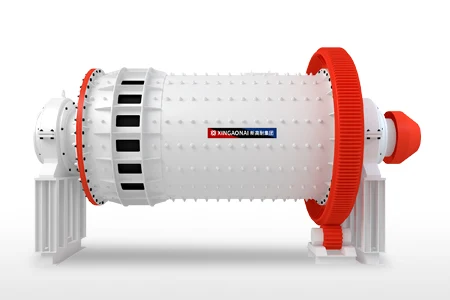
Choosing a rod mill manufacturer involves more than comparing equipment prices or motor power. The manufacturer must understand the raw material, required product size, production capacity and complete grinding circuit before recommending a suitable machine.
An incorrectly selected rod mill may technically operate but still produce excessive fines, insufficient capacity, unstable discharge or high wear costs. A reliable supplier should therefore provide a selection proposal based on project data rather than recommend the same model for every application.
This guide explains how to compare rod mill manufacturers, what information to include in an inquiry and which technical and commercial details should be confirmed before placing an order.
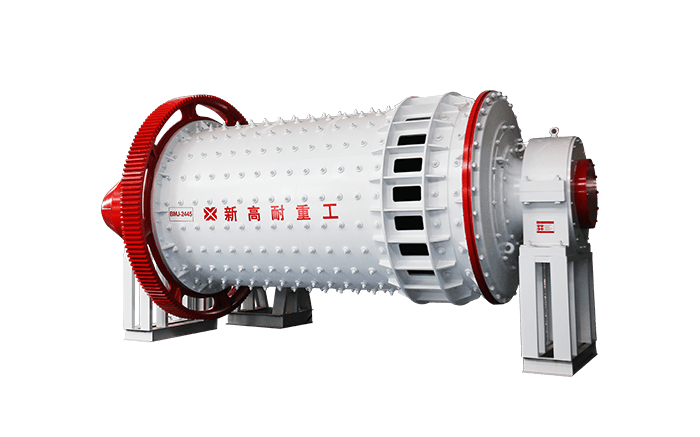
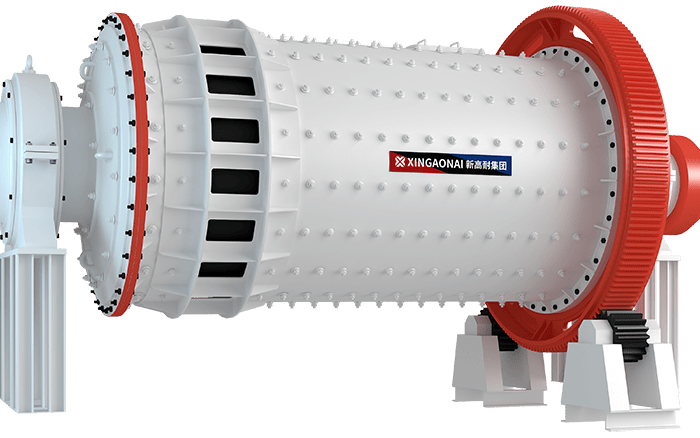
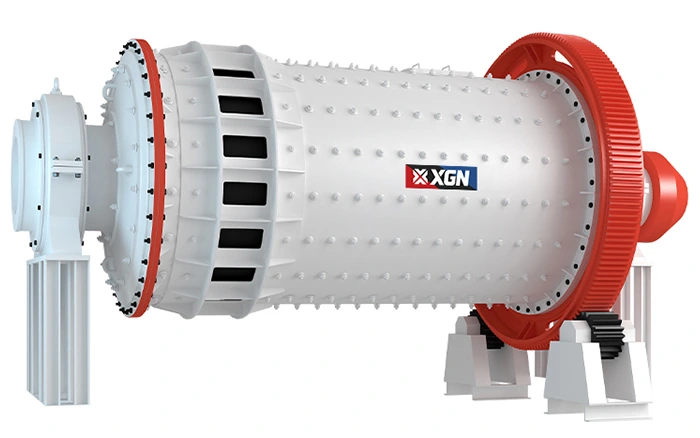
For manufactured-sand projects, buyers can also review the XINGAONAI sand making rod mill range before requesting a model recommendation.
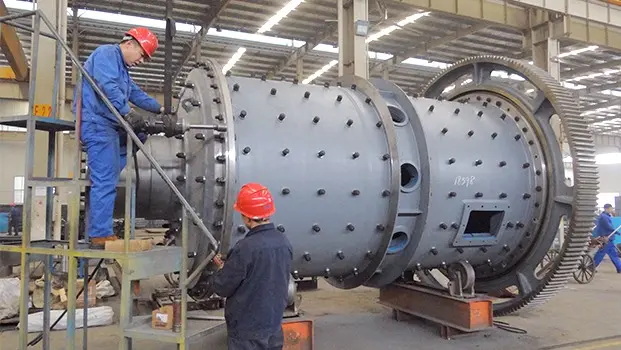
What Should a Rod Mill Manufacturer Know About Your Project?
Before recommending a model, a rod mill manufacturer should collect sufficient information about the feed material and production target.
At minimum, provide:
Material name and mineral composition
Material hardness and abrasiveness
Maximum feed size
Feed particle-size distribution
Feed moisture or slurry concentration
Required processing capacity
Target product size
Acceptable fines content
Wet or dry grinding requirement
Upstream crushing equipment
Downstream screening or classification equipment
Available power supply
Installation altitude and climate
Project location
If the material varies significantly, representative samples or test data should also be provided.
A supplier that issues a final quotation based only on required capacity may overlook important factors affecting actual production, power demand, liner wear and rod consumption.
1. Evaluate the Manufacturer’s Process Knowledge
A rod mill should be selected as part of a complete process rather than as an isolated machine.
The manufacturer should be able to explain:
Why a rod mill is suitable for the target application
Whether the feed needs additional crushing
Whether wet or dry grinding is more appropriate
Which discharge configuration should be used
Whether screening or classification is required
How oversized material will be returned
How water, dust and finished material will be managed
For sand-making projects, the supplier should consider the entire route:
Pre-crushing → Controlled feeding → Rod milling → Screening → Oversize return → Finished sand
For mineral-processing projects, the rod mill may operate before classification, ball milling, flotation, magnetic separation or another beneficiation stage.
A manufacturer should also be willing to explain when a rod mill is not the most suitable option. For example, a ball mill may be more appropriate when the target product is significantly finer.
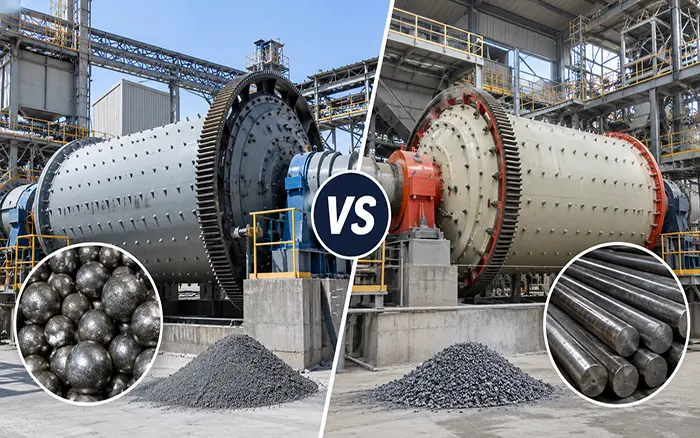
Read the difference between a ball mill and a rod mill before choosing the grinding equipment.
2. Compare Models Using the Same Operating Basis
Published capacity should not be treated as a guaranteed figure for every material. Capacity is affected by:
Feed size
Material hardness
Material abrasiveness
Feed moisture
Target product size
Rod diameter and loading
Cylinder speed
Discharge design
Open- or closed-circuit operation
When comparing rod mill manufacturers, make sure every supplier calculates performance using the same feed and product conditions.
A useful technical proposal should identify:
| Item | Information to confirm |
|---|---|
| Model | Manufacturer’s model designation |
| Cylinder size | Diameter and effective length |
| Maximum feed size | Based on the proposed configuration |
| Target product size | Expected discharge under stated conditions |
| Nominal capacity | Based on the specified material |
| Motor power | Installed power and voltage |
| Rod specifications | Material, diameter, length and loading |
| Liner specifications | Material, profile and estimated wear basis |
| Discharge type | Overflow, peripheral or another configuration |
| Operating mode | Wet or dry |
| Equipment weight | Required for transport and foundation design |
| Auxiliary equipment | Feeder, screen, classifier, conveyor or pump |
Do not compare two quotations solely by their headline throughput if the suppliers used different target sizes or material assumptions.
3. Check the Grinding Media and Liner Design
Steel rods and cylinder liners are major wear-related components. Their design affects grinding performance, equipment availability and long-term operating cost.
Ask the manufacturer to specify:
Recommended rod material
Initial rod diameters
Rod length
Total rod charge
Rod replenishment method
Liner material
Liner profile
Liner fastening method
Estimated inspection interval
Spare-part identification numbers
Rod selection should correspond to the feed size and material characteristics. Oversized or unsuitable rods can increase impact and wear, while rods that are too small may not effectively break larger feed particles.
The liner should protect the cylinder while supporting controlled rod movement. Its design should not encourage excessive lifting or create conditions that increase the risk of rod tangling.
For more information, read the rod mill liner selection and maintenance guide.
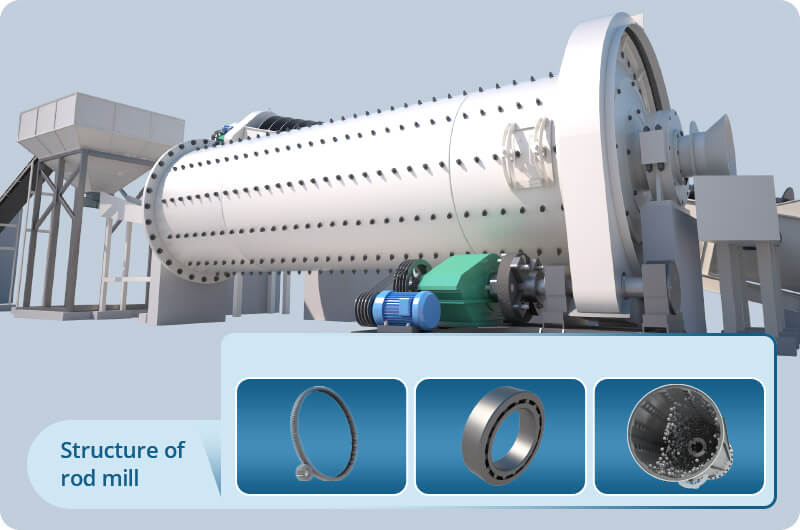
4. Review Manufacturing and Quality-Control Information
Buyers should request evidence of how critical components are manufactured and inspected.
Important items include:
Cylinder fabrication
Confirm the material specification, plate thickness, welding method and inspection process used for the mill shell.
Machining accuracy
Trunnions, bearing seats, gears and other rotating components require controlled machining and alignment. Poor dimensional accuracy can lead to vibration, uneven gear contact and premature bearing wear.
Gear and drive system
Ask for the motor, reducer, pinion and girth-gear specifications. The quotation should identify the component brands or applicable technical standards where possible.
Dynamic and assembly checks
The supplier should explain which inspections are completed before shipment, such as:
Dimensional inspection
Weld inspection
Gear contact inspection
Bearing and trunnion alignment
No-load rotation check
Motor and reducer verification
Fastener and lubrication-system inspection
Avoid relying only on general statements such as “high quality” or “advanced technology.” Ask for technical specifications, inspection records or photographs relevant to the proposed machine.
5. Ask Whether Material Testing Is Available
Material testing can reduce selection risk, especially when:
The material is highly abrasive
Moisture or clay content varies
The required product grading is strict
The ore contains several minerals
Existing production data is unavailable
The project uses an unusual raw material
A test or process evaluation should focus on:
Feed-size distribution
Grindability
Expected product-size distribution
Fine-particle generation
Moisture response
Likely wear characteristics
Required classification method
Testing does not eliminate every difference between laboratory and industrial operation, but it provides a better basis for model selection than assumptions alone.
6. Evaluate the Complete Equipment Scope
A rod mill normally requires supporting equipment. A low mill quotation may become expensive after necessary auxiliary systems are added.
Confirm whether the proposal includes:
Feeding equipment
Main motor and drive
Lubrication system
Electrical control system
Foundation bolts
Steel grinding rods
Initial liner set
Discharge equipment
Screen or classifier
Conveyors or slurry pumps
Dust-control equipment
Guards and safety devices
Installation tools
Recommended spare parts
The quotation should clearly distinguish between included, optional and customer-supplied items.
For a sand-making project, also confirm how the final product will be screened and how oversized material will return to the grinding circuit.
7. Examine Installation and Commissioning Support
Even a correctly manufactured rod mill can perform poorly if it is installed or commissioned incorrectly.
Ask the manufacturer who is responsible for:
Foundation drawing preparation
Foundation inspection
Equipment positioning
Shell and drive alignment
Gear-contact adjustment
Lubrication-system setup
Initial rod loading
No-load testing
Load testing
Operating-parameter adjustment
Operator training
Installation responsibilities, travel costs, visa requirements, accommodation and commissioning duration should be written into the commercial agreement.
XINGAONAI’s equipment service and technical support information includes project consultation, customized solutions, installation, commissioning and operator guidance. The exact service scope should still be confirmed in the project contract.
8. Confirm Spare Parts and After-Sales Support
Rod mills operate with replaceable wear parts and mechanical components. Spare-parts availability can therefore be as important as the initial machine price.
Before ordering, request:
Recommended start-up spare-parts list
Two-year wear-parts recommendation
Part drawings or identification codes
Typical manufacturing lead time
Availability of rods and liners
Remote technical-support process
On-site service conditions
Warranty scope
Warranty exclusions
Response procedure for equipment failure
Clarify whether standard bearings, motors and electrical components can be sourced locally. Locally available components may reduce future downtime.
9. Compare Total Cost, Not Only Purchase Price
The least expensive quotation may not provide the lowest long-term cost.
Evaluate:
Total cost = Equipment price
           + Transport
           + Installation
           + Power consumption
           + Grinding rod consumption
           + Liner wear
           + Lubrication
           + Maintenance labor
           + Downtime
           + Spare-parts inventory
A higher-capacity machine is not automatically more economical. If it consistently operates below its efficient load range, it may increase capital cost and reduce operational stability.
Likewise, a smaller machine may have a lower purchase price but fail to meet required production, leading to overloading and accelerated wear.
Request calculations or operating assumptions that explain how each model was selected.
10. Watch for Common Warning Signs
Be cautious when a rod mill supplier:
Guarantees capacity without asking about the material
Uses one model for widely different applications
Does not specify the target product size
Claims fixed energy savings without test conditions
Cannot explain the discharge configuration
Provides no rod or liner specifications
Excludes essential components without clearly stating it
Cannot supply foundation or installation drawings
Has no defined spare-parts procedure
Uses inconsistent data across the quotation and website
Claims the machine can process every material equally well
Reliable selection depends on clearly stated operating conditions, not broad marketing claims.
XINGAONAI Sand Making Rod Mill Range
XINGAONAI currently lists six sand making rod mill models for different nominal capacities.
| Model | Cylinder size | Maximum feed | Listed discharge | Motor power | Nominal capacity |
|---|---|---|---|---|---|
| BMJ-2136 | 2100 × 3600 mm | ≤30 mm | <5 mm | 280 kW | 80–100 t/h |
| BMJ-2445 | 2400 × 4500 mm | ≤30 mm | <5 mm | 380 kW | 150–200 t/h |
| BMJ-2745 | 2700 × 4500 mm | ≤30 mm | <5 mm | 450 kW | 200–300 t/h |
| BMJ-2755 | 2700 × 5500 mm | ≤30 mm | <5 mm | 500 kW | 300–350 t/h |
| BMJ-3255 | 3200 × 5500 mm | ≤30 mm | <5 mm | 800 kW | 400–450 t/h |
| BMJ-3655 | 3600 × 5500 mm | ≤30 mm | <5 mm | 1250 kW | 450–500 t/h |
These are published nominal specifications rather than guaranteed results for every material. Actual capacity, product grading and power consumption must be confirmed according to the feed properties and process configuration.
Review the complete Sand Making Rod Mill specifications or submit your project conditions for model selection.
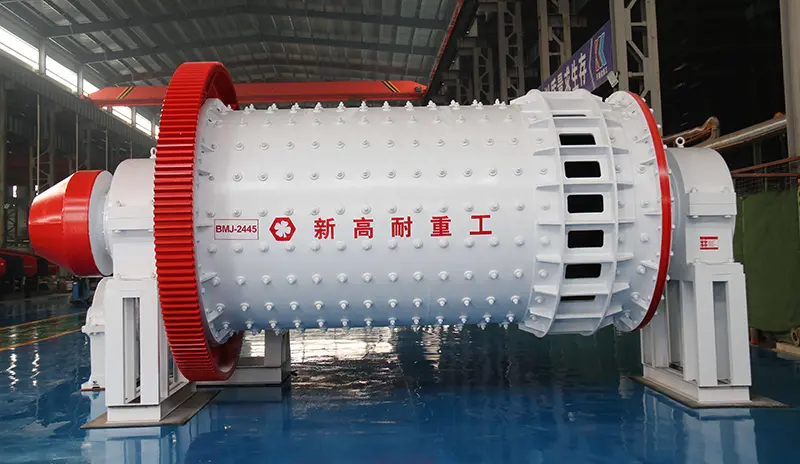
Questions to Ask a Rod Mill Manufacturer
Before accepting a quotation, ask these questions:
Why is the proposed model suitable for my material?
Which feed and product conditions were used to calculate capacity?
What discharge configuration is included?
What are the rod material, dimensions and initial loading?
What liner material and profile are supplied?
Is the motor power based on full-load operation?
Which auxiliary machines are required?
Is material testing available?
What inspections are completed before shipment?
Which spare parts are included?
How long does wear-part production normally take?
Who is responsible for installation and commissioning?
What operator training is provided?
What is covered by the warranty?
Which information is required before final technical confirmation?
The manufacturer’s answers should be documented in the technical agreement rather than discussed only through informal messages.
Recommended Rod Mill Procurement Process
A structured purchasing process can reduce technical and commercial risk.
Step 1: Define the process requirement
Document the material, feed size, capacity, target size and downstream process.
Step 2: Send the same data to shortlisted manufacturers
Using the same inquiry document makes quotations easier to compare.
Step 3: Review the technical proposal first
Confirm model selection, process design, rods, liners, motor and auxiliary systems before comparing price.
Step 4: Request evidence
Ask for relevant drawings, inspection procedures, component specifications and service terms.
Step 5: Clarify commercial boundaries
Confirm what is included in the quotation, delivery terms, installation responsibilities and payment conditions.
Step 6: Sign a detailed technical agreement
The agreement should identify the accepted feed conditions, target capacity basis, main specifications, inspection requirements and supplied scope.
Step 7: Inspect before shipment
Verify equipment identity, dimensions, included components, spare parts and shipping documentation.
Conclusion
Selecting a rod mill manufacturer requires a technical comparison, not simply a price comparison. A suitable supplier should understand the material, explain the model-selection basis, identify the complete equipment scope and provide clear information about rods, liners, drive components, installation and spare parts.
Before requesting a final quotation, prepare the material characteristics, maximum feed size, required capacity, target product size, moisture content and project location. This information allows the manufacturer to develop a more reliable technical proposal.
For manufactured-sand applications, review XINGAONAI’s 80–500 t/h sand making rod mill and confirm the final model against your actual operating conditions.