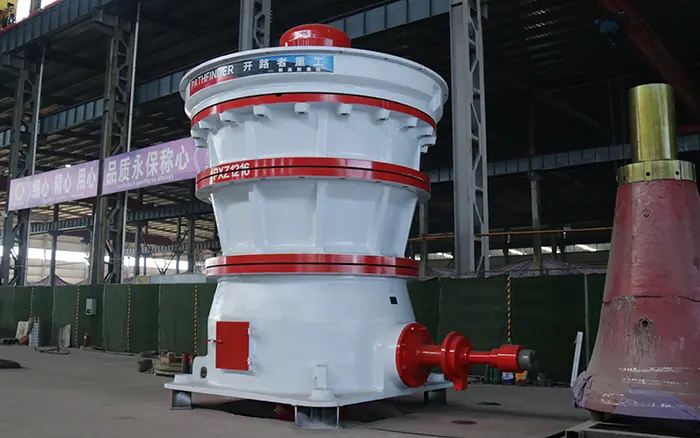
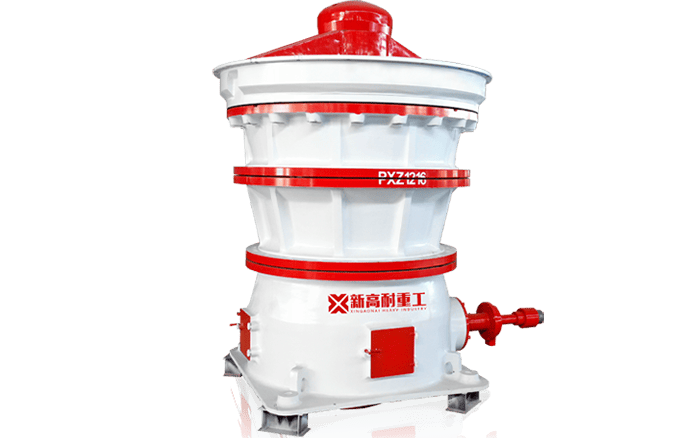
Stone Crusher

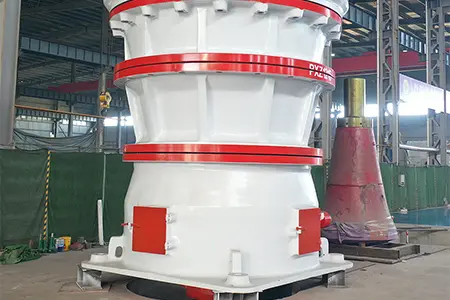
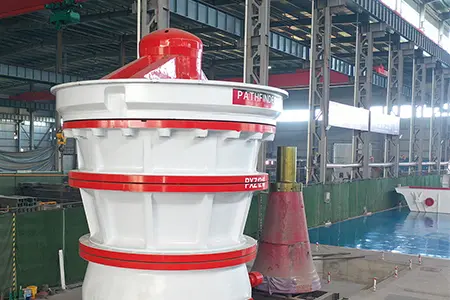
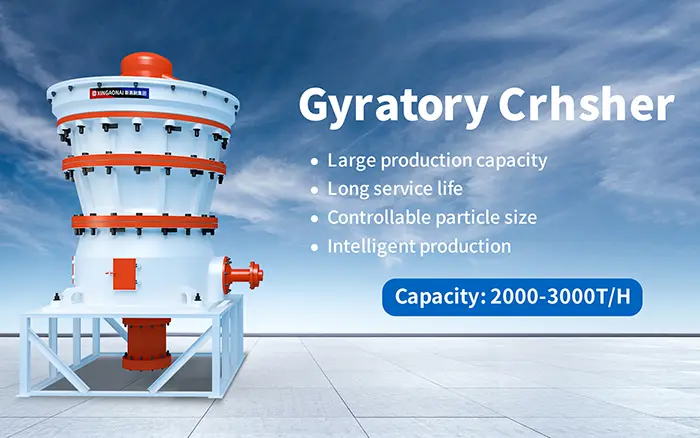
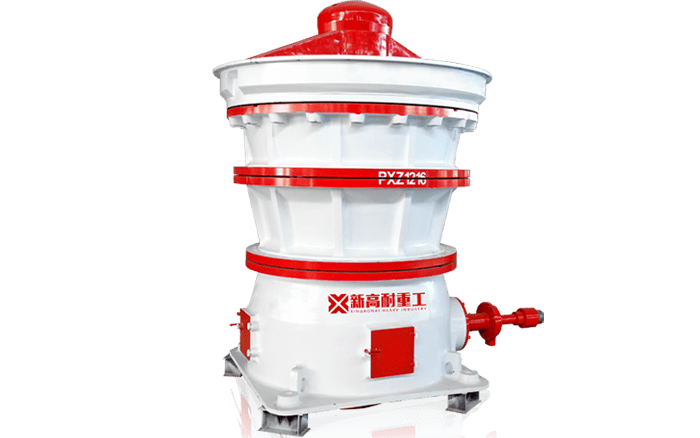
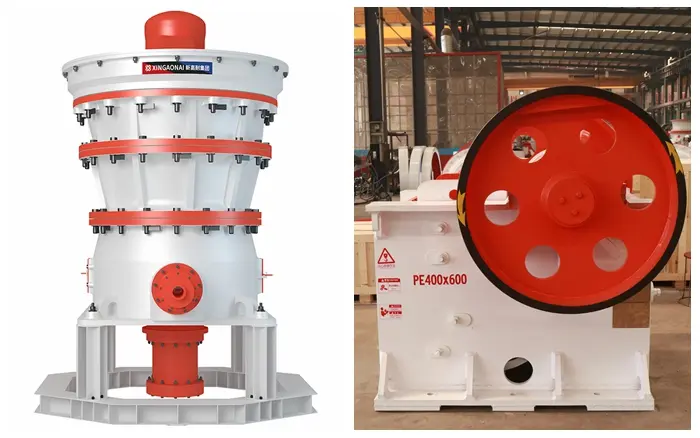
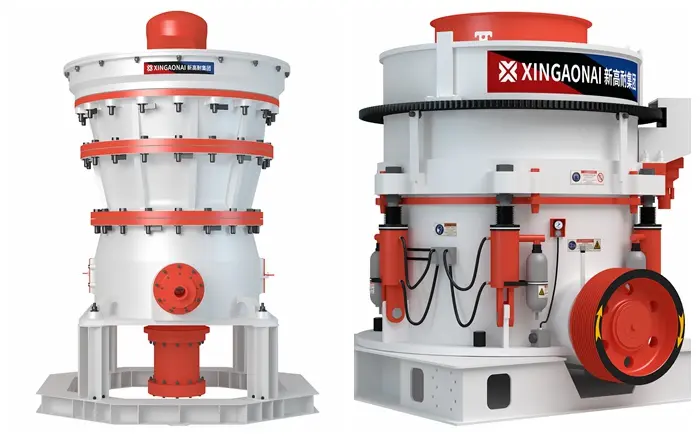
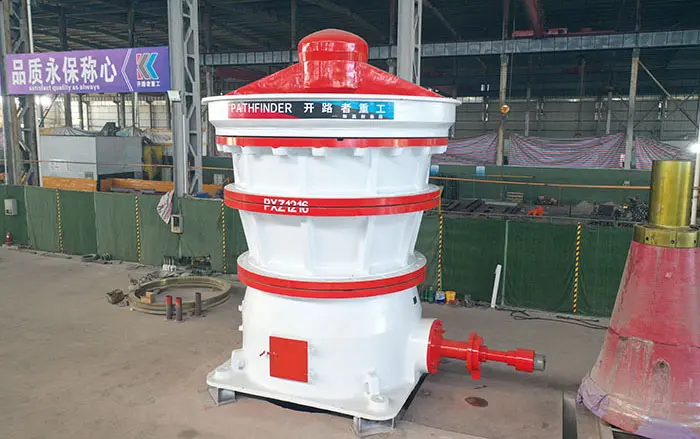
Gyratory Crusher

CAPACITY

310-3200t/h

FEED SIZE

≤1350mm
Application areas:The Gyratory Crusher serves primary crushing in large open-pit & underground mines, hard rock quarries for Fe/Cu/Au ores, and aggregate production lines.
Applicable materials:Iron/copper/gold/molybdenum/nickel/manganese ores, granite, basalt, limestone, quartzite & other hard/extra-hard materials for primary crushing (≤300 MPa, ≤1,600 mm feed, 100–300 mm output).
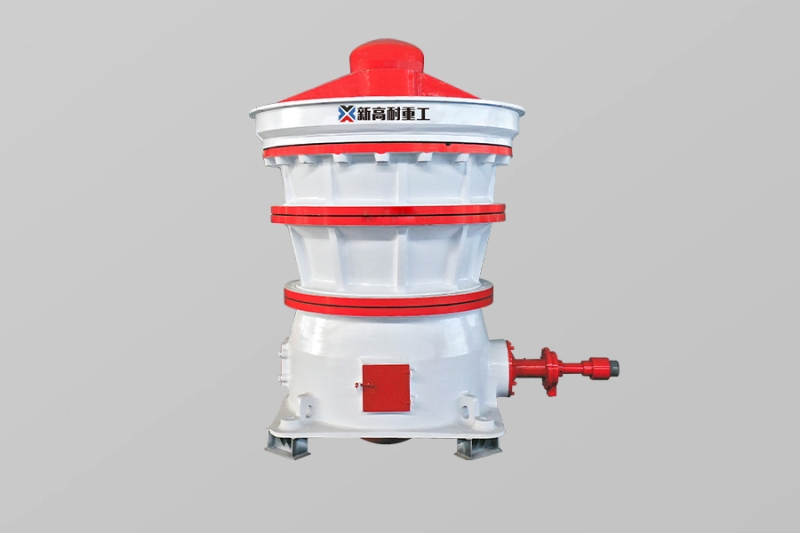
Product Overview

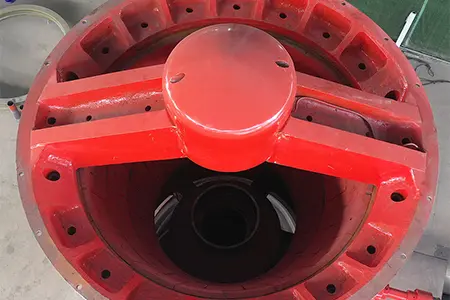
The X Series Primary Gyratory Crusher is designed for continuous primary crushing in large mines, hard-rock quarries and high-capacity aggregate plants. It processes run-of-mine ore and blasted rock before secondary crushing, grinding or material handling. Multiple chamber configurations and model sizes are available to match different feed openings, capacities and product-size requirements.

Key Advantages

High-Capacity Primary Crushing

The X Series Primary Gyratory Crusher provides continuous crushing and discharge for large mines, hard-rock quarries and aggregate plants. The available models offer nominal capacities from 310 to 3,200 tph.

Hydraulic CSS Adjustment

The hydraulic system raises or lowers the main shaft to adjust the closed-side setting. This helps control product size and compensate for mantle and concave wear.

Hydraulic Overload Protection

When tramp metal or another uncrushable object enters the chamber, the hydraulic system helps increase the discharge opening and protect critical components.

Heavy-Duty Structure

The heavy-duty main frame, spider assembly, main shaft, mantle, concaves and eccentric assembly are designed for continuous primary-crushing loads in mining and quarrying applications.

Controlled Lubrication System

The forced-circulation lubrication system supplies oil to critical bearings and bushings. Oil-temperature, pressure and flow monitoring help protect the crusher during continuous operation.

Multiple Models and Chamber Configurations

Different models and crushing chambers are available for various feed sizes, capacities and discharge requirements. Model selection should consider the complete process rather than nominal capacity alone.

Working Principle

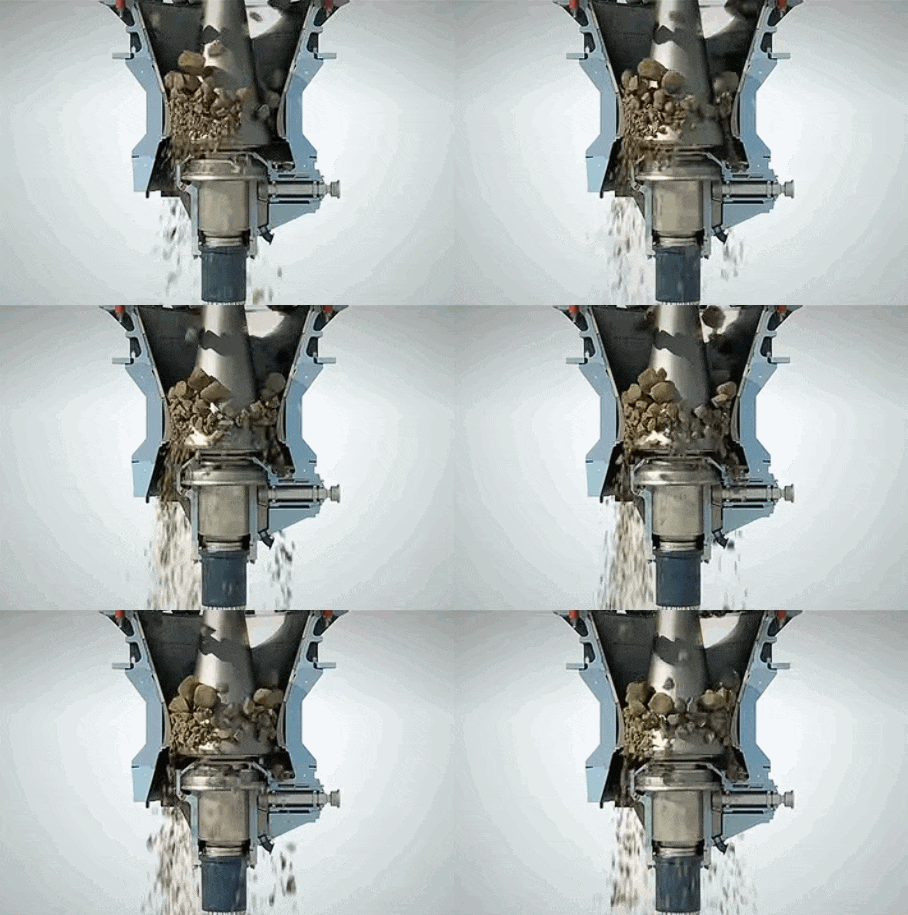
Working Principle of Gyratory Crusher
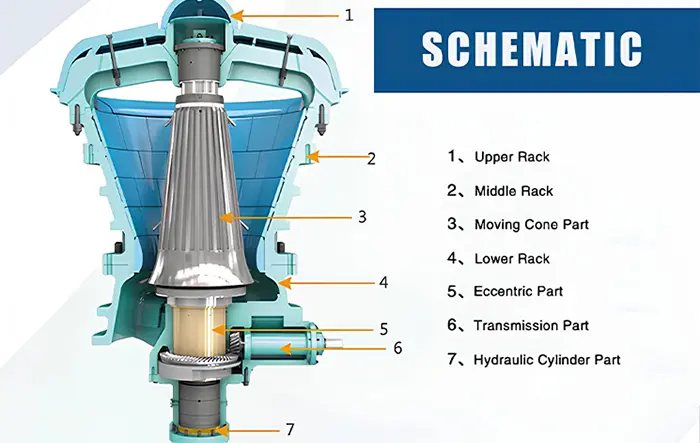
Run-of-mine ore or blasted rock enters the crushing chamber between the moving mantle and the stationary concaves. The eccentric assembly causes the main shaft and mantle to move in a continuous gyrating path. Material is compressed when the mantle moves toward the concaves and moves downward when the crushing gap opens. The material is progressively reduced until it is small enough to leave through the bottom discharge opening. Product size is mainly controlled by the closed-side setting (CSS), chamber profile, feed gradation and material properties. The hydraulic system adjusts the main-shaft position to control the CSS and compensate for liner wear. For stable operation, material should be fed continuously and distributed evenly around the crushing chamber.

Technical Parameters

Model

Feeding port size

(mm)

Discharge size

(mm)

Larger feeding size

(mm)

Adjustment range

(mm)

Capacity

(tph)

X0710700100580100-130310-400
X09099009075090-120380-510
X0913900130750130-160625-770
X0917900170750170-190815-910
X121612001601000160-1901250-1480
X122112002101000210-2301560-1720
X141714001701200170-2001750-2060
X142214002201200210-2302160-2370
X161816001801350180-2102400-2800
X162316002301350210-2402800-3200


Model

Bottom diameter

(mm)

Total weight

(t)

Motor power

(kw)

Motor RPM

(r/min)

Lubrication station specification

(l/min)

Remark
X0710140091.2145/15573040
X0909165014121073563
X0913165014121073563
X0917165014121073563
X12162000228.2310590125
X1221
X14172200309430590125
X1422
X16182500481310*2590125Dual drive
X1623


We are here waiting for you
Our professional team can tailor the solution to suit your needs and answer your questions
Contact Engineer

Frequently Asked Questions

Unlike a jaw crusher, which uses a reciprocating motion, a gyratory crusher uses a continuous gyrating motion of a cone-shaped mantle inside a concave bowl. This allows for continuous crushing (not intermittent), resulting in higher throughput, lower energy consumption per ton, and more consistent particle shape.

Limited moisture may be acceptable, but excessive clay or sticky fines can cause buildup, bridging and reduced capacity. Moisture and clay content should be evaluated before equipment selection.

Key maintenance items include the main shaft and mantle wear inspection, eccentric sleeve lubrication, spider bearing checks, and monitoring the hydraulic or mechanical adjustment system. A structured preventive maintenance program significantly extends machine lifespan.

Yes. Due to its large size and high operating forces, a gyratory crusher requires a solid reinforced concrete foundation specifically designed to its load specifications. Xingaonai provides detailed foundation drawings and installation engineering support as part of the project package.

Related Blogs

Send message

Please enter your name
Please enter your email
Please enter your message