Stone Crusher

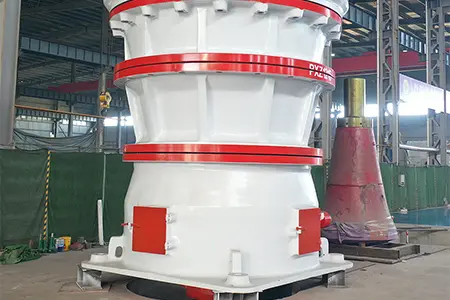
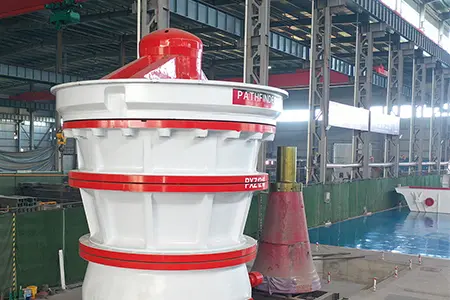
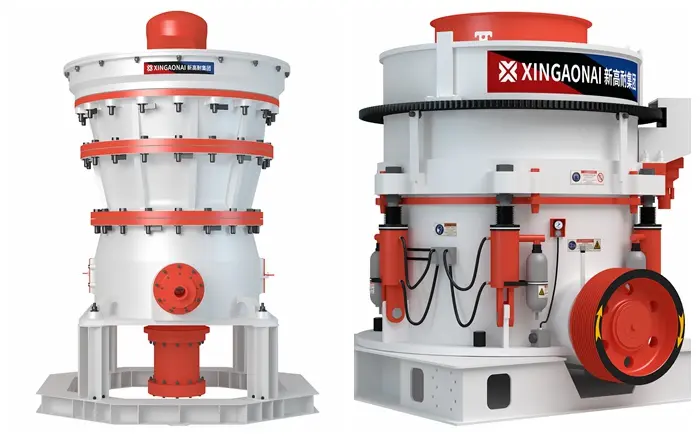
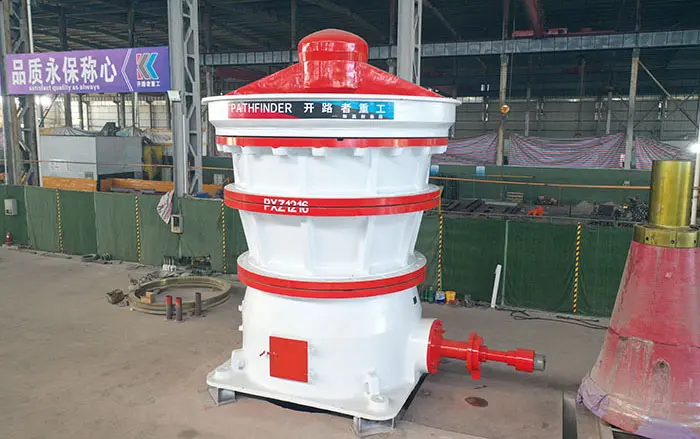
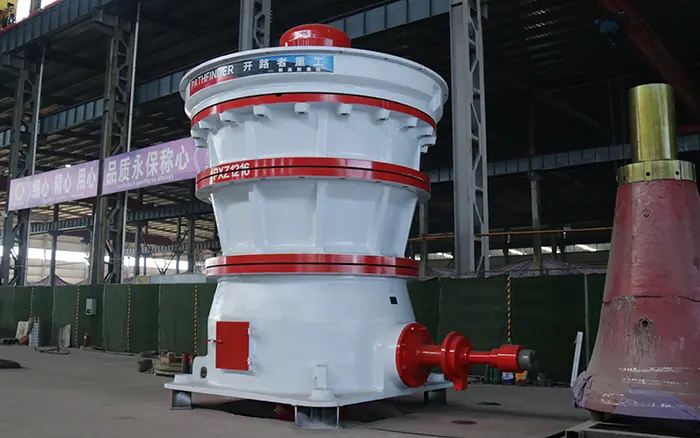
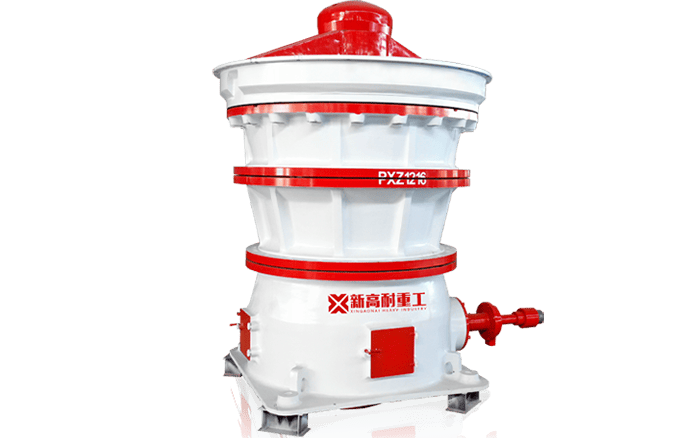
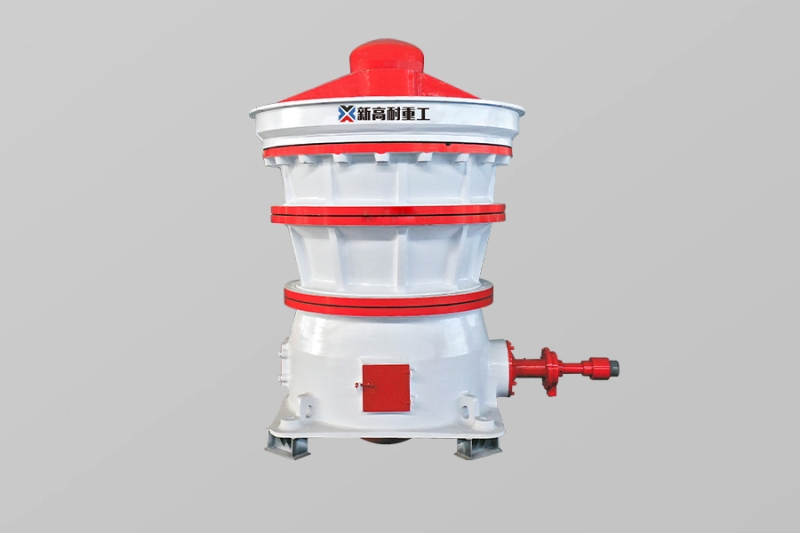
Gyratory Crusher

CAPACITY

310-3200t/h

FEED SIZE

≤1600mm
Application areas:The Gyratory Crusher serves primary crushing in large open-pit & underground mines, hard rock quarries for Fe/Cu/Au ores, and aggregate production lines.
Applicable materials:Iron/copper/gold/molybdenum/nickel/manganese ores, granite, basalt, limestone, quartzite & other hard/extra-hard materials for primary crushing (≤300 MPa, ≤1,600 mm feed, 100–300 mm output).

Product Overview

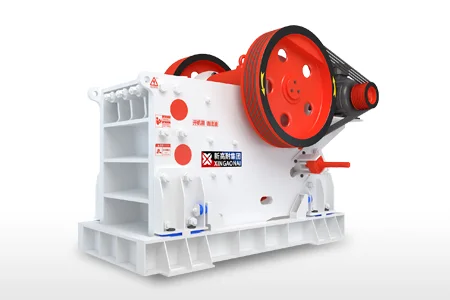
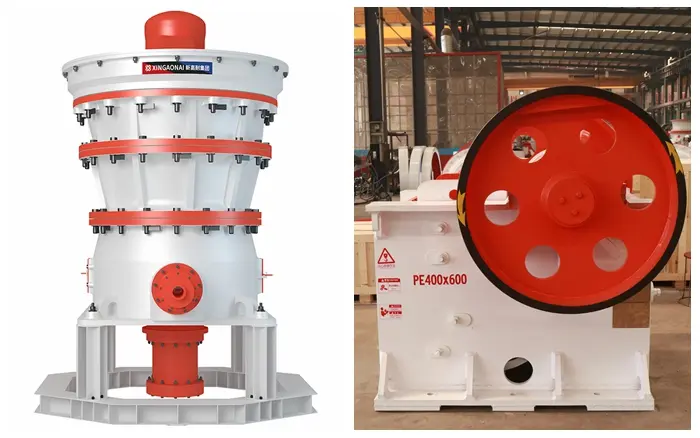
The Gyratory Crusher is the highest-capacity primary crushing machine in the world, designed for continuous, uninterrupted primary size reduction of run-of-mine ore and hard rock directly from the blasting face or mine haul truck dump without pre-sorting or pre-sizing of the feed material. Unlike jaw crushers — which crush material in a reciprocating motion with a defined open and closed cycle — the Gyratory Crusher operates by continuous gyration of a conical mantle within a concave crushing shell, maintaining a continuously open discharge gap on one side of the chamber at all times and delivering a smooth, continuous product discharge flow without the pulsating output characteristic of jaw crusher operation. This continuous crushing action, combined with the large feed opening and extremely high installed power, gives the Gyratory Crusher a throughput capacity two to three times that of an equivalent-opening jaw crusher, making it the preferred primary crusher for mining operations processing 2,000–5,000 TPH or more of run-of-mine ore.    


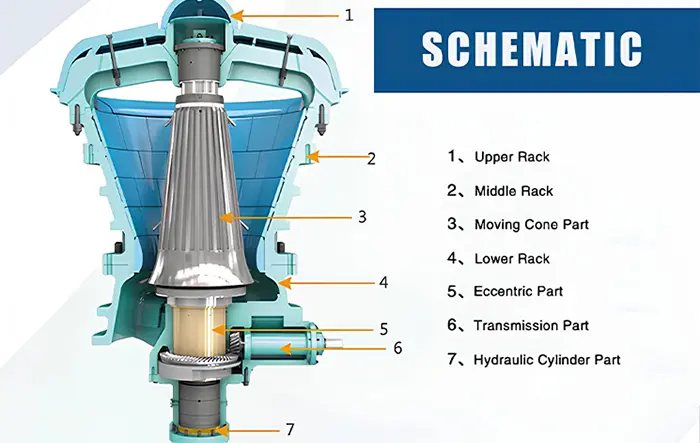
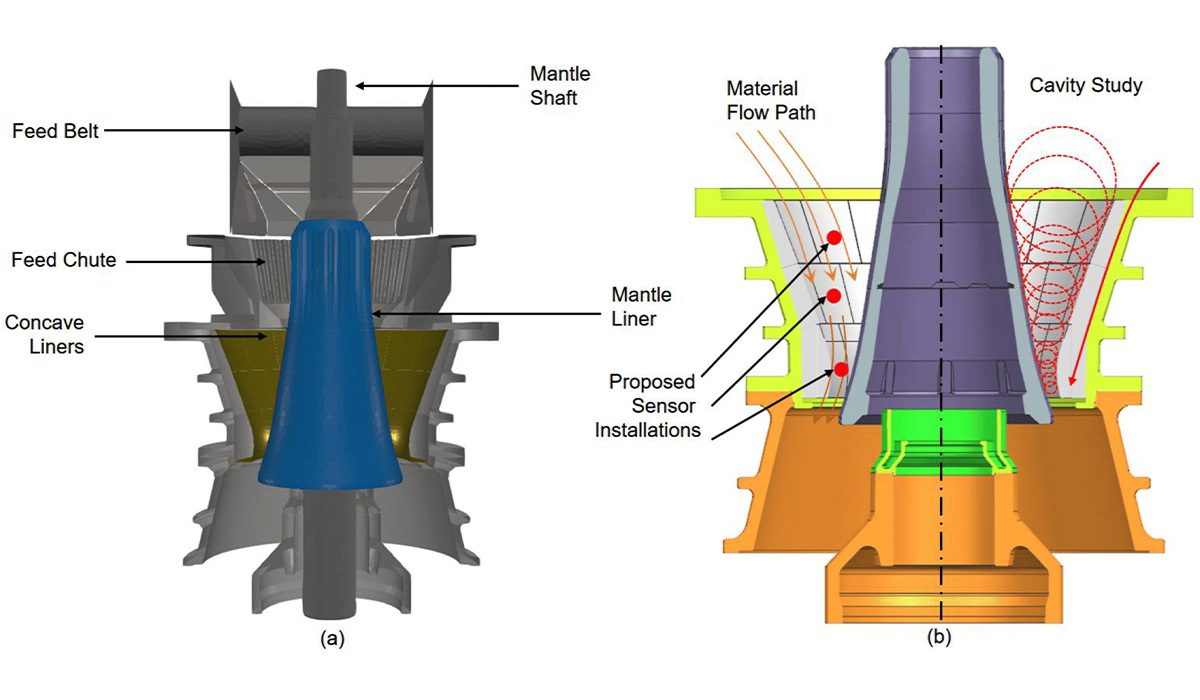
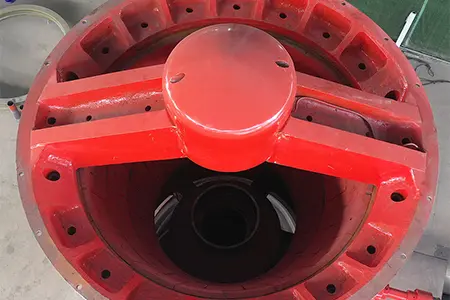
XINGAONAI Gyratory Crushers are engineered with a massive one-piece cast steel main frame that supports the stationary outer crushing shell (concave) and the hydraulically adjustable inner crushing head (mantle) on the gyrating main shaft. The main shaft is supported at the bottom on a large-diameter bronze eccentric bushing within the spider hub and guided at the top by the spider bearing, delivering a precisely controlled eccentric throw of 25–50 mm at the mantle surface for consistent nip angle and crushing force distribution across the full circumference of the crushing chamber simultaneously.


The hydraulic main shaft adjustment system raises or lowers the main shaft to change the closed-side setting (CSS) with millimeter-level precision, compensating for mantle wear and controlling output product size throughout the full liner service life without stopping the crusher. The hydraulic overload protection system automatically drops the main shaft to pass uncrushable tramp iron through the crushing chamber without damaging the mantle, concave, or main shaft, resetting automatically after each event. A forced-circulation thin-oil lubrication system with dual oil pumps, oil cooler, dual oil filters, and continuous oil temperature, pressure, and flow monitoring protects all eccentric, main shaft, spider, and bevel gear bearing surfaces under continuous 24-hour high-load operation.
Key Advantages

Highest Throughput Capacity of Any Primary Crusher

The annular crushing chamber — open simultaneously around its full 360° circumference — crushes and discharges material continuously without the open-and-close cycle limitation of jaw crushers, delivering processing capacities from 1,000 TPH to over 5,000 TPH from a single machine. This throughput capability eliminates the need for multiple parallel primary crusher installations at large mining operations, reducing civil infrastructure cost, equipment count, maintenance complexity, and plant footprint compared to multi-jaw crusher primary crushing stations of equivalent total capacity.

Continuous Feed Acceptance, No Pre-Sorting Required

The large feed opening — up to 1,500 mm — accepts run-of-mine boulders directly from mine haul truck dumps or blasted stockpiles without requiring a primary grizzly or pre-crusher to remove oversize, unlike smaller primary crushers that require controlled, pre-sorted feed. The wide feed opening also accommodates occasional oversize boulders without bridging, eliminating the production interruptions and manual breaking required to clear feed bridges in smaller primary crusher installations.

Hydraulic CSS Adjustment for Consistent Product Size

The hydraulic main shaft lifting system adjusts the CSS upward or downward with millimeter precision from the remote control room without stopping the crusher, compensating for mantle wear continuously throughout the full liner service life. This real-time CSS control maintains consistent output product gradation — critical for maintaining stable feed conditions to the downstream secondary crushing circuit — and eliminates the progressive product size coarsening that occurs in mechanically adjusted primary crushers as the mantle wears between scheduled adjustment intervals.

Automatic Hydraulic Overload Protection

The hydraulic main shaft support system provides instantaneous overload protection when uncrushable tramp iron or an extremely hard boulder exceeds the maximum set crushing force. The main shaft drops automatically, widening the CSS to pass the obstruction through the chamber without damaging the mantle, concave, or bevel gear, then returns automatically to the preset CSS position within seconds — eliminating the production stoppages and manual intervention required to clear tramp iron from conventional mechanically protected primary crushers.

Low Operating Cost Per Tonne at High Throughput

The combination of extremely high throughput, long mantle and concave liner service life (typically 800,000–2,000,000 tonnes per liner set depending on ore abrasiveness), and a single large machine replacing multiple smaller units results in the lowest primary crushing cost per tonne of any crusher type at high production rates. The continuous discharge flow also eliminates the surge bin sizing requirements associated with pulsating jaw crusher discharge, reducing downstream surge handling infrastructure cost.

Robust All-Weather Design for Permanent Installation

The massive cast steel main frame, spider, and top shell are designed for permanent outdoor installation without building enclosure in open-pit mining environments, withstanding extreme temperature ranges, heavy rainfall, dust, and seismic loading over service lives of 25–40 years between major structural overhauls. The modular mantle and concave liner system allows individual liner segments to be replaced by standard maintenance crews with mobile cranes without dismantling the main frame or shaft, minimizing scheduled downtime for liner change-out at regular production intervals.

Working Principle

Working Principle of Gyratory Crusher
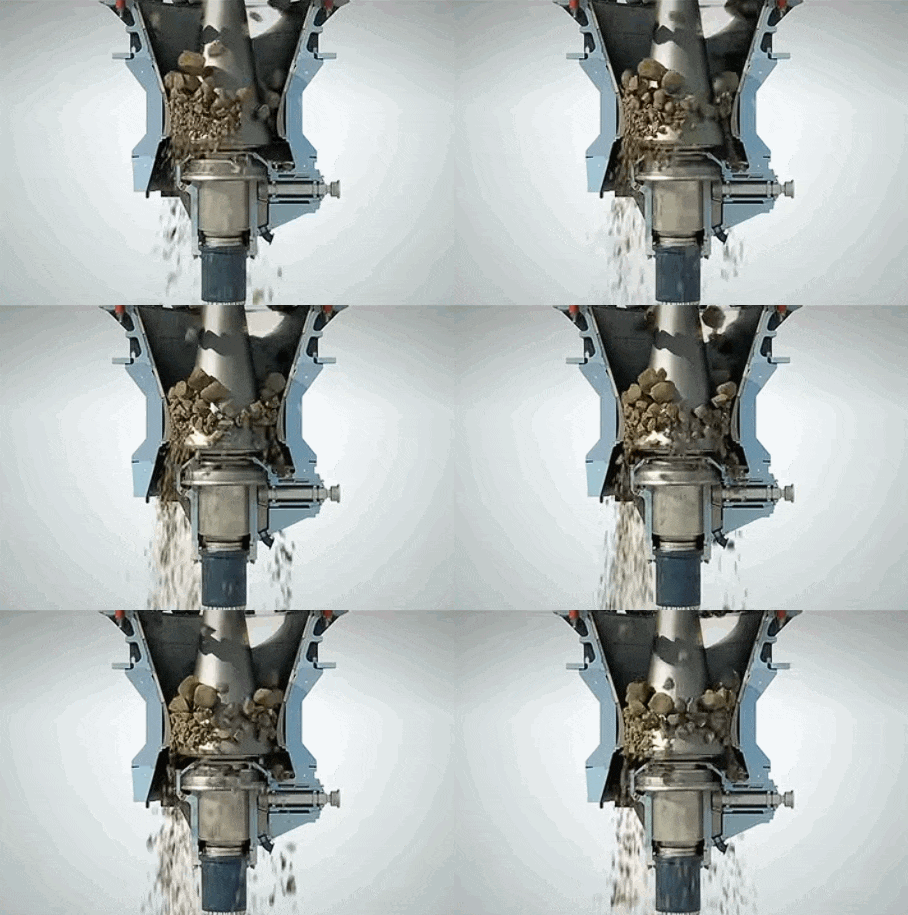
Run-of-mine ore or blasted rock is dumped directly into the top of the Gyratory Crusher feed opening by mine haul trucks or conveyor and falls by gravity around the full circumference of the annular space between the gyrating conical mantle — mounted on the eccentric-driven main shaft supported at the bottom in the bronze eccentric bushing and guided at the top by the spider bearing — and the stationary concave crushing shell fixed in the top shell and main frame; as the eccentric rotates at 85–150 RPM, the main shaft and mantle gyrate in a circular path, with the mantle face continuously approaching the concave surface on one side of the chamber to compress and fracture feed material while simultaneously receding from the concave on the diametrically opposite side to open the discharge gap and allow crushed product to fall by gravity through the bottom of the crushing chamber onto the product conveyor or ore pass below; because the gyrating motion is continuous and the crushing and discharge zones are always present simultaneously on opposite sides of the 360° annular chamber, material is crushed and discharged continuously without interruption, producing a smooth, high-volume product flow; the hydraulic CSS adjustment system continuously maintains the set main shaft height and responds instantaneously to overload conditions by dropping the shaft to pass tramp material, while the forced-circulation thin-oil lubrication system protects all bearing and bushing surfaces and the PLC control system monitors all critical parameters throughout uninterrupted 24-hour operation.

Technical Parameters

Model

Feeding port size

(mm)

Discharge size

(mm)

Larger feeding size

(mm)

Adjustment range

(mm)

Capacity

(tph)

X0710700100580100-130310-400
X09099009075090-120380-510
X0913900130750130-160625-770
X0917900170750170-190815-910
X121612001601000160-1901250-1480
X122112002101000210-2301560-1720
X141714001701200170-2001750-2060
X142214002201200210-2302160-2370
X161816001801350180-2102400-2800
X162316002301350210-2402800-3200


Model

Bottom diameter

(mm)

Total weight

(t)

Motor power

(kw)

Motor RPM

(r/min)

Lubrication station specification

(l/min)

Remark
X0710140091.2145/15573040
X0909165014121073563
X0913165014121073563
X0917165014121073563
X12162000228.2310590125
X1221
X14172200309430590125
X1422
X16182500481310*2590125Dual drive
X1623


We are here waiting for you
Our professional team can tailor the solution to suit your needs and answer your questions
Contact Engineer

Frequently Asked Questions

Unlike a jaw crusher, which uses a reciprocating motion, a gyratory crusher uses a continuous gyrating motion of a cone-shaped mantle inside a concave bowl. This allows for continuous crushing (not intermittent), resulting in higher throughput, lower energy consumption per ton, and more consistent particle shape.

Gyratory crushers can accept feed sizes up to 1,500mm and handle capacities from 1,000 t/h to over 5,000 t/h, depending on the model. They are purpose-built for ultra-large primary crushing tasks.

Key maintenance items include the main shaft and mantle wear inspection, eccentric sleeve lubrication, spider bearing checks, and monitoring the hydraulic or mechanical adjustment system. A structured preventive maintenance program significantly extends machine lifespan.

Yes. Due to its large size and high operating forces, a gyratory crusher requires a solid reinforced concrete foundation specifically designed to its load specifications. Xingaonai provides detailed foundation drawings and installation engineering support as part of the project package.

Explore Our Projects

Related Blog

Send message

Please enter your name
Please enter your email
Please enter your message