Common Vibrating Screen Problems and Troubleshooting Solutions
1. Bearing Overheating
High temperature on bearing housing
Abnormal heat emission
Bearing noise or jamming
Insufficient or deteriorated lubricating grease
Excessive lubrication filling
Bearing wear or damage
Misalignment of vibration motor
Loose or damaged bearing seat
Replenish or replace high-temperature resistant lubricating grease.
Adjust lubrication amount to a reasonable level.
Replace worn bearings in time.
Check and correct motor installation alignment.
Fasten or repair the bearing seat.
2. Abnormal Noise and Vibration
Loud knocking or friction noise
Unstable or uneven vibration
Strong shaking of the whole machine
Loose bolts on the screen body or motor base
Cracked side plate or damaged beam
Worn or broken rubber shock absorber
Unbalanced vibration motor
Loose or damaged screen frame
Tighten all connecting bolts.
Repair or replace cracked components
Replace worn shock absorbers.
Adjust motor balance or replace eccentric block.
Reinforce or repair the screen frame.
3. Low Screening Efficiency
Too much fine material left in oversize product
Low output of qualified material
Incomplete material classification
Incorrect vibration amplitude or frequency
Uneven feeding or excessive feeding amount
Blocked screen mesh
Worn or damaged screen surface
Improper installation angle of the screen
Adjust motor eccentric block to change amplitude.
Control feeding speed and keep uniform feeding.
Clean blocked screen mesh regularly
Replace worn screen mesh.
Adjust the installation angle of the screen machine.
4. Screen Mesh Blockage
Material accumulation on the screen surface
Reduced or no material passing through the mesh.
Uneven material distribution
High moisture content in materials
Sticky or muddy materials
Inappropriate screen mesh size
Insufficient vibration force
Dry materials before feeding if possible
Use anti-blocking screen mesh or bouncing ball devices.
Adjust vibration amplitude to improve penetration.
Clean the screen surface during operation.
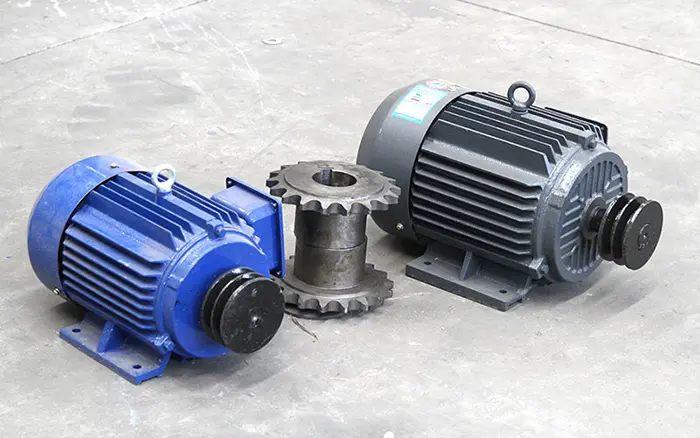
5. Abnormal Motor Operation
Motor does not start.
Motor overheats quickly
Weak or uneven vibration
Power supply failure
Damaged motor coil or bearing
Incorrect wiring connection
Overload operation
Check power supply and voltage.
Repair or replace the faulty motor
Reconnect wiring according to the instructions.
Reduce feeding amount to avoid overload.
6. Fast Screen Mesh Wear
Screen mesh breaks or deforms quickly.
Uneven wear on screen surface
Excessive impact from large materials
Sharp or highly abrasive materials
Incorrect installation of screen mesh
Insufficient tension of screen mesh
Install a buffer feeder to reduce material impact.
Choose high-wear-resistance screen mesh.
Reinstall and tension the screen mesh properly
Avoid overloading the screen.
7. Material Movement Abnormality
Material runs to one side.
Material stays on the screen too long.
Material is thrown out too fast.
Unbalanced vibration force
The inclination angle of the screen is incorrect.
Loose or damaged support springs
Adjust vibration motor parameters.
Correct the installation angle.
Replace damaged support springs.
Preventive Maintenance to Reduce Vibrating Screen Troubleshooting
Lubricate bearings regularly with recommended grease
Check and tighten all bolts before each shift.
Clean screen mesh and remove accumulated materials daily
Inspect shock absorbers, springs, and motors weekly.
Replace worn parts before complete failure.
Keep feeding uniform and within designed capacity.