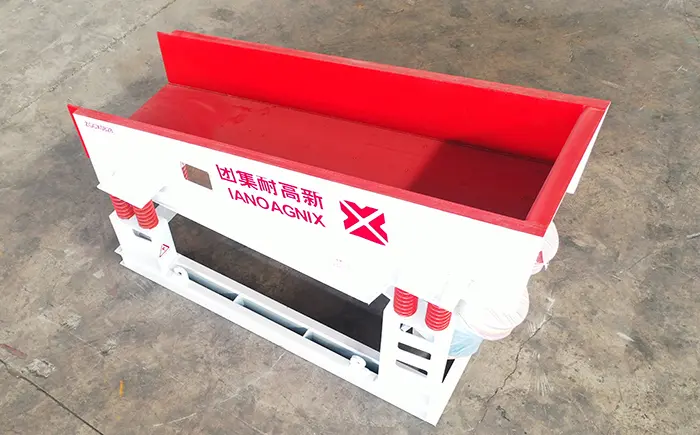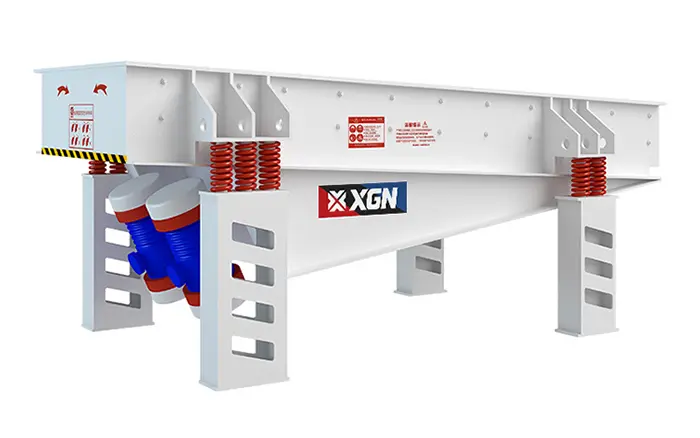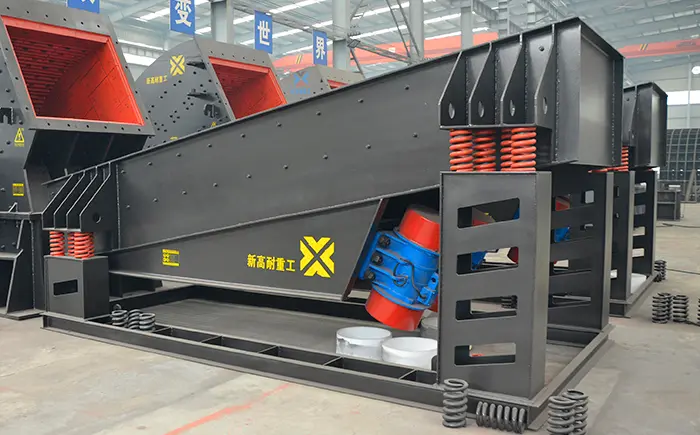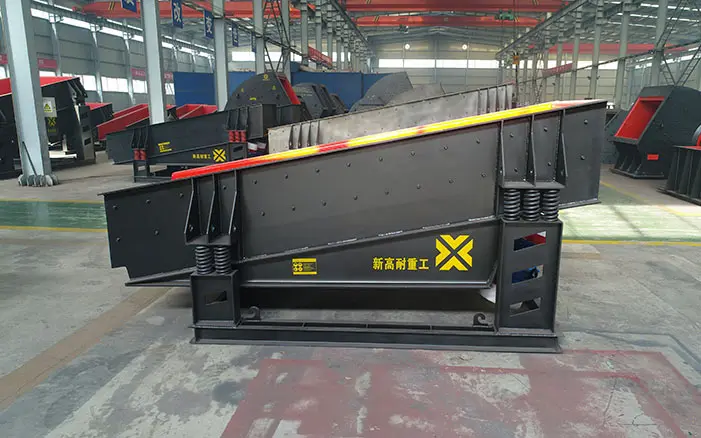
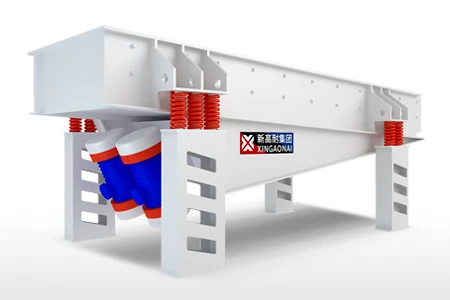
Choosing a China vibrating feeder supplier involves more than comparing equipment prices. A quotation should establish what machine will be supplied, the operating conditions it is designed for, which components are included and how the equipment will be inspected, delivered and supported.
Two offers with similar model names or nominal capacities may cover different trough arrangements, drive systems, liners, controls and installation responsibilities. These differences can affect the cost and work required before the feeder enters production.
A useful purchasing process connects five items:
Confirmed operating requirements → Defined supply scope → Manufacturing evidence → Agreed inspection → Documented delivery and support
This guide explains how to evaluate those items when sourcing a vibrating feeder from China.
For current equipment configurations, see the XINGAONAI Vibrating Feeder product page.
Define the Purchase Before Comparing Suppliers
Suppliers can provide more comparable offers when they receive the same project information.
Prepare a short technical brief covering:
Material type;
Required normal and peak feed rates;
Maximum lump size;
Particle-size distribution;
Bulk density;
Moisture and clay conditions;
Upstream hopper or chute arrangement;
Receiving equipment;
Available installation space;
Electrical supply;
Whether pre-screening is required;
Destination country and delivery location.
Where information is unavailable, identify it as an assumption requiring confirmation.
A capacity figure without a material basis is difficult to evaluate. Similarly, an overall feeder dimension does not establish whether the unit will fit beneath the existing hopper or discharge correctly into the crusher.
The mining vibrating feeder selection guide explains how these operating conditions affect equipment selection.
Confirm Who Is Responsible for the Equipment
A supplier may manufacture the feeder, integrate equipment from several factories or act as an export sales company.
The purchasing decision should establish who is responsible for:
Technical selection;
Drawing preparation;
Manufacturing;
Component sourcing;
Inspection;
Export packing;
Shipping coordination;
Installation guidance;
Warranty administration;
Replacement-part identification.
Ask for the legal entity named on the quotation and purchase documents, the manufacturing location and the contact responsible for technical questions.
Where several companies participate, clarify their responsibilities before placing the order. The buyer should know which organization will resolve a dimensional mismatch, supply a missing component or review an operating problem.
Request Factory Evidence Relevant to the Quoted Feeder
General workshop photographs can introduce a company, but equipment-specific evidence is more useful for evaluating an order.
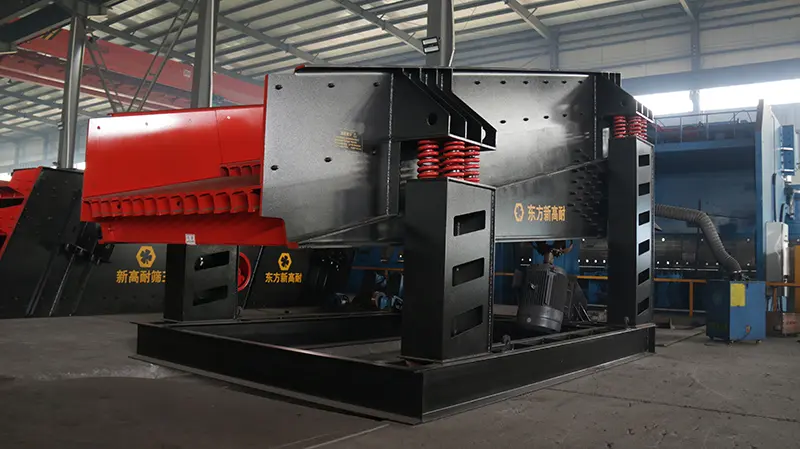
Request photographs or a live workshop review showing relevant work such as:
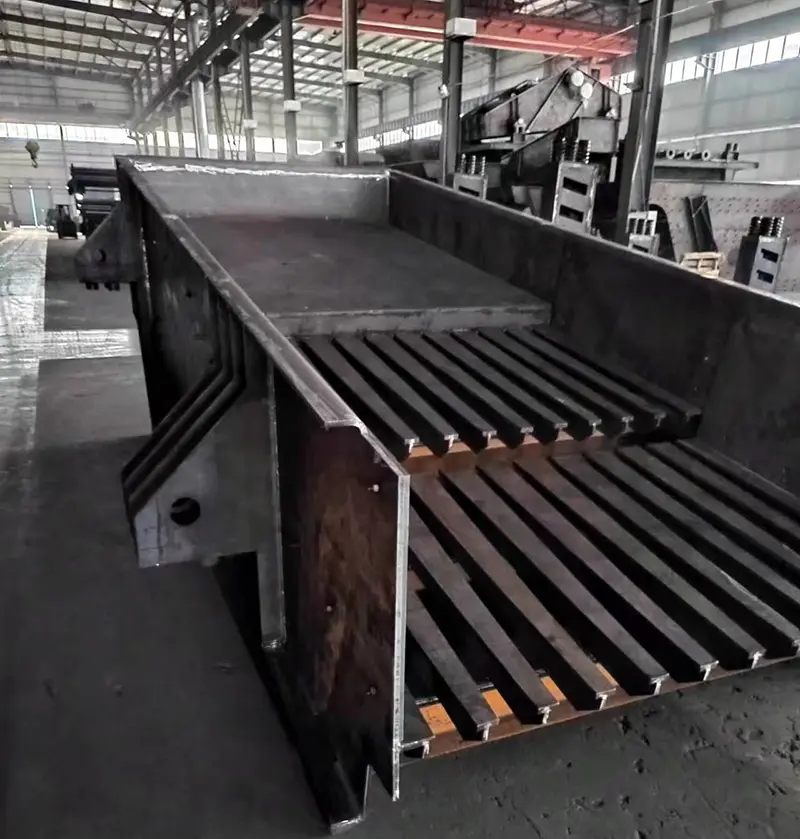
Trough fabrication;
Liner installation;
Motor or exciter mounting;
Spring supports;
Grizzly fabrication, where applicable;
Mechanical assembly;
Finished-machine inspection;
Packing preparation.
Ask the supplier to identify what each photograph shows and whether it relates to the quoted equipment, a similar machine or an earlier project.
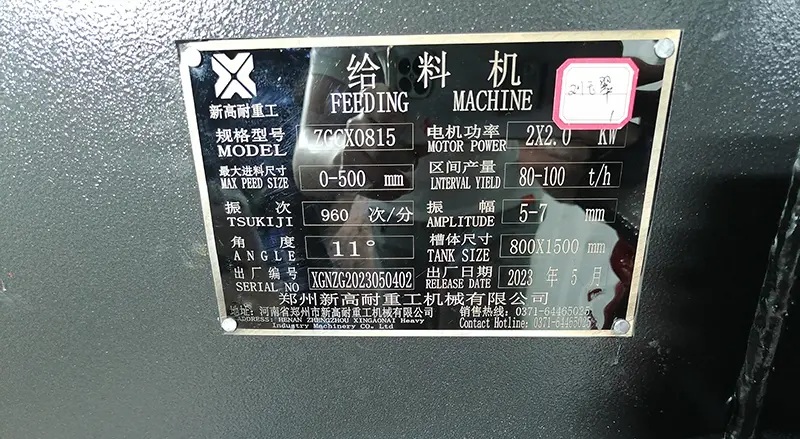
For an existing order, use the machine identification, order reference or production record to connect the evidence with the equipment being supplied.
A supplier review should also examine whether technical questions receive clear, consistent answers. Repeated contradictions between the quotation, drawings and sales explanation need to be resolved before manufacturing proceeds.
Compare Quotations on the Same Supply Scope
The lowest quoted equipment price may exclude components included in another offer.
Use a comparison sheet to establish the same purchasing basis.
| Quotation item | What to confirm |
|---|---|
| Feeder model | Exact designation and configuration |
| Capacity basis | Material properties and operating assumptions |
| Trough | Dimensions, arrangement and construction specification |
| Wear liners | Material, thickness, fixing method and replaceable sections |
| Drive | Motor or exciter identification, quantity and electrical ratings |
| Springs and supports | Included components and installation arrangement |
| Grizzly section | Whether included, opening arrangement and discharge routing |
| Controls | Included panel, control functions and interface requirements |
| Guards | Included protection for the supplied drive arrangement |
| Loose accessories | Fasteners, mounting items and separately packed components |
| Documentation | Drawings, manuals, wiring information and parts identification |
| Inspection | Agreed checks, records and witnessing arrangements |
| Packing | Protection, package dimensions and lifting provisions |
| Service | Included assistance, exclusions and additional charges |
Resolve differences in writing. A product photograph should not be treated as a complete supply specification.
If a grizzly section is required, confirm its inclusion explicitly. The vibrating feeder screening guide explains how pre-screening changes the material route.
Agree on Drawings and Installation Interfaces
The feeder must connect with equipment and structures supplied by other parties.
Before manufacturing, confirm which drawings require approval and which dimensions are critical.
Typical interface information includes:
Overall equipment dimensions;
Feed and discharge positions;
Support locations;
Installation elevation;
Required movement clearances;
Access for maintenance;
Motor and cable-entry positions;
Chute interfaces;
Equipment mass;
Relevant support-load information.
Also establish who supplies the hopper, fixed skirts, discharge chute, supporting steelwork, electrical cabling and control connections.
Where a drawing is revised, identify the approved revision used for production. An email discussion should not leave the factory and installation contractor working from different dimensions.
The underlying relationship between trough movement and fixed structures is explained in the vibrating feeder working principle.
Set Inspection and Acceptance Criteria Before Production
Inspection is most useful when the buyer and supplier agree beforehand on what will be checked and what records will be provided.
Depending on the order, the inspection plan may include:
Equipment identification;
Critical dimensions;
Supplied component verification;
Liner and grizzly arrangement;
Accessible weld and fabrication checks;
Fastener and guard installation;
Electrical identification;
No-load operation;
Motor current readings;
Motion observations;
Abnormal noise or contact checks;
Packing and accessory verification.
Any specialist testing, third-party inspection or witnessed acceptance should be included in the agreed scope.
Understand What a No-Load Test Demonstrates
A workshop no-load run can help demonstrate assembly condition, drive operation and the absence of obvious mechanical interference.
It does not establish the feeder’s guaranteed capacity with the buyer’s actual material.
If loaded performance verification is required, agree on:
Test material;
Material properties;
Feed conditions;
Measurement method;
Test duration;
Acceptance criteria;
Responsibility for providing the material and equipment.
A short operating video is useful evidence, but its meaning depends on what conditions and measurements it documents.
Review Packing, Shipping and Arrival Requirements
A feeder may be shipped assembled or with selected components removed for transport. Confirm the arrangement before dispatch.
Request a packing plan covering:
Number of packages;
Package dimensions;
Gross and net weights;
Equipment lifting points;
Protection of electrical components;
Corrosion protection;
Loose-part identification;
Transport restraints, where required;
Handling and storage instructions;
Reassembly information.
Confirm whether the shipping dimensions allow the proposed transport method and whether lifting equipment will be available at the destination.
The quotation should also identify the delivery basis, named location, included logistics costs and the point at which responsibility changes between the parties.
Shipping time and manufacturing time are different parts of the schedule. Clarify what starts the production period and whether drawing approval, component procurement or inspection can affect dispatch.
Confirm Installation and Commissioning Responsibilities
“Installation support” can describe several different services.
Ask whether the offer includes:
Installation drawings;
Remote technical guidance;
On-site supervision;
Mechanical installation;
Electrical commissioning;
Operator instruction;
Travel and accommodation;
Follow-up operating review.
Confirm which activities are included, which require a separate agreement and what site preparation the buyer must complete.
For example, a supplier’s commissioning assistance may depend on the foundation, power supply, upstream hopper and receiving equipment being ready.
XINGAONAI’s equipment service and technical support page introduces its service offering. The location, timing, responsibilities and charges applicable to an individual order should be confirmed in the project documents.
Plan Spare Parts Around the Supplied Configuration
A general promise of spare-parts support is less useful than a clear identification system.
Request a parts list linked to the supplied machine, including relevant items such as:
Liners;
Grizzly bars;
Springs;
Motor or exciter components;
Mounting hardware;
Bearings and seals, where serviceable;
Model-specific wear and connection parts.
Discuss which items are routine consumables and which may have longer procurement times.
For drive components, record the actual manufacturer, model and electrical information. Replacement compatibility should be confirmed from the installed equipment rather than from the feeder name alone.
The vibrating feeder motor selection and replacement guide explains which motor details should be retained.
Also clarify warranty coverage, exclusions, notification requirements and the process for reviewing a fault. Expected wear and an equipment defect may require different assessments.
Evaluate Total Procurement Cost
Equipment price is one part of the purchasing decision.
Compare the cost and responsibility associated with:
Feeder supply;
Optional components;
Inspection;
Packing;
Transport;
Destination handling;
Installation;
Electrical integration;
Commissioning assistance;
Initial spare parts;
Future replacement parts.
A lower initial price may still be suitable, but only when the buyer understands the exclusions and can complete the remaining work.
Use the same technical and commercial assumptions when comparing suppliers.
Purchasing a Vibrating Feeder from XINGAONAI
The ZG Series Vibrating Feeder page provides the current model reference and listed specifications.
For a project quotation, send:
Material and feed-rate information;
Maximum lump size and particle-size distribution;
Moisture, clay and bulk-density information;
Hopper and receiving-equipment drawings;
Available installation space;
Electrical supply;
Pre-screening requirements;
Destination and required delivery schedule;
Requested inspection and documentation;
Installation and support expectations.
Ask for the proposal to identify its assumptions, exclusions, equipment configuration and drawing requirements.
This provides a documented basis for reviewing the equipment and confirming the order.
Prepare a Clear Enquiry
A China vibrating feeder supplier should be evaluated through the connection between its proposal, equipment, inspection records and delivery responsibilities.
Begin with a clear operating brief, compare the complete supply scope and confirm the interfaces before manufacturing. Agree on inspection, packing, installation assistance and parts identification while the order is being defined.
Contact XINGAONAI with the project information and available drawings to request a feeder proposal with a clear technical scope.