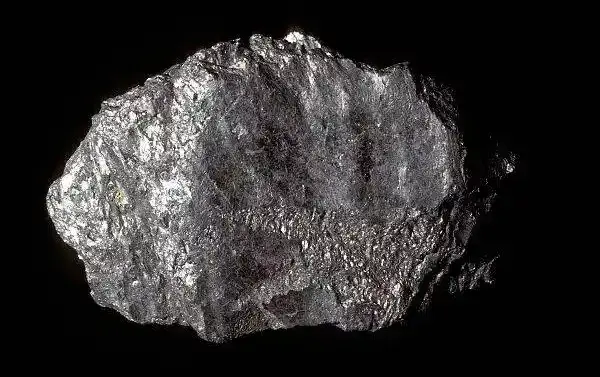
Graphite is a naturally occurring form of crystalline carbon with unique physical and chemical properties, including excellent electrical conductivity, thermal resistance, lubricity, and chemical stability. These characteristics make graphite an important industrial mineral used in batteries, refractories, lubricants, foundries, electronics, and other applications.
Graphite mining and processing involve several stages, from extracting graphite-bearing ore to crushing, grinding, beneficiation, dewatering, and concentrate preparation. The optimal process depends on the graphite deposit, ore grade, mineralogy, flake size, liberation characteristics, and final product requirements.
For natural flake graphite, preserving the original flake size during processing is particularly important because larger flakes can have higher commercial value in some markets.
1. What Is Graphite Mining?
Graphite mining is the process of extracting graphite-bearing ore from natural deposits.
Graphite deposits can occur in different geological environments, and the ore may contain graphite together with quartz, feldspar, mica, calcite, sulfide minerals, and other gangue materials.
The main types of natural graphite commonly considered in mining include:
Flake graphite
Amorphous graphite
Vein or lump graphite
Each type has different physical characteristics and may require a different mining and processing approach.
Flake Graphite
Flake graphite consists of relatively large graphite particles distributed within the host rock. It is widely used in applications where flake size and purity are important.
Amorphous Graphite
Amorphous graphite generally has a much finer structure and is often associated with metamorphosed carbonaceous materials.
Vein Graphite
Vein graphite occurs in relatively concentrated veins or masses and can have very high carbon content in suitable deposits.
2. Graphite Ore Characteristics
Before designing a graphite processing plant, the ore should be carefully characterized.
Important parameters include:
Graphite grade
Graphite mineralogy
Flake size distribution
Degree of liberation
Host-rock composition
Ore hardness
Clay and slime content
Presence of sulfide minerals
Required concentrate grade
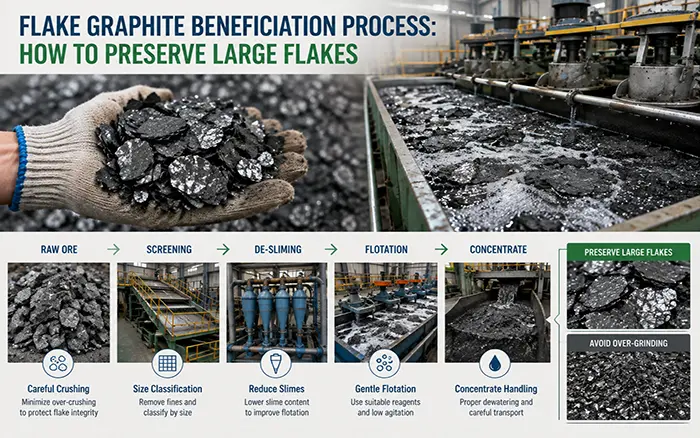
Graphite beneficiation is particularly sensitive to grinding conditions. Excessive grinding can break graphite flakes and reduce the value of the final concentrate.
For this reason, laboratory testing is an important part of graphite processing plant design.
3. Graphite Mining Methods
The mining method depends on deposit geometry, depth, ore distribution, ground conditions, and economic factors.
Open-Pit Graphite Mining
Open-pit mining can be used when the graphite deposit is relatively close to the surface.
Typical operations include:
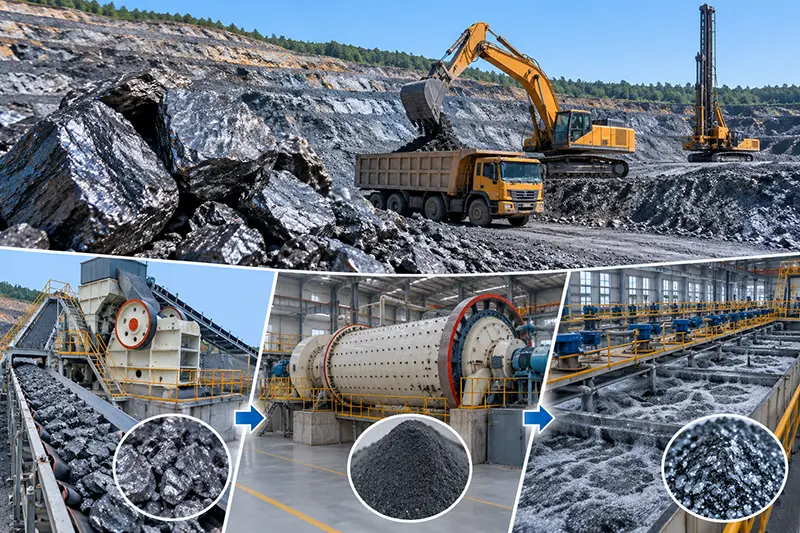
Drilling → Blasting → Excavation → Loading → Hauling → Ore Processing
The mining plan should minimize dilution and maintain a consistent ore feed to the processing plant.
Underground Graphite Mining
Underground mining may be considered when the deposit extends significantly below the surface or when open-pit extraction becomes less economical.
The selected underground method depends on the geometry and stability of the orebody.
4. Graphite Ore Processing Flow
A typical graphite processing plant may include:
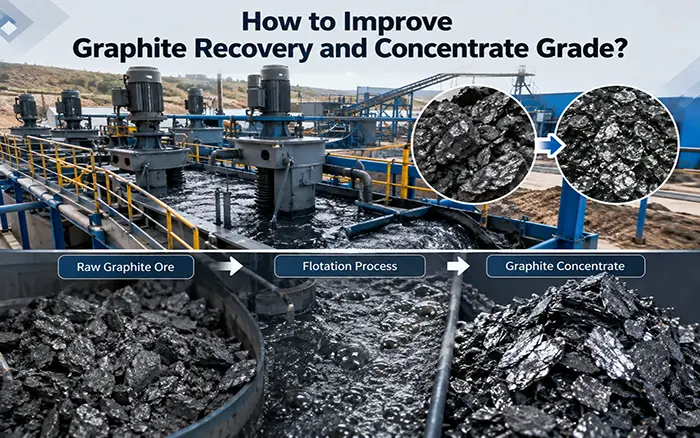
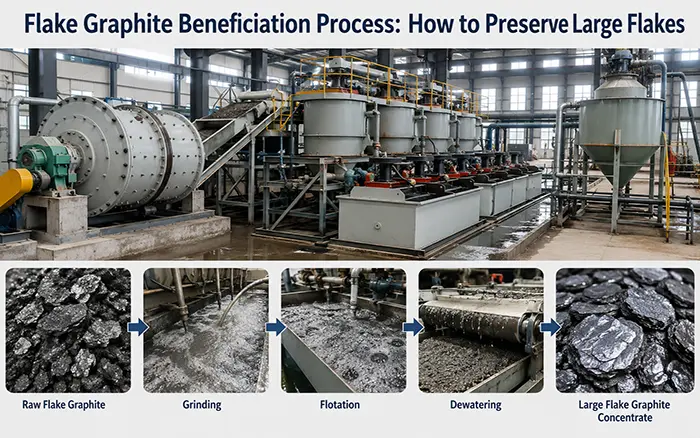
Crushing → Grinding → Flotation → Regrinding → Cleaning → Dewatering → Concentrate Drying
The exact flowsheet varies according to the ore characteristics.
Unlike many other minerals, graphite has natural hydrophobicity, which makes flotation an important beneficiation method for many flake graphite ores.
The main objective is to separate graphite from gangue minerals while preserving valuable graphite flakes.
5. Crushing Graphite Ore
The first processing stage is usually crushing.
The purpose of crushing is to reduce run-of-mine ore to a suitable size for subsequent grinding and beneficiation.
Common equipment may include:
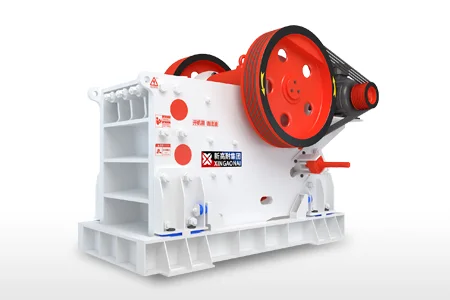
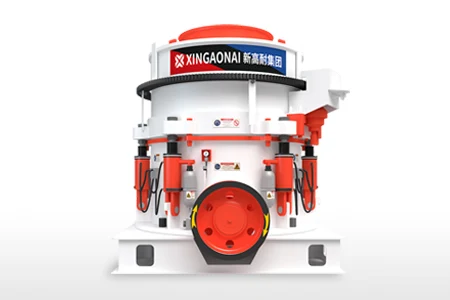
Jaw crushers
Cone crushers
Impact crushers
Vibrating screens
Belt conveyors
The crushing circuit should avoid unnecessary size reduction.
If graphite flakes are already liberated at a relatively coarse size, excessive crushing may damage them and create unnecessary fines.
6. Grinding and Liberation
Grinding is used to liberate graphite particles from the surrounding rock.
However, graphite processing requires careful control of grinding intensity.
A common approach is to use staged grinding rather than attempting to achieve complete liberation in a single grinding stage.
For example:
Primary Grinding → Flotation → Regrinding → Cleaner Flotation
This approach can help preserve larger graphite flakes while gradually improving liberation.
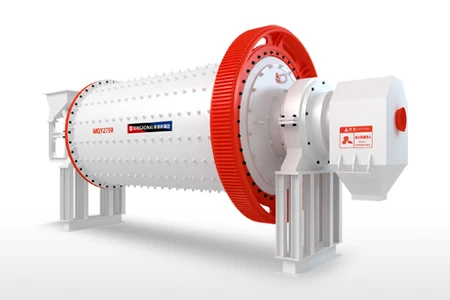
Ball mills and other grinding equipment may be used depending on the ore and plant design.
7. Graphite Flotation
Flotation is one of the most important stages in many graphite processing plants.
Graphite's natural hydrophobicity allows it to attach to air bubbles under suitable flotation conditions.
During flotation:
Ground ore is mixed with water.
Reagents may be added to modify flotation conditions.
Air is introduced into the flotation cells.
Graphite particles attach to bubbles.
Graphite-rich froth rises to the surface.
Gangue minerals remain primarily in the pulp.
The graphite-rich froth is collected and sent to subsequent cleaning stages.
The flotation circuit may include rougher, scavenger, and multiple cleaner stages depending on the required concentrate grade and recovery.
8. Graphite Concentrate Cleaning
Rougher flotation usually produces a graphite-rich intermediate product rather than a final commercial concentrate.
Additional cleaning stages can remove remaining gangue minerals and increase carbon content.
A simplified circuit may be:
Rougher Flotation → Regrinding → Cleaner Flotation → Final Graphite Concentrate
The number of cleaning stages depends on the required concentrate specification.
Some applications may require high-purity graphite, while others can use lower-grade material.
9. Why Flake Size Matters
Flake size is one of the key factors affecting natural flake graphite value.
Larger graphite flakes may provide desirable properties for certain applications, while smaller flakes are suitable for other markets.
Grinding therefore needs to achieve a balance between:
Liberation
Recovery
Concentrate grade
Flake preservation
A process that produces a very high-grade concentrate but destroys too much of the valuable coarse flake fraction may not provide the best economic result.
This is why graphite processing should be designed around both grade and flake-size distribution.
10. Graphite Concentrate Dewatering
After flotation and cleaning, the graphite concentrate normally contains a significant amount of water.
Dewatering equipment can reduce moisture before concentrate storage, transportation, or drying.
Possible equipment includes:
Thickener
Filter press
Vacuum filter
Concentrate storage tank
A thickener can increase the solids concentration before filtration, while a filter press can produce a relatively dry filter cake.
11. Graphite Concentrate Drying
Depending on the final product requirements, the concentrate may need additional drying.
Drying reduces residual moisture and can improve the handling and transportation characteristics of the concentrate.
Rotary dryers and other industrial drying systems can be considered depending on production capacity and moisture requirements.
Temperature control is important because graphite processing should maintain the desired product characteristics throughout the drying stage.
12. Graphite Purification
Flotation can produce a commercial graphite concentrate, but some applications require much higher purity.
Additional purification may therefore be required.
Possible approaches include:
Chemical purification
Thermal purification
Additional physical separation
Combined purification processes
The appropriate method depends on the target carbon content and the nature of the impurities.
For battery-grade graphite, purification and downstream processing requirements can be significantly more demanding than those for conventional industrial graphite products.
13. Graphite Processing Equipment
A graphite processing plant may contain different equipment at each stage.
| Processing Stage | Typical Equipment |
|---|---|
| Crushing | Jaw crusher, cone crusher, screen |
| Grinding | Ball mill or other grinding equipment |
| Classification | Hydrocyclone, screen |
| Flotation | Flotation machine |
| Concentrate cleaning | Regrinding mill, cleaner flotation cells |
| Thickening | Concentrate thickener |
| Filtration | Filter press or vacuum filter |
| Drying | Rotary dryer or other dryer |
| Material handling | Pump, conveyor, storage equipment |
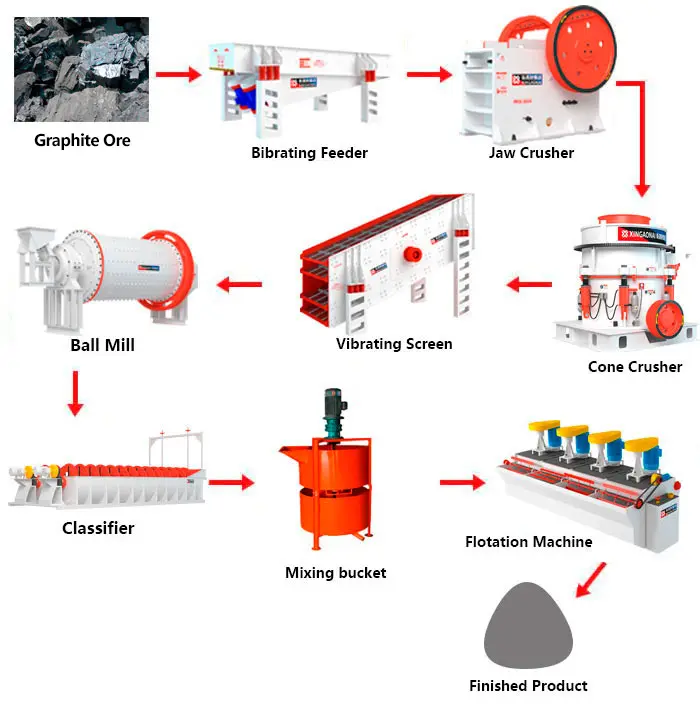
The equipment list should be determined after mineralogical and metallurgical testing rather than copied from another graphite project.
14. Factors Affecting Graphite Recovery
Graphite recovery depends on several factors.
Ore Grade
Higher head grade does not automatically guarantee high recovery. The distribution and liberation of graphite are also important.
Liberation Size
If graphite remains locked with gangue minerals, additional grinding may be required.
Flake Size
Large flakes can be valuable, so the process should minimize unnecessary breakage.
Flotation Conditions
Reagent dosage, pulp density, air flow, flotation time, and water chemistry can affect flotation performance.
Slime Content
Excessive slimes may interfere with flotation and reduce separation efficiency.
Regrinding
Regrinding can improve liberation but may also reduce flake size. The number and intensity of regrinding stages should therefore be carefully controlled.
15. How to Design a Graphite Processing Plant
A practical graphite processing plant design can follow several steps.
Step 1: Conduct Ore Characterization
Analyze graphite grade, mineralogy, flake size, impurities, and liberation characteristics.
Step 2: Perform Crushing and Grinding Tests
Determine the appropriate size reduction strategy while minimizing flake damage.
Step 3: Conduct Flotation Tests
Evaluate reagent schemes, flotation conditions, concentrate grade, and recovery.
Step 4: Test Regrinding and Cleaning
Determine how many cleaner and regrinding stages are required to achieve the target concentrate quality.
Step 5: Evaluate Dewatering
Test thickening and filtration performance to determine the appropriate concentrate dewatering system.
Step 6: Establish the Complete Flowsheet
Integrate crushing, grinding, flotation, cleaning, dewatering, drying, and any required purification stages.
Step 7: Conduct Economic Evaluation
Compare capital investment, operating costs, recovery, concentrate quality, and potential product value.
16. Common Challenges in Graphite Processing
Graphite processing presents several challenges that need to be considered during plant design.
Flake Damage
Excessive crushing and grinding can reduce graphite particle size and affect product value.
Difficult Liberation
Some graphite ores require multiple grinding and flotation stages to achieve acceptable liberation.
Impurity Removal
Quartz, mica, sulfides, and other minerals can reduce concentrate purity.
Fine Graphite Losses
Very fine graphite particles may be difficult to recover efficiently during flotation.
Variable Ore Characteristics
Changes in ore mineralogy and grade can affect flotation performance and concentrate quality.
A robust process should therefore allow reasonable operating flexibility.
17. Applications of Processed Graphite
Processed graphite is used across a wide range of industries.
Important applications include:
Lithium-ion battery materials
Refractory products
Foundry materials
Lubricants
Conductive materials
Crucibles
Electronics
Steelmaking
Thermal management
The required graphite specification varies significantly between applications.
For example, battery applications require stringent control of purity, particle characteristics, and product consistency, while some traditional industrial applications can accept different specifications.
Conclusion
Graphite mining and processing involve more than simply extracting graphite-bearing ore and upgrading its carbon content. The deposit's mineralogy, graphite liberation, flake size, impurity distribution, and final product requirements all influence the process design.
A typical natural graphite flowsheet may include crushing, controlled grinding, flotation, regrinding, cleaning, dewatering, and drying. Additional purification may be required when high-purity or specialized graphite products are targeted.
One of the most important considerations in graphite processing is preserving valuable flake size while achieving sufficient liberation. Excessive size reduction can increase fine graphite production and potentially reduce product value.
For this reason, laboratory and pilot-scale testing should be conducted before selecting equipment and finalizing the plant flowsheet. A properly designed graphite processing plant should balance recovery, concentrate quality, flake preservation, operating cost, and the requirements of the intended market