Granite is one of the hardest and most widely used rocks in mining and construction. Whether you are building a quarry, a road, or a concrete plant, granite is often the material of choice. But its hardness comes with a price: it is tough on crushing equipment. Understanding granite compressive strength is essential for selecting the right crusher, controlling wear costs, and achieving efficient production. This article explains what compressive strength means, gives typical values for granite, and shows how to match the right crusher type to the material.
What Is Compressive Strength?
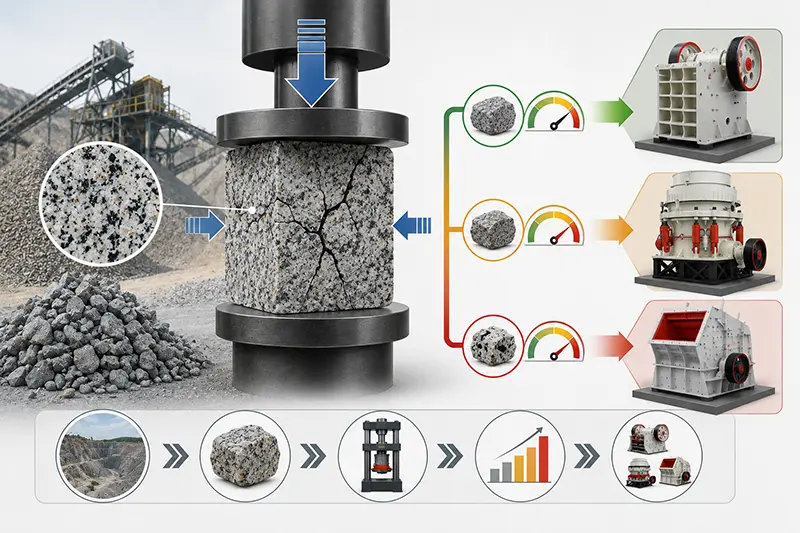
Compressive strength is the maximum force a material can withstand before it fails under pressure. For rocks, it is measured in megapascals (MPa). The higher the number, the harder the rock. In simple terms, compressive strength tells you how much squeezing a rock can take before it breaks.
For crushing equipment, compressive strength directly affects:
Crusher type selection – Some crushers are built for hard rock; others work best on soft rock.
Wear part life – Harder rocks wear out jaw plates, blow bars, and liners faster.
Energy consumption – More force is needed to break hard rock, which increases power use.
Throughput capacity – Hard rock takes longer to crush, reducing tons per hour.
Typical Granite Compressive Strength Values
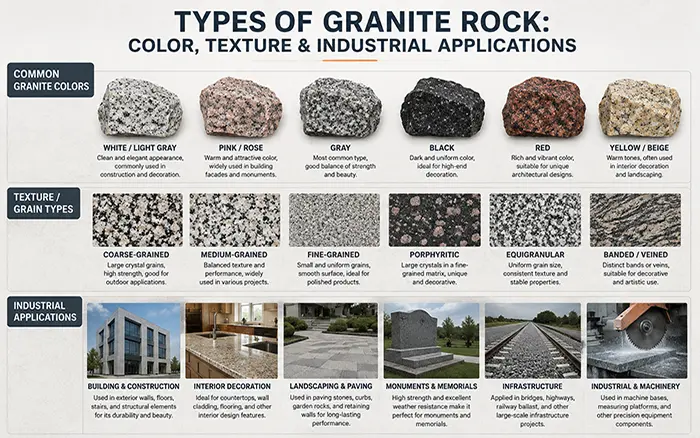
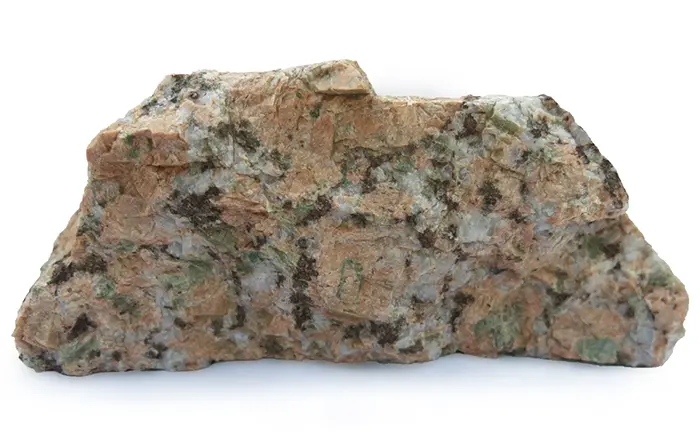
Granite is not uniform. Its compressive strength can vary based on mineral composition, grain size, and degree of weathering. Fresh, unweathered granite is one of the strongest common rocks.
Here are typical values from multiple sources:
| Source / Granite Type | Compressive Strength (MPa) |
|---|---|
| Engineering Toolbox (typical range) | 130 |
| Matmake (typical range) | 96 – 310 |
| Mining industry sources | 100 – 300 |
| Fine-grained granite | up to >300 |
| MatWeb (general granite) | 100 – 275 |
| Demote area, Nigeria (Fulkin granite) | 63 |
| Demote area, Nigeria (Bargain granite) | 66 |
| Demote area, Nigeria (Shing granite) | 53 |
| Selected Nigerian granites | 52.5 – 172.5 |
| Selected Nigerian granites | 123 – 175 |
| Another Nigerian study | 110.65 – 173.76 |
| Laboratory samples | 104.8 – 200.9 |
| Dry condition (black granite, Saudi Arabia) | 173 |
| Dry condition (grey granite, Saudi Arabia) | 137 |
| Black granite (Saudi Arabia) | 173 |
| Grey granite (Saudi Arabia) | 137 |
| Engineering Edge (general granite) | 100 – 275 |
| Granite (general) | 220 |
| Granite (general) | 100 – 250 |
Most fresh granite falls in the range of 100 to 250 MPa, though some fine-grained varieties exceed 300 MPa. Weathered or decomposed granite can be much weaker, sometimes below 100 MPa.
For practical crushing applications, granite is generally considered a hard rock with compressive strength well above 150 MPa. This high strength is what makes it challenging to crush and why crusher selection matters so much.
Why Compressive Strength Matters for Crusher Selection
When you are choosing a crusher for granite, the compressive strength tells you how the rock will behave under pressure.
Hard rock (above 150 MPa) – Granite falls into this category. It resists compression and requires high crushing forces. Using the wrong crusher leads to:
Premature wear of blow bars or hammers.
Lower throughput as the machine struggles to break the rock.
Higher energy costs per ton.
Increased risk of mechanical failure.
Soft rock (below 100 MPa) – Rocks like limestone are much easier to crush. They allow the use of impact crushers with lower wear rates.
Because granite is hard and often abrasive, it demands crushers that use compression rather than impact. Compression crushers apply a squeezing force that gradually breaks the rock along its natural grain boundaries. Impact crushers rely on high-speed striking, which works well for softer rocks but causes rapid wear on granite.
Best Crusher Types for Granite Based on Compressive Strength
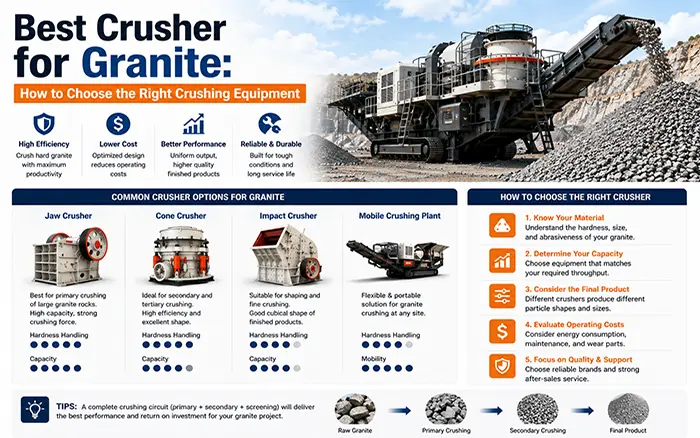
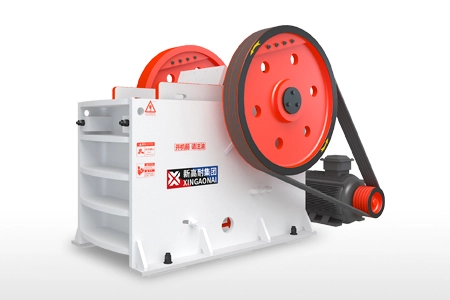
Jaw Crusher (Primary Crushing)
The jaw crusher is the most common primary crusher for granite. It uses compression to break large rocks (up to 1 meter or more) into smaller pieces (100–300 mm). Jaw crushers are built with heavy-duty frames and wear-resistant manganese jaw plates.
Why it works for granite: The compression mechanism is ideal for hard, abrasive rock. Jaw plates are designed to withstand high forces and can be made from high-manganese steel (Mn18Cr2 or higher) for extended life.
Typical application: First stage of crushing in a granite quarry or mine. Output feeds into a secondary crusher like a cone crusher.
Jaw crushers can handle granite with compressive strength up to 320 MPa and are the least capital cost option for primary crushing.
Cone Crusher (Secondary/Tertiary Crushing)
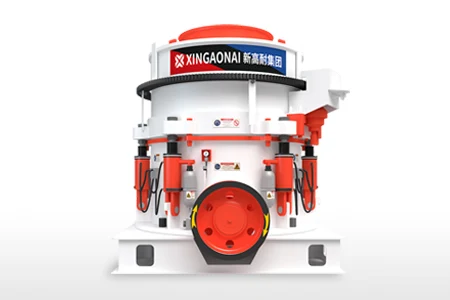
The cone crusher is the standard choice for secondary and tertiary crushing of granite. It also uses compression, with a rotating mantle crushing rock against a stationary concave. The laminating crushing action produces uniform, cubical particles.
Why it works for granite: Cone crushers excel at crushing hard, highly abrasive materials. The lamination principle reduces direct impact and prolongs wear part life. Modern hydraulic cone crushers can handle compressive strengths up to 300–350 MPa.
Typical application: Second or third stage after a jaw crusher, producing final aggregate sizes from 5–40 mm.
The industry standard for a hard rock crushing plant is a jaw crusher plus cone crusher combination. This setup delivers the best durability and long-term performance for granite.
Impact Crusher – Not Recommended for Hard Granite
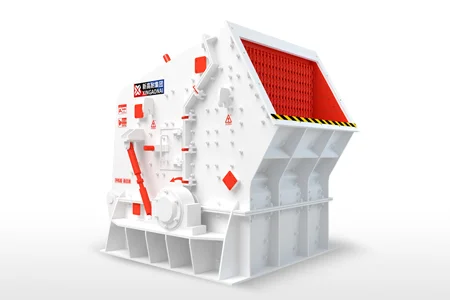
While some impact crusher specifications claim they can crush granite with compressive strength up to 350 MPa, this is not advisable for most operations. Impact crushers use blow bars that strike the rock at high speed.
Why it is not recommended: For hard, abrasive granite, the blow bars wear out very quickly. Replacement costs become unacceptably high. The blow bars may need replacement after only a few hundred hours of crushing granite.
When it might work: If the granite is unusually soft (weathered) or if you are only crushing small volumes, an impact crusher could be considered. But for regular production, a cone crusher is almost always the better choice.
The Jaw + Cone Combination: The Industry Standard for Granite
For most granite crushing operations, the most effective setup is:
Primary crushing – Jaw crusher reduces run-of-quarry rock to 100–300 mm.
Secondary crushing – Cone crusher further reduces material to 20–60 mm.
Optional tertiary crushing – Another cone crusher or vertical shaft impactor for finer products.
This combination uses compression at both stages, maximizing wear part life and energy efficiency. The jaw crusher handles the large feed size, while the cone crusher excels at producing a consistent, cubical product.
Single-stage impact crushing may look simpler on paper, but for hard and abrasive granite, it usually results in high liner consumption and unstable long-term performance.
How to Extend Crusher Life When Processing High-Strength Granite
Even with the right crusher type, high compressive strength granite will wear down components. Here are practical ways to reduce wear and operating costs.
Choose the right wear part material. For jaw crushers, use high-manganese steel with added chromium (Mn18Cr2) or high-chromium white iron for the hardest applications. These materials offer 2–3 times better wear resistance than standard manganese.
Control the feed size. Oversize rocks cause impact damage and uneven wear. Pre-screen the feed to remove material larger than the crusher’s rated maximum.
Maintain a consistent choke feed. Running the crusher at full capacity with a steady feed reduces wear compared to intermittent operation.
Monitor the closed side setting (CSS). As wear parts erode, the CSS increases, producing coarser product and reducing efficiency. Adjust it back to specification regularly.
Use a metal detector and tramp iron magnet. Steel in the feed can damage crusher components. Install a magnet before the crusher to remove tramp iron.
Common Mistakes When Selecting a Crusher for Granite
Many engineers select machines based only on compressive strength data. But crushing granite involves more than just strength. Here are common pitfalls.
Choosing an impact crusher for hard granite. The blow bars will wear out rapidly, and downtime for replacement becomes a major cost.
Overlooking abrasiveness. Granite is not just hard; it is often abrasive. Abrasiveness accelerates wear even more than hardness alone. For highly abrasive granite, a cone crusher with high-chromium liners is the best choice.
Underestimating power requirements. Hard rock requires more energy per ton. Ensure the motor and drive system are sized correctly for the expected throughput.
Ignoring moisture content. Wet, sticky granite can clog crushers, especially cone crushers with fine settings. Consider a vibrating grizzly feeder to remove fines before the crusher.
Summary: Matching Crusher Type to Granite Compressive Strength
| Crusher Type | Suitable for Granite? | Best Application | Why |
|---|---|---|---|
| Jaw crusher | Yes (primary) | First stage crushing | Compression mechanism ideal for hard rock; handles large feed sizes |
| Cone crusher | Yes (secondary/tertiary) | Second and third stages | Laminating compression; long wear life; produces cubical product |
| Impact crusher | Not recommended | Soft to medium-hard rock only | Blow bars wear too quickly on abrasive granite |
| Jaw + Cone combination | Yes (full plant) | Complete granite crushing line | Industry standard for hard rock; maximizes efficiency and wear part life |
Conclusion
Granite compressive strength typically ranges from 100 to 310 MPa, making it one of the hardest and most abrasive rocks in common use. This high strength directly influences crusher selection. For primary crushing, a jaw crusher is the reliable choice. For secondary and tertiary crushing, a cone crusher delivers the best combination of efficiency and wear life. The jaw + cone combination is the industry standard for granite processing. Avoid impact crushers for hard granite unless you are prepared for frequent blow bar replacements. By matching the crusher type to the material’s compressive strength, you can reduce operating costs, extend equipment life, and achieve consistent production.