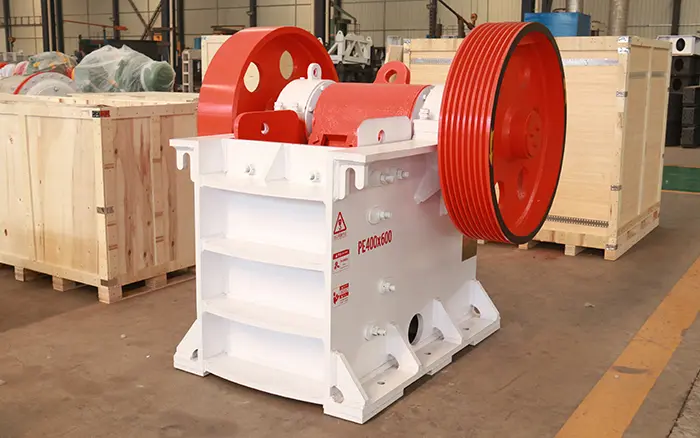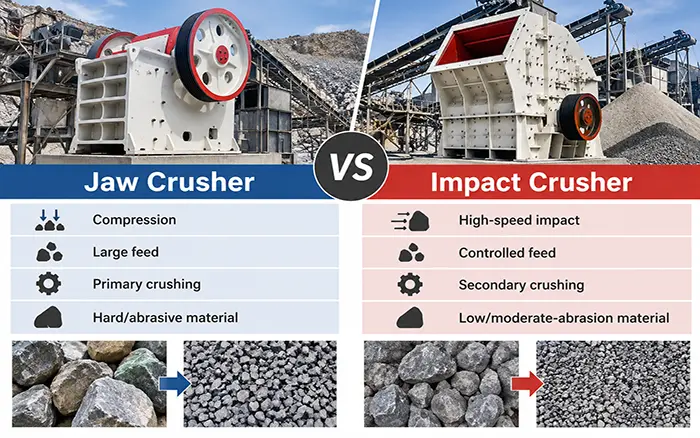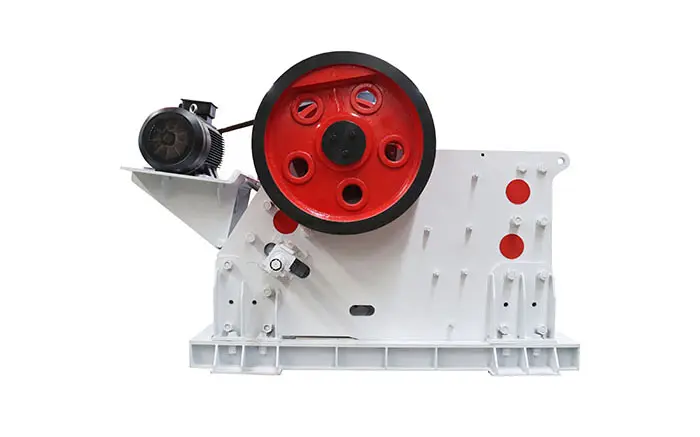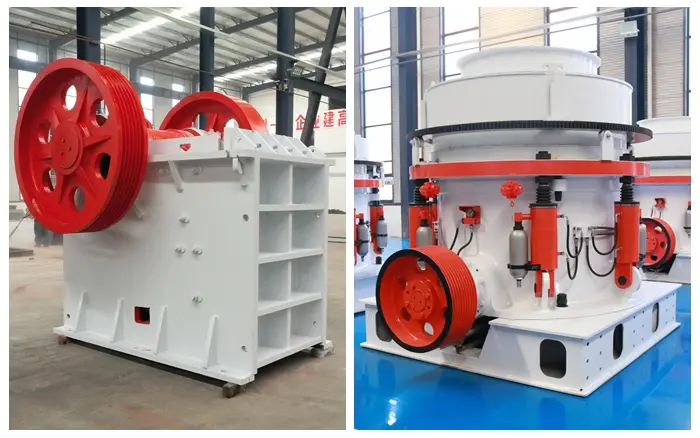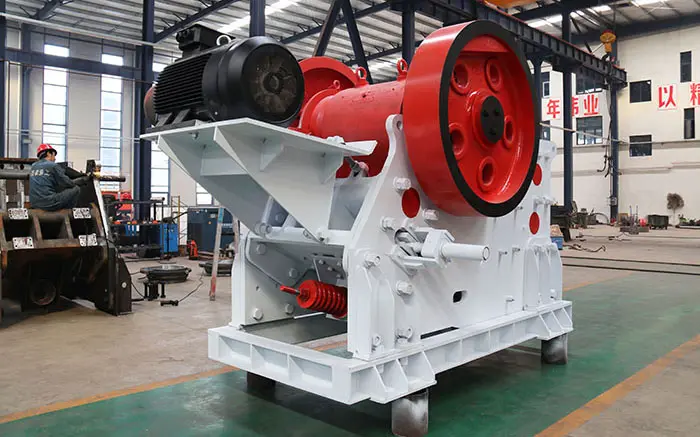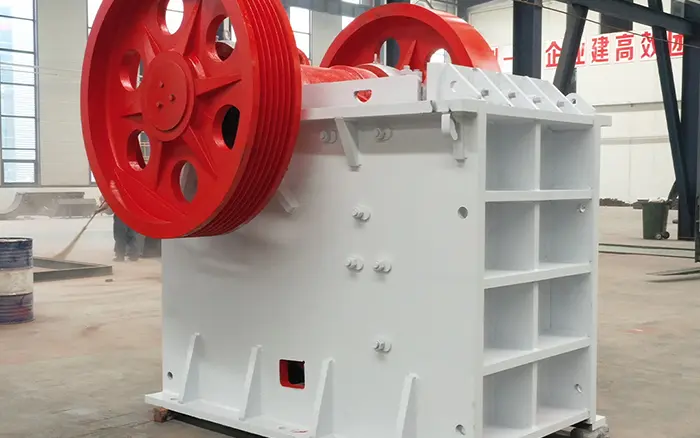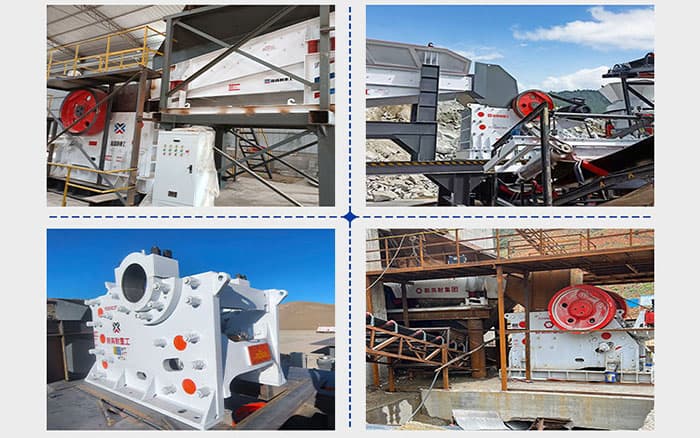
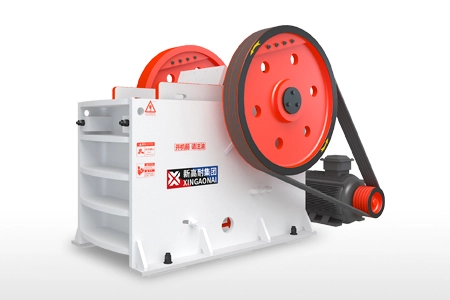
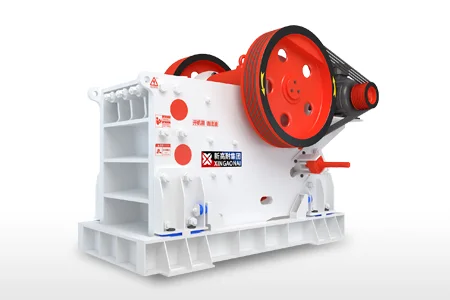
A jaw crusher is a machine that breaks rocks by squeezing them between two metal plates. These plates are called jaw crusher liners. They are the parts that actually touch the rock. Without liners, the crusher body would wear out very fast. Liners take all the wear and tear. So knowing about jaw crusher liners is important for every quarry or mining worker. This article explains what jaw crusher liners are, what materials they are made of, how to choose the right one, and how to make them last longer.
What Is a Jaw Crusher Liner?
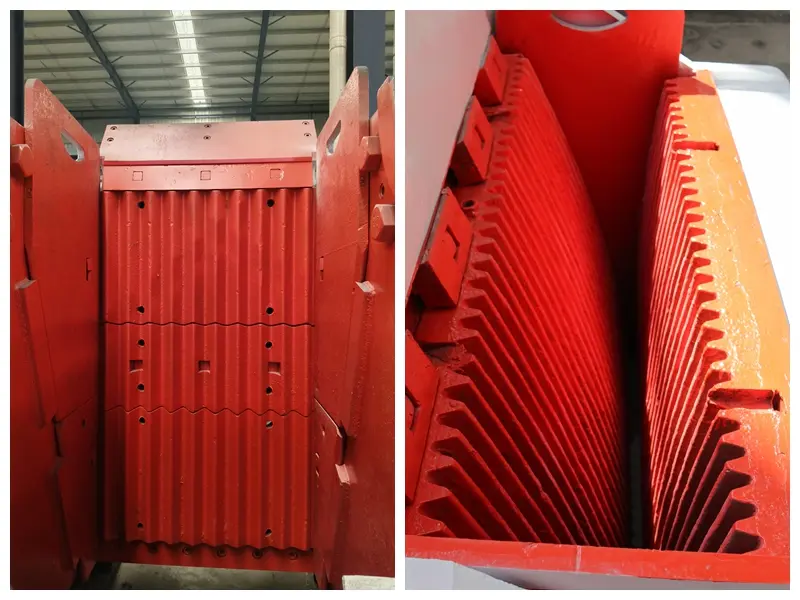
A jaw crusher liner is a replaceable wear part that covers the fixed jaw and the moving jaw inside a jaw crusher. The fixed jaw liner is attached to the crusher frame. The moving jaw liner is attached to the moving jaw plate. When the moving jaw pushes against the fixed jaw, the rock gets crushed between the two liners.
The jaw crusher liner does two jobs:
It protects the crusher body from wear.
It provides the right shape and movement to crush rocks efficiently.
Without a good jaw crusher liner, your crusher will not work well, and you will spend a lot of money on repairs.
Common Materials for Jaw Crusher Liners
The material of a jaw crusher liner is very important. It must be hard enough to crush rock but also tough enough not to crack. The most common materials are:
1. High Manganese Steel (Mn14%, Mn18%, Mn22%)
This is the most popular material for jaw crusher liners. High manganese steel becomes harder under impact. When rocks hit the liner, the surface gets harder while the inside stays tough. Manganese steel liners work well for crushing hard and abrasive rocks like granite and basalt.
2. Chrome Iron (High Chromium White Iron)
Chrome iron is very hard and resists wear well. But it is more brittle than manganese steel. It can crack if the crusher gets large pieces of very hard rock. Chrome iron jaw crusher liners are good for softer rocks where wear is the main problem.
3. Composite Liners (Manganese + Chrome)
Some jaw crusher liners combine manganese steel and chrome iron. The main body is manganese for toughness, and the surface has chrome for wear resistance. These are more expensive but last longer in very abrasive conditions.
Types of Jaw Crusher Liners by Tooth Pattern
The surface of a jaw crusher liner is not flat. It has ridges or teeth. The pattern of these teeth affects how the crusher works.
1. Wide Teeth (WT)
Profile: Broad, flat tooth design with wider spacing and increased surface area
Key Features: Exceptional wear resistance, reduced stress concentration, balanced power consumption
Ideal For: Feeds with high fines content (clay-rich materials, weathered stone, recycled concrete/asphalt), abrasive materials, primary/secondary crushing stages
Advantages: Maximizes liner lifespan, minimizes chipping/cracking, maintains consistent particle shape
Disadvantages: Less aggressive grip on slippery/flaky materials
2. Sharp Teeth (ST)
Profile: Aggressive, pointed tooth profile with moderate spacing
Key Features: Superior gripping action, prevents material slippage, optimized bite force
Ideal For: Flaky, angular, or slippery materials (rounded river rocks, limestone), materials that tend to slide in the crushing chamber
Advantages: Boosts throughput, reduces recirculation, improves material reduction efficiency
Disadvantages: Higher wear rate, increased power requirements, potential for more slabby product
3. Corrugated (C)
Profile: Grooved surface with smaller, closely spaced teeth
Key Features: Designed for smaller close-side settings (CSS), enhanced fines removal, balanced crushing action
Ideal For: Less abrasive materials (gravel, shot rock), secondary/tertiary crushing, portable crushing applications
Advantages: Maintains high capacity at tight settings, improves product gradation, good wear balance between fixed and movable jaws
Disadvantages: Less effective on highly abrasive or very hard materials
4. Coarse Corrugated (CC)
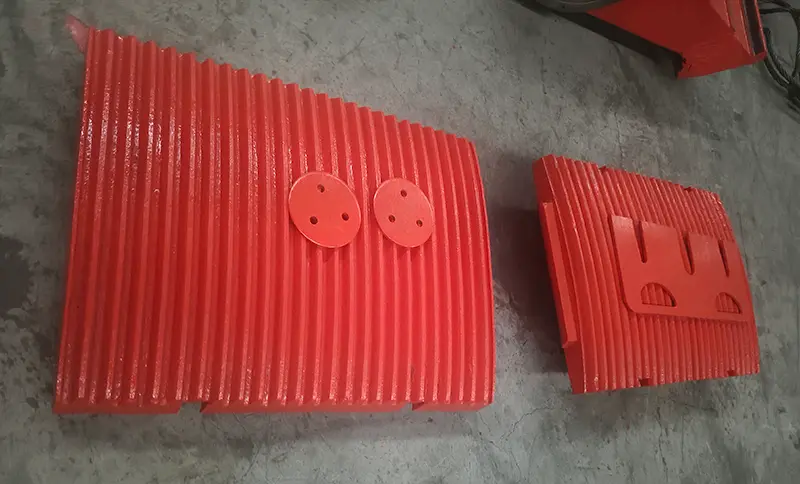
Profile: Larger, deeper grooves than standard corrugated pattern
Key Features: Increased material flow, better capacity for larger feed sizes, enhanced particle shaping
Ideal For: Primary crushing of medium-hard rocks, materials with moderate fines content, quarry applications
Advantages: Balances grip and wear resistance, reduces power consumption, improves throughput
5. Wide Wave (WW)
Profile: Wavy surface with alternating peaks and valleys
Key Features: "Wave peak crushing + wave valley discharge" mechanism, combines benefits of sharp and flat teeth
Ideal For: Slabby, less abrasive materials, materials with variable feed sizes, applications requiring uniform product shape
Advantages: Prevents material bridging, improves particle shape, reduces slabby product, balanced wear life
6. Heavy Duty (HD) / Heavy Duty Ultra-Thick (UT)
Profile: Extra-thick construction with robust tooth design, massive structure
Key Features: Distributes crushing loads across larger surface area, extreme impact resistance, extended wear life
Ideal For: High-impact applications, large boulder crushing, hard/abrasive rocks (granite, basalt), heavy mining operations
Advantages: Withstands severe conditions, minimizes downtime, reduces replacement frequency
Disadvantages: Higher initial cost, increased weight, may require higher power consumption
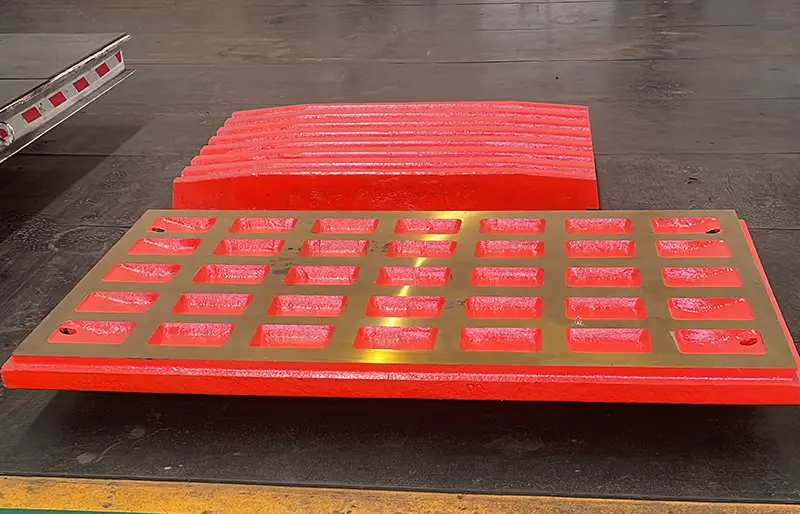
7. Flat/Smooth Jaw Plates
Profile: Minimal or no tooth pattern, flat surface
Key Features: Focuses on compression rather than gripping, consistent particle shape production
Ideal For: Soft, non-abrasive materials (limestone, coal, clay), applications requiring minimal particle degradation
Advantages: Low wear rate, reduced power requirements, uniform product size
Disadvantages: Poor grip on hard or slippery materials, limited to specific applications
| Material Type | Recommended Tooth Pattern | Key Considerations |
|---|---|---|
| Hard, abrasive rocks (granite, basalt) | HD/UT, Wide Teeth | Prioritize wear resistance, impact absorption |
| Flaky, slippery materials | Sharp Teeth, Wide Wave | Focus on grip, prevent slippage |
| High fines content (clay, weathered stone) | Wide Teeth, Corrugated | Optimize fines removal, reduce wear |
| Slabby materials | Wide Wave, Slab Breaker | Improve particle shaping, prevent bridging |
| Soft, non-abrasive materials | Flat/Smooth, Corrugated | Minimize power consumption, maintain product shape |
| Primary crushing (large feed) | Coarse Corrugated, HD | Maximize capacity, handle large boulders |
| Secondary/tertiary (small CSS) | Corrugated, Sharp Teeth | Improve reduction ratio, product gradation |
How to Choose the Right Jaw Crusher Liner
Choosing the right jaw crusher liner saves you money. Here are the factors to consider.
Rock Hardness
For very hard rocks (like granite, basalt, iron ore), use high manganese steel liners with a corrugated pattern. For soft rocks (like limestone, gypsum), you can use chrome iron or smoother patterns.
Feed Size
Large feed sizes (over 300 mm) need aggressive tooth patterns to grab the rock. Small feed sizes work well with smoother liners.
Desired Product Size
If you want fine output, choose a liner with a narrower gap at the bottom and a smoother surface. If you want coarse output, a corrugated liner with a wider bottom gap is better.
Cost and Life
High manganese liners are cheaper but wear faster on very soft rocks. Chrome iron costs more but lasts longer on abrasive materials. Compare the cost per ton crushed, not just the price of the liner.
Signs That Your Jaw Crusher Liner Needs Replacement
A worn jaw crusher liner will hurt your production. Look for these signs.
Uneven wear: One side of the liner is much thinner than the other. This means the crusher is feeding unevenly.
Worn teeth: The ridges on the liner are flat or missing. Then the crusher cannot grip the rock well.
Cracks or breaks: Visible cracks mean the liner could fall apart soon.
Lower production: Your crusher is taking longer to process the same amount of rock.
Wider product size: The crushed rock has more large pieces than before.
Most operators change their jaw crusher liners when the thinnest point is about 20% of the original thickness. Some wait until 10%, but that risks damaging the crusher body.
How to Extend the Life of Your Jaw Crusher Liner
You can make your jaw crusher liner last longer with simple steps.
1. Feed evenly across the crusher. Do not dump all rock on one side. Use a vibrating feeder to spread the material evenly. Uneven feeding causes one liner to wear faster than the other.
2. Turn the liners around. Many jaw crusher liners are reversible. When one side wears, you can flip the liner to use the other side. This doubles the liner life.
3. Adjust the discharge gap regularly. As liners wear, the gap at the bottom gets bigger. Adjust it back to the right setting. A gap that is too large lets larger rocks pass, and you lose product quality.
4. Use the right manganese grade. For hard rock, use Mn18% or Mn22%. For soft rock, Mn14% is enough. Using a higher grade than needed costs more but does not last longer on soft rock.
5. Avoid overfeeding. Too much rock at once can overload the crusher and crack the liners. Keep the feed steady and within the crusher's capacity.
How to Replace a Jaw Crusher Liner
Replacing a jaw crusher liner is a heavy job. It takes a few hours or a full day. Here are the basic steps.
Shut down the crusher and lock out the power.
Remove the old liners. You may need a torch to cut the bolts.
Clean the mounting surface on the crusher frame.
Check the frame for cracks or damage.
Install the new jaw crusher liner. Tighten all bolts to the correct torque.
Check alignment. The liners must be parallel.
Close the crusher and test without feed first.
Run with light feed for the first hour to let the liners settle.
Always follow the crusher manufacturer's manual. Use new bolts and lock washers every time.
Common Mistakes to Avoid
Mixing different liner patterns on the fixed and moving jaw. Use matching sets.
Reusing old bolts. They may have stretched and will not hold properly.
Not torquing bolts evenly. Loose bolts let the liner move and crack.
Running the crusher with a broken liner. Small cracks grow fast, and pieces of the liner can fall into the product.
Conclusion
The jaw crusher liner is a simple but very important part of your crusher. It protects the machine and does the actual crushing. By choosing the right material (manganese for hard rock, chrome iron for abrasive soft rock) and the right tooth pattern, you can improve production and reduce costs. Regular inspection, even feeding, and timely replacement will make your jaw crusher liners last longer and keep your crusher running smoothly.