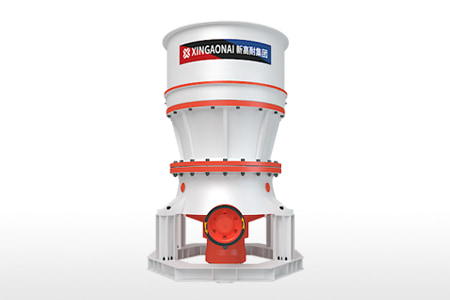
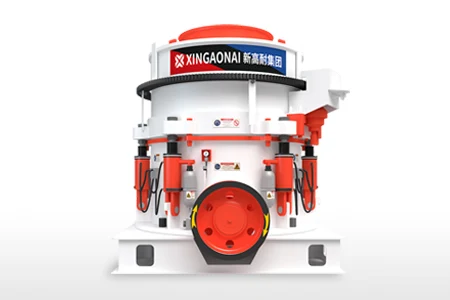
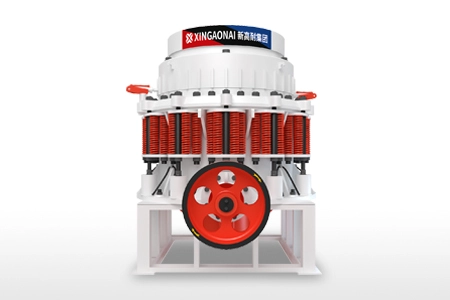
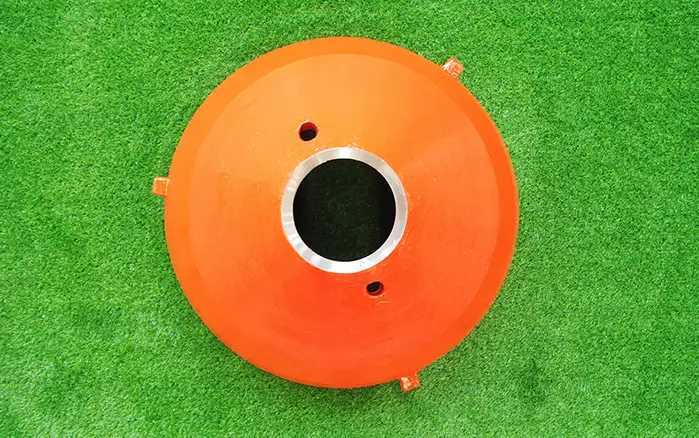
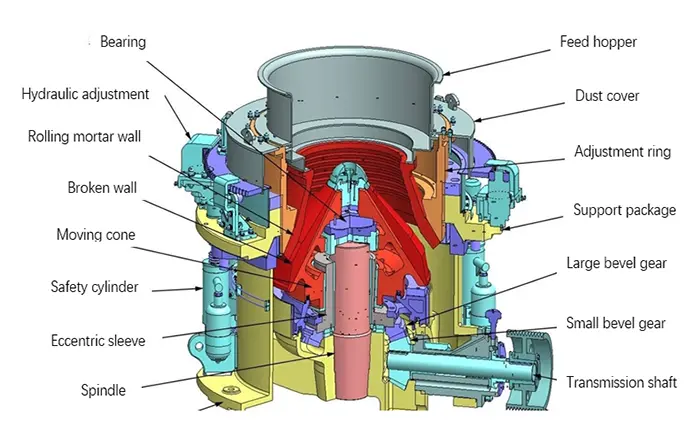
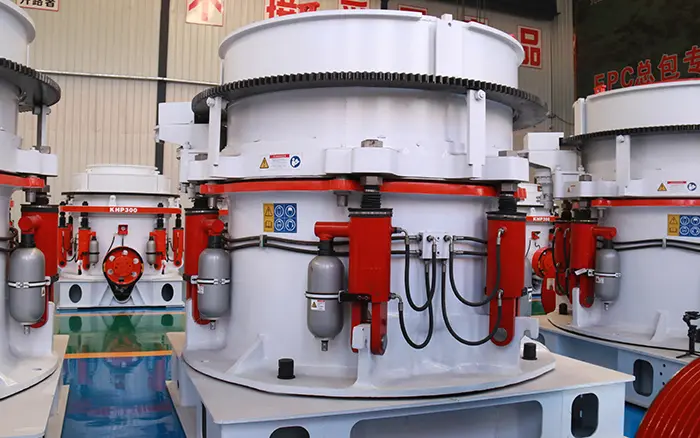
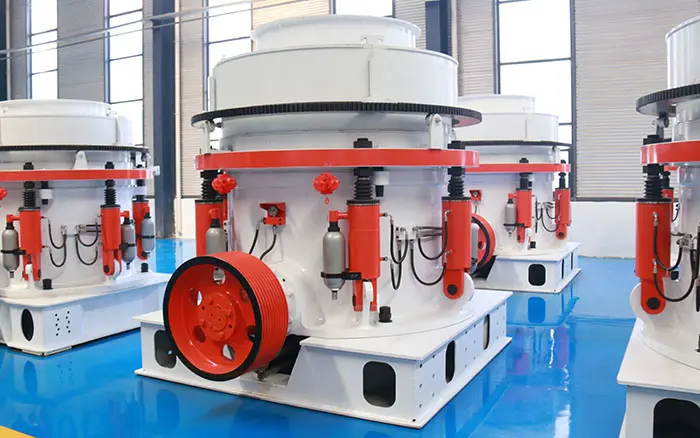
The fixed cone and moving cone are the two primary wear components of the cone crusher. They form the crushing chamber surfaces that make direct contact with the feed material during operation and are manufactured from high-manganese steel — a material that, while exceptionally wear-resistant under the impact and compression loads of crushing service, is susceptible to surface oxidation and rust formation when exposed to atmospheric moisture during storage, transportation, or periods of planned or unplanned machine downtime.
Rust formation on the cone surfaces is not merely a cosmetic concern. Surface oxidation that progresses unchecked can compromise the dimensional accuracy of the cone contact surfaces, create localized stress concentrations that accelerate fatigue cracking under crushing loads, interfere with the correct seating of the liner on its backing material, and make future liner removal significantly more difficult by causing the liner to bond to the head or bowl through corrosion products. All of these consequences are preventable through the regular and correct application of anti-rust oil — precisely the procedure shown in this video.
Why the Fixed Cone and Moving Cone Require Special Protection
The fixed cone — also referred to as the concave or bowl liner — and the moving cone — also called the mantle — are the replaceable wear liners that define the geometry of the crushing chamber. They are cast from high-manganese steel alloys with manganese content typically ranging from 14% to 22%, a material selected for its outstanding work-hardening behavior under impact loading and its combination of high surface hardness in service with good core toughness.
High-manganese steel is, however, an iron-based alloy that oxidizes readily in the presence of moisture and oxygen. Unlike stainless steel, it does not form a passive oxide layer that protects the underlying metal from further corrosion — instead, surface rust on high-manganese steel components can continue to develop and penetrate the surface if left untreated. In humid climates, in coastal environments, or in operations where equipment is stored outdoors between campaigns, unprotected cone liners can develop significant surface rust in a matter of weeks.
The consequences of rust formation on cone liner surfaces extend beyond the liners themselves. If rust develops on the interface between the mantle and the head center — the steel casting on which the mantle is seated — it can cause the two components to seize together, making liner removal at the end of the liner's service life an extremely difficult and potentially damaging operation. Similarly, rust on the concave seating surface in the bowl can interfere with the correct bedding of the liner backing compound, compromising the even load distribution between liner and bowl that is essential for liner retention and crusher frame protection.