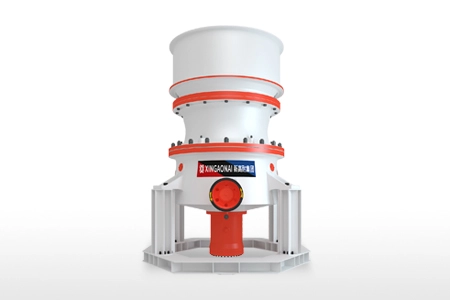
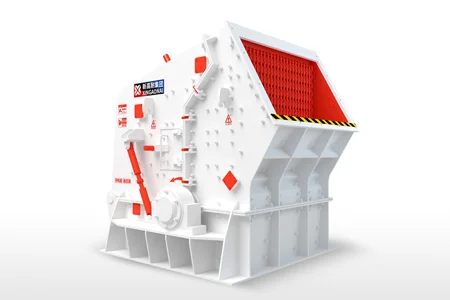
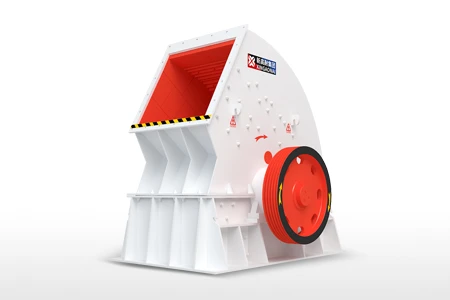
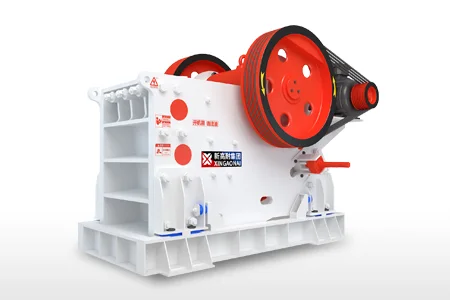
For many small hard-rock mines, a suitably sized jaw crusher is a practical starting point for primary crushing. A secondary cone crusher may be needed when abrasive ore requires further reduction. Impact or hammer crushing may be considered for suitable low-abrasion, brittle materials.
However, the correct solution depends on what happens after crushing. A mine supplying a grinding circuit has different requirements from a quarry selling several aggregate sizes. An alluvial operation processing loose material may need washing and classification rather than a crusher.
The aim is to build the simplest circuit that consistently delivers the required material to the next process.
This guide focuses on the operating decisions faced by smaller mines: daily production, limited working hours, ore variability, power availability, maintenance resources and staged investment.
Start with the Material Leaving the Crushing Circuit
Before selecting a crusher, define the required output from the complete circuit.
Ore Going to a Grinding Mill
The crushing circuit must provide feed that suits the mill’s allowable top size and operating requirements.
A jaw crusher may provide sufficient reduction in some installations. Other projects require secondary crushing and screening before the material reaches the mill.
Do not assume that a small mine can eliminate a crushing stage simply because its daily tonnage is low. Required reduction and downstream feed limits still apply.
Ore Going to Sorting or Gravity Separation
Particle size and fines generation may affect separation performance.
For some ores, excessive crushing can create fines that are difficult to recover in the selected process. In other cases, further liberation is necessary.
Define the useful size range through material testing and process design before selecting the crushing arrangement.
Rock Sold as Aggregate
The plant may need several saleable size fractions, a specified particle shape and control of undersize material.
Screens and return conveyors can therefore be as important as the crusher. A machine producing enough total tonnes does not establish that the required proportion of each product will be available.
Loose Alluvial Material
An alluvial deposit may contain sand, gravel, clay and valuable minerals that are already liberated.
In that situation, washing, scrubbing and screening may be evaluated before crushing. A crusher should be added only where a defined oversize fraction or cemented material requires size reduction.
Calculate the Required Operating Rate
“Small-scale” does not establish a universal hourly capacity.
A mine that operates its crusher for a short period each day may require a higher hourly rate than a mine processing the same daily tonnage over two shifts.
Use:
Required average running throughput = Daily feed tonnage ÷ Effective crushing hours
Effective hours account for planned operating time and the realistic proportion of that time available for crushing.
For example:
Daily crushing requirement: 240 tonnes
Scheduled crushing period: 6 hours
Planning assumption for availability during that period: 80%
Effective crushing hours: 6 × 0.80 = 4.8 hours
Required average running throughput: 240 ÷ 4.8 = 50 t/h
The availability figure is an illustrative planning assumption, not a guaranteed equipment value.
A crusher must then be evaluated at the actual material conditions and discharge setting, with appropriate provision for normal feed variations.
Also specify whether the target refers to raw feed, dry solids or saleable product. These quantities may differ.
Compare Three Practical Crushing Arrangements
The following circuits are starting points for engineering review. They are not complete equipment specifications.
| Operating requirement | Circuit to evaluate | Main condition |
|---|---|---|
| Hard ore requiring coarse feed preparation | Controlled feed → jaw crusher → stockpile or next process | Jaw discharge must meet downstream requirements |
| Abrasive hard ore requiring finer feed | Controlled feed → jaw crusher → secondary cone crusher → screen | Check secondary feed size, circulating load and required mill feed |
| Low-abrasion brittle rock requiring graded products | Controlled feed → suitable primary reduction → impact or hammer crushing → screen | Confirm wear potential, fines production and product specifications |
Arrangement 1: Primary Crushing Only
A single jaw-crushing stage may be suitable where the next process can accept its discharge.
Potential benefits include fewer machines, fewer transfer points and a simpler maintenance workload.
The main question is whether the required output can be achieved without forcing the jaw crusher to operate at an unsuitable setting or reduction duty.
If the downstream process needs finer material, removing a secondary stage may transfer the problem to the mill or separation plant.
Arrangement 2: Jaw Crusher and Secondary Cone Crusher
This arrangement is commonly evaluated for hard, abrasive ore requiring further reduction.
The jaw crusher prepares feed for the cone crusher. A screen can remove correctly sized material and return oversize for additional crushing.
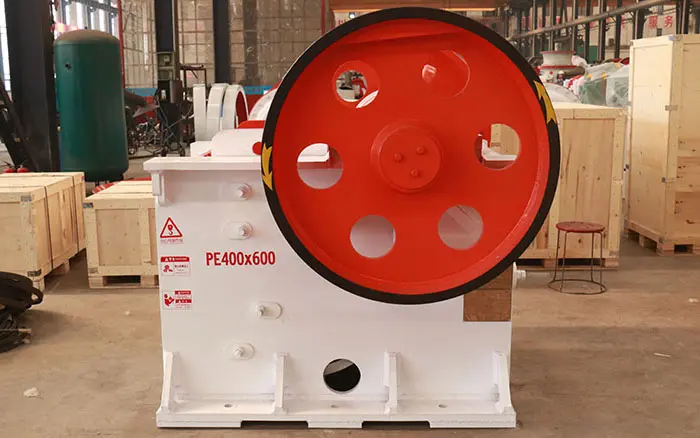
For relevant equipment configurations, see the PEV Series Jaw Crusher and XGP Series Single Cylinder Hydraulic Cone Crusher.
These series cover different duties and capacities. Their inclusion here does not establish suitability for every low-tonnage project.
Arrangement 3: Impact or Hammer Crushing for Suitable Material
Impact crushing may be considered for low-abrasion rock where reduction and aggregate shape are important.
The Impact Crusher product page provides current secondary-crushing configurations.
A Light Hammer Crusher may also be evaluated for appropriate brittle materials, subject to its feed, strength and wear limits.
Quartz-rich ore should not be treated as a default hammer-crusher application. Its abrasiveness can produce substantial wear, and the resulting fines must suit the downstream process.
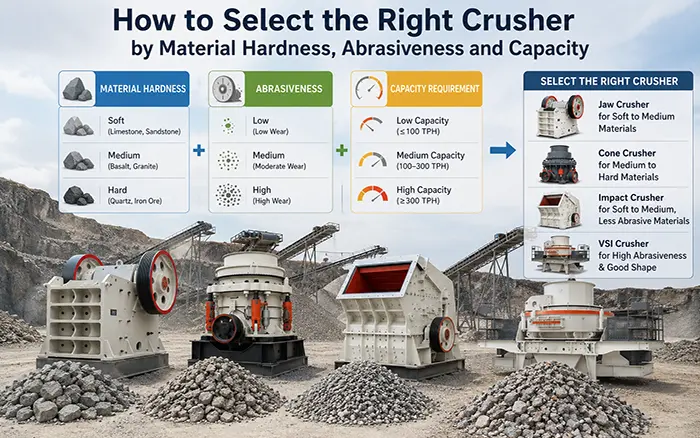
For a broader material comparison, refer to how to select a crusher.
Check the Entire Circuit for Bottlenecks
The plant’s sustainable output is limited by its most restrictive stage.
A feeder, screen, transfer chute or conveyor can restrict production even when the crusher has spare capacity.
Check:
Feed delivery and maximum lump size;
Primary discharge;
Secondary-crusher feed limits;
Screen capacity at the selected apertures;
Conveyor loading;
Chute clearances;
Stockpile access;
Downstream processing capacity.
Include Recirculating Material
In a closed circuit, the crusher and conveyors may handle more material than the fresh-feed rate.
For an illustrative secondary circuit:
Fresh feed entering the circuit: 40 t/h
Oversize returned to the crusher: 20 t/h
Total crusher feed: 60 t/h
Selecting that crusher only for 40 t/h would ignore the return load.
Actual recirculation depends on ore behavior, crusher setting, screen performance and product requirements. It must be estimated for the proposed circuit.
Plan for Variable Ore and Intermittent Feeding
Smaller operations may feed the plant directly from a loader or excavator. This can create alternating surges and periods without material.
Practical measures may include:
A suitable receiving hopper;
Controlled feeding;
Oversize management;
A buffer stockpile;
Separation of materially different ore types;
Feed sampling and operating records.
A stockpile can allow crushing and downstream processing to operate on different schedules. Its size and arrangement should consider handling equipment, segregation, drainage and the risk of contamination.
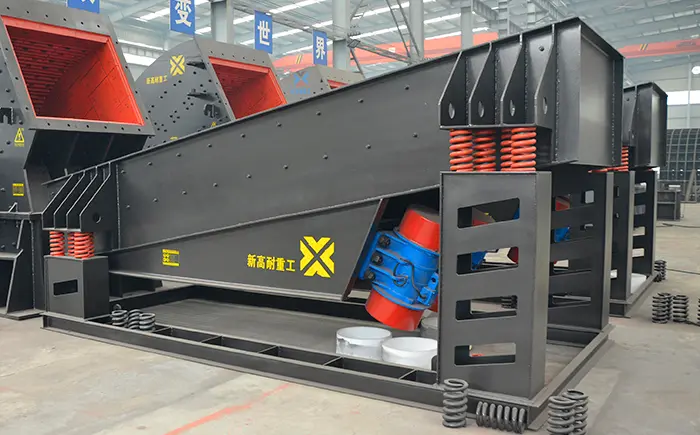
For hopper loading and feed delivery, see the mining vibrating feeder selection guide.
Choose Fixed, Skid-Mounted or Mobile Equipment from the Site Plan
A small mine does not automatically require a mobile crusher.
| Installation approach | Conditions to evaluate | Main planning questions |
|---|---|---|
| Fixed plant | Stable processing location and longer operating horizon | Foundations, access, transfer points and future expansion |
| Skid-mounted arrangement | Modular installation or occasional relocation | Module weights, lifting, transport and site connections |
| Mobile plant | Repeated relocation or changing feed locations | Access, transport, power or fuel supply and maintenance support |
Mobile equipment may reduce some relocation work, but its purchase price, transport arrangements and service requirements still need assessment.
A fixed plant can be appropriate where the crushing location remains unchanged and material can be delivered economically.
Compare the complete installation and relocation workload rather than assuming one format always costs less.
Review Power and Maintenance Resources Early
Electrical supply can constrain the equipment configuration.
Confirm:
Supply voltage and frequency;
Available running power;
Starting requirements;
Transformer or generator capability;
Motor-starting sequence;
Cable distances;
Site altitude and ambient conditions.
A generator should not be selected from the sum of motor running powers alone. Starting demand and the behavior of connected loads require an electrical review.
Maintenance capacity also affects plant availability.
Before ordering, check whether the site can provide:
Safe access to wear parts;
Suitable lifting equipment;
Lubrication and inspection;
Electrical fault diagnosis;
Replacement-part storage;
Planned shutdown time;
Trained operating personnel.
A compact layout that blocks liner replacement or motor access can create avoidable downtime.
Match Crushing to Recovery Requirements
For an ore-processing mine, crusher output is an intermediate product.
The most economical circuit is not necessarily the one with the lowest crushing cost alone. It should also support the required downstream recovery and throughput.
Questions to resolve include:
What maximum size can the next process accept?
Does additional crushing improve liberation?
Are valuable minerals being lost in fines?
Can natural fines bypass unnecessary crushing?
Does the ore contain clay that needs separate treatment?
Will ore characteristics change during the project?
Use representative samples. A few selected rocks may not reflect weathered zones, clay-rich material or harder sections encountered later.
Where ore recovery depends strongly on particle size, processing tests should inform the circuit before equipment is purchased.
Build the Budget Around a Defined Equipment Package
A universal price for a small mine crushing plant is not reliable without an equipment scope and location.
Prepare the budget in separate groups:
| Cost group | Items to include |
|---|---|
| Process equipment | Crushers, feeder, screens and conveyors |
| Installation | Foundations, steelwork, chutes, access and lifting |
| Electrical system | Supply connection, controls, cables and starting equipment |
| Site operation | Stockpile handling, water and dust-management arrangements |
| Delivery | Packing, transport and destination handling |
| Startup support | Assembly assistance, commissioning and operator instruction |
| Operating provision | Wear parts, maintenance materials and working capital |
Compare quotations on the same basis.
A low equipment price may exclude the feeder, control panel, return conveyor or installation work required for a functioning circuit.
For supplier evaluation and quotation comparison, refer to how to evaluate stone crusher manufacturers.
Plan Expansion Without Installing Unnecessary Equipment
A small mine may need room to grow, but future expansion does not always justify buying the largest machines immediately.
A staged plan can preserve:
Space for a secondary crusher;
Conveyor routes;
Electrical expansion capacity;
Screen installation space;
Stockpile access;
Lifting and maintenance clearances.
For example, an initial primary-crushing stage may later connect to secondary crushing if the future process requires it.
This approach works only when the initial discharge, future feed requirements and physical interfaces have been reviewed. Leaving empty space alone does not establish an expandable plant.
Information Needed for a Small-Mine Crushing Proposal
Provide XINGAONAI with:
Ore or rock type and available test results;
Maximum lump size and feed-size distribution;
Moisture, clay and abrasiveness information;
Daily tonnage and scheduled crushing hours;
Required downstream feed or saleable product sizes;
Grinding or separation-process requirements;
Site layout and available space;
Electrical supply or generator information;
Loading and stockpile arrangements;
Relocation requirements;
Maintenance and lifting resources;
Planned expansion;
Project location and required supply scope.
The proposal should identify its assumptions and explain how each stage meets the process requirement.
For a project focused specifically on compact jaw-crusher applications, see the separate small jaw crushers guide.
Prepare a Circuit That Fits the Mine
Suitable crushing equipment for a small-scale mine depends on the required process output, effective operating hours and available site resources.
Start by defining where the crushed material will go. Evaluate whether one stage is sufficient, whether secondary crushing and screening are required, and how feeding, power, stockpiling and maintenance will support production.
Send XINGAONAI the material information, daily production target, downstream requirements and site layout to request a preliminary crushing-circuit proposal.