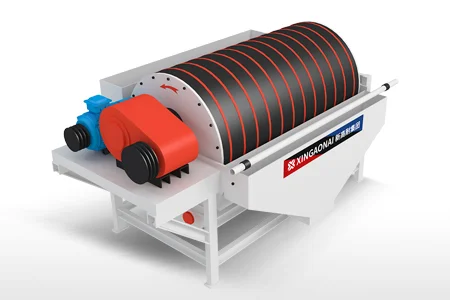
Magnetic separation is one of the most widely used mineral processing technologies for recovering magnetic minerals and removing unwanted impurities. It is extensively applied in iron ore beneficiation, heavy mineral processing, silica sand purification, recycling, and industrial mineral production. One of the first decisions when designing a magnetic separation circuit is choosing between wet magnetic separation and dry magnetic separation.
Although both methods use magnetic force to separate minerals, they operate under different conditions and are suitable for different feed materials, particle sizes, and processing objectives. Selecting the wrong method can reduce recovery, increase operating costs, and negatively affect downstream processes.
This guide compares wet vs dry magnetic separation, explaining their working principles, equipment, advantages, limitations, applications, and the key factors that determine which method best suits your material and processing plant.
What Is Magnetic Separation?
Magnetic separation is a physical beneficiation process that separates minerals according to differences in their magnetic properties.
When mineral particles pass through a magnetic field:
Magnetic minerals are attracted to the magnetic source.
Weakly magnetic minerals respond only to high-intensity magnetic fields.
Non-magnetic minerals continue along a separate path.
Magnetic separation can be used for:
Recovering valuable magnetic minerals
Removing iron contamination
Upgrading ore grade
Improving downstream beneficiation efficiency
Producing high-purity industrial minerals
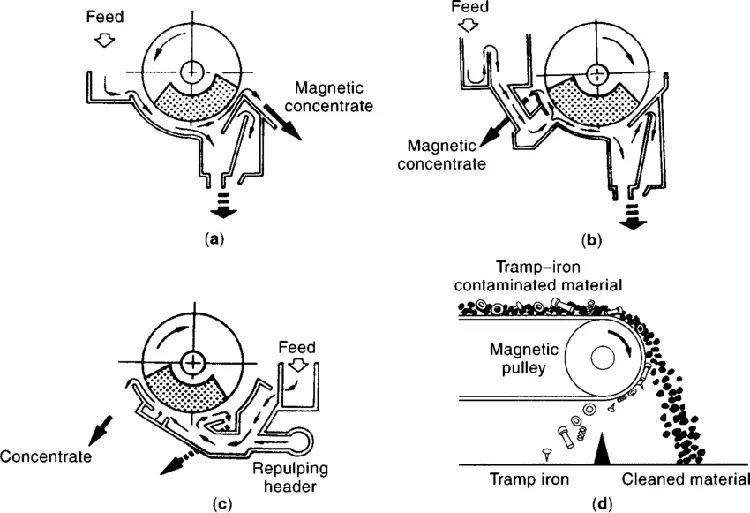
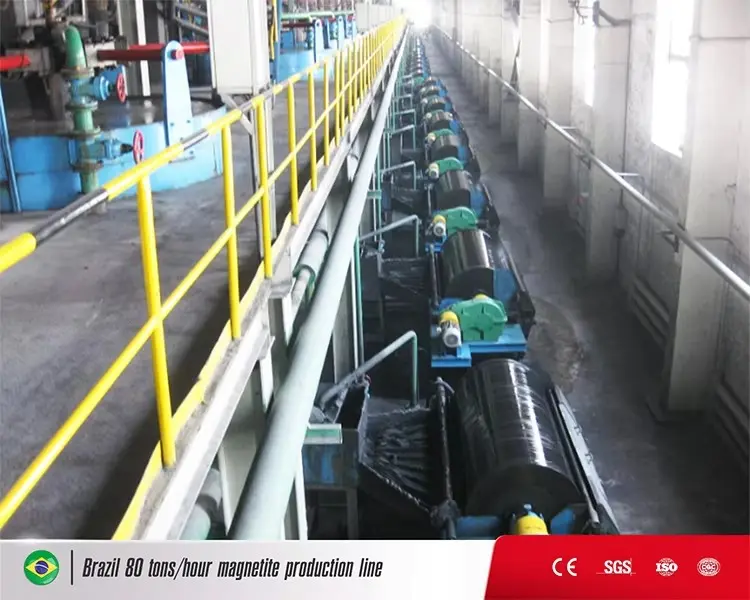
What Is Wet Magnetic Separation?
Wet magnetic separation processes minerals in the form of a slurry mixed with water.
The feed is pumped into a magnetic separator where magnetic particles are captured by the magnetic field while non-magnetic particles are carried away by the flowing slurry.
Typical wet magnetic separators include:
Wet high-intensity magnetic separators (WHIMS)
Wet high-gradient magnetic separators (HGMS)
Wet processing is commonly used in concentrators where grinding and classification already produce a slurry.
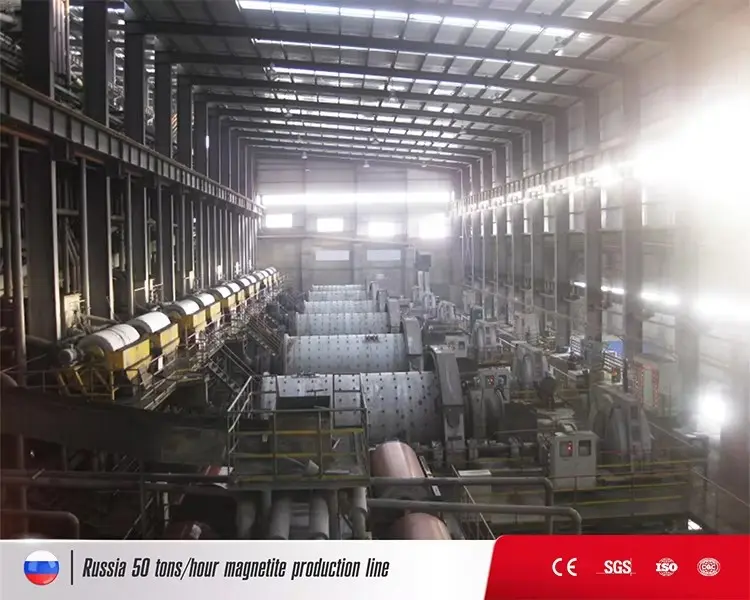
What Is Dry Magnetic Separation?
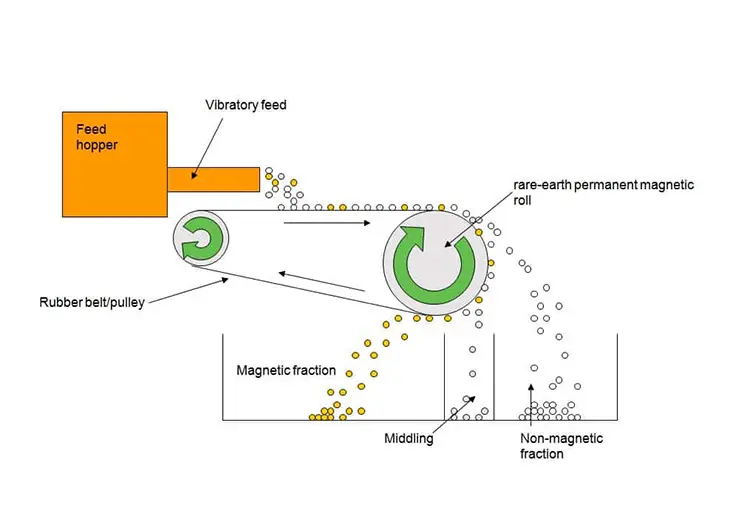
Dry magnetic separation treats dry, free-flowing materials without adding water.
The material passes through a magnetic field using gravity, vibration, or conveyor systems to separate magnetic from non-magnetic particles.
Common equipment includes:
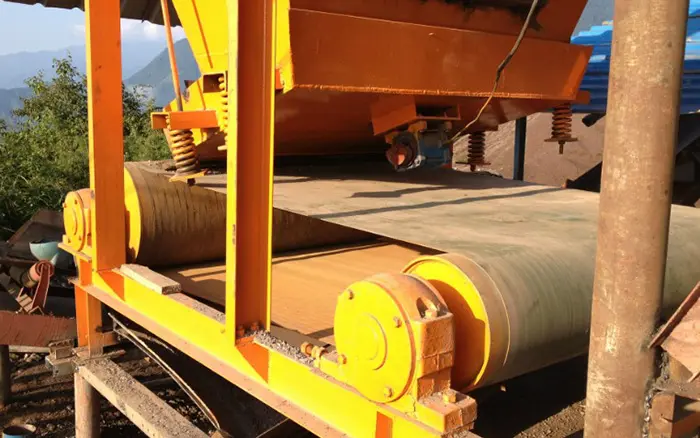
Dry drum magnetic separators
Roll magnetic separators
Rare earth roll separators
Cross-belt magnetic separators
Dry separation is often preferred where water is scarce or where the feed is already dry.
Wet vs Dry Magnetic Separation: Working Principle
Although both methods rely on magnetic attraction, the transport medium differs significantly.
Wet Magnetic Separation
Process Flow:
Crushing → Grinding → Classification → Slurry Preparation → Wet Magnetic Separation → Dewatering
Water helps disperse particles, reduce dust, and improve mineral liberation during separation.
Dry Magnetic Separation
Process Flow:
Crushing → Screening or Dry Grinding → Dry Magnetic Separation → Product Collection
Particles move through the separator by gravity, belt movement, or vibration without the use of water.
Equipment Comparison
Wet Magnetic Separation Equipment
Typical machines include:
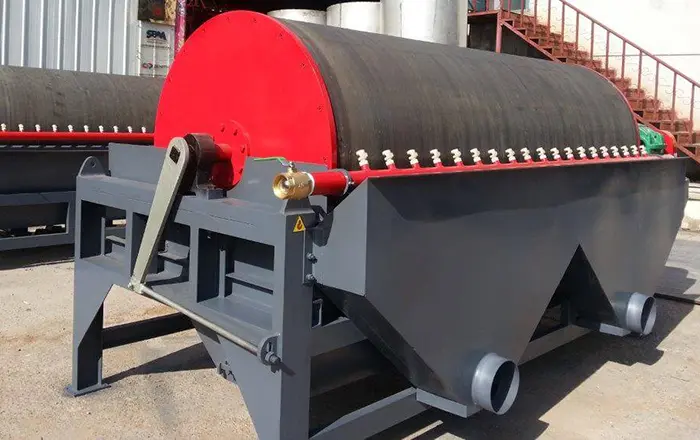
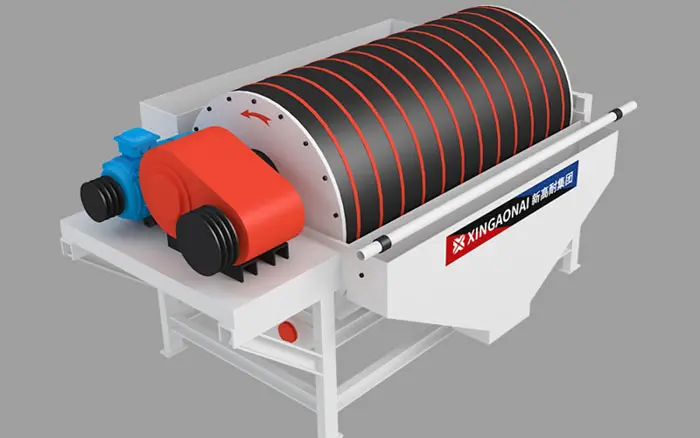
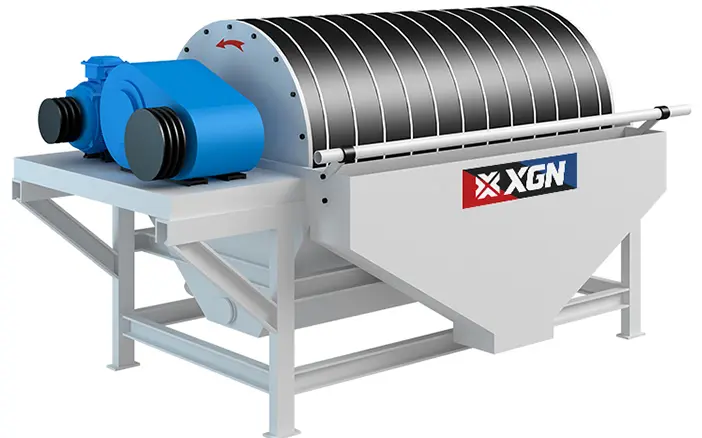
Wet drum magnetic separator
Wet high-intensity magnetic separator (WHIMS)
Wet high-gradient magnetic separator
Counter-current drum separator
Concurrent drum separator
These systems are suitable for continuous slurry processing.
Dry Magnetic Separation Equipment
Common equipment includes:
Dry drum magnetic separator
Rare earth roll magnetic separator
Induced roll magnetic separator
Cross-belt magnetic separator
Overband magnetic separator
These machines are designed for dry bulk materials with controlled moisture content.
Advantages of Wet Magnetic Separation
Wet magnetic separation offers several operational benefits.
Higher Separation Efficiency
Water disperses particles and minimizes particle agglomeration, allowing magnetic minerals to contact the magnetic field more effectively.
Better Fine Particle Recovery
Wet separators perform especially well with fine particles, often below 1 mm, where dry systems may experience reduced efficiency.
Reduced Dust Generation
Because materials are processed in slurry form, dust emissions are significantly reduced, creating a cleaner working environment.
Stable Processing Conditions
Continuous slurry flow helps maintain consistent feed conditions and separation performance.
Limitations of Wet Magnetic Separation
Despite its advantages, wet processing also presents challenges.
Requires a reliable water supply
Higher water treatment costs
Additional dewatering equipment
Increased plant complexity
Potential freezing issues in cold climates
Proper water management is essential for efficient wet magnetic separation.
Advantages of Dry Magnetic Separation
Dry magnetic separation is particularly attractive for certain applications.
Lower Water Consumption
No process water is required, making it suitable for arid regions.
Simpler Plant Layout
Without slurry pumps, thickeners, or dewatering equipment, dry systems generally require less supporting infrastructure.
Lower Installation Cost
Dry circuits often involve lower initial investment for water handling facilities.
Suitable for Pre-Concentration
Dry separators can reject waste rock before grinding, reducing energy consumption in downstream circuits.
Limitations of Dry Magnetic Separation
Dry systems also have operational constraints.
Less effective for ultrafine particles
Performance affected by feed moisture
Higher dust generation
Lower efficiency with sticky materials
Reduced separation accuracy for some ores
Maintaining appropriate feed moisture is critical for stable operation.
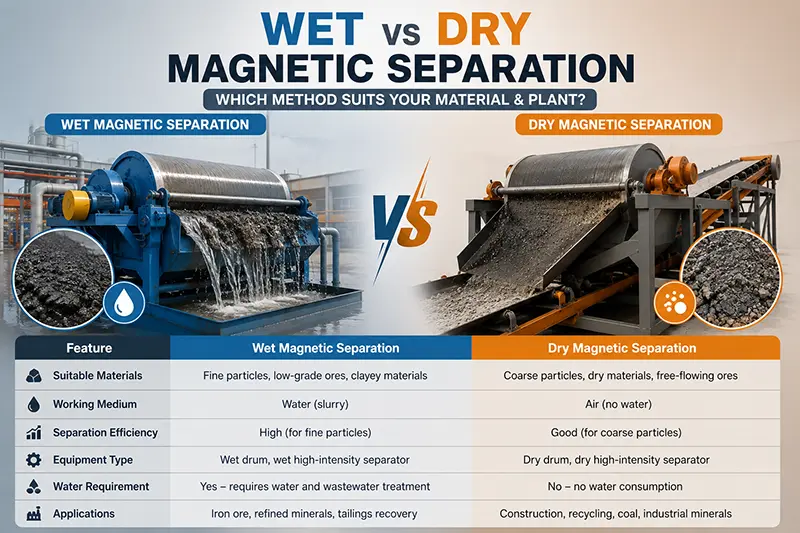
Comparison of Wet vs Dry Magnetic Separation
| Feature | Wet Magnetic Separation | Dry Magnetic Separation |
|---|---|---|
| Feed Condition | Slurry | Dry material |
| Water Requirement | High | None |
| Fine Particle Recovery | Excellent | Moderate |
| Dust Generation | Very Low | Higher |
| Plant Complexity | Higher | Lower |
| Initial Infrastructure | More Extensive | Simpler |
| Typical Feed Size | Fine to very fine | Coarse to medium |
| Operating Environment | Wet processing plants | Dry processing plants |
Typical Applications
Wet Magnetic Separation
Commonly used for:
Ilmenite processing
Manganese ore
Fine iron ore recovery
Dry Magnetic Separation
Typical applications include:
Dry magnetite ore
Silica sand purification
Feldspar beneficiation
Quartz processing
Coal cleaning
Recycling
Tramp iron removal
Factors to Consider When Choosing the Right Method
Several technical and economic factors influence equipment selection.
Ore Characteristics
Evaluate:
Magnetic susceptibility
Particle size distribution
Moisture content
Mineral liberation
Clay content
Water Availability
Sites with limited water resources often benefit from dry magnetic separation.
Where water recycling systems are already available, wet separation may provide higher recovery.
Particle Size
Fine particles generally respond better to wet magnetic separation.
Coarse materials are often suitable for dry separation.
Production Capacity
Large concentrators frequently integrate wet magnetic separation into grinding circuits.
Smaller dry plants may benefit from simpler dry separation systems.
Downstream Processing
If flotation or leaching follows magnetic separation, wet processing may integrate more efficiently.
If dry screening or dry grinding is used, dry separation can simplify material handling.
Can Wet and Dry Magnetic Separation Be Combined?
Yes. Many modern mineral processing plants use both methods within the same flowsheet.
For example:
Dry magnetic separation removes waste rock before grinding.
Wet magnetic separation upgrades concentrate after grinding.
This hybrid approach reduces energy consumption while maximizing overall mineral recovery.
Future Trends in Magnetic Separation
Magnetic separation technology continues to evolve.
Current developments include:
High-gradient magnetic separators
Rare earth permanent magnets
Intelligent process control
AI-assisted separator optimization
Automated magnetic field monitoring
Energy-efficient magnetic systems
Dry processing technologies for water conservation
Real-time mineral sensing
These innovations improve recovery while reducing operating costs and environmental impact.
Conclusion
Choosing between wet vs dry magnetic separation depends on the characteristics of the material, plant design, water availability, and production objectives. Wet magnetic separation generally provides higher recovery and better performance for fine particles, making it the preferred choice for most concentrators handling slurry. Dry magnetic separation, on the other hand, offers lower water consumption, simpler plant layouts, and excellent performance for coarse, dry materials or pre-concentration applications.
Rather than selecting one method based solely on equipment cost, mining companies should evaluate ore mineralogy, particle size, moisture content, downstream processing requirements, and long-term operating expenses. In many cases, combining both wet and dry magnetic separation within the same processing circuit delivers the highest efficiency and the best economic results.