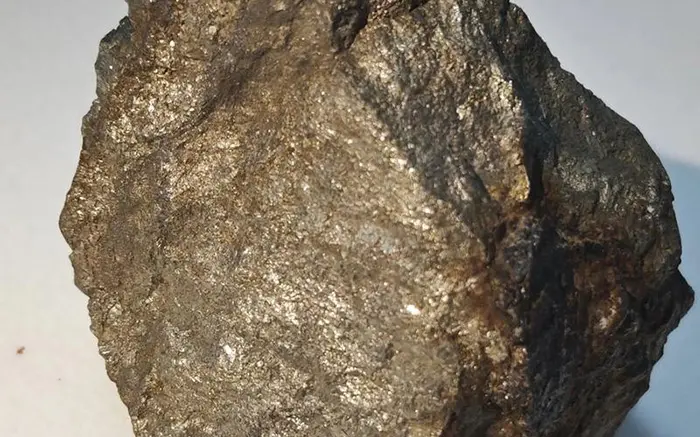
Correctly identifying silver ore is one of the first and most important steps in mineral exploration and mine development. While silver is highly valuable, it is rarely found in nature as pure metallic silver. Instead, it is commonly found in sulfide minerals or associated with lead, zinc, copper, and gold deposits. As a result, recognizing silver-bearing rocks requires a combination of geological observation, mineral identification, and laboratory testing.
Misidentifying ore can lead to unnecessary exploration costs and inefficient processing. Understanding the geological environment, ore mineralogy, and reliable testing methods helps exploration teams evaluate a deposit's economic potential before investing in mining and beneficiation.
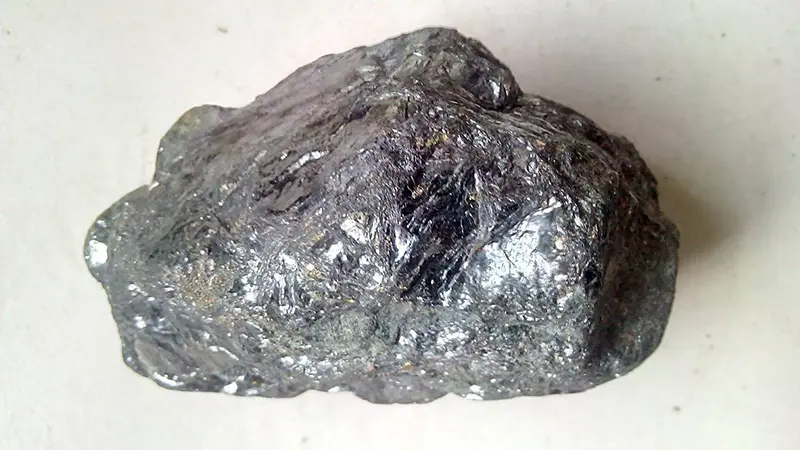
This guide explains how to identify silver ore, including its common mineral types, host rocks, visual characteristics, field identification techniques, laboratory testing methods, and exploration indicators.
Why Is Silver Ore Difficult to Identify?
Unlike gold nuggets or large quartz veins, silver rarely appears as obvious metallic masses.
Several factors make silver ore identification challenging:
Most silver occurs in microscopic mineral grains.
Silver is often chemically combined with sulfur, antimony, or arsenic.
Many silver-bearing minerals resemble other metallic ores.
Valuable silver may be distributed unevenly within the deposit.
Surface weathering can alter the appearance of silver minerals.
Because of these characteristics, visual inspection alone is rarely sufficient for accurate identification.
Common Silver Ore Minerals
Understanding silver-bearing minerals is the first step in identifying silver ore.
The most common silver minerals include:
| Native Silver | Ag | Bright silver metallic |
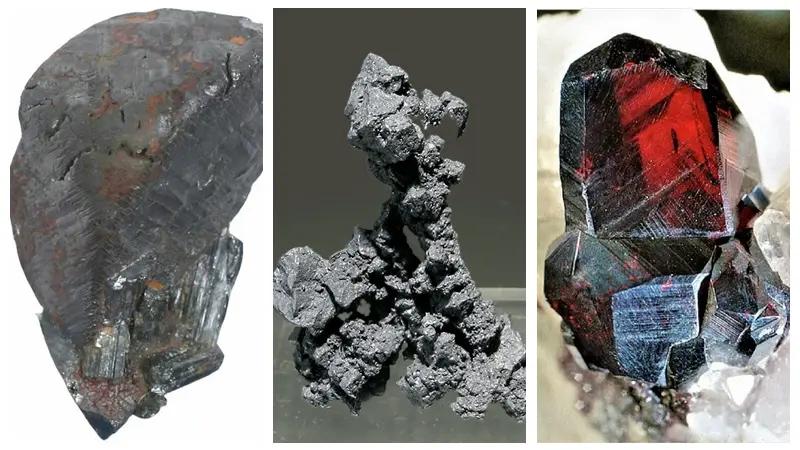
| Argentite (Acanthite) | Ag₂S | Dark gray to black |
| Pyrargyrite | Ag₃SbS₃ | Deep red to dark gray |
| Proustite | Ag₃AsS₃ | Scarlet red |
| Cerargyrite | AgCl | Gray to violet waxy appearance |
| Stephanite | Ag₅SbS₄ | Black metallic |
| Polybasite | (Ag,Cu)₁₆Sb₂S₁₁ | Steel gray |
Most commercial silver deposits contain several of these minerals together rather than a single silver mineral.
Rocks Commonly Associated with Silver Ore
Silver deposits are usually found in specific geological environments.
Common host rocks include:
Quartz veins
Limestone
Dolomite
Andesite
Rhyolite
Granite
Volcanic breccia
Metamorphic rocks
Quartz veins containing sulfide minerals are among the most common exploration targets for silver.
Visual Characteristics of Silver Ore
Although laboratory testing provides the most reliable results, several visual features may indicate the presence of silver-bearing minerals.
Typical characteristics include:
Metallic Luster
Many silver minerals exhibit a metallic or semi-metallic sheen.
Freshly broken surfaces often appear brighter than weathered surfaces.
Dark Gray or Black Minerals
Silver sulfides frequently appear:
However, these colors are also common in lead and copper minerals.
Heavy Weight
Silver-bearing minerals generally have a relatively high specific gravity.
Rock samples containing abundant sulfides often feel noticeably heavier than ordinary rocks of similar size.
Quartz Veins
Silver mineralization commonly fills fractures within quartz veins.
Quartz veins associated with pyrite, galena, or sphalerite may warrant further investigation.
Oxidized Surface Minerals
Weathered silver deposits may contain:
These alteration features often indicate underlying sulfide mineralization.
Indicator Minerals Associated with Silver
Silver rarely occurs alone.
The following minerals commonly accompany silver deposits:
Finding these minerals does not guarantee the presence of silver, but they can be valuable indicators of exploration potential.
Geological Indicators of Silver Deposits
Successful exploration depends on understanding regional geology.
Favorable indicators include:
Hydrothermal Veins
Most silver deposits originate from hydrothermal fluids that filled fractures in host rocks.
Fault Zones
Major faults provide pathways for mineral-rich fluids.
Silver mineralization frequently occurs along fault-controlled structures.
Alteration Zones
Hydrothermal alteration may produce:
Silicification
Sericitization
Argillic alteration
Carbonate alteration
These alteration patterns often accompany silver mineralization.
Volcanic Belts
Many epithermal silver deposits occur within volcanic regions characterized by ancient lava flows and volcanic intrusions.
Field Methods for Identifying Silver Ore
Geologists use several practical techniques during exploration.
Visual Mapping
Mapping rock types, alteration zones, and mineralized structures helps identify promising exploration targets.
Hand Lens Examination
A geological hand lens allows close observation of mineral textures, crystal shapes, and metallic grains.
Specific Gravity Estimation
Heavy rock samples may contain sulfide minerals associated with silver.
Although not definitive, density differences can help prioritize samples for laboratory analysis.
Portable XRF Analysis
Portable X-ray fluorescence (XRF) analyzers rapidly measure the elemental composition of rock samples.
While portable XRF can detect elements such as lead, zinc, copper, and arsenic, its ability to accurately measure silver depends on the instrument's sensitivity and the concentration of silver in the sample.
Laboratory Testing Methods
Laboratory analysis provides the most reliable confirmation of silver ore.
Fire Assay
Fire assay is considered the industry standard for determining precious metal grades.
Advantages include:
ICP Analysis
Inductively Coupled Plasma (ICP) analysis measures multiple elements simultaneously.
It is commonly used for exploration and resource evaluation.
Mineralogical Analysis
Microscopic and automated mineralogical studies identify:
These data are essential for designing beneficiation processes.
X-Ray Diffraction (XRD)
XRD identifies crystalline mineral phases and helps distinguish silver-bearing minerals from similar-looking ores.
Common Misidentification Mistakes
Several minerals resemble silver ore but contain little or no silver.
Common examples include:
| Galena | Metallic gray appearance |
| Pyrite | Metallic luster |
| Molybdenite | Soft metallic flakes |
| Graphite | Dark gray color |
| Hematite | Metallic sheen |
Visual similarities highlight the importance of laboratory confirmation before making economic decisions.
How Silver Ore Identification Influences Processing
Accurate mineral identification directly affects beneficiation strategy.
Different silver occurrences require different processing methods:
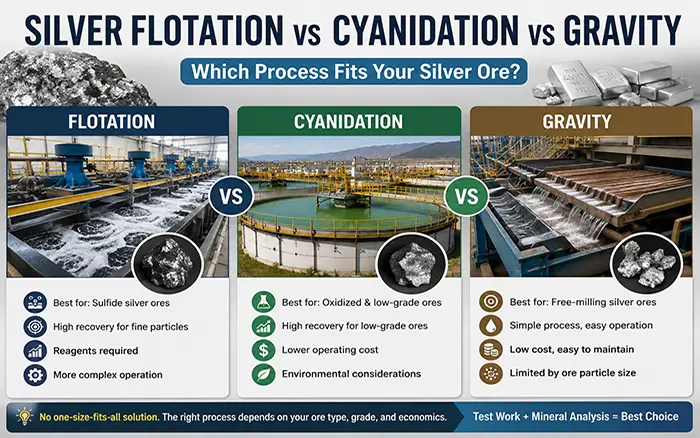
Free native silver may respond well to gravity separation.
Sulfide-hosted silver is commonly recovered by flotation.
Oxidized silver ores may require cyanidation or specialized leaching methods.
Complex polymetallic ores often need combined beneficiation flowsheets.
Mineralogical studies help engineers select equipment and optimize recovery.
Modern Technologies Used in Silver Exploration
Technological advances continue to improve exploration efficiency.
Modern methods include:
Drone-based geological mapping
Hyperspectral imaging
AI-assisted mineral prediction
Three-dimensional geological modeling
Automated core scanning
Remote sensing
Geophysical surveys
Machine learning for exploration targeting
These technologies reduce exploration risk and improve the accuracy of resource evaluation.
Conclusion
Identifying silver ore requires more than recognizing metallic-looking rocks. Because silver commonly occurs within sulfide minerals and polymetallic deposits, successful identification combines geological knowledge, mineral recognition, field observations, and laboratory analysis. Understanding host rocks, associated minerals, hydrothermal alteration, and structural controls enables exploration teams to identify promising silver-bearing zones more effectively.
Modern testing methods such as fire assay, ICP analysis, XRD, and mineralogical studies provide the accurate data needed for resource evaluation and process design. By integrating field experience with advanced analytical technologies, mining companies can improve exploration success, optimize beneficiation strategies, and maximize the economic value of silver deposits.