Hydrocyclones and spiral classifiers are both widely used in mineral processing plants to separate particles according to size and settling behavior. Although they can perform similar classification duties, their operating principles, capacities, water requirements, and suitable applications differ significantly.
Choosing between a hydrocyclone and a spiral classifier depends on factors such as feed particle size, required separation size, slurry concentration, processing capacity, mineral density, and the role of classification in the overall flowsheet.
This guide compares hydrocyclones and spiral classifiers to help determine which equipment is more suitable for a particular mineral processing application.
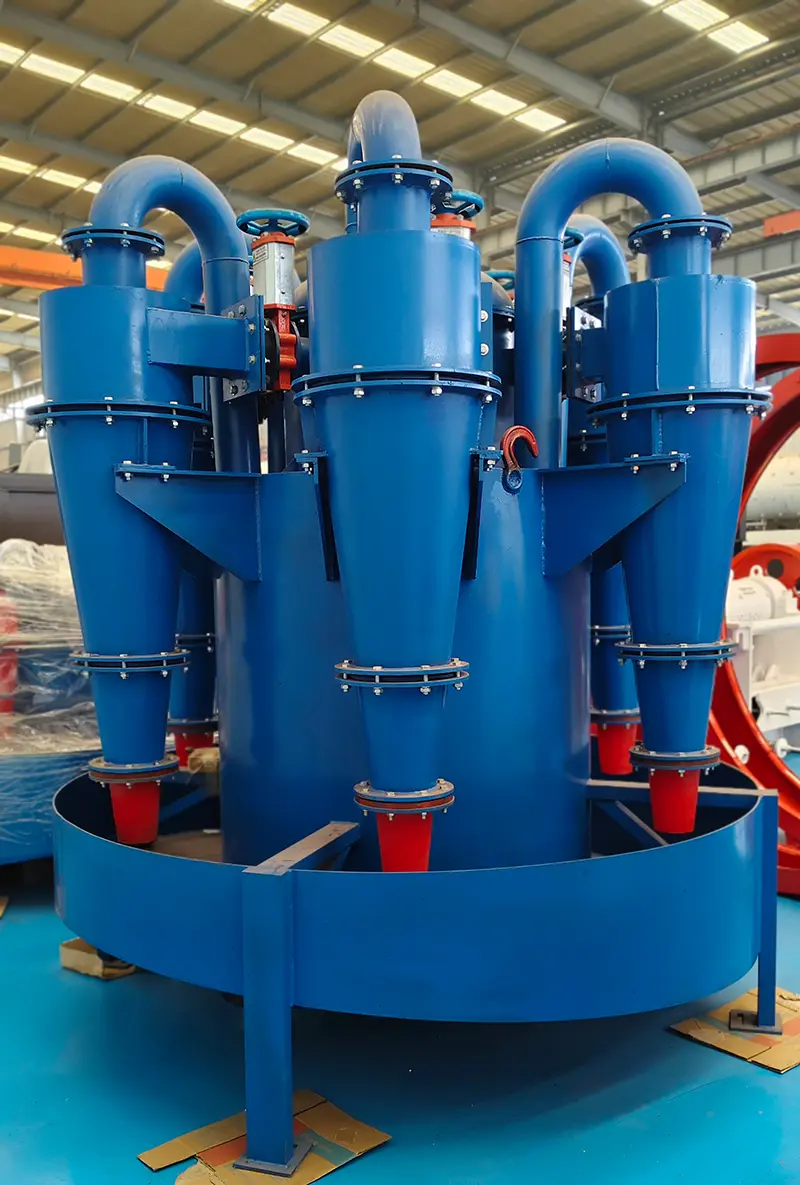
What Is a Hydrocyclone?
A hydrocyclone is a classification device that uses centrifugal forces generated by the swirling of a slurry inside a conical chamber.
Slurry enters the hydrocyclone tangentially under pressure. The resulting rotational flow creates different forces on particles. Coarser and denser particles tend to move toward the outer wall and discharge through the underflow, while finer particles are carried toward the center and leave through the overflow.
A simplified separation process is:
Slurry Feed → High-Speed Rotation → Particle Separation → Overflow + Underflow
Hydrocyclones have no moving mechanical parts, which allows them to operate continuously and makes them suitable for high-throughput classification circuits.
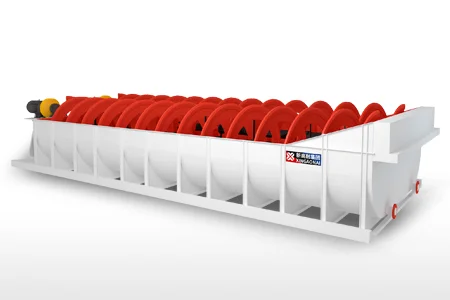
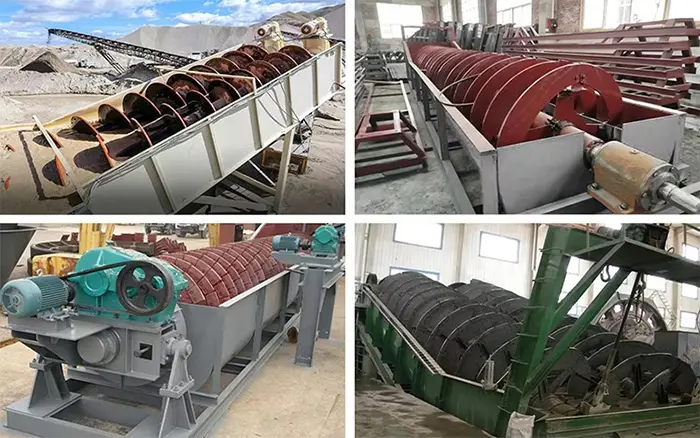
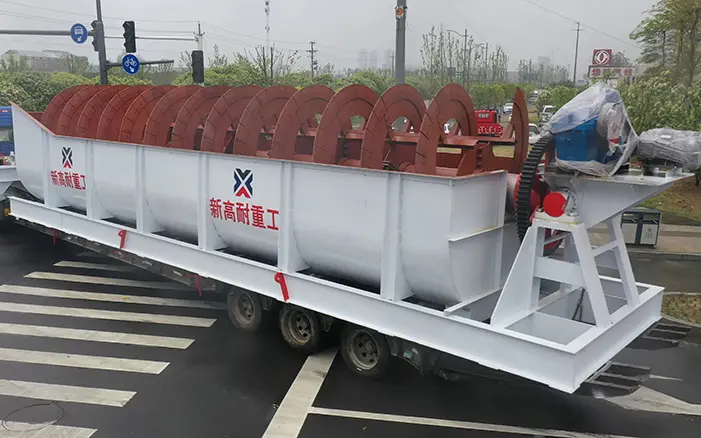
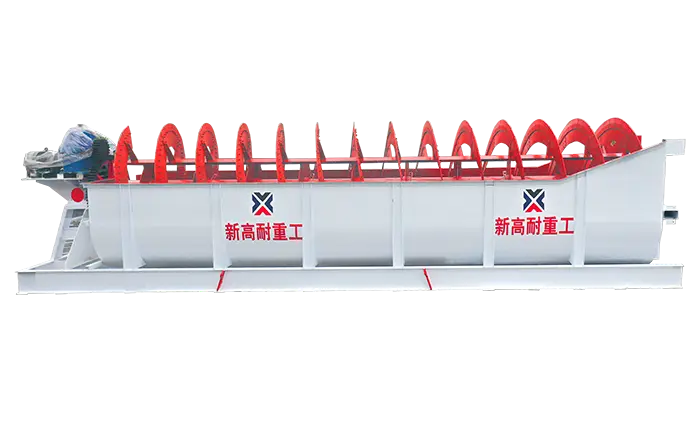
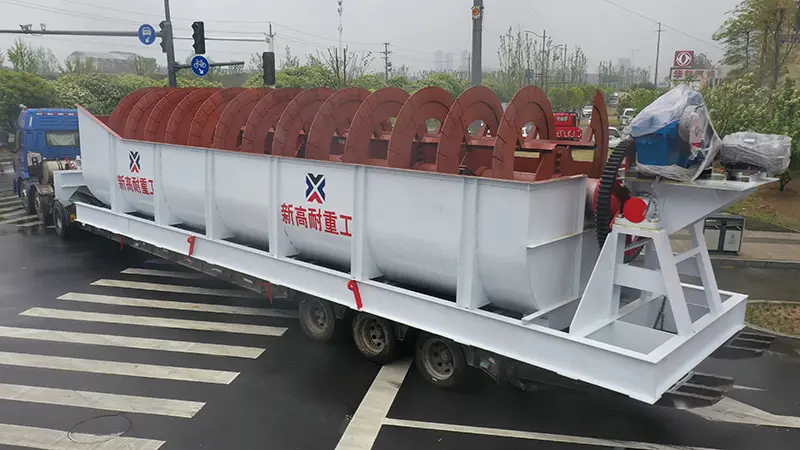
A spiral classifier is a mechanical classification machine that separates particles based mainly on differences in settling velocity.
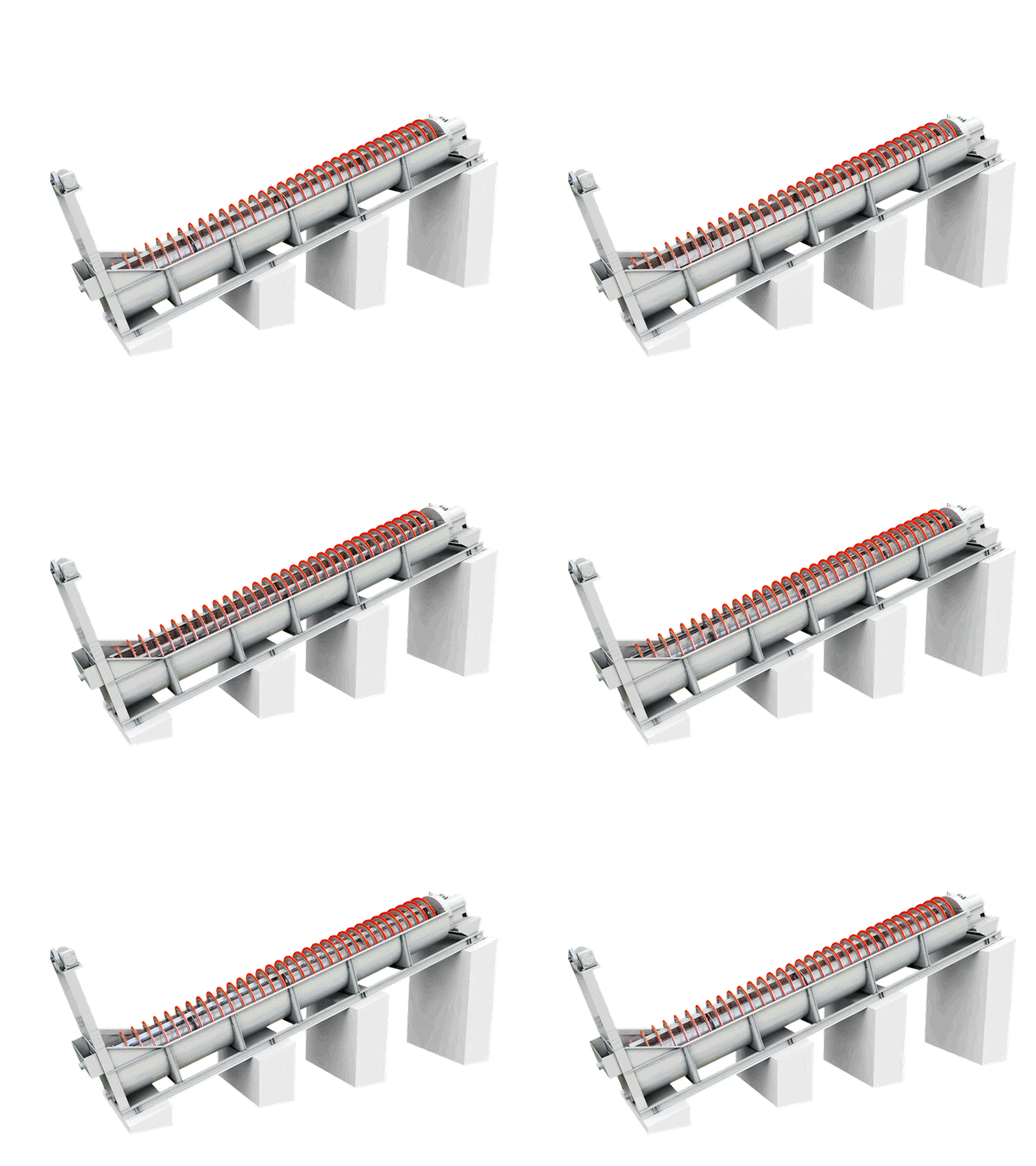
The slurry enters a settling tank where particles have time to settle according to their size and density. Fine particles remain suspended and flow with the water toward the overflow, while coarser particles settle to the bottom.
A rotating spiral then moves the settled coarse material upward for discharge.
Spiral classifiers are commonly used in grinding circuits and can also assist with washing, desliming, and separating coarse and fine mineral particles.
Hydrocyclone vs Spiral Classifier: Working Principle
The biggest difference is how the two machines create particle separation.
Hydrocyclone
A hydrocyclone relies on centrifugal forces produced by pressurized swirling slurry. The high rotational velocity allows relatively fine particles to be classified in a compact vessel.
Spiral Classifier
A spiral classifier relies primarily on gravity and settling. The slurry remains in a tank long enough for particles to settle at different rates, after which the spiral transports the coarse fraction.
Therefore, hydrocyclones generally provide a more compact and high-intensity classification process, while spiral classifiers provide a slower mechanical settling process.
Key Differences Between Hydrocyclone and Spiral Classifier
| Factor | Hydrocyclone | Spiral Classifier |
| Separation principle | Centrifugal force | Gravity settling |
| Moving parts | No | Rotating spiral |
| Installation footprint | Compact | Relatively large |
| Feed pressure | Requires pressurized feed | Generally operates without high feed pressure |
| Classification response | Fast | Relatively slow |
| Fine classification | Generally effective | More limited |
| Capacity per unit volume | High | Lower |
| Maintenance | Relatively simple mechanically | Spiral and drive require maintenance |
| Typical role | Grinding and fine classification | Grinding and coarse classification |
The actual performance of either machine depends on the feed properties and operating conditions.
Hydrocyclone vs Spiral Classifier in Grinding Circuits
Classification is critical in closed-circuit grinding.
The classifier separates sufficiently fine particles from coarse particles that require additional grinding.
Hydrocyclone Closed Circuit
A typical circuit may be:
Ball Mill → Hydrocyclone → Fine Product
with the coarse underflow returning to the mill.
Hydrocyclones are particularly common in modern grinding circuits because they can process large slurry volumes in a relatively small installation area.
Spiral Classifier Closed Circuit
A traditional circuit may use:
Ball Mill → Spiral Classifier → Fine Product
The coarse material settles and is returned toward the grinding mill by the spiral.
Spiral classifiers can be useful when a relatively simple classification system is required, and the available process conditions are compatible with their settling characteristics.
Classification Fineness
The required separation size is an important factor when comparing the two machines.
Hydrocyclones are generally better suited to fine classification because centrifugal forces allow them to separate relatively fine particles.
Spiral classifiers are more commonly associated with coarser classification duties. Their performance depends heavily on the settling behavior of the feed and the design of the settling tank.
If the grinding circuit requires a fine and tightly controlled classification cut, a hydrocyclone is often considered first.
Capacity and Installation Space
Hydrocyclones are compact compared with many mechanical classifiers.
Multiple hydrocyclones can also be installed in parallel when additional capacity is required. This makes them attractive for large mineral processing plants where floor space and throughput are important considerations.
Spiral classifiers require a larger settling area because particles need sufficient residence time to separate.
For plants with limited space or high processing capacity, hydrocyclones can therefore provide an important layout advantage.
Feed Pressure and Water Requirements
A hydrocyclone requires slurry to enter under pressure. A pump is normally used to provide the required feed pressure.
This means the classification circuit needs to consider:
A spiral classifier does not depend on the same type of pressurized feed. Instead, it relies on the natural settling behavior of particles in the classification tank.
However, this does not mean that a spiral classifier always consumes less water or energy. The overall power and water requirements should be evaluated at the plant level.
Maintenance and Operating Considerations
Hydrocyclones have no moving mechanical components, which reduces mechanical maintenance. However, internal liners and components such as the apex and vortex finder can experience wear, particularly when processing abrasive materials.
Spiral classifiers contain mechanical components, including the spiral drive and supporting structure. These components require inspection and maintenance during operation.
The best choice should therefore consider both routine maintenance and wear-part replacement.
When Should You Choose a Hydrocyclone?
A hydrocyclone may be preferable when the plant requires:
Fine particle classification
High processing capacity
Compact equipment
Continuous operation
Multiple units operating in parallel
Tight integration with a modern grinding circuit
Hydrocyclones are especially common in large-scale mineral processing plants where classification efficiency and installation space are important.
A spiral classifier may be suitable when:
The required classification size is relatively coarse
A traditional grinding-classification circuit is preferred
The plant has sufficient installation space
The feed characteristics are suitable for gravity settling
Mechanical classification is appropriate for the flowsheet
Spiral classifiers can also be useful in existing plants where replacing the entire classification circuit would be impractical.
Hydrocyclone vs Spiral Classifier for Different Minerals
The equipment choice should be based on the processing characteristics rather than simply the name of the mineral.
Gold Ore
Hydrocyclones are commonly used after grinding to control particle size before downstream gravity, flotation, or leaching processes.
Spiral classifiers can also be used in suitable grinding circuits, particularly where relatively coarse classification is acceptable.
Iron Ore
Hydrocyclones can be useful for fine classification and desliming-related applications.
Spiral classifiers may be considered where coarse and fine particles need to be separated through gravity settling.
Copper Ore
Hydrocyclones are widely used in closed-circuit grinding before flotation.
The classification cut should be selected according to the liberation size required for efficient flotation.
Lead-Zinc Ore
Both types of classifiers can be considered depending on the grinding circuit, feed characteristics, and required product size.
How to Select the Right Classifier
Before selecting equipment, evaluate the following factors:
1. Required Separation Size
Determine the target particle size for the overflow or final product.
2. Processing Capacity
Calculate the slurry flow rate and solids throughput that the classification circuit must handle.
3. Feed Particle Size Distribution
A broad or irregular feed size distribution can affect classification performance.
4. Slurry Density
Solids concentration influences settling and separation behavior.
5. Mineral Characteristics
Density, shape, hardness, and abrasiveness can affect classifier performance and wear.
6. Plant Layout
Consider available space, equipment arrangement, pump requirements, and maintenance access.
7. Operating Cost
Compare energy, water, wear parts, maintenance, and other operating expenses rather than focusing only on the initial purchase price.
Can Hydrocyclones and Spiral Classifiers Be Used Together?
In some plants, different classification technologies can be combined if the flowsheet benefits from their respective characteristics.
For example, a spiral classifier can handle a relatively coarse classification duty, while hydrocyclones can be used for finer classification downstream.
However, using both is not automatically better. Additional equipment increases capital investment, operating complexity, and maintenance requirements.
The circuit should therefore be based on test work and the specific requirements of the mineral processing plant.
Conclusion
Hydrocyclones and spiral classifiers can both perform classification duties in mineral processing, but they use different separation mechanisms.
Hydrocyclones use centrifugal forces generated by pressurized slurry and are generally well suited to high-capacity, fine classification in compact installations. Spiral classifiers rely mainly on gravity settling and mechanical transport, making them suitable for certain coarse-classification and traditional grinding circuits.
There is no universal winner between the two. The right choice depends on the required separation size, throughput, slurry characteristics, plant layout, energy requirements, and downstream processing requirements.
For a new plant, classification test work and a complete process-flow evaluation should be completed before selecting the equipment. The classifier should be chosen as part of the entire grinding and mineral-processing circuit rather than as an isolated machine.