A gravel size chart is useful when you need to describe the products a quarry or crushing plant should make. However, a label such as “10–20 mm” is only a starting point. It does not tell you the percentage of particles that must pass each test sieve, the permitted fines content, or whether the material is suitable for a particular construction project.
This guide compares common plant product sizes in millimeters and inches, explains the difference between product fractions and numbered aggregate grades, and shows how to specify and check finished material.
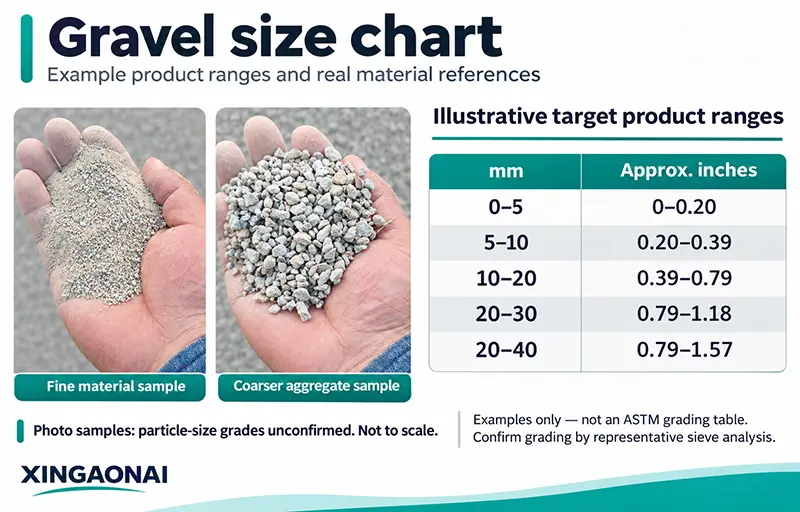
Common Gravel and Crushed Stone Sizes
| Example finished-product fraction | Approximate range in inches | How to read it |
|---|---|---|
| 0–5 mm | 0–0.20 in | A fine product fraction; its suitability as construction sand requires separate testing |
| 5–10 mm | 0.20–0.39 in | A relatively small coarse-aggregate fraction |
| 10–20 mm | 0.39–0.79 in | A common target range for a screened stone product |
| 20–30 mm | 0.79–1.18 in | A larger fraction that may be produced as a separate stockpile |
| 20–40 mm | 0.79–1.57 in | Another possible plant product range, depending on the order |
These are examples of product ranges, not a universal grading standard. A project specification may allow a defined percentage of particles above or below the stated limits. The required sieve sizes and allowable percentages must be confirmed in the applicable contract or local standard.
The 0–5 mm row needs particular care. The No. 4 test sieve has a 4.75 mm opening and is commonly used to distinguish coarse and fine aggregate in highway materials testing. A commercial “0–5 mm” product therefore should not automatically be described as standard-compliant sand.FHWA Field Materials Manual
Product Fractions Are Different From Numbered Aggregate Grades
A plant may receive an order for 5–10 mm and 10–20 mm products. These names describe the intended separation ranges and the stockpiles the buyer wants.
In the United States, a buyer may instead request a numbered size such as No. 57. That number refers to a defined aggregate grading designation, not a single particle diameter or one screen opening. ASTM D448 defines size-number designations and standard ranges for sieve analyses of coarse aggregate and screenings used in road and bridge work.ASTM D448
For this reason, do not rename a 10–20 mm stockpile “No. 57” merely because some particles look similar in size. First obtain the specified grading table, test a representative sample, and compare its percentage passing at each required sieve.
What Does “Percentage Passing” Mean?
A sieve analysis separates a sample through a series of test sieves. The result for each sieve is normally reported as the percentage by mass of the sample that passes that opening. Together, those results describe the particle-size distribution, or gradation.FHWA explanation of aggregate gradation
For example, a buyer asking for a 10–20 mm product may also specify:
Which test sieves must be used;
How much material may pass the smaller sieve;
How much may be retained above the larger sieve;
Limits for dust, clay or other fines;
Sampling frequency and the test method.
The name of the product alone cannot answer these questions. The plant and buyer should agree on the applicable specification before equipment is selected or a supply contract is signed.
How a Crushing Plant Makes Several Sizes
A plant first reduces the feed rock to a size that the screening circuit can handle. Screens then separate the material into product streams. Material above the desired size may return to a crusher, while acceptable fractions travel to separate stockpiles.
The target product chart affects more than the choice of screen openings. The plant designer also needs to consider the feed-size distribution, rock properties, capacity, number of required products, available screen area and the expected amount of material returning for further crushing.
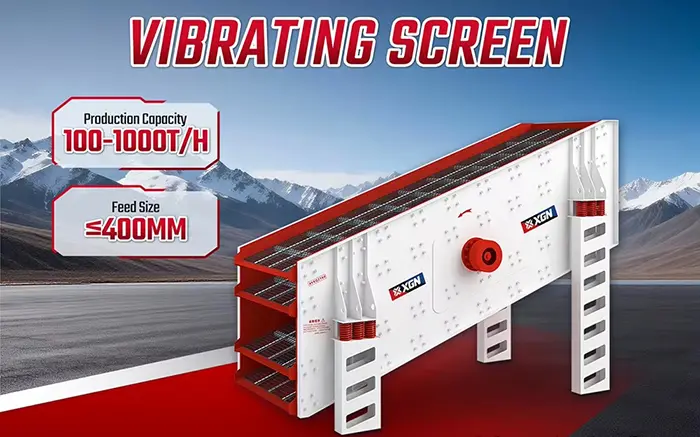
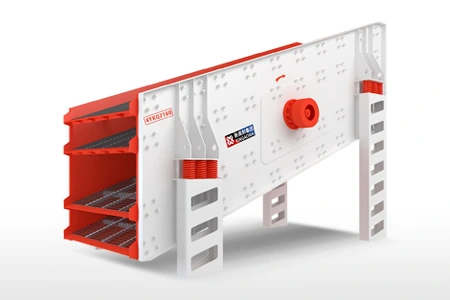
An example appears in XINGAONAI’s 700 TPH limestone plant in Kenya. Its published project page lists four finished fractions: 0–5 mm, 5–10 mm, 10–20 mm and 20–30 mm. It describes a heavy hammer crusher, an SZJ double-rotor sand making machine and four YKZ linear vibrating screens, with oversized material returned for further processing. The project page gives the intended products and equipment arrangement; it does not publish a laboratory grading report for each fraction.
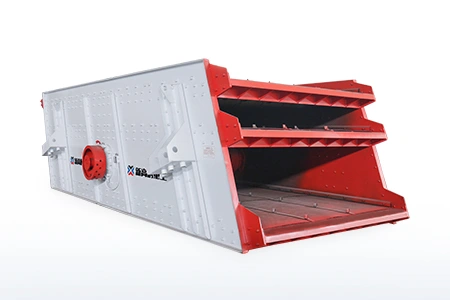
For more detail on the separation equipment, see XINGAONAI’s Linear Vibrating Screen. A Circular Vibrating Screen is another product option for aggregate classification; the appropriate machine depends on the project conditions.
How to Specify the Sizes You Need
When requesting a plant design or equipment quotation, provide a product schedule rather than saying only “make gravel.” Include:
Feed material: rock type, maximum feed size, moisture and clay content.
Plant capacity: required feed rate and expected operating hours.
Finished fractions: every size range you intend to sell or use.
Product split: the approximate required output of each fraction, if known.
Quality requirements: the governing standard, sieve-passing limits, particle shape and fines limits.
Project location: local specifications, available space, water and power conditions.
The product split matters. Two plants may both target 300 tonnes per hour and produce the same four size labels, yet need different equipment arrangements if one buyer requires much more 0–5 mm material than the other.
The chart should be treated as an input to design, followed by testing and adjustment. For the technical choice of openings, read how to choose vibrating screen aperture size. For the number of screen surfaces and media options, see the vibrating screen deck guide.
How to Check the Finished Product
Take representative samples from the relevant finished-product stockpile and perform sieve analysis using the method required by the project. Compare the measured percentage passing with the specified range at every required sieve, not only the upper size limit.
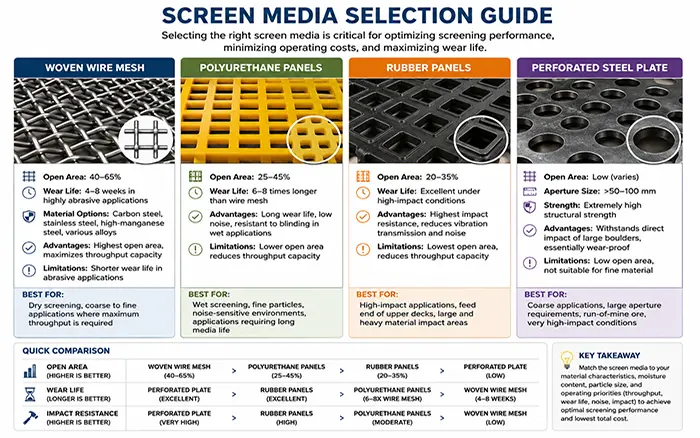
If a product does not meet the agreed range, investigate the feed and operating conditions before changing a screen opening. Check for worn or torn media, blocked apertures, uneven feed distribution, excessive loading and changes in the crusher product. A nominal opening does not guarantee an exact cut in operation.
Common Mistakes When Reading a Gravel Size Chart
Treating the size label as a guarantee for every particle. Acceptance depends on the specified tolerances and test results.
Equating a numbered grade with one millimeter size. A grade such as No. 57 is defined through a grading range.
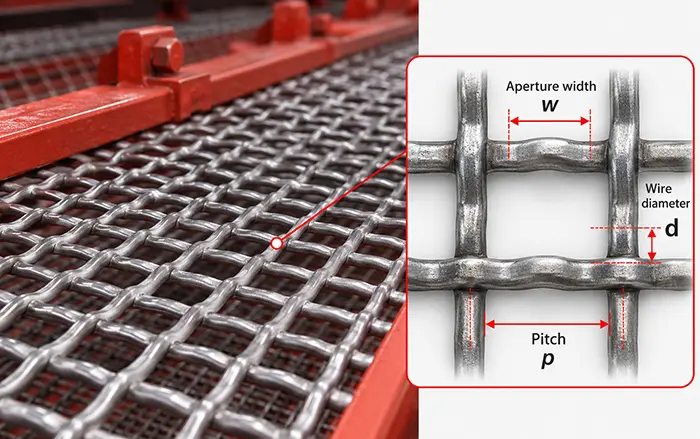
Confusing screen aperture with finished-product specification. Actual separation depends on the feed and operating conditions.
Ignoring fines and particle shape. Two stockpiles with similar size labels may perform differently in the intended application.
Using a project photo as proof of compliance. Photographs show the material and equipment; a representative test is needed to demonstrate gradation
Conclusion
A useful gravel size chart tells you what size ranges to discuss, but it cannot replace a project specification or a sieve test. Define the products first, select the crushing and screening circuit around those targets, and check each finished fraction against the agreed grading limits.
If you are planning a multi-product aggregate line, send XINGAONAI your feed material, capacity, required fractions and quality specification so the equipment arrangement can be assessed against your actual project.