Selecting a fine material screw washer is not simply a matter of matching the machine’s rated tons per hour to the required plant capacity. The equipment must handle both the solid material and the process water while producing sand that meets the required gradation, fines-retention and moisture specifications.
An undersized washer may lose usable fine sand through the overflow, produce an excessively wet discharge or become overloaded when the feed changes. An oversized washer may increase capital cost, water demand and power consumption without improving product quality.
Before selecting a spiral sand washing machine, confirm four basic inputs:
Dry solids feed rate
Complete feed particle-size distribution
Process-water flow
Required finished-product specification
These inputs are more useful than the total slurry flow or a general capacity estimate.
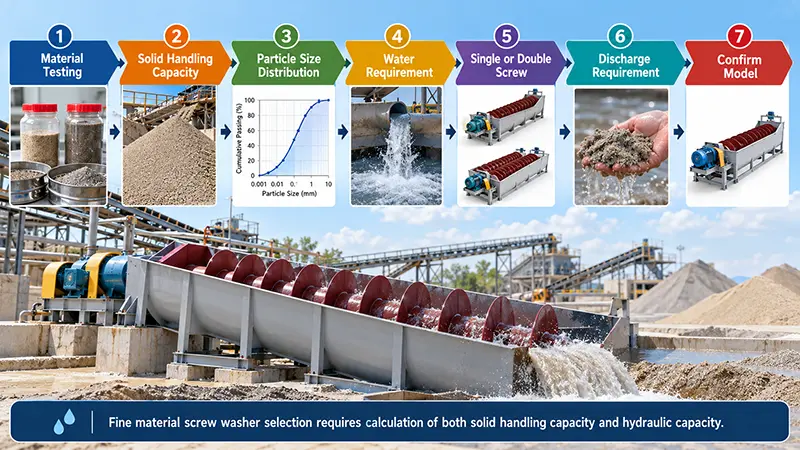
1. Define the Required Product Before Selecting the Washer
The selection process should begin with the finished product rather than the equipment model.
Confirm:
Maximum required product size
Minimum particle size that should be retained
Maximum allowable clay, silt or dust content
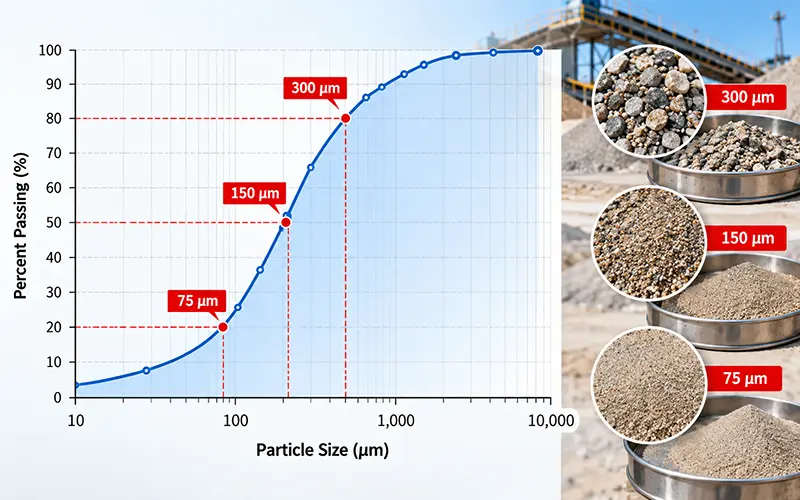
Acceptable percentage passing 300 μm
Acceptable percentage passing 75 μm
Required discharge moisture
Whether the material will be stockpiled, conveyed or sent directly to another processing stage
If the plant must retain a large proportion of fine sand, the washer requires sufficient pool area, controlled overflow velocity and an appropriate screw speed. If the objective is aggressive removal of ultrafines, the operating conditions will be different.
A machine cannot be selected correctly until the required separation boundary is clearly defined.
2. Analyse the Complete Feed Gradation
The nominal maximum feed size alone is not enough. Two feeds with the same top size and the same total tonnage can behave very differently if their fine-particle contents are different.
A useful particle-size analysis should include at least:
| Size range | Information required | Why it matters |
|---|---|---|
| Above 5 mm | Percentage by weight | Confirms whether oversize must be removed before washing |
| 5–2 mm | Percentage by weight | Influences conveying load and screw torque |
| 2 mm–300 μm | Percentage by weight | Represents most of the recoverable sand fraction |
| Below 300 μm | Percentage by weight | Strongly affects fines retention and required screw speed |
| Below 150 μm | Percentage by weight | Helps predict overflow losses |
| Below 75 μm | Percentage by weight | Influences water demand, slurry behaviour and required removal efficiency |
The percentage passing approximately 300 μm is particularly important when selecting operating speed and capacity. The percentage below approximately 75 μm helps determine how much clay, silt or unwanted ultrafine material must leave with the overflow.
For silica or other industrial sands, additional mineral and contamination analysis may be necessary. The washing circuit may require classification, attrition or magnetic separation in addition to the screw washer. See the silica sand washing process for related process considerations.
3. Calculate the Required Solids Capacity
Machine capacity should be based on dry solids, not the total mass of slurry.
Use:
Required design capacity = normal dry solids feed × peak-load factor
For example, if the normal feed rate is 80 tph and the plant may experience a 20% short-term increase:
80 × 1.20 = 96 tph
The washer should therefore be evaluated at a design load of at least 96 tph, subject to gradation, density and washing requirements.
Do not use the catalogue maximum as the normal operating target. A practical design should provide capacity for feed fluctuations, uneven loading and normal wear.
The following factors may reduce effective capacity:
High percentage of fine material
High clay content
Sticky feed
High material density
Slow screw speed required for fines retention
Restricted water discharge
Worn or incorrectly configured flights
4. Check Water-Handling Capacity Separately
A screw washer must handle two different loads:
The dry solids being conveyed by the screw
The water and suspended fines flowing through the washer
A unit may have sufficient mechanical capacity for the solids but insufficient pool area or overflow capacity for the water.
Confirm:
Water added at the feed point
Water carried in the incoming slurry
Spray-water demand
Recirculated-water volume
Total overflow flow
Expected suspended-solids concentration
If too much water passes through a small washer, the velocity at the overflow can increase and carry recoverable sand out of the machine. If too little water is used, clay and silt may not separate effectively.
Water volume must therefore be matched to the tank width, pool area and overflow-weir design.
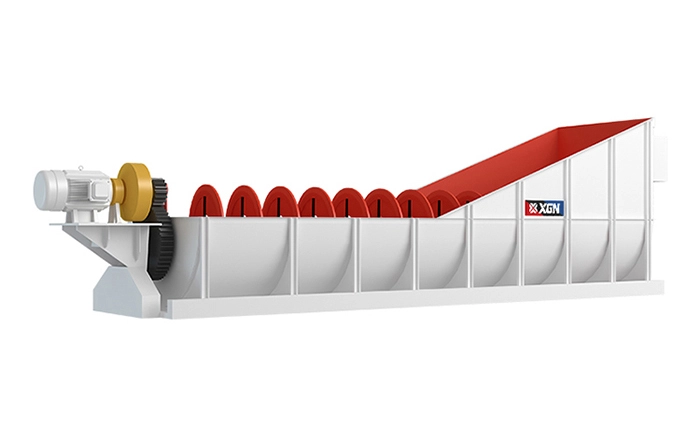
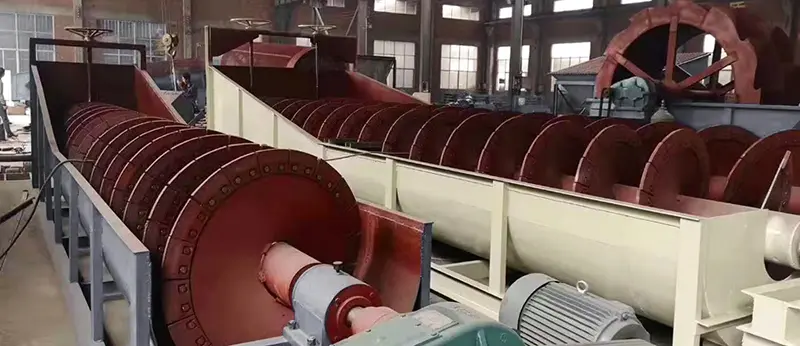
5. Choose Between a Single-Screw and Twin-Screw Washer
A single-screw washer is normally suitable for moderate capacities, relatively stable feeds and installations where space or initial investment is limited.
Typical advantages include:
Simpler structure
Lower initial cost
Fewer moving components
Easier access for routine maintenance
Suitable for small and medium production lines
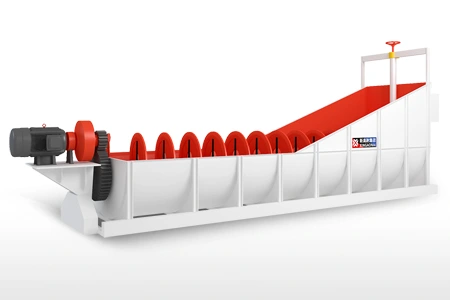
A twin-screw washer provides greater conveying width and generally offers higher solids and water-handling capacity.
It is more suitable when:
The required capacity is high
The feed contains a large percentage of fines
The slurry volume is high
More pool area is required
Feed conditions vary significantly
Future production expansion is expected
Single- and twin-screw selection should not be based on capacity alone. Tank width, water loading, fines-retention targets and available installation space should be evaluated together.
For differences between equipment configurations, refer to wheel vs spiral sand washing machine.
6. Match Screw Speed to Capacity and Fines Retention
Screw speed directly affects conveying capacity, retention time and fine-particle recovery.
A higher screw speed can:
Increase solids conveying capacity
Move material through the washer faster
Shorten residence time
Increase the risk of fine-particle loss
Produce a wetter discharge under some conditions
A lower screw speed can:
Increase settling time
Improve the retention of recoverable fines
Provide more washing time
Reduce mechanical throughput
Increase the risk of overload if the feed rate is not reduced
Reducing screw speed to retain more fine material also reduces the available conveying capacity. For this reason, the equipment should not be selected from a capacity table without considering the actual operating speed.
Variable-frequency control is useful when feed gradation changes, but it cannot compensate for a tank or screw that is fundamentally undersized.
For a detailed explanation of the process, see the working principle of a screw sand washing machine.
7. Evaluate Pool Area and Overflow-Weir Design
Fine-particle separation occurs mainly in the water pool at the lower end of the washer.
A larger, calmer pool allows heavier sand particles to settle before the water reaches the overflow. A small or highly turbulent pool makes it easier for usable fines to escape.
Evaluate:
Effective water-surface area
Feed-entry position
Distance between the feed zone and overflow
Baffle arrangement
Overflow-weir length
Water depth
Turbulence near the overflow
The feed should not be directed straight toward the overflow. Baffles or feed-control structures should distribute the slurry and reduce short-circuiting.
The overflow weir should provide an even discharge across its width. Uneven flow indicates poor levelling, blockage or unbalanced water distribution.
8. Confirm Discharge-Moisture Requirements
A screw washer provides preliminary dewatering as the cleaned material is conveyed up the inclined tank. However, the discharged sand may still contain more moisture than required for immediate stockpiling or transport.
Confirm:
Maximum acceptable discharge moisture
Required stockpile drainage time
Whether the product will be transported immediately
Whether runoff from the stockpile is acceptable
Whether water recovery is a priority
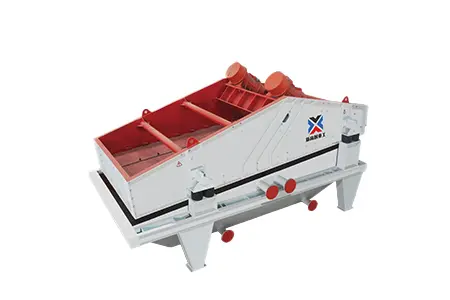
When lower moisture is required, combine the washer with a dewatering screen.
A combined circuit can:
Reduce final product moisture
Improve stockpile stability
Recover more process water
Reduce material loss
Make conveying and transport easier
9. Consider Abrasion and Wear-Part Configuration
Quartz sand, manufactured sand, granite fines and many mineral sands are abrasive. Wear resistance should therefore be included in the selection process rather than treated only as a maintenance issue.
Check:
Flight material and thickness
Replaceable wear shoes
Tank liners
Lower-end bearing protection
Shaft sealing
Reducer service factor
Access for wear-part replacement
Availability of spare parts
Highly abrasive material may justify a higher initial investment in replaceable wear components. Otherwise, frequent welding or complete flight replacement can increase downtime and long-term operating cost.
10. Information Required for Final Model Selection
Provide the following data to the equipment supplier:
| Selection item | Required information |
|---|---|
| Material | River sand, manufactured sand, silica sand or other mineral |
| Dry solids capacity | Normal and peak tph |
| Feed size | Maximum particle size |
| Feed gradation | Full sieve analysis |
| Fine content | Percentage below 300 μm and 75 μm |
| Clay content | Percentage and type of clay |
| Slurry condition | Solids concentration or water-to-solids ratio |
| Water flow | Feed water, spray water and recirculated water |
| Product requirement | Required gradation and allowable fines |
| Discharge moisture | Maximum acceptable moisture |
| Abrasiveness | Low, medium or high |
| Installation | Available space, elevation and foundation |
| Utilities | Power supply and available water pressure |
| Downstream equipment | Conveyor, stockpile, hydrocyclone or dewatering screen |
Without this information, a supplier can only provide a preliminary recommendation rather than a reliable equipment selection.
11. Common Selection Mistakes
Selecting only by tph
Capacity tables normally assume specific feed and operating conditions. They do not automatically account for high fines, clay, slurry volume or a reduced screw speed.
Ignoring process-water volume
Adequate solids capacity does not guarantee adequate hydraulic capacity. Excess water flow can increase fine-sand loss.
Using only the maximum feed size
The complete particle-size distribution is more important than the top size when fines retention is a priority.
Selecting the smallest acceptable model
A machine operating continuously near its maximum capacity has less tolerance for feed fluctuations and wear.
Expecting the washer to solve every contamination problem
A screw washer can remove loose clay, silt and lightweight contaminants, but strongly bonded clay coatings may require attrition scrubbing or additional washing stages.
Ignoring downstream moisture requirements
If the final product must be transported or stockpiled immediately, a dewatering screen may be required after the washer.
Conclusion
Correct fine material screw washer selection requires more than choosing a machine from a capacity table. The equipment must be sized for dry solids, process water, feed gradation, fine-particle retention and final moisture requirements.
Start with a representative sieve analysis and a clearly defined finished-product specification. Then check solids capacity, hydraulic capacity, screw configuration, operating speed, pool area, overflow design and downstream dewatering requirements.
This approach reduces fine-sand loss, prevents overload and produces a more stable finished product under real plant conditions.