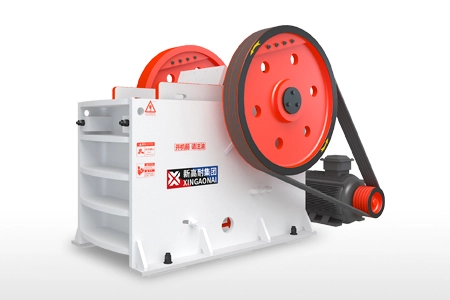
A jaw crusher consists of wear parts, structural components, power-transmission parts and adjustment devices working together to reduce large rocks and ores by compression. Understanding the function of each component helps operators identify abnormal wear, diagnose performance problems and order the correct replacement parts.
Jaw crushers are primarily used for coarse and primary crushing in mining, quarrying, aggregate production and mineral processing. Although different models use different frame structures, chamber designs and adjustment systems, most machines contain the same basic components.
This guide explains the main jaw crusher parts, their functions, common materials, wear characteristics and inspection requirements.
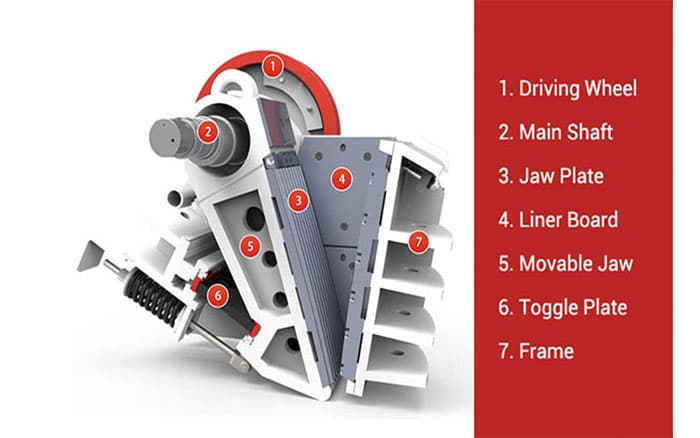
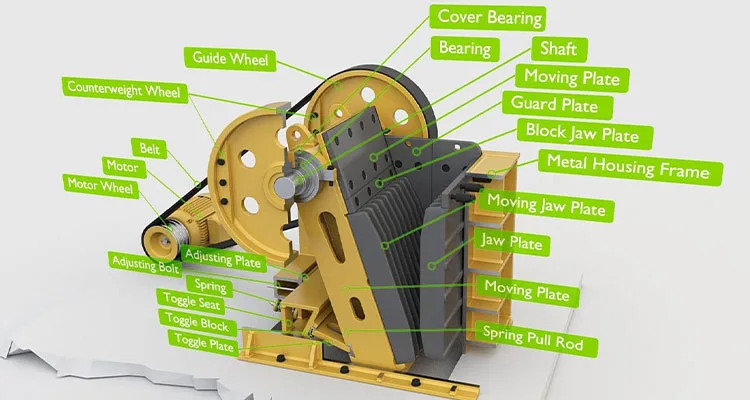
Main Jaw Crusher Parts at a Glance
| Jaw crusher part | Primary function | Component type |
|---|---|---|
| Fixed jaw plate | Forms the stationary crushing surface | Wear part |
| Movable jaw plate | Forms the moving crushing surface | Wear part |
| Pitman or movable jaw | Supports the movable jaw plate and creates crushing movement | Structural component |
| Eccentric shaft | Generates the eccentric motion of the movable jaw | Power-transmission component |
| Toggle plate | Transfers crushing force and supports the toggle mechanism | Mechanical component |
| Toggle seats | Support the ends of the toggle plate | Replaceable mechanical component |
| Cheek plates | Protect the side walls of the crushing chamber | Wear part |
| Bearings | Support the eccentric shaft and rotating loads | Service component |
| Frame | Supports the crushing chamber and operating loads | Structural component |
| Flywheel | Stores rotational energy and stabilizes crusher speed | Drive component |
| Tension rod and spring | Maintain the correct position of the toggle system | Mechanical component |
| Discharge adjustment system | Controls the crusher discharge opening | Adjustment component |
| Motor, belts and pulleys | Supply and transmit power to the crusher | Drive component |
| Lubrication system | Reduces bearing friction and operating temperature | Service system |
Component design and material specifications vary by crusher model. Always use the model-specific parts manual when inspecting or ordering replacement components.
1. Fixed Jaw Plate
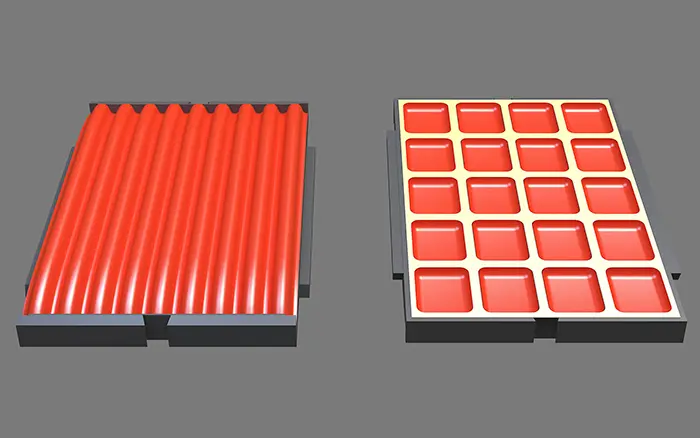
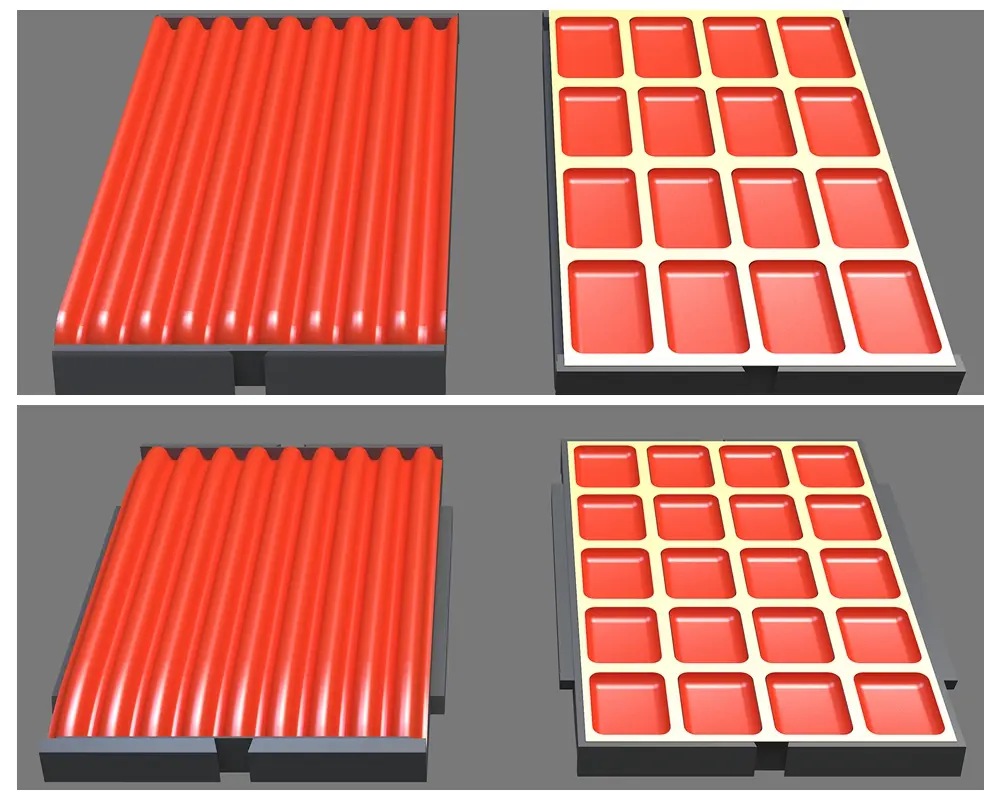
The fixed jaw plate is a replaceable wear liner mounted on the stationary side of the crushing chamber. Together with the movable jaw plate, it compresses large rocks and reduces them to a smaller size.
Jaw plates are commonly manufactured from high-manganese steel or another application-specific wear-resistant alloy. Their material composition and tooth profile should be selected according to:
Material hardness
Material abrasiveness
Feed size and gradation
Moisture and clay content
Required product size
Crusher operating conditions
A jaw plate designed for abrasive granite may not be the best choice for soft limestone or wet, sticky feed. Selecting the correct plate profile can improve material flow and reduce uneven wear.
2. Movable Jaw Plate
The movable jaw plate is attached to the moving jaw or pitman assembly. As the eccentric shaft rotates, the movable jaw approaches and moves away from the fixed jaw, producing the compressive force required for crushing.
The movable and fixed plates do not always wear at the same rate. Their wear pattern can be affected by:
Uneven feeding across the crushing chamber
Incorrect feed size
Improper discharge setting
Loose mounting bolts
Unsuitable jaw plate profile
Segregated or one-sided material flow
Operators should inspect both plates for cracks, loose fasteners, damaged teeth and uneven surface wear. The plates should be reversed or replaced according to the manufacturer’s wear limits and operating instructions.
3. Pitman or Movable Jaw Assembly
The pitman is the main moving jaw assembly that supports the movable jaw plate and transfers motion from the eccentric shaft to the crushing chamber.
It operates under repeated cyclic loads and must maintain correct alignment during continuous crushing. Depending on the crusher design, the pitman assembly may contain bearing housings and connection points for the toggle plate and tension system.
Common pitman-related inspection points include:
Cracks or structural damage
Loose jaw plate mounting bolts
Bearing condition
Toggle seat condition
Alignment of the movable jaw
Abnormal movement or knocking sounds
Damage to the pitman or its bearing seats can affect the entire crusher and should be assessed by qualified maintenance personnel.
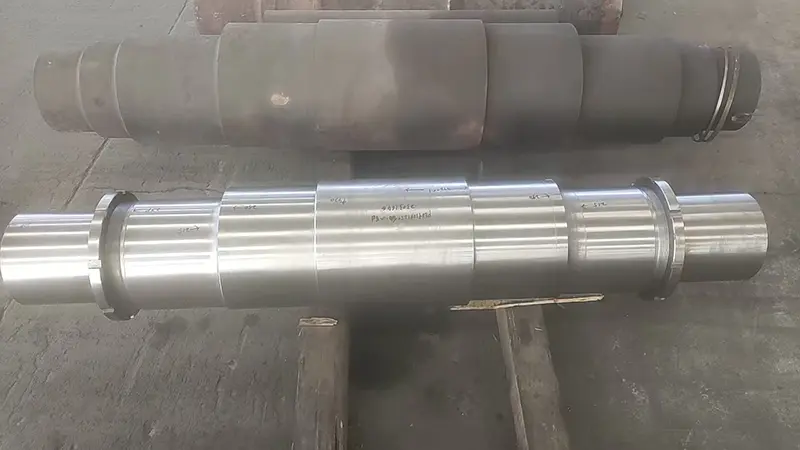
4. Eccentric Shaft
The eccentric shaft converts the rotational power supplied by the motor into the reciprocating movement of the movable jaw.
Because it carries heavy and repeated loads, the shaft is normally manufactured from high-strength forged or alloy steel. Accurate machining, correct bearing installation and proper lubrication are essential for reliable operation.
Possible signs of eccentric shaft or bearing problems include:
Excessive vibration
Abnormal bearing temperature
Metallic knocking sounds
Unstable flywheel movement
Irregular movement of the movable jaw
Lubricant leakage or contamination
A suspected shaft problem should be investigated promptly. Continued operation with damaged bearings or incorrect alignment may cause more extensive damage.
5. Toggle Plate and Toggle Seats
The toggle plate transfers crushing force between the pitman and the rear support mechanism. It also helps maintain the mechanical relationship between the movable jaw and the adjustment system.
In some crusher designs, the toggle plate may provide a degree of mechanical overload protection. However, operators should not assume that every toggle plate is designed to break under all overload conditions.
The ends of the toggle plate are supported by toggle seats. Wear, incorrect installation or inadequate lubrication at these contact points can produce abnormal noise and unstable crusher movement.
Inspect the toggle system for:
Cracks or deformation
Worn contact surfaces
Damaged toggle seats
Incorrect alignment
Loose tension components
Insufficient lubrication, where applicable
Replacement parts must match the crusher model and manufacturer specifications.
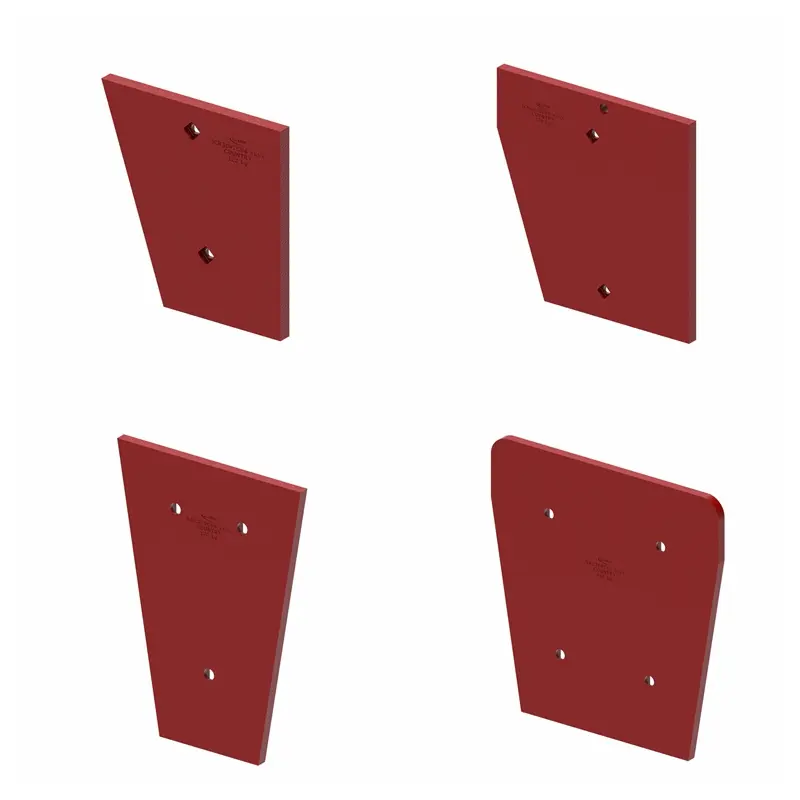
6. Cheek Plates
Cheek plates are replaceable wear liners installed on the side walls of the crushing chamber. They protect the crusher frame from direct contact with feed material.
Although cheek plates do not perform the main crushing action, they are continuously exposed to abrasion. Excessive wear can expose structural surfaces and affect the effective shape of the crushing chamber.
Cheek plate wear should be inspected together with jaw plate wear. Replace or reverse the plates according to the model-specific maintenance instructions.
7. Crusher Frame
The frame supports the main crushing components and absorbs the forces generated during operation. Depending on the model, it may use:
Cast-steel construction
Welded-steel construction
Bolted modular construction
A combination of fabricated and machined sections
A rigid and correctly installed frame helps maintain shaft, bearing and chamber alignment.
Inspect the frame and installation points for:
Cracks
Loose foundation bolts
Loose frame connections
Abnormal deformation
Damaged mounting surfaces
Excessive vibration around the base
Frame repairs should follow an approved engineering procedure. Unauthorized welding or modification may change the stress distribution of the machine.
8. Bearings
Bearings support the eccentric shaft and allow it to rotate under heavy loads. Their performance depends on proper installation, correct lubrication, suitable operating temperature and protection against dust and contamination.
Common warning signs include:
Increasing bearing temperature
Abnormal noise
Excessive vibration
Contaminated lubricant
Lubricant leakage
Irregular shaft movement
High bearing temperature does not always mean the bearing must be replaced. Possible causes also include incorrect lubricant, excessive lubricant, insufficient lubricant, misalignment, damaged seals or an overloaded crusher.
Check the crusher manual before adding lubricant or adjusting the bearing assembly.
9. Flywheels, Belts and Pulleys
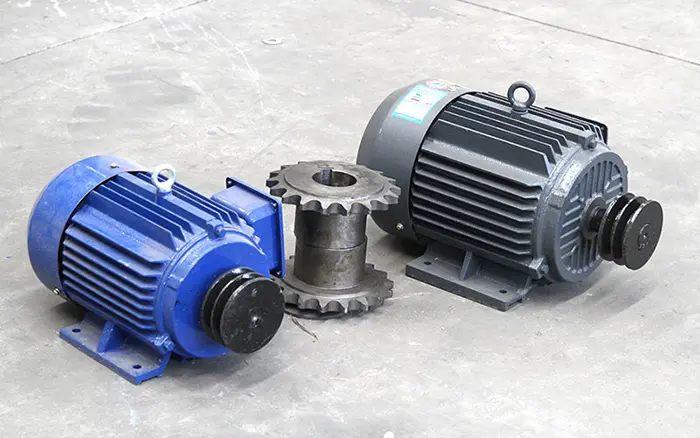
The drive system normally consists of an electric motor, V-belts, drive pulleys and flywheels.
The motor transfers power through the belts and pulleys to the eccentric shaft. The flywheels store rotational energy and help stabilize operating speed during the crushing cycle.
Inspection points include:
Belt tension and wear
Pulley alignment
Flywheel fasteners
Cracks or physical damage
Protective guards
Abnormal vibration
Belt slippage
The crusher must never be operated without the required guards around belts, pulleys, couplings and other moving components.
10. Tension Rod and Spring
The tension rod and spring help maintain the correct position of the toggle plate and movable jaw mechanism. Their exact configuration varies by crusher design.
Incorrect spring compression, loose components or a damaged tension rod may result in:
Toggle plate movement
Knocking sounds
Unstable operation
Incorrect mechanical positioning
Premature wear of toggle seats
Adjustment should only be performed according to the equipment manual and with all energy sources safely isolated.
11. Discharge Adjustment System
The discharge opening determines the approximate maximum size of material leaving the crushing chamber and influences crusher capacity, reduction ratio and circulating load.
Depending on the model, the crusher may use:
Shim adjustment
Wedge adjustment
Mechanical adjustment
Hydraulic adjustment
Operators should distinguish between the open-side setting and closed-side setting when checking the discharge opening. The correct measurement method and adjustment procedure depend on the crusher design.
A smaller discharge setting does not automatically provide better performance. If the setting is too small for the application, it may reduce capacity, increase wear and raise the load on the crusher.
For additional guidance, see the jaw crusher discharge-gap adjustment guide.
12. Lubrication System
The lubrication system reduces friction and helps control the temperature of bearings and other designated lubrication points.
Depending on the model, the crusher may use grease lubrication, circulating oil or an automatic lubrication system. Lubricant type, quantity and service interval should always follow the equipment manual.
Routine checks may include:
Lubricant level
Lubricant condition
Water or dust contamination
Leakage
Supply pressure
Lubrication-line condition
Bearing temperature
Do not apply a universal lubricant replacement interval to every crusher. Service requirements vary with the model, bearing arrangement, operating hours, ambient temperature and site conditions.
Jaw Crusher Wear Parts and Materials
Wear parts are components designed to be replaced after their working surfaces have reached the specified wear limit.
| Part | Common material | Main requirement |
|---|---|---|
| Jaw plates | High-manganese steel or application-specific wear alloy | Impact and abrasion resistance |
| Cheek plates | Wear-resistant steel | Side-wall protection |
| Toggle plate | Cast iron or steel, depending on design | Force transmission and model compatibility |
| Toggle seats | Hardened or wear-resistant steel | Stable contact and wear resistance |
| Eccentric shaft | Forged alloy steel | Fatigue strength and dimensional accuracy |
| Frame | Cast, welded or modular steel structure | Rigidity and load resistance |
The actual materials used by a manufacturer may vary between models. Confirm material grade and part number before ordering replacements.
What Affects Jaw Plate Service Life?
Jaw plate life depends on more than material hardness. Important factors include:
Abrasiveness and mineral composition
Feed size and gradation
Moisture and clay content
Jaw plate alloy and profile
Discharge setting
Feed distribution
Crusher utilization
Presence of uncrushable objects
Correct installation and tightening
Operating and maintenance practices
Abrasive materials such as quartz-rich rock may cause faster wear than some equally hard but less abrasive materials.
Uneven feeding can also concentrate wear on one side or one section of the plate. A properly selected feeder and consistent material distribution help use the crushing chamber more effectively.
Common Symptoms and Parts to Inspect
| Operating symptom | Parts or conditions to inspect |
|---|---|
| Uneven product size | Jaw plates, discharge setting and toggle mechanism |
| Reduced capacity | Jaw plate profile, feed condition, chamber filling and discharge setting |
| Abnormal vibration | Bearings, flywheels, foundation bolts, shaft and frame |
| High bearing temperature | Lubrication, bearings, seals, alignment and crusher load |
| Metallic knocking sound | Toggle plate, toggle seats, fasteners and jaw plate mounting |
| Uneven jaw plate wear | Feed distribution, plate alignment and chamber condition |
| Belt slippage | Belt tension, pulley alignment and crusher load |
| Frequent chamber blockage | Feed size, moisture, clay content and feeder operation |
These symptoms are diagnostic starting points, not final conclusions. Inspection should be performed by trained personnel using the manufacturer’s procedures.
Jaw Crusher Parts Inspection Checklist
Before operation:
Confirm that guards are installed.
Check for loose bolts and visible damage.
Check the lubrication system.
Inspect belts and pulleys.
Confirm that the crushing chamber is clear.
Check the feeder and downstream equipment.
During operation:
Monitor bearing temperature.
Listen for abnormal noise.
Observe vibration.
Check feed distribution.
Monitor discharge size and capacity.
Watch for belt slippage and lubricant leakage.
During planned shutdowns:
Inspect jaw and cheek plate wear.
Check toggle plate and toggle seats.
Inspect the tension system.
Check bearing condition.
Inspect the frame and foundation.
Verify the discharge setting.
Retighten fasteners according to the specified torque.
Safety Before Inspection or Replacement
Before inspecting, adjusting or replacing jaw crusher parts:
Stop the feeder.
Allow the crushing chamber to clear when it is safe to do so.
Stop the crusher and connected equipment.
Isolate electrical, hydraulic, pneumatic and stored mechanical energy.
Apply the site’s lockout/tagout procedure.
Confirm that the equipment cannot restart.
Secure suspended or movable components.
Follow the model-specific maintenance manual.
Never enter the crushing chamber or remove guards while the crusher is running.
How to Order the Correct Replacement Parts
Jaw crusher parts are not normally interchangeable based only on appearance or nominal machine size.
When requesting replacement parts, provide:
Crusher manufacturer
Crusher model
Serial number
Part name
Part number
Assembly drawing, if available
Dimensions of the original part
Photographs of the component
Material being processed
Required quantity
Delivery country
Required delivery date
For jaw plates, also provide information about material hardness, abrasiveness, maximum feed size, moisture content and current wear pattern. This information can help determine whether a different alloy or tooth profile should be considered.
PE and PEV Series Jaw Crusher Parts
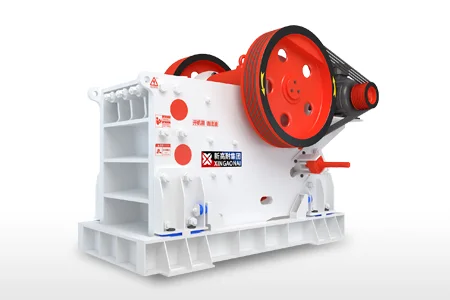
XINGAONAI supplies jaw crushers and replacement components for primary crushing applications.
The PE Series Jaw Crusher uses a proven conventional design for mining, quarrying and aggregate production.
The PEV Series Jaw Crusher uses an updated chamber and modular frame configuration for projects with different capacity, transportation, installation and maintenance requirements.
Parts specifications vary by model. Provide the equipment model, serial number and part drawing when requesting jaw plates or mechanical components.
Conclusion
Jaw crusher performance depends on the condition and compatibility of its wear parts, structural components and drive system. Jaw plates perform the main crushing action, while the pitman, eccentric shaft, bearings, toggle mechanism, frame and drive components support and transmit the forces required for continuous operation.
Regular inspection, correct lubrication, even feeding and the use of model-compatible replacement parts can reduce unplanned downtime and prevent secondary damage. Maintenance intervals and wear limits should always follow the instructions for the specific crusher model rather than universal estimates.