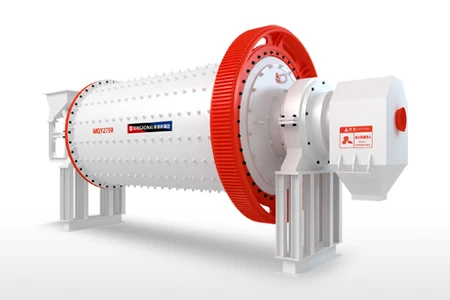
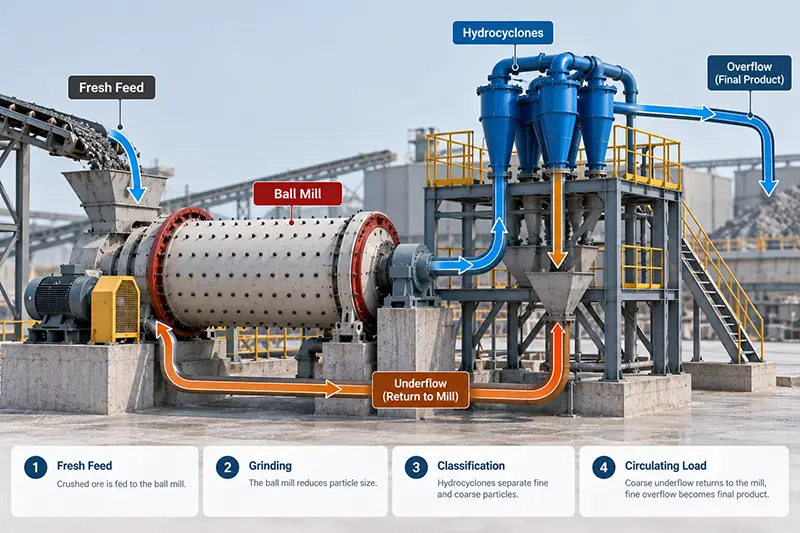
In a closed grinding circuit, not all the material leaving the mill immediately becomes the final product. A classifier separates the mill discharge into a fine fraction that can proceed to the next process stage and a coarse fraction that returns to the mill for further grinding.
This returning material creates the circulating load.
Circulating load is an important operating parameter because it connects fresh feed, classifier return and total mill feed. However, a high circulating load is not automatically bad, and a low circulating load is not automatically good. The value must be interpreted in the context of the complete grinding-classification circuit.
This article focuses specifically on what circulating load means, how it is calculated and what changes in circulating load may indicate.
What Is Circulating Load in a Grinding Circuit?
Circulating load is the mass flow of material returned from the classifier to the grinding mill relative to the fresh feed entering the circuit.
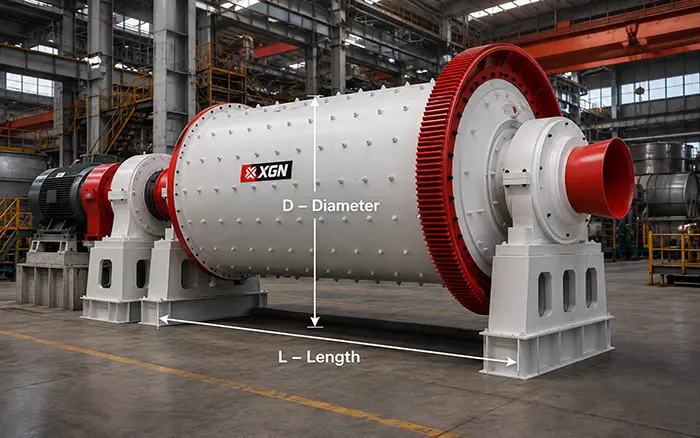
A typical closed-circuit grinding arrangement using a ball mill can be simplified as follows:
Fresh Feed → Ball Mill → Classifier → Fine Product
The coarse fraction follows a return path:
Classifier Underflow → Ball Mill
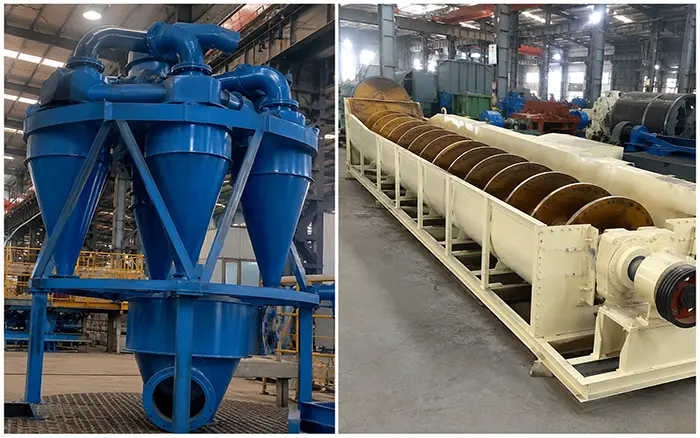
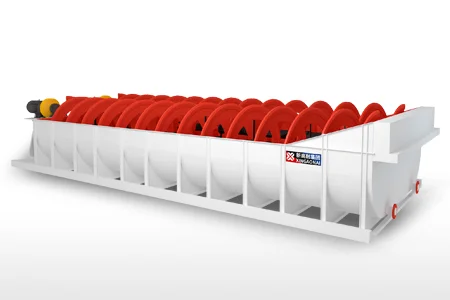
In a hydrocyclone circuit, the coarse underflow normally returns to the mill, while the finer overflow proceeds to the next process stage. A spiral classifier performs a similar circuit function by returning settled coarse material for further grinding.
Three flow rates are particularly useful:
F = fresh feed
R = circulating or return flow
P = final circuit product
The total solids flow entering the mill is therefore:
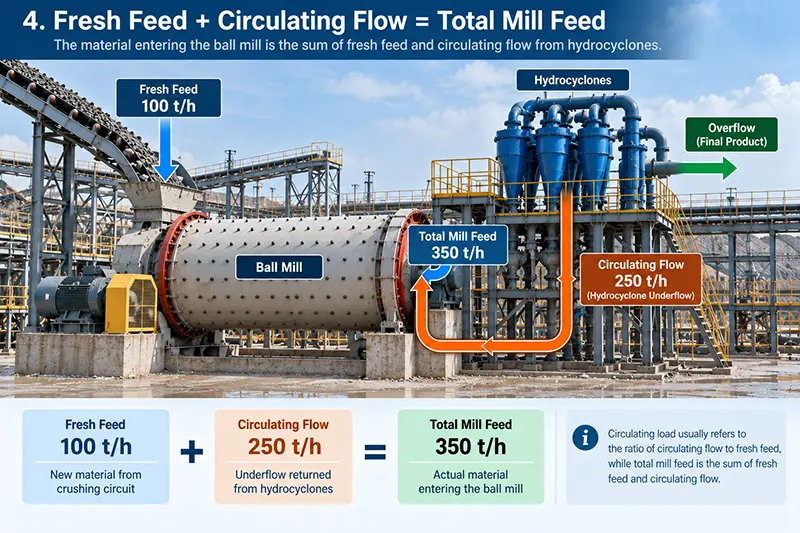
Total Mill Feed = Fresh Feed + Circulating Flow
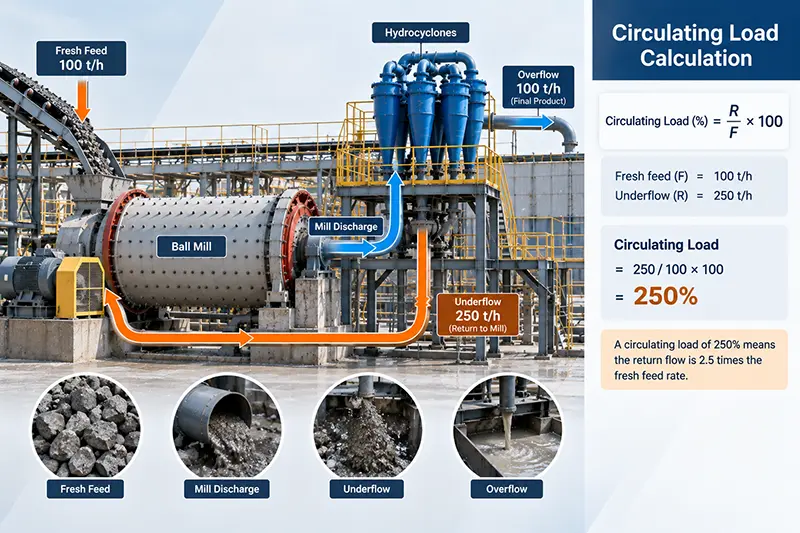
For example, if the fresh feed is 100 t/h and 250 t/h of coarse material returns from the classifier:
Total Mill Feed = 100 + 250 = 350 t/h
This does not mean that the plant is producing 350 t/h of new product. Of that flow, 250 t/h consists of material that is already circulating inside the grinding circuit.
How to Calculate Circulating Load
When the mass flow rate of the returning material is known, the circulating load percentage can be calculated directly:
Circulating Load (%) = R ÷ F × 100
Where:
R = mass flow returning to the mill
F = fresh feed entering the circuit
Direct Mass-Flow Calculation
Consider a closed grinding circuit with:
Fresh feed = 100 t/h
Classifier underflow = 250 t/h
The circulating load is:
CL = 250 ÷ 100 × 100 = 250%
A circulating load of 250% means that the return-flow mass rate is 2.5 times the fresh-feed rate.
It does not mean that 250% more ore is somehow being created or that plant production is 250% higher. It is simply a ratio between two mass-flow rates.
The total mill feed in this example is:
100 + 250 = 350 t/h
This distinction is important when evaluating mill throughput and circuit operating conditions.
What If the Return Flow Cannot Be Measured Directly?
In an operating plant, directly measuring the solids flow in the classifier underflow may not always be practical.
Circulating load can then be estimated through a material balance using representative samples from the relevant circuit streams and a measurable characteristic that can be balanced, such as the proportion of a selected particle-size fraction. In some applications, suitable assay or tracer data may also be used.
The exact calculation depends on:
Which circuit streams are sampled
Whether the circuit is sufficiently close to steady state
How the solids concentration is determined
Which measurable characteristic is used for the balance
Sampling and analytical accuracy
For this reason, the simple R ÷ F × 100 formula explains the definition of circulating load, while a complete plant calculation may require a more detailed grinding-circuit mass balance.
Why Do Closed Grinding Circuits Have a Circulating Load?
The purpose of classification is to prevent all mill discharge from being treated as finished grinding product.
After grinding, the mill discharge contains particles of different sizes. The classifier separates these particles according to the operating conditions of the circuit.
In simplified form:
Fine fraction → Leaves the grinding circuit
Coarse fraction → Returns to the mill
The returned coarse material therefore creates the circulating load.
Circulating load itself is not a process fault. It is a natural consequence of operating a closed grinding circuit.
A properly designed circuit uses classification to reduce unnecessary treatment of particles that are already sufficiently fine while returning material that still requires further grinding.
If you need to understand the equipment used for this separation, see Hydrocyclone vs Spiral Classifier rather than expanding classifier selection inside the circulating-load calculation.
What Does a High Circulating Load Mean?
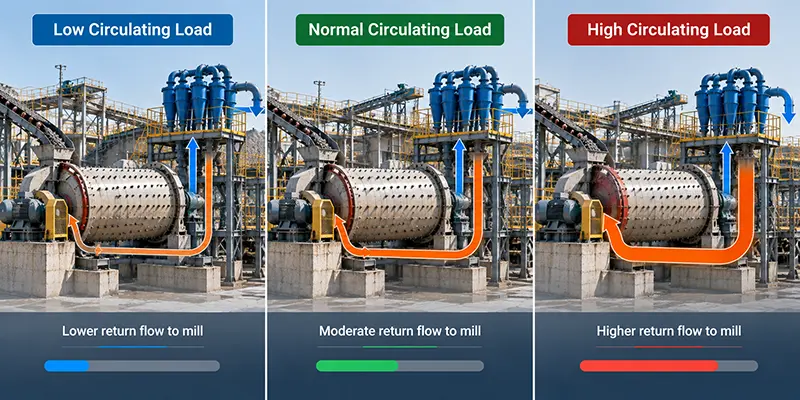
A high circulating load means that a relatively large mass flow is returning to the mill compared with the fresh feed.
For example:
Fresh feed = 100 t/h
Return flow = 400 t/h
The result is:
Circulating Load = 400 ÷ 100 × 100 = 400%
This number alone does not prove that the circuit is operating poorly.
A higher circulating load may be associated with changes in classifier split, feed characteristics, grinding conditions, water balance or other operating variables.
The important question is not simply:
Is the circulating load high?
A more useful question is:
Has the circulating load moved significantly away from the normal stable range of this particular grinding circuit?
Different circuits can operate at different circulating loads because mill design, classifier type, ore properties, target grind and operating strategy are not identical.
Therefore, a universal “ideal circulating load percentage” should not be applied to every plant.
What Does a Low Circulating Load Mean?
A low circulating load means that less material is returning to the mill relative to the fresh feed.
This can occur when less coarse material reports to the classifier return stream or when operating conditions change the split between final product and return flow.
Again:
A low circulating load does not automatically mean better grinding performance.
A decrease may result from a legitimate process change, but it may also indicate that feed conditions, classification behavior or circuit balance have changed.
The circulating-load trend should therefore be interpreted together with:
Fresh-feed rate
Product particle-size distribution
Classifier performance
Mill operating condition
Slurry and water balance
The objective is stable and appropriate circuit operation rather than simply minimizing the circulating-load percentage.
Why Does Circulating Load Change?
Circulating load results from the interaction between grinding and classification, so it can change even when the fresh-feed tonnage remains constant.
| Operating change | Possible influence |
|---|---|
| Feed size changes | Changes the amount of material requiring further grinding |
| Ore hardness changes | Changes how rapidly particles are reduced in the mill |
| Classifier split changes | Alters the proportion of material returning to the mill |
| Water balance changes | Can affect slurry properties and classification behavior |
| Grinding conditions change | Can alter the size distribution reaching the classifier |
These relationships should not be interpreted as fixed one-to-one rules.
For example, a change in hydrocyclone operating conditions can alter overflow and underflow behavior, but circulating load cannot be diagnosed reliably from one parameter alone.
That is why hydrocyclone pressure, cut size and abnormal discharge behavior are better treated as separate operating topics rather than being folded into the definition of circulating load.
Circulating Load vs Mill Load: What Is the Difference?
Circulating load is sometimes confused with total mill feed or the amount of material physically contained inside the mill.
They are different concepts.
| Term | Meaning |
|---|---|
| Fresh feed | New material entering the circuit |
| Circulating load | Material returned from the classifier |
| Total mill feed | Fresh feed plus circulating material |
| Mill load | Material physically contained inside the mill at a particular time |
Using the previous example:
Fresh feed = 100 t/h
Return flow = 250 t/h
Total mill feed = 350 t/h
The 350 t/h figure is a mass-flow rate.
It does not mean that 350 tonnes of ore are physically contained inside the mill.
This distinction is also important when performing ball mill sizing. Mill selection considers throughput, F80, P80, grindability, circuit configuration and other operating factors. Circulating load is one circuit consideration rather than a substitute for the sizing calculation.
Circulating Load Is a Circuit Balance Indicator
Circulating load should not be treated as a standalone performance target for which a higher or lower value is automatically better.
Instead, it is a useful indicator of how material moves between the mill and classifier.
A stable circulating load can help operators understand the relationship among:
Fresh Feed → Grinding → Classification → Return Flow → Final Product
When circulating load changes significantly, the next step is to determine what changed elsewhere in the circuit rather than immediately attempting to increase or decrease the percentage.
Feed characteristics, grinding conditions, classification behavior and water balance should be evaluated together.
For plants evaluating broader circuit optimization rather than only an existing return-load problem, How to Improve Ball Mill Efficiency covers the principal factors affecting grinding performance.