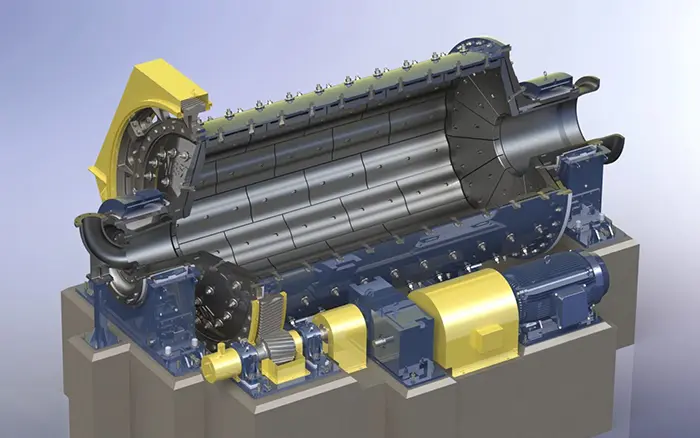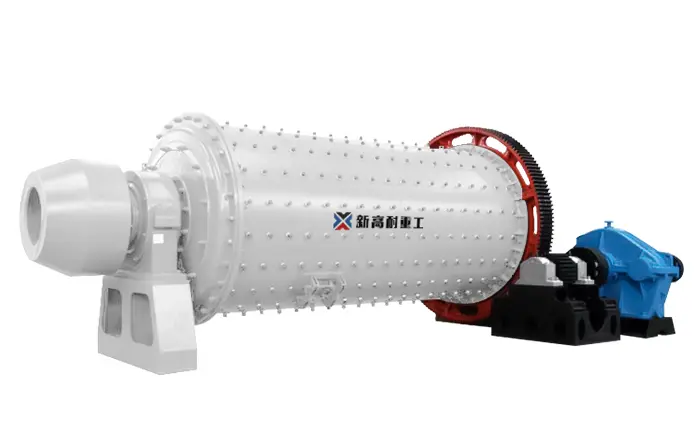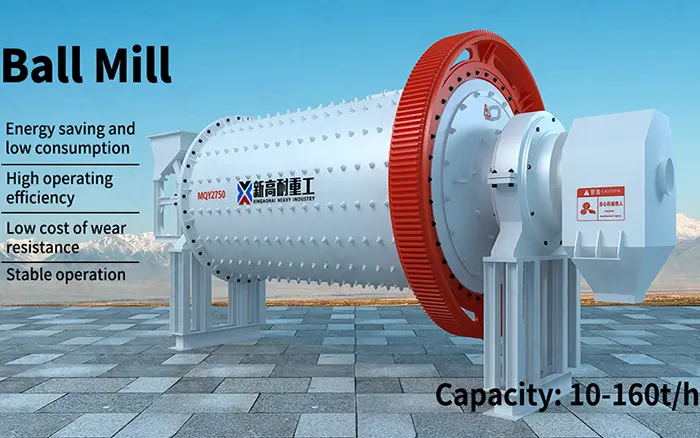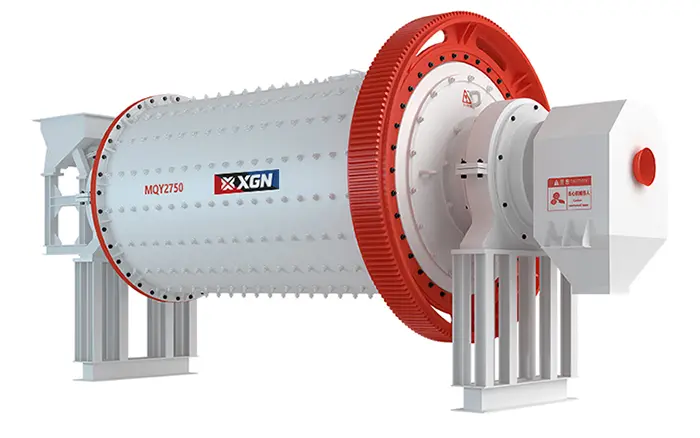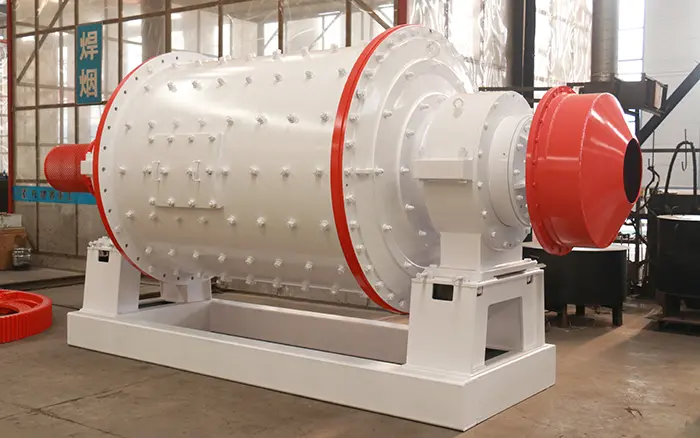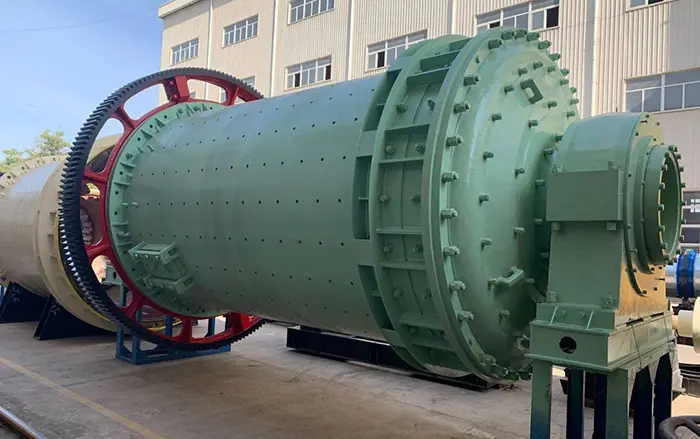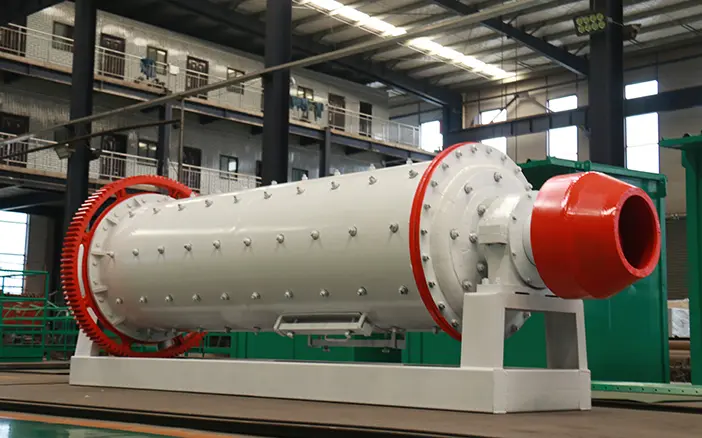
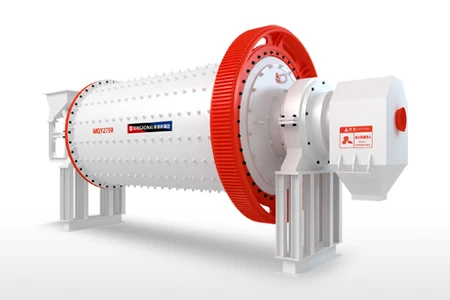
Ball mills are the most common grinding equipment in mineral processing plants. They take the crushed ore and grind it down to a fine powder, which is then sent to the next stage of the process. But ball mills are also one of the biggest energy consumers in a processing plant. In fact, grinding operations can account for more than 50% of the total energy used in a mineral processing plant. So improving ball mill efficiency is not just about getting better results—it is also about saving money and reducing operating costs.
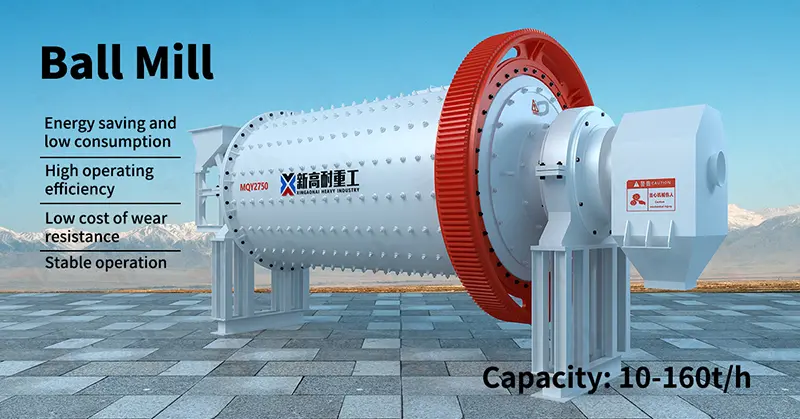
This article explains practical ways to improve the efficiency of your ball mill. Each method is explained in simple terms, with specific numbers and examples where possible.
1. Optimize Your Grinding Media
The grinding media are the balls inside the mill that actually do the crushing. Their size, material, and how they are mixed together all affect how well the mill works.
Choose the Right Ball Material
Most ball mills use steel balls. But for some applications, other materials may work better. Nano-ceramic balls, for example, have shown good results in recent years. In one copper mine in China, replacing steel balls with nano-ceramic balls increased the amount of fine particles (below 0.049 mm) in the ground product by nearly 8 percentage points.
A gold mine in China also tested nano-composite ceramic balls. After modifying the mill discharge and increasing the ceramic ball filling rate, the operation kept the same processing capacity but reduced electricity consumption by 34.90% and ball consumption by 56.67%. The annual economic benefit was over $300,000 USD.
Get the Ball Size Right
The size of the balls matters a lot. If the balls are too big, they will not make enough contact with the ore particles. If they are too small, they may not have enough force to break the larger pieces.
A common approach is to use a mix of ball sizes. A typical starting point for many mills is a ball size distribution of 30% large balls, 20% medium-large, 20% medium, and 30% small balls. But the exact mix depends on your ore. You should check the particle size of your feed and adjust the ball mix accordingly.
Watch Your Ball Filling Rate
The ball filling rate is how much of the mill volume is filled with balls. Too few balls means less grinding. Too many balls means they just get in each other's way.
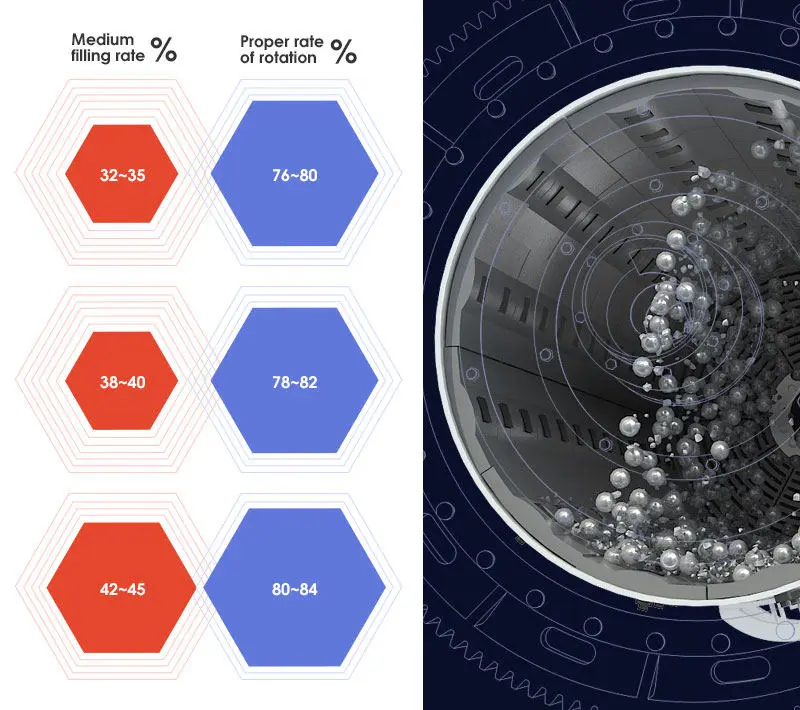
Published data on ball mill performance shows that a ball filling rate of around 40% to 45% works best for most operations. At a 40% filling rate, the grinding results are generally the best. At 45%, the mill reaches its maximum effective filling rate—beyond that, the grinding efficiency actually goes down.
2. Adjust Your Operating Parameters
How you run the mill is just as important as how it is built. Three key parameters to watch are the mill speed, the feed rate, and the pulp density.
Mill Speed
The speed of the mill controls how high the balls are lifted before they fall and hit the ore. If the speed is too low, the balls just roll around at the bottom. If it is too high, the balls stick to the mill wall from centrifugal force and do not fall at all.
The best speed for most ball mills is between 65% and 85% of the critical speed (the speed at which centrifugal force would pin the balls to the mill wall). Many older mills run at a fixed speed, but installing a variable frequency drive (VFD) allows you to adjust the speed based on the ore you are processing.
VFDs can also save energy. They reduce the starting current (which protects the motor) and can cut electricity use by 5% to 15%. One mining operation reported that after installing VFDs, they saved over $140,000 USD per year in electricity costs and reduced maintenance expenses by another $28,000 USD annually.
Feed Rate and Pulp Density
The feed rate is how fast ore goes into the mill. If the feed rate is too high, the mill gets overloaded and the grinding becomes less effective. If it is too low, the mill is not being used efficiently.
For wet grinding, the pulp density (how much solid material is in the water) also matters. A pulp density of around 70% solids is often a good starting point. Tests have shown that a 70% pulp density, combined with a 40% ball filling rate and a specific ball-to-ore ratio, gives the best grinding results for many ores.
3. Upgrade Your Classification Equipment
The classifier (often a hydrocyclone) separates the ground material into two streams: fine particles that are ready to go to the next stage, and coarse particles that go back to the mill for more grinding. If the classifier does not work well, you may end up with either oversized particles in your final product or fine particles being sent back to the mill for no reason (called over-grinding).
Improve Classification Efficiency
Better classifiers can make a big difference. Newer models like the NEA DCX ultrafine classifier have much higher separation efficiency. The DCX classifier uses about half the energy of older classifiers because nearly all the material ground by the mill goes directly into the classification process.
If you are using a hydrocyclone, try adding a pressure gauge to monitor the operating pressure. Consistent pressure leads to more consistent classification. One gold mine in China made this simple change and saw improved classification results.
Adjust the Return Sand Ratio
The return sand ratio is the amount of coarse material sent back to the mill compared to the amount of new ore coming in. Increasing this ratio within a reasonable range puts more material in the mill and improves grinding efficiency. But if the ratio gets too high, the mill can become overloaded. Finding the right balance for your specific ore is important.
4. Apply the "More Crushing, Less Grinding" Principle
Crushing is much more energy-efficient than grinding. In fact, grinding can use 10 times more energy than crushing to achieve the same size reduction. So anything you can do to make the crushing stage more effective will reduce the workload on the ball mill.
Reduce the Feed Size to the Ball Mill
The smaller the particles are when they enter the ball mill, the less work the mill has to do. If you can improve your crushing circuit to produce finer material, the ball mill will run more efficiently.
Using a high-pressure grinding roll (HPGR) before the ball mill is one way to do this. HPGRs use compression to break the ore and create micro-cracks inside the particles. These micro-cracks make the ore easier to grind in the ball mill. Industry data confirms that HPGR products have a Bond ball mill work index that is 2.7% to 10.8% lower than cone crusher products, meaning they require less energy to grind.
Remove Fines Before Grinding
If your crushed ore already contains fine particles, consider removing them with a screen or classifier before they enter the ball mill. This prevents over-grinding (which wastes energy) and keeps the mill focused on breaking down the larger particles.
5. Upgrade Your Mill Liners
The liners inside the ball mill protect the mill shell from wear and also help lift the balls to the right height. Different liner shapes produce different ball trajectories, which affects grinding efficiency.
High-chromium cast iron liners are much harder and more wear-resistant than traditional manganese steel liners. They can last up to three times longer, which means less downtime for replacements. Some manufacturers claim that optimized wave-shaped liners can increase grinding efficiency by 15% to 20% by improving how the balls are lifted and dropped.
6. Use Chemical Grinding Aids
Grinding aids are chemicals added to the mill to make grinding easier. They work by reducing the surface tension of the material and preventing fine particles from sticking together.
While grinding aids are more common in cement grinding, they can also work for some ore types. In cases where you cannot change the ore properties through other means, a grinding aid might be worth testing. Some operations have reported energy savings of 15% to 20% when using the right grinding aid for their material.
7. Implement a Monitoring and Maintenance Program
Even the best equipment will not perform well if it is not properly maintained. A good maintenance program includes:
Regularly check the wear on liners and replace them before they fail.
Monitor the mill temperature, bearing temperature, and motor current for signs of trouble.
Keep the lubrication system working properly to prevent bearing failure.
Use automated systems to track key parameters like feed rate, pulp density, and mill load.
Some operations are now using real-time monitoring systems that analyze the entire grinding circuit and automatically adjust parameters to keep the mill running at peak efficiency.
Summary
Improving ball mill efficiency is not about one single change. It is about looking at the whole system—the grinding media, the operating parameters, the classification equipment, the crushing circuit, the liners, and the maintenance program. By making improvements in several areas, you can increase throughput, reduce energy consumption, and lower your operating costs.
Start by checking the basics: your ball filling rate (aim for 40-45%), your mill speed (65-85% of critical), and your pulp density (around 70% solids). Then look at upgrading specific components where the potential savings are largest—whether that is switching to ceramic balls, installing a VFD, or upgrading your classifier. Every ore is different, so test and measure as you go to find what works best for your operation.