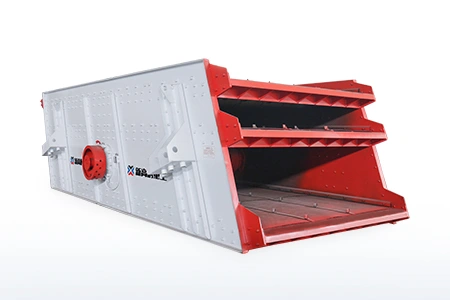
A vibrating screen for recycled aggregate must handle more than a target particle size. Crushed concrete may arrive with residual steel, brick, soil, wood or plastic. Its moisture and particle size distribution can also change from one demolition batch to the next. These conditions affect screening performance even when the required tonnes per hour remain the same.
This guide focuses on recycled concrete aggregate (RCA) after crushing. It explains where the screen belongs in the process, what information is needed to select it, and which operating problems deserve attention. Mixed, unsorted construction and demolition waste needs additional preparation before it reaches this stage.
Why is screening recycled concrete different?
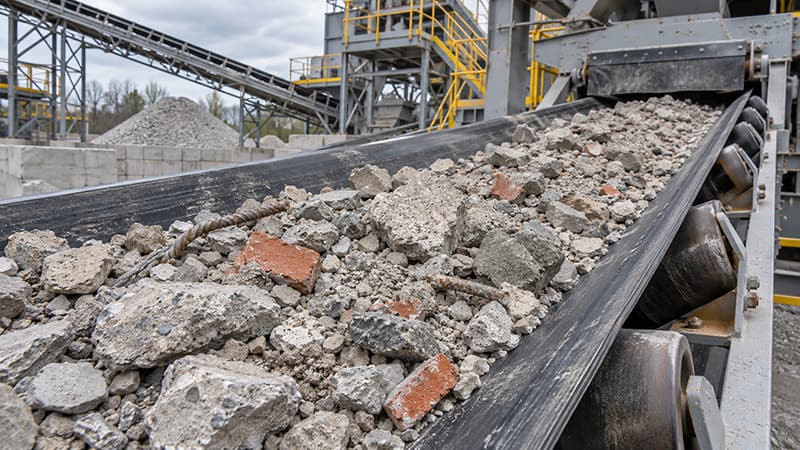
A screen separates material primarily by particle size. It cannot reliably remove steel, wood or plastic simply by choosing a different aperture. The feed therefore needs to be assessed before screen selection.
Residual metal: Rebar and other steel pieces can damage equipment or interrupt material flow. Suitable metal separation should be considered before the screen.
Mixed contaminants: Brick, wood, plastic and other demolition materials can enter the crushed feed. Screening may separate some material by size, but it does not guarantee a clean concrete product.
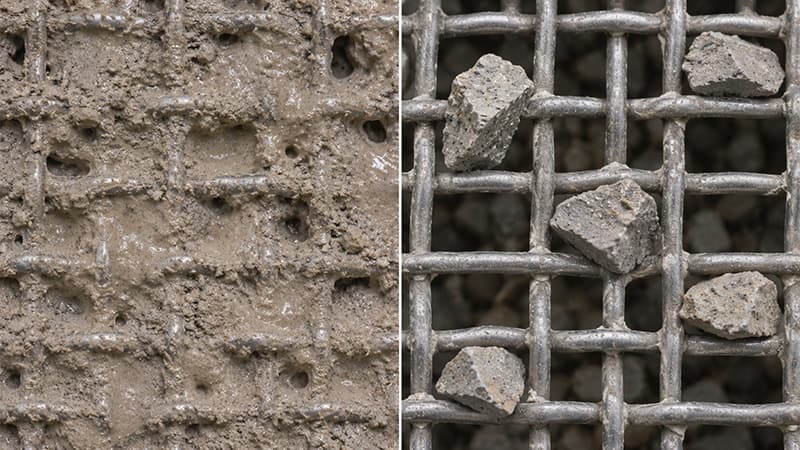
Moisture and clay: Damp fines can coat openings and reduce effective open area.
Variable grading: Changes in the proportion of fines and particles close to the aperture size can alter deck loading and separation efficiency.
Ask for representative feed photographs and samples from normal operation, not only a clean sample prepared for a quotation. If the incoming material varies substantially, the screen should be evaluated against the difficult operating condition as well as the average one.
Where does the screen fit in the process?
A typical illustrative arrangement is:
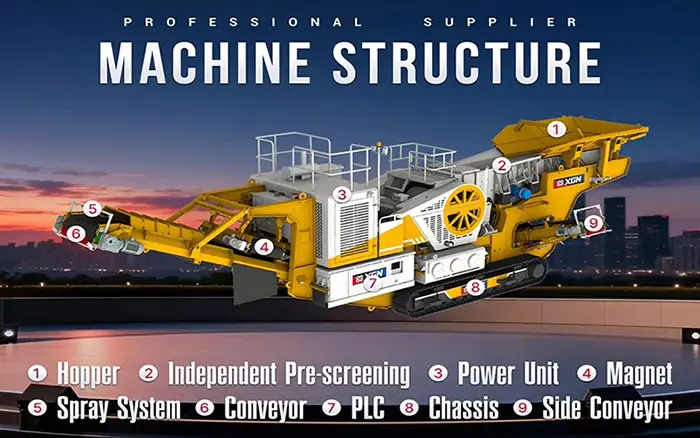
Pre-sorting → crushing → magnetic separation → vibrating screening → product stockpiles
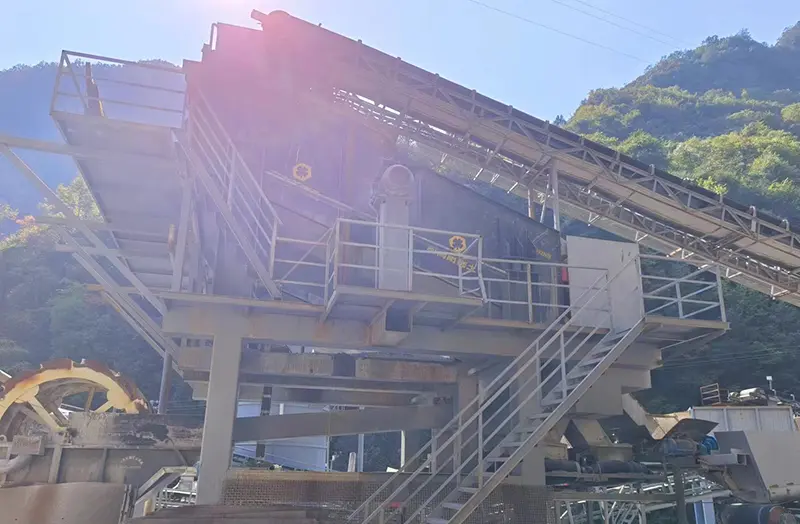
Oversize material may return to the crusher when the project uses a closed circuit. Additional separation of lightweight contaminants, or washing, may be necessary when the feed and product requirements justify it. These are process options, not a claim that every recycling plant requires the same equipment sequence.
The concrete recycling process with a mobile crusher provides broader process context. Here, the selection question is narrower: what must the vibrating screen do after crushing and contaminant control?
Define the product sizes before choosing a screen
Start with the sizes the plant must actually produce. For example, a project might discuss an oversize stream above 20 mm, a 5–20 mm product and fines below 5 mm. These figures are an illustration, not a recommended product specification or a guaranteed screen cut. The required fractions must come from the buyer’s application and applicable local requirements.
Then confirm:
Which fraction is the main saleable product?
What amount of material near each cut size is expected?
Can oversize return to the crusher, or must it leave the plant?
Is the fine fraction a usable product, a feed for further processing or a waste stream?
What contamination limits apply to each product?
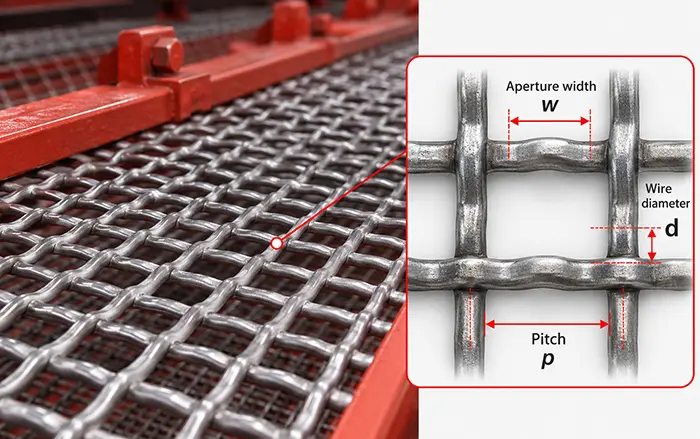
The nominal aperture is only one part of this decision. Actual separation also depends on feed distribution, screen movement, screen media, moisture and operating load. For detailed aperture selection, see how to choose vibrating screen aperture size.
Select the screen and deck for the actual feed
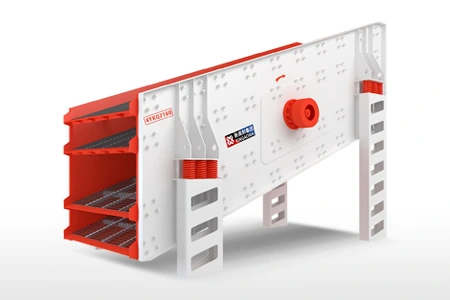
A YKQ Series circular vibrating screen is one model family to assess for aggregate classification. A YKZ Series linear vibrating screen may also be considered where the required material travel, installation layout and duty suit that design. Neither screen type should be selected from the article title or a catalogue capacity figure alone.
For a recycling project, check the maximum feed size, required hourly throughput, bulk density, feed grading, number of product fractions and space available for conveyors. Confirm the load on each deck, not only the total material entering the machine. If a large proportion of the feed is close to a required cut size, request an assessment of screening performance under that condition.
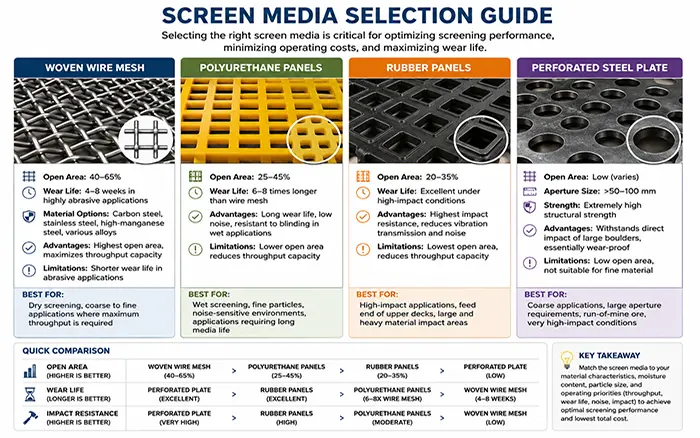
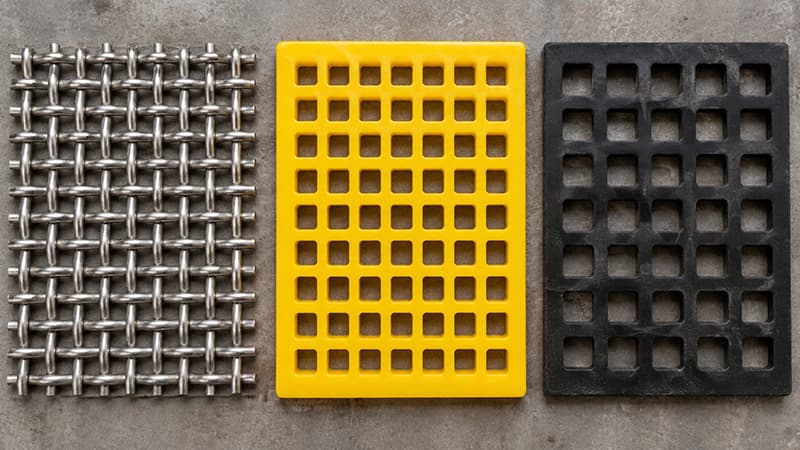
Screen media also needs to match the material and the machine. Wire, polyurethane and rubber media may offer different trade-offs in open area, wear and resistance to impact. The suitable choice depends on the feed and the required separation; none is universally best for recycled concrete. The existing guide to vibrating screen decks and media selection covers those options in greater detail.
Common problems during operation
| Observation | Possible cause to investigate | Practical check |
|---|---|---|
| Fine material remains in the coarse product | Uneven feed, excessive deck loading or blocked openings | Check feed distribution, deck condition and material on each discharge conveyor |
| Openings are covered by damp fines | Moisture, clay or insufficient material preparation | Inspect the feed and media; assess whether feed preparation or a different process is needed |
| Particles lodge in individual openings | A high proportion of particles close to the aperture size | Compare feed grading with aperture size and inspect the affected media |
| Media wears or breaks sooner than expected | Impact from large pieces, residual metal or incorrect support and fastening | Check upstream separation, feed impact point and media installation |
A blocked opening can have different causes. Sticky fines may cover an area of the deck, while individual particles close to the opening size may become lodged in it. Record the symptom before changing media or increasing vibration settings.
What should you send with an enquiry?
To evaluate a vibrating screen for recycled concrete aggregate, send:
Photographs of the feed, including visible concrete, brick and contaminants;
Maximum feed size and, if available, a particle size distribution;
Average and peak feed rate in tonnes per hour;
Estimated bulk density;
Moisture condition and whether clay or soil is present;
Required product size ranges and the intended use of each fraction;
Planned number of product streams and whether oversize will be recirculated;
Available installation space, power supply and project location;
Photographs or drawings of the existing line if the screen is a replacement.
Where the feed is highly variable, a representative material sample and trial are more useful than a catalogue figure alone. Final screen size, deck arrangement and media should be confirmed against the project data.