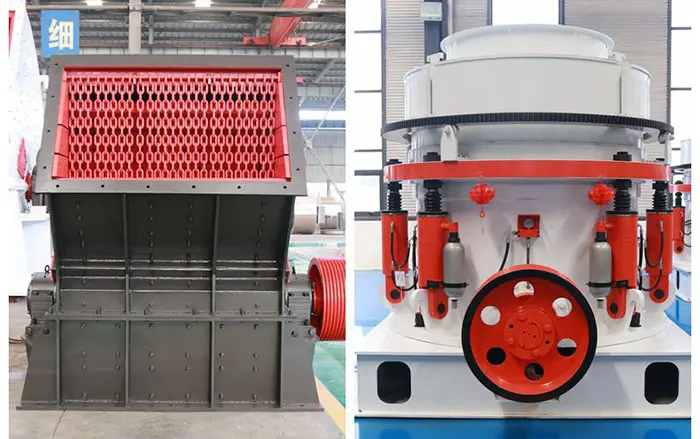
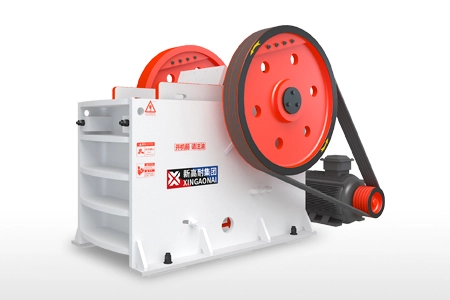
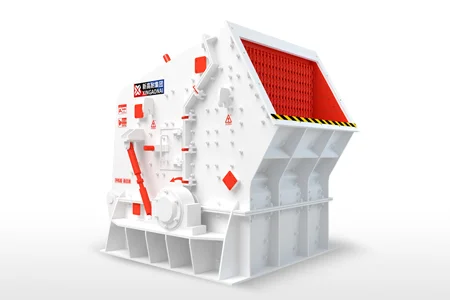
Jaw crushers and impact crushers are commonly used in mining, quarrying, aggregate production and construction-material processing. However, they use different crushing mechanisms and are usually installed at different stages of a crushing plant.
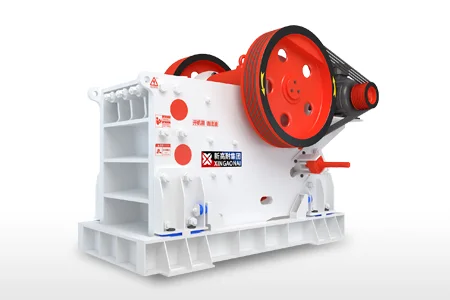
A jaw crusher breaks material by compression between fixed and movable jaw plates. It is normally selected for primary crushing because it can accept large feed and process hard or abrasive rock.
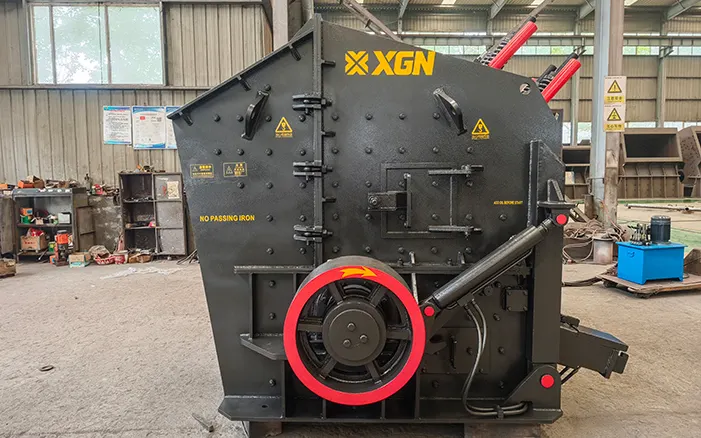
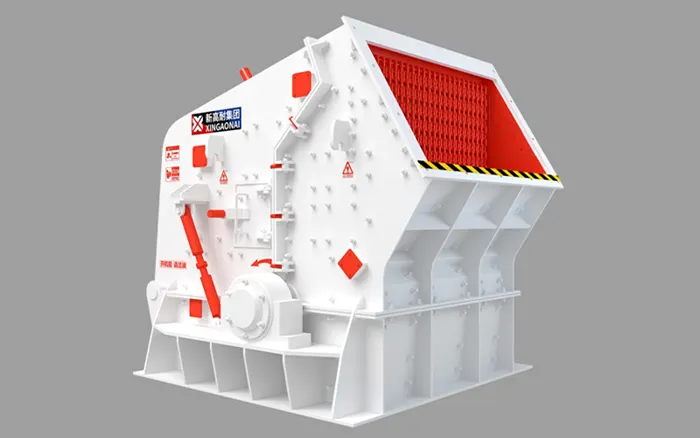
An impact crusher uses high-speed blow bars and impact plates to break material. It is commonly selected for secondary crushing of low- to medium-abrasive materials when a higher reduction ratio and more cubical product shape are required.
In many production lines, the two machines are not direct alternatives. A jaw crusher performs primary crushing, while an impact crusher processes and shapes the jaw crusher discharge.
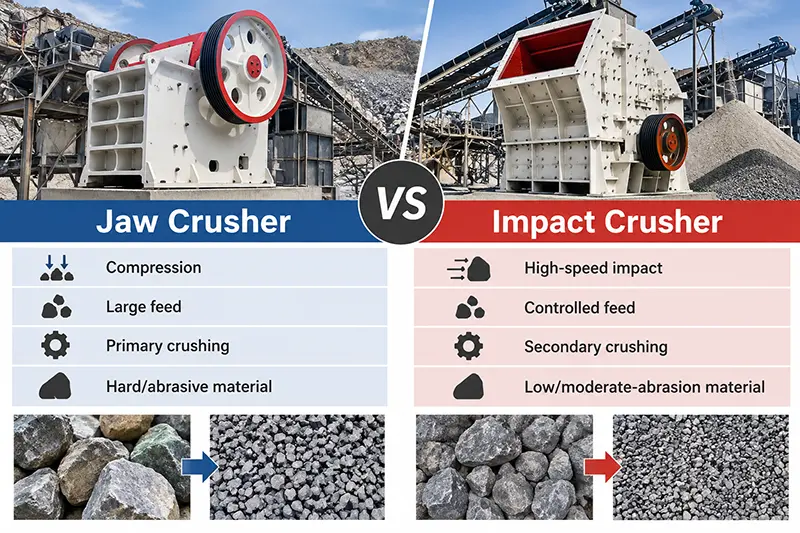
Jaw Crusher vs Impact Crusher: Quick Comparison
| Comparison | Jaw Crusher | Impact Crusher |
|---|---|---|
| Crushing method | Compression | High-speed impact |
| Typical crushing stage | Primary crushing | Mainly secondary crushing |
| Feed size | Generally accepts larger feed | Normally requires smaller, controlled feed |
| Suitable material | Hard, tough or abrasive rock | Brittle, low- to medium-abrasive material |
| Product shape | Coarser and relatively irregular | More cubical with fewer flaky particles |
| Reduction ratio | Moderate | Generally higher |
| Main wear parts | Jaw plates and cheek plates | Blow bars, impact plates and liners |
| Typical use | Mining and hard-rock primary crushing | Limestone crushing and aggregate shaping |
These are general differences. Actual capacity, maximum feed size and product size depend on the selected model and operating conditions.
1. Different Crushing Principles
The most important difference between a jaw crusher and an impact crusher is how each machine breaks material.
How a Jaw Crusher Works
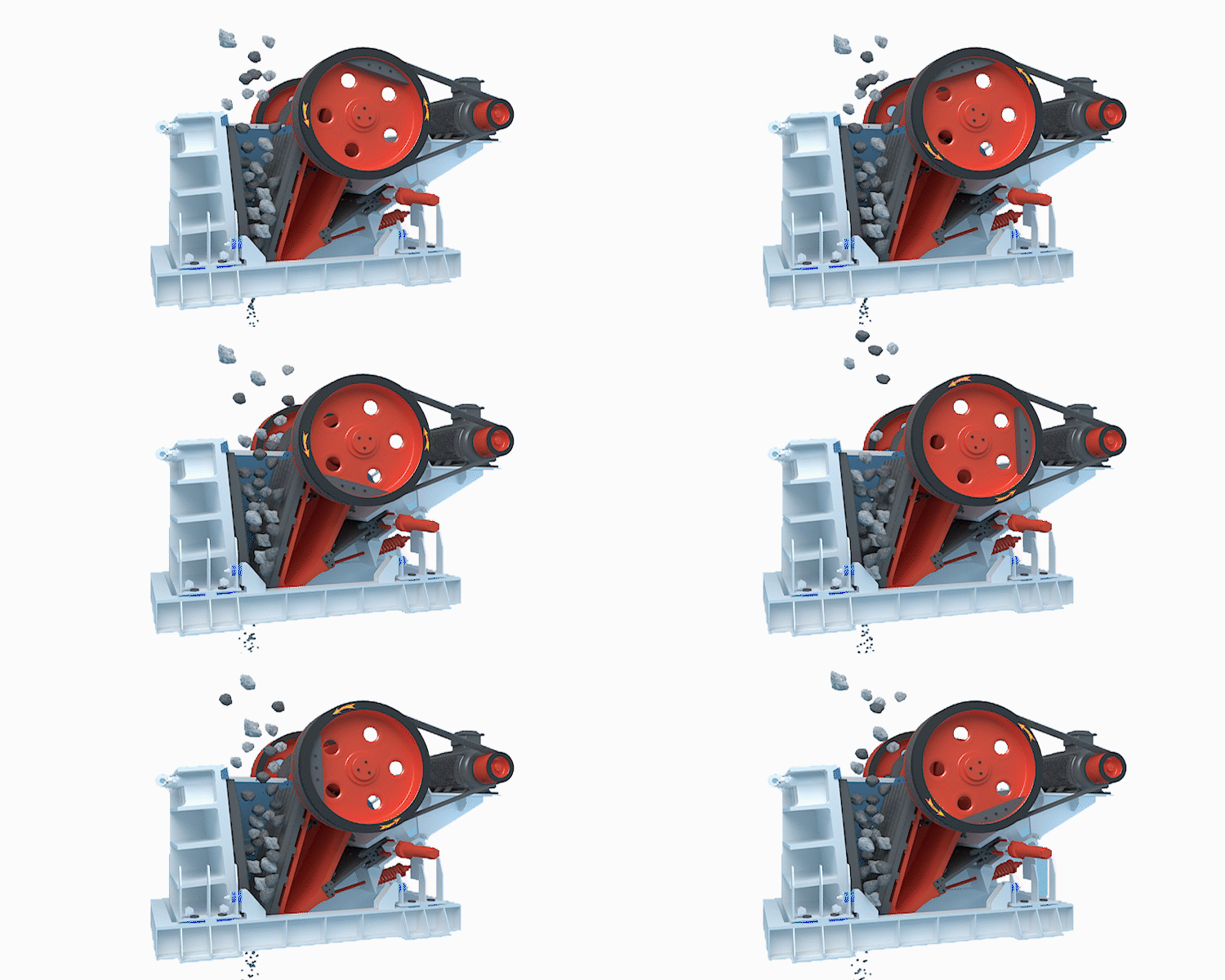
A jaw crusher has a fixed jaw plate and a movable jaw plate. The movable jaw periodically approaches the fixed jaw, compressing the material inside the crushing chamber.
As the movable jaw moves away, the crushed material travels downward. Particles leave through the discharge opening after they become smaller than the selected setting.
Compression crushing makes the jaw crusher suitable for large, hard and abrasive feed.
For additional component information, see the jaw crusher parts guide.
How an Impact Crusher Works
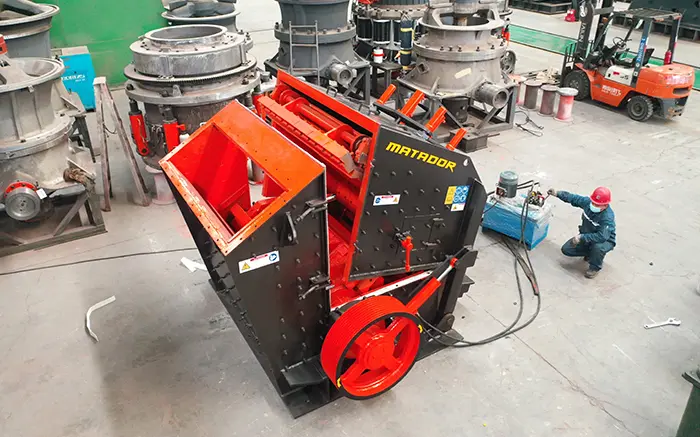
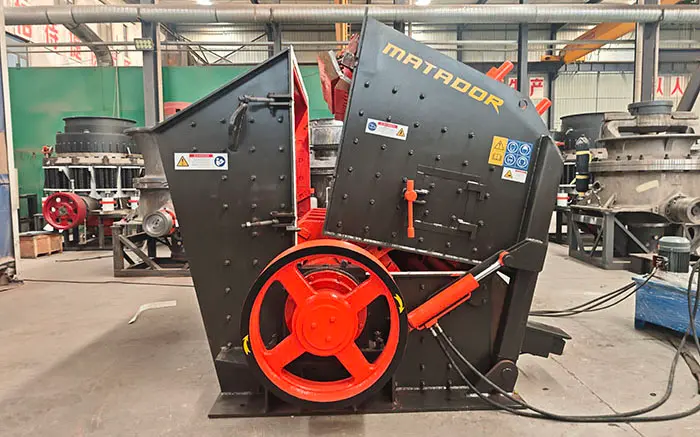
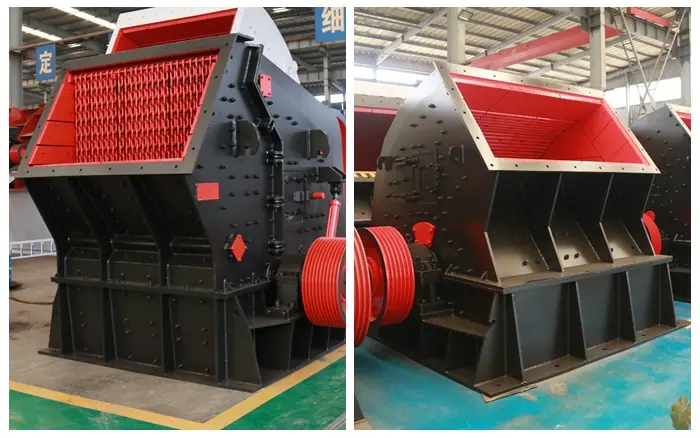
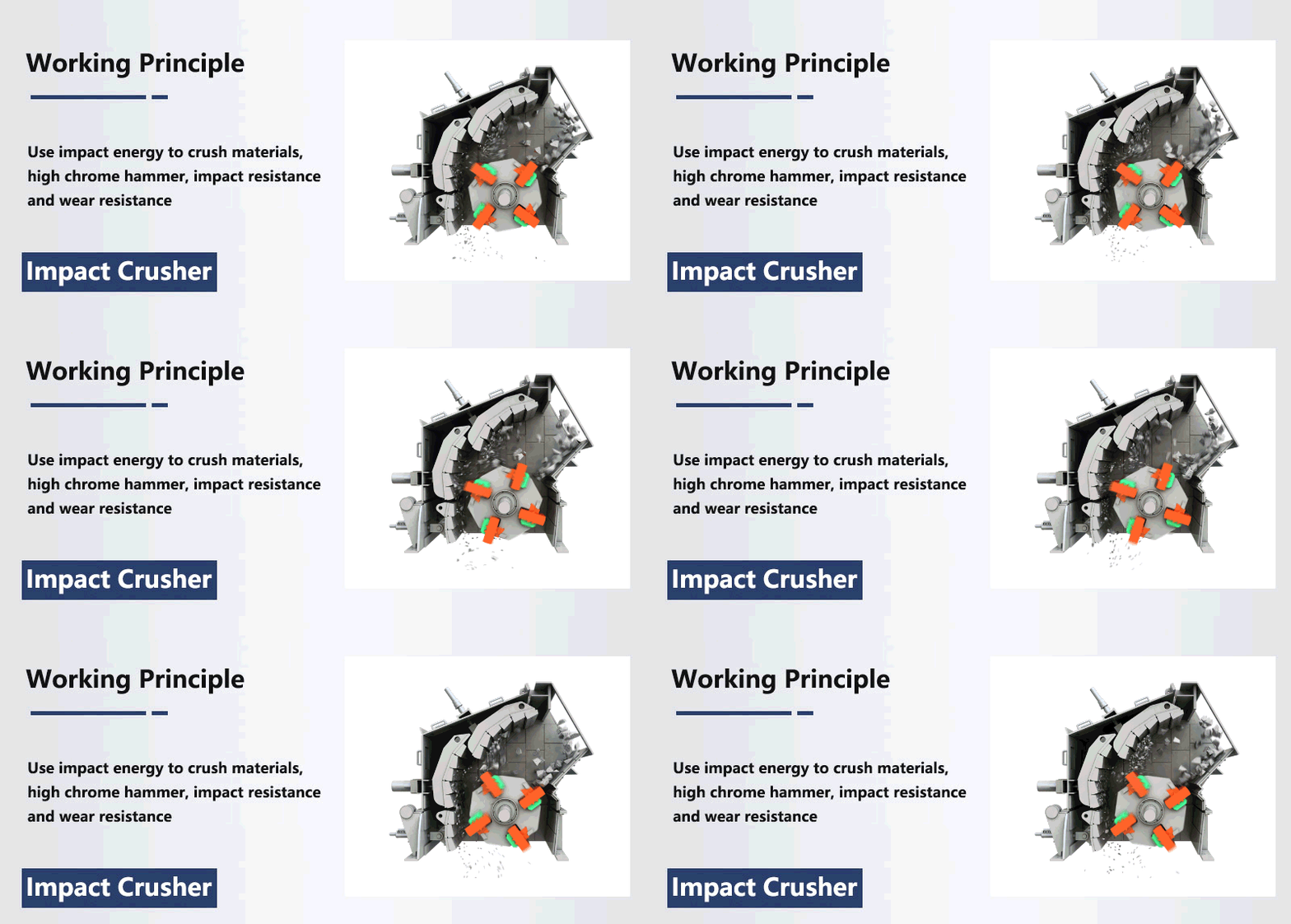
An impact crusher contains a high-speed rotor fitted with blow bars. Material entering the crushing chamber is struck by the blow bars and thrown toward the impact plates. Repeated impacts reduce the material until it can leave the discharge area.
This impact-based process normally provides a higher reduction ratio and produces a more cubical product than primary jaw crushing.
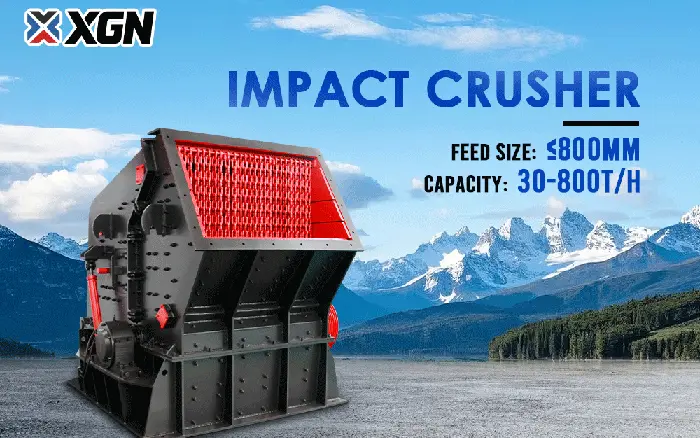
XINGAONAI’s Impact Crusher is designed mainly for secondary crushing. The current product range covers nominal capacities of 30–800 tph and maximum feed sizes of up to 800 mm, depending on the model.
2. Material Suitability
Material hardness alone is not enough to select a crusher. Abrasiveness, toughness, mineral composition, moisture and feed gradation must also be considered.
Materials Suitable for a Jaw Crusher
Jaw crushers are normally preferred for:
Granite
Basalt
Quartzite
River stone
Iron ore
Copper ore
Other hard or abrasive rock
The compression mechanism allows the machine to handle hard feed without exposing high-speed blow bars to continuous abrasive impact.
XINGAONAI offers the PEV Series Jaw Crusher for high-capacity primary crushing and the PE Series Jaw Crusher for conventional primary-crushing applications.
Materials Suitable for an Impact Crusher
Impact crushers are generally more suitable for:
Limestone
Dolomite
Recycled concrete
Bluestone
Coal gangue
Other brittle materials with low to moderate abrasiveness
An impact crusher may technically process harder materials, but blow-bar and liner consumption can increase significantly when the feed contains large amounts of quartz or other abrasive minerals.
For highly abrasive granite, basalt or quartz-rich rock, a jaw crusher followed by a cone crusher is generally more economical than using an impact crusher for continuous secondary crushing.
3. Feed Size and Crushing Stage
Jaw Crusher
A jaw crusher normally performs the first crushing stage. Its relatively large feed opening allows it to receive run-of-mine ore or blasted quarry rock.
According to current XINGAONAI product specifications:
The PE Series Jaw Crusher handles feed sizes up to 1,200 mm, depending on the model.
The PEV Series Jaw Crusher handles feed sizes up to 2,000 mm, depending on the model.
These maximum values apply only to specific models. Crusher selection must be based on the largest feed particle, not only the average feed size.
Impact Crusher
An impact crusher is commonly installed after a jaw crusher. It receives smaller material and further reduces it to the required aggregate size.
XINGAONAI impact crusher models currently specify maximum feed sizes between approximately 300 and 800 mm, depending on the model.
The basic difference is therefore:
Jaw crusher: large feed → coarse primary product
Impact crusher: controlled feed → smaller, better-shaped secondary product
4. Product Size and Particle Shape
A jaw crusher and an impact crusher produce different product characteristics.
Jaw Crusher Product
A jaw crusher normally produces:
A relatively coarse product
A wider particle-size distribution
More elongated or irregular particles
Suitable feed for secondary crushing
Product shape varies with the crushing chamber, jaw plate profile, discharge setting, feed distribution and material characteristics.
Impact Crusher Product
An impact crusher generally produces:
A higher proportion of cubical particles
Fewer elongated and flaky particles
A higher reduction ratio
A product suitable for many aggregate applications
This makes impact crushers useful for producing aggregate for concrete, asphalt and road construction when the feed material has suitable abrasiveness.
The product is better described as “cubical” rather than “smooth.” Crushed aggregate still has angular surfaces.
5. Capacity Comparison
Capacity should not be compared using crusher type alone.
Current XINGAONAI nominal product ranges are:
| XINGAONAI product | Nominal capacity | Maximum feed size |
|---|---|---|
| PE Series Jaw Crusher | 90–1,100 tph | Up to 1,200 mm |
| PEV Series Jaw Crusher | 55–1,590 tph | Up to 2,000 mm |
| Impact Crusher | 30–800 tph | Up to 800 mm |
These figures describe different model ranges and do not mean that every jaw crusher has a higher capacity than every impact crusher.
Actual output depends on:
Material properties
Feed-size distribution
Bulk density
Moisture and clay content
Discharge setting
Feeding consistency
Equipment condition
Screening efficiency
Model capacities should only be compared under equivalent feed and product conditions.
6. Wear Parts and Operating Cost
Jaw Crusher Wear
The main jaw crusher wear parts are:
Fixed jaw plate
Movable jaw plate
Cheek plates
Wear rate depends on the abrasiveness of the feed, jaw plate profile, feed distribution, discharge setting and operating hours.
Impact Crusher Wear
The main impact crusher wear parts are:
Blow bars
Impact plates
Chamber liners
Rotor protection components
Because these parts operate under high-speed impact, material abrasiveness has a strong influence on wear cost.
For a technical overview, see the impact crusher parts guide.
It is not reliable to state that jaw plates or blow bars will last a fixed number of months. Wear life should be evaluated in operating hours or cost per tonne under comparable site conditions.
When processing limestone or another low-abrasion material, an impact crusher may provide an economical combination of reduction ratio and product shape. When processing abrasive granite or quartz-rich rock, frequent blow-bar replacement may make compression crushing more economical.
Jaw Crusher vs Impact Crusher: Which Should You Choose?
Choose a jaw crusher when:
The machine will perform primary crushing.
The feed contains large rocks.
The material is hard, tough or abrasive.
A coarse product will be processed by downstream equipment.
Wear cost is more important than final particle shape.
Choose an impact crusher when:
The machine will perform secondary crushing.
The material is brittle and not highly abrasive.
A high reduction ratio is required.
Cubical aggregate shape is important.
The application involves suitable limestone or recycled concrete.
Use both machines when:
The raw feed is too large for the impact crusher.
Primary and secondary crushing are both required.
The plant needs a combination of large-feed handling and improved aggregate shape.
A common production line is:
Vibrating feeder → Jaw crusher → Impact crusher → Vibrating screen
In this arrangement, the jaw crusher reduces the large raw feed, while the impact crusher performs secondary reduction and improves product shape.
Typical Selection Examples
| Application | Recommended arrangement | Reason |
|---|---|---|
| Granite primary crushing | Jaw crusher | Large, hard and abrasive feed |
| Basalt aggregate plant | Jaw crusher followed by cone crusher | Lower wear risk for abrasive material |
| Limestone aggregate plant | Jaw crusher plus impact crusher, or suitable primary impact crusher | High reduction and good particle shape |
| Iron ore primary crushing | Jaw crusher | Suitable for large and tough ore feed |
| Recycled concrete | Jaw or impact crusher, depending on feed size | Selection depends on reinforcement and target product |
| Cubical limestone aggregate | Impact crusher | Better particle shape for suitable material |
These are starting recommendations rather than final equipment specifications.
Conclusion
The key difference between a jaw crusher and an impact crusher is their role in the crushing process.
A jaw crusher uses compression and is normally selected for primary crushing of large, hard or abrasive material. An impact crusher uses high-speed impact and is commonly selected for secondary crushing when a higher reduction ratio and more cubical product are required.
For hard-rock primary crushing, compare the PE Series Jaw Crusher and PEV Series Jaw Crusher.
For secondary crushing of suitable limestone, recycled concrete and other low- to medium-abrasive materials, review the specifications of the XINGAONAI Impact Crusher.
The final selection should be based on feed size, material abrasiveness, required capacity, target product size and expected wear cost—not on crusher type alone.