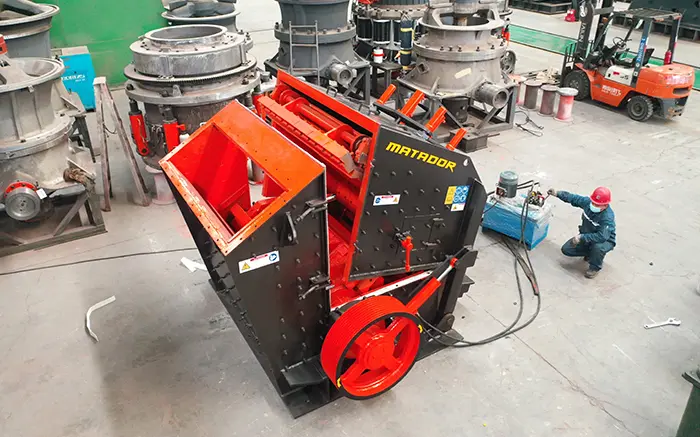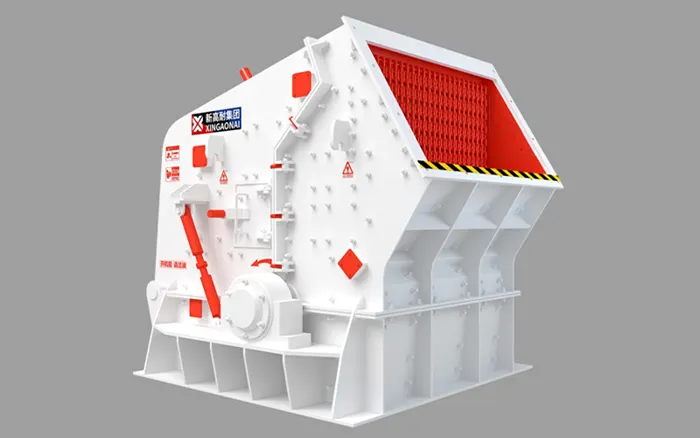
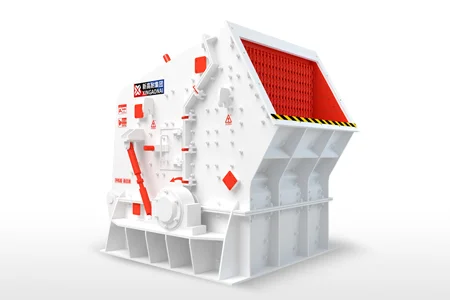
A primary impact crusher uses a high-speed horizontal rotor and blow bars to reduce large feed material at the first crushing stage. It can provide a high reduction ratio and a more cubical product than many compression crushers, potentially reducing the amount of secondary crushing required.
However, a primary impact crusher is not the correct choice for every project.
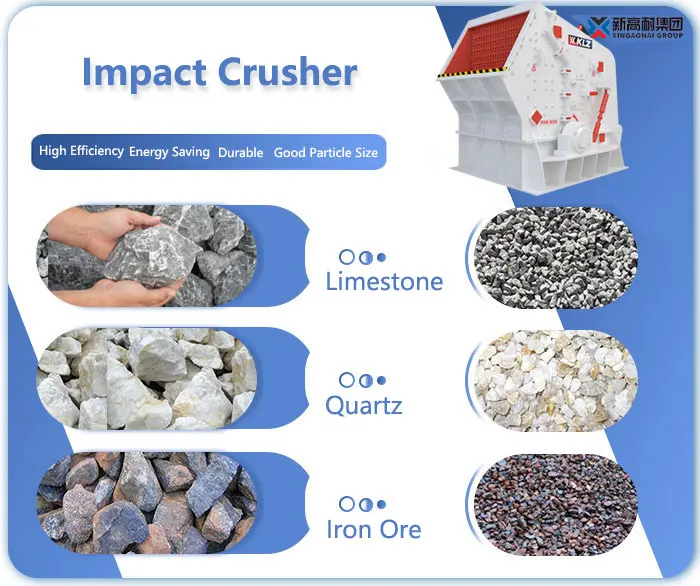
It generally performs best with soft to medium-hard, brittle and relatively low-abrasion materials such as limestone, dolomite, gypsum, coal, sandstone, recycled concrete and asphalt. Hard, quartz-rich and highly abrasive materials can cause rapid wear of blow bars, impact plates and chamber liners.
The decision should therefore be based on:
Material hardness and abrasiveness.
Maximum feed size.
Feed-size distribution.
Moisture and clay content.
Required capacity.
Target product sizes.
Particle-shape requirements.
Expected wear cost.
Number of crushing stages.
Stationary or mobile installation.
Downstream screening arrangement.
This guide explains what defines a primary impact crusher, where it fits in a crushing plant, which materials it can process and how to determine whether it is more suitable than a jaw, gyratory, hammer or secondary impact crusher.
What Is a Primary Impact Crusher?
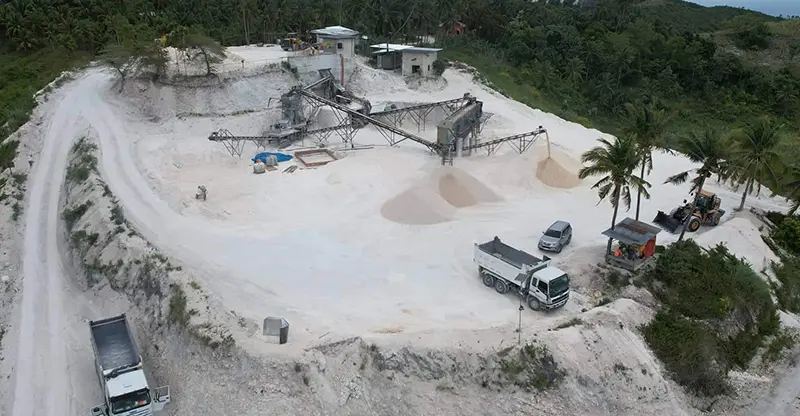
A primary impact crusher is a horizontal-shaft impact crusher positioned at the first size-reduction stage of a crushing circuit.
Large material from a quarry, mine, demolition site or stockpile enters the machine without passing through another crusher first. The rotor-mounted blow bars strike the material and throw it against stationary impact aprons. Repeated impacts reduce the material until it can leave the chamber.
A simplified material flow is:
Raw Material → Feeding and Pre-screening → Primary Impact Crushing → Screening or Further Crushing
The word “primary” describes the crusher’s duty within the process. It does not mean that every impact crusher can accept direct quarry or run-of-mine feed.
To perform primary crushing, the selected model must have:
A sufficiently large feed opening.
A rotor designed for the required lump size and impact load.
Suitable blow-bar material.
Adequate drive power.
Heavy-duty impact aprons and housing.
Sufficient capacity under the actual feed conditions.
A feeding system that controls large material.
Protection against uncrushable objects.
A secondary impact crusher, by comparison, normally receives material that has already been reduced by a jaw, gyratory or another primary crusher.
Primary Impact Crusher vs Secondary Impact Crusher
| Factor | Primary impact crusher | Secondary impact crusher |
|---|---|---|
| Position in the circuit | First crushing stage | After a primary crusher |
| Feed source | Direct quarry, stockpile or demolition feed | Pre-crushed material |
| Typical feed condition | Larger and less uniform | Smaller and more controlled |
| Feed opening | Relatively large | Usually smaller |
| Rotor duty | Higher impact from large lumps | More controlled crushing and shaping |
| Main objective | Large initial size reduction | Further reduction and product shaping |
| Wear risk | Strongly influenced by large lumps and contaminants | Influenced by abrasiveness and recirculation |
| Upstream equipment | Hopper, feeder and optional pre-screen | Primary crusher and transfer equipment |
| Downstream equipment | Screen or secondary crusher | Screen, tertiary crusher or stockpile |
A machine should not be assigned to primary duty solely because the material physically fits through its feed opening. The rotor, chamber, drive and wear parts must also be able to withstand the expected load.
How Does a Primary Impact Crusher Work?
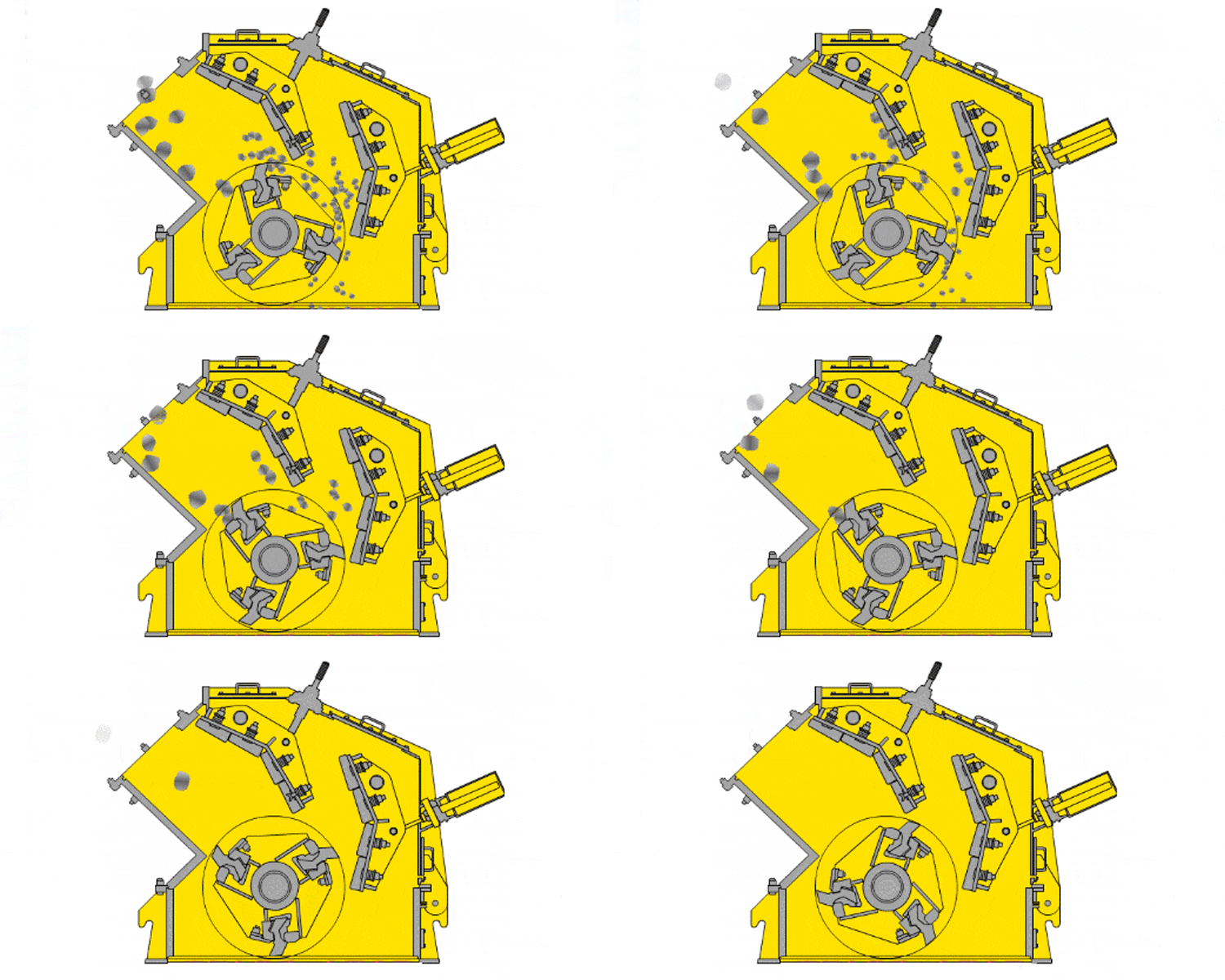
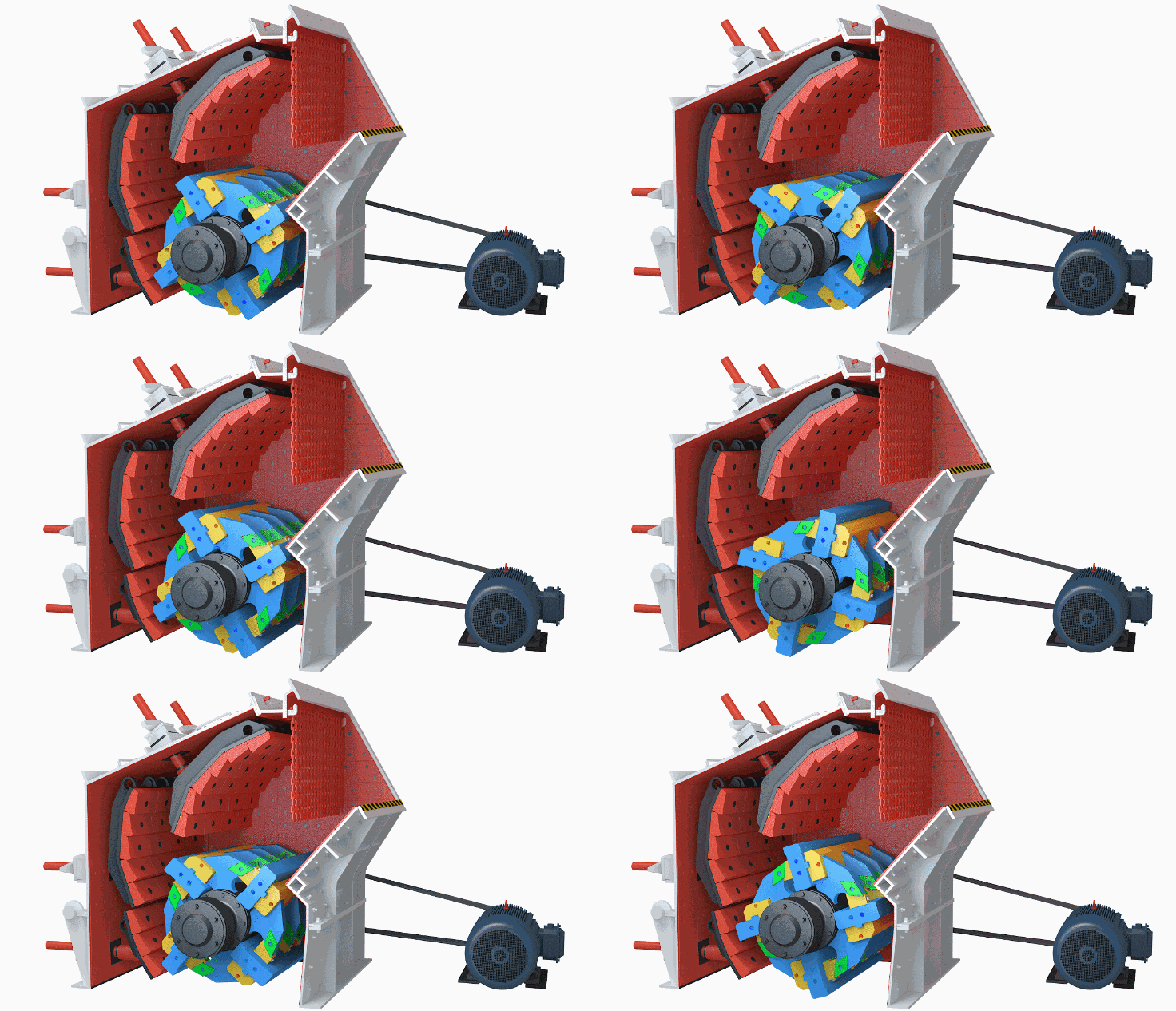
The crushing process is based on the transfer of kinetic energy from the rotating rotor to the feed material.
Step 1: Controlled Feeding
A hopper and feeder deliver material into the crushing chamber.
The feeding system should:
Control the feed rate.
Prevent sudden surges.
Distribute material across the rotor width.
Remove fine material before crushing when practical.
Limit feed to the model’s maximum allowable size.
Reduce the risk of uncrushable objects entering the chamber.
Uniform feeding improves rotor loading and helps prevent one end of the blow bars from wearing faster than the other.
Step 2: Initial Blow-Bar Impact
The rotor rotates at high speed. Blow bars mounted in the rotor strike the incoming material and transfer kinetic energy to it.
Brittle material tends to fracture along natural weaknesses. The first impact produces the largest initial size reduction.
Step 3: Collision with the Impact Aprons
After the first impact, the material is accelerated toward the impact aprons or breaker plates.
The collision causes further breakage, after which the particles:
Return toward the rotor.
Collide with other particles.
Strike another apron.
Move toward the discharge zone.
Step 4: Repeated Size Reduction
Material circulates through repeated impact zones until it becomes small enough to move through the lower part of the chamber.
The final product is influenced by:
Rotor speed.
Blow-bar profile.
Apron position.
Chamber geometry.
Feed properties.
Feed rate.
Downstream screening and recirculation.
Step 5: Discharge
Crushed material exits onto a conveyor and moves to:
A vibrating screen.
A secondary crushing stage.
A product stockpile.
A closed-circuit return conveyor.
For a more detailed explanation of the crushing mechanism, see how an impact crusher works.
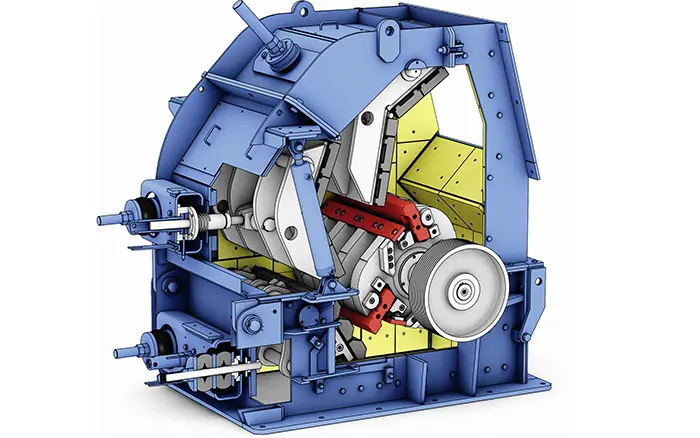
Main Components of a Primary Impact Crusher
A primary impactor normally includes the following systems.
Rotor
The rotor holds the blow bars and stores the rotational energy used for crushing. Its diameter, width, mass, speed and balance affect:
Feed acceptance.
Impact energy.
Capacity.
Product gradation.
Vibration.
Bearing load.
Blow Bars
Blow bars make the first high-speed contact with the feed.
Material selection may include:
High-chromium iron.
Martensitic steel.
Manganese steel.
Composite materials with ceramic inserts.
The correct choice depends on impact severity, abrasiveness, feed size and the risk of metal entering the crusher.
Impact Aprons and Breaker Plates
Impact aprons redirect the material into additional crushing zones. Replaceable plates or liners protect their structural sections.
The apron position affects material movement and product gradation, but it is not the only factor controlling finished-product size.
Rotor Shaft and Bearings
The shaft supports the rotor and transfers the load to the bearing assemblies. Bearings must operate under high rotational, impact and vibration loads.
Lubrication, alignment and rotor balance are essential to bearing reliability.
Housing and Wear Liners
The housing contains the crushing process. Replaceable liners protect:
Side walls.
Feed zone.
Apron surfaces.
Discharge area.
Selected rotor areas.
Drive System
The drive may include:
Electric motor.
V-belts.
Pulleys.
Coupling.
Motor base.
Belt-tensioning system.
Protective guards.
Hydraulic System
Depending on the model, the hydraulic system may help:
Open the housing.
Adjust the impact aprons.
Provide overload relief.
Improve access for maintenance.
For a detailed explanation of these assemblies and their replacement criteria, see the guide to impact crusher parts.
What Materials Can a Primary Impact Crusher Process?
Material suitability depends on more than compressive strength. Hardness, abrasiveness, mineral composition, fracture behaviour, moisture and contaminants must be evaluated together.
Materials Generally Suitable for Primary Impact Crushing
Limestone
Limestone is one of the most common primary-impact applications because many deposits are:
Relatively soft.
Brittle.
Low in abrasive minerals.
Easy to fracture by impact.
A primary impactor may provide both initial size reduction and improved particle shape. Depending on the required products, this can simplify the crushing circuit.
However, limestone deposits vary. Silica bands, hard inclusions and clay can change wear and feeding behaviour.
Dolomite
Some dolomite can be processed effectively by impact crushing, particularly when abrasiveness remains moderate.
Material testing is important because dense or silica-rich dolomite may produce higher wear than expected.
Gypsum
Gypsum is comparatively soft and brittle. Impact crushing can provide a high reduction ratio, although moisture and sticky fines must be controlled to prevent buildup.
Coal and Coal Gangue
Suitable coal applications may benefit from impact crushing because the material fractures easily. The design must still consider moisture, dust control and the required amount of fines.
Gangue properties vary and should be tested before final selection.
Sandstone
Low-abrasion sandstone may be suitable. Sandstone with high quartz content can cause rapid blow-bar and liner wear even when its compressive strength appears manageable.
Recycled Concrete
Primary impact crushers are frequently considered for concrete recycling because they can:
Reduce large concrete pieces.
Produce a relatively cubical recycled aggregate.
Process mixed demolition feed.
Be integrated with magnetic separation.
Reinforcing steel and other contaminants require controlled handling. The crusher must not be treated as protection against every uncrushable object.
Reclaimed Asphalt
Impact crushing can help separate and reduce asphalt material for recycling. Feed temperature, stickiness and buildup must be considered.
Materials Requiring Caution
The following materials may be technically crushable but economically unsuitable for continuous primary impact duty:
Granite.
Basalt.
Quartzite.
River stone with high quartz content.
Hard metallic ores.
Abrasive slag.
Silica-rich construction waste.
These materials can accelerate wear of:
Blow bars.
Impact plates.
Side liners.
Rotor-protection parts.
Feed and discharge liners.
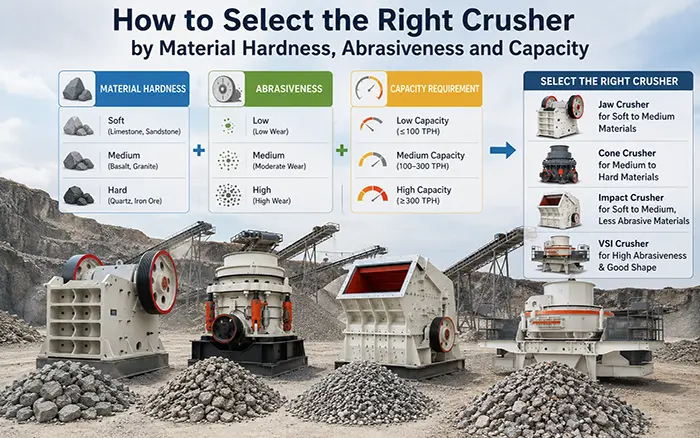
In hard and abrasive applications, a jaw or gyratory crusher is usually more economical for the primary stage.
The guide on selecting a crusher by hardness, abrasiveness and capacity explains why hardness and abrasiveness must be evaluated separately.
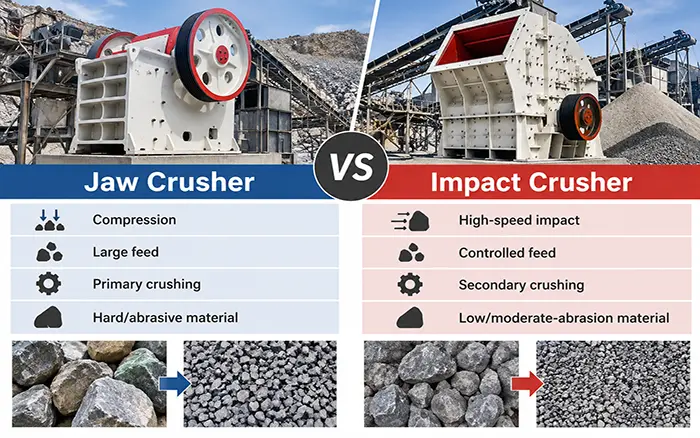
Primary Impact Crusher vs Jaw Crusher
Both machines may be considered for primary crushing, but their operating mechanisms and application ranges are different.
| Factor | Primary impact crusher | Jaw crusher |
|---|---|---|
| Crushing principle | High-speed impact | Compression |
| Best material range | Soft to medium-hard, brittle and low-abrasion material | Hard, strong and abrasive rock |
| Feed condition | Requires controlled feed and suitable lump size | Can accept large, irregular feed |
| Product shape | Generally more cubical | Usually more angular and irregular |
| Reduction in one stage | Potentially high for suitable material | More moderate and controlled |
| Fines generation | May produce more fines | Generally produces fewer fines |
| Wear cost | Can be high with abrasive feed | Usually more manageable with hard rock |
| Main wear parts | Blow bars, impact plates and liners | Fixed and moving jaw plates |
| Tramp-material sensitivity | High-speed rotor requires careful protection | Robust but still requires protection |
| Typical applications | Limestone, recycling, gypsum, coal and some sandstone | Granite, basalt, ores, river stone and general primary crushing |
| Downstream requirement | May reduce the need for another crushing stage | Often followed by cone or impact crushing |
Choose a Primary Impact Crusher When
The material is brittle and relatively low in abrasiveness.
Cubical product shape is important.
A high stage reduction is desirable.
Producing some fines is acceptable.
The feed can be controlled.
Blow-bar wear is economically manageable.
Concrete or asphalt recycling is required.
The circuit may be simplified by combining reduction and shaping.
Choose a Jaw Crusher When
The material is hard or highly abrasive.
The feed includes large, irregular rock.
Wear cost is a major concern.
A coarse primary product is acceptable.
The machine must operate continuously with demanding quarry or mine feed.
The material contains quartz or hard minerals.
The primary stage will be followed by cone or impact crushing.
For a more detailed evaluation, consult the jaw crusher vs impact crusher comparison.
Advantages of Primary Impact Crushing
1. High Reduction in a Suitable Application
Impact crushing can provide substantial size reduction when the material fractures easily.
This may allow a plant to move from:
Primary Crusher → Secondary Crusher → Screen
to a simpler configuration such as:
Primary Impact Crusher → Screen
Whether a secondary stage can be removed depends on the feed distribution, final products, recirculating load and practical crusher performance.
A high advertised reduction ratio should not be used as the only selection criterion. The crusher reduction ratio guide explains how size reduction should be distributed across the complete circuit.
2. Improved Particle Shape
Repeated impacts tend to break suitable material along weak planes, producing a more cubical aggregate than many primary compression crushers.
Improved shape can be valuable for:
Concrete aggregate.
Asphalt aggregate.
Road construction.
Recycled aggregate.
Products with restrictions on flat or elongated particles.
Actual shape still depends on:
Feed properties.
Rotor speed.
Blow-bar condition.
Apron configuration.
Screening.
Closed-circuit operation.
3. Potentially Simpler Plant Design
If the required reduction and product specifications can be achieved with fewer crushing stages, the plant may require:
Fewer crushers.
Fewer transfer conveyors.
Less structural steel.
Fewer foundations.
Simpler electrical control.
Less intermediate stockpiling.
The total plant must still include adequate feeding, screening, dust control and product handling.
4. Suitable for Recycling
Impact crushers can be integrated into mobile or stationary recycling systems with:
Vibrating feeders.
Pre-screens.
Magnetic separators.
Picking stations.
Recirculating screens.
Dust suppression.
5. Adjustable Product Characteristics
Changes to rotor speed, apron position and circuit configuration can influence product size and fines generation.
These adjustments should be evaluated together rather than relying only on the apron gap.
Limitations of a Primary Impact Crusher
1. Wear with Abrasive Material
The principal limitation is wear cost.
As abrasiveness increases, the plant may experience:
Shorter blow-bar life.
Faster impact-plate wear.
More frequent shutdowns.
Greater spare-parts consumption.
Higher labour requirements.
Increased cost per tonne.
A lower purchase price does not automatically produce a lower lifetime cost.
2. Sensitivity to Feed Distribution
Material concentrated on one side can cause:
Uneven blow-bar wear.
Uneven liner wear.
Unbalanced rotor loading.
Reduced use of the chamber width.
Unstable product gradation.
The feeder and chute must distribute material across the rotor.
3. Fines Generation
Impact crushing can produce more fines than compression crushing.
This may be beneficial when fine aggregate is required, but undesirable when the plant’s objective is to maximise coarse products.
4. Wet and Sticky Material
Moderate moisture may be manageable, but excessive water or clay can cause:
Feed-chute buildup.
Material accumulation in the chamber.
Reduced capacity.
Unstable feeding.
Discharge restriction.
Increased cleaning requirements.
Pre-screening, washing or other feed treatment may be necessary.
5. Uncrushable Objects
Metal and other uncrushable objects can damage:
Blow bars.
Rotor seats.
Impact aprons.
Liners.
Shaft and bearings.
Recycling applications should consider magnetic separation, operator inspection and appropriate overload protection.
Stationary vs Mobile Primary Impact Crusher
Stationary Primary Impact Crusher
A stationary machine is normally integrated into a fixed plant with permanent:
Feed hopper.
Feeder.
Structural supports.
Conveyor system.
Vibrating screens.
Electrical equipment.
Dust-control system.
Maintenance platforms.
It is generally suitable when:
Material comes from one long-term source.
High annual production is required.
The plant layout is permanent.
Multiple finished products are produced.
Fixed infrastructure is economically justified.
Mobile Primary Impact Crusher
A mobile impact crusher combines the crushing unit with a tracked or wheeled chassis. Depending on the configuration, it may also include:
Feed hopper.
Feeder.
Pre-screen.
Magnet.
Discharge conveyor.
Return screen.
Remote control.
Dust suppression.
It is generally suitable when:
The material source changes.
Crushing must occur near the demolition or excavation face.
Transporting unprocessed material is expensive.
The project is temporary.
Rapid relocation is required.
Concrete and asphalt are being recycled.
Mobility does not remove the need to evaluate feed size, abrasiveness, capacity and final-product requirements.
Typical Primary Impact Crusher Circuits
Configuration 1: Low-Abrasion Limestone with Direct Screening
Hopper → Vibrating Feeder → Primary Impact Crusher → Vibrating Screen → Finished Products
Oversize material may return to the crusher in a closed circuit.
Suitable when:
Feed size is within the machine limit.
Limestone is relatively low in abrasiveness.
Required products can be achieved in one crushing stage.
Fines generation is acceptable.
Configuration 2: Limestone with Secondary Size Control
Hopper → Feeder → Primary Impact Crusher → Secondary Crusher → Screen
Suitable when:
The primary impactor cannot produce all required sizes efficiently.
Product specifications are narrow.
Several aggregate sizes are required.
Production requires additional reduction.
Configuration 3: Hard-Rock Crushing
Hopper → Feeder → Jaw Crusher → Cone Crusher → Vibrating Screen
This is normally more appropriate for:
Granite.
Basalt.
Quartzite.
Hard metallic ores.
Other abrasive materials.
An impact crusher may still be added later for shaping if the additional wear cost is acceptable.
Configuration 4: Concrete Recycling
Feed Hopper → Pre-screen → Primary Impact Crusher → Magnetic Separator → Screen → Product
The plant may also require:
Manual sorting.
Air separation.
Dust suppression.
Recirculation of oversize material.
Removal of wood, plastic and other contaminants.
For a wider explanation of how crushing, screening and recirculation work together, refer to the aggregate production process.
How to Select a Primary Impact Crusher
Step 1: Identify the Material
Provide the exact material name. “Stone” or “rock” is not enough.
Useful information includes:
Geological or mineral composition.
Proportion of quartz.
Compressive strength.
Mohs hardness.
Abrasion Index, if available.
Bulk density.
Fracture characteristics.
Variability across the deposit.
If material data are unavailable, samples may need to be tested.
Step 2: Define Feed Size
Provide:
Maximum lump size.
F80.
Complete feed-size distribution.
Percentage of fines.
Shape of the largest pieces.
Expected variation after blasting or excavation.
The maximum feed opening is not the same as the recommended continuous feed size. Feed must enter the chamber reliably without bridging or repeated impact on the feed opening.
Step 3: Define Capacity
Capacity should include:
Normal operating throughput.
Peak throughput.
Daily operating hours.
Annual production requirement.
Expected plant availability.
Future expansion requirement.
Published crusher capacity is normally based on defined operating conditions. Actual capacity changes with:
Material density.
Feed gradation.
Moisture.
Clay.
Rotor speed.
Apron setting.
Wear condition.
Feeding consistency.
Downstream restrictions.
The article on crusher capacity in tons per hour explains why rated and actual plant output may differ.
Step 4: Define Finished Products
Specify:
Required product sizes.
Percentage required in each size.
Maximum permitted oversize.
Acceptable fines percentage.
Particle-shape requirements.
Final application.
Applicable aggregate standard.
A requirement such as “0–40 mm” is not enough when the plant must sell several separate products.
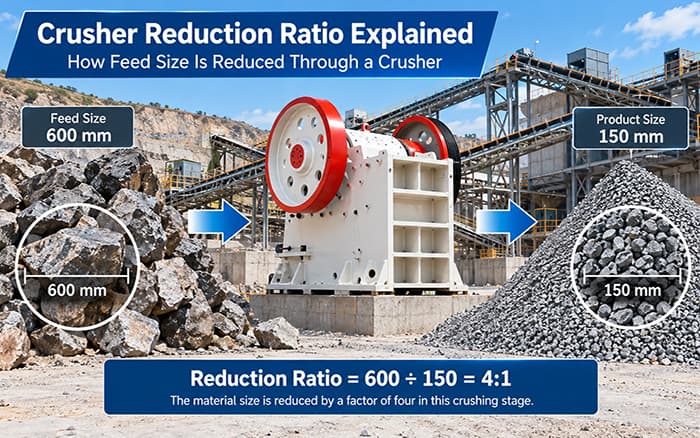
Step 5: Determine the Required Reduction
Calculate the approximate reduction from feed to crusher product:
Reduction Ratio = Feed Size ÷ Product Size
Use the same size basis for both values, such as maximum size or F80/P80.
Do not assume that one crusher should provide the entire plant reduction. Screening and additional stages may provide a more stable and economical solution.
Step 6: Estimate Wear Cost
Request information about:
Blow-bar material.
Blow-bar weight.
Number of bars.
Estimated service life under comparable material.
Impact-plate material.
Liner replacement requirements.
Local part availability.
Delivery time.
Replacement labour.
Planned shutdown duration.
Calculate wear cost per tonne rather than only the price of one set of blow bars.
Step 7: Evaluate Feeding and Pre-screening
A suitable feeder should:
Control the flow.
Reduce surges.
Distribute the feed.
Handle the maximum lump size.
Remove fines when beneficial.
Removing material already smaller than the crusher’s target feed duty can:
Increase effective capacity.
Reduce unnecessary wear.
Lower power demand.
Reduce fines generation.
Step 8: Check Downstream Equipment
The impact crusher must be matched with:
Discharge conveyor capacity.
Screen area.
Screen opening sizes.
Return-conveyor capacity.
Stockpile arrangement.
Dust control.
Metal-removal equipment.
A crusher cannot maintain rated output if the screen or conveyor restricts the material flow.
Step 9: Confirm Maintenance Access
Check whether the layout provides space for:
Opening the crusher housing.
Removing blow bars.
Lifting the rotor.
Servicing bearings.
Replacing apron liners.
Accessing the drive.
Using a crane or lifting beam.
Storing removed parts safely.
Maintenance access should be considered before finalising foundations and structural steel.
Step 10: Compare Total Cost per Tonne
Evaluate:
Equipment price.
Foundations.
Installation.
Power.
Blow bars and liners.
Labour.
Lubricants.
Planned downtime.
Unplanned downtime risk.
Spare-parts inventory.
Product value.
Possible reduction in the number of crushing stages.
The lowest equipment quotation may not provide the lowest processing cost.
XINGAONAI PF Impact Crusher Range
The current XINGAONAI PF impact crusher range includes models from PF1007 to PF1820.
Published specifications include:
| Model | Maximum feed size | Published capacity |
|---|---|---|
| PF1007 | ≤300 mm | 30–70 t/h |
| PF1010 | ≤350 mm | 50–90 t/h |
| PF1210 | ≤350 mm | 70–130 t/h |
| PF1214 | ≤350 mm | 100–180 t/h |
| PF1315 | ≤500 mm | 130–250 t/h |
| PF1320 | ≤500 mm | 160–350 t/h |
| PF1520 | ≤700 mm | 200–550 t/h |
| PF1820 | ≤800 mm | 400–800 t/h |
These figures are preliminary selection references, not unconditional production guarantees.
Actual performance depends on:
Material.
Feed gradation.
Bulk density.
Moisture and clay.
Rotor configuration.
Apron setting.
Feeding stability.
Screening circuit.
Wear condition.
The PF range is commonly positioned for secondary crushing. A larger model should only be assigned primary-impact duty when the actual material, maximum feed size, impact load and circuit requirements have been technically evaluated.
Primary Impact Crusher Maintenance Requirements
Primary-duty feeding can expose the machine to larger and less uniform material than secondary crushing. Maintenance should therefore focus on:
Blow-bar wear and cracks.
Blow-bar weight differences.
Wedges and locking blocks.
Rotor seating surfaces.
Rotor balance.
Impact-apron liners.
Side liners.
Shaft and bearings.
Belt tension and pulley alignment.
Hydraulic leakage.
Frame and structural connections.
Feed-chute wear.
Material buildup.
Maintenance should follow:
Daily Inspection → Wear Measurement → Trend Analysis → Planned Replacement
Avoid operating until a blow bar or liner fails completely. A broken wear part can damage the rotor or supporting structure.
The complete impact crusher maintenance checklist explains daily, periodic and planned-shutdown inspections.
Information to Provide Before Requesting a Quotation
Provide the following information:
Material name.
Mineral composition.
Compressive strength.
Abrasion Index, if available.
Maximum feed size.
F80 or feed-size distribution.
Moisture and clay content.
Required capacity in t/h.
Required finished-product sizes.
Percentage required in each product size.
Acceptable fines percentage.
Required particle shape.
Daily and annual operating hours.
Stationary or mobile requirement.
Site elevation and ambient conditions.
Available electrical power.
Upstream feeding arrangement.
Downstream screening arrangement.
Project location.
Available layout or site drawing.
Complete project data allow the manufacturer to evaluate the process rather than recommending a crusher based only on maximum feed size or rated capacity.
Common Selection Mistakes
Avoid these mistakes:
Assuming every impact crusher can be used as a primary crusher.
Selecting by feed opening alone.
Considering hardness but ignoring abrasiveness.
Ignoring quartz content.
Using the maximum catalogue capacity as guaranteed output.
Assuming a high reduction ratio will eliminate every downstream stage.
Ignoring the percentage of fines.
Selecting blow-bar material only by hardness.
Failing to pre-screen fine material.
Allowing feed to concentrate on one side of the rotor.
Ignoring downstream screen and conveyor capacity.
Comparing equipment price without wear cost.
Providing no feed-size distribution.
Designing the layout without maintenance access.
Ordering the crusher before confirming the finished-product specifications.
Conclusion
A primary impact crusher can be an efficient first-stage crushing solution when the material, feed and product requirements match impact crushing.
It is particularly suitable when:
The material is brittle and relatively low in abrasiveness.
A high stage reduction is required.
Cubical particle shape is important.
Some fines are acceptable.
The feed can be controlled and distributed evenly.
Wear-part consumption remains economically manageable.
The project involves limestone, concrete or asphalt recycling.
It is generally not the best primary crusher when the feed is hard, quartz-rich or highly abrasive. In those applications, compression crushing with a jaw or gyratory crusher usually provides a more sustainable wear cost.
Before selecting a model:
Test or document the material.
Define the complete feed distribution.
Specify every required finished product.
Calculate the required reduction by stage.
Check downstream screen and conveyor capacity.
Compare wear cost per tonne.
Confirm maintenance access.
Evaluate the entire circuit instead of one crusher in isolation.
The correct primary crusher is not necessarily the machine with the largest feed opening or highest advertised capacity. It is the machine that can process the actual material reliably, supply the downstream circuit and produce the required products at a sustainable total cost.