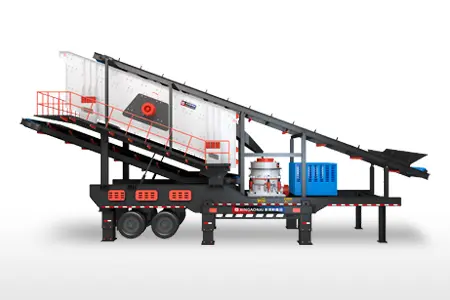
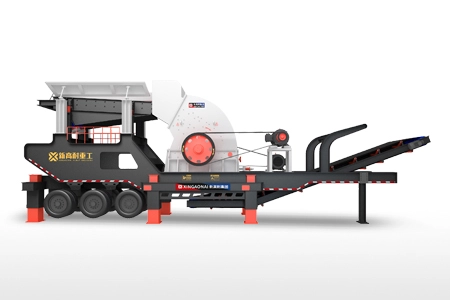
A wheeled mobile crusher, also called a wheel type mobile crusher or portable crushing plant, can be a practical choice when a project needs equipment that can be relocated between prepared working areas. Choosing one requires more than comparing a headline tonnes-per-hour figure: the crushing unit, feed material, finished product, site layout and transport arrangement must work together.
This guide focuses on selecting a wheeled configuration for quarrying, aggregate production and suitable recycling applications. For available equipment, start with our mobile crusher range, then confirm the proposed plant against your actual duty.
1. When Does a Wheeled Crushing Plant Make Sense?
A wheeled plant carries crushing equipment on a chassis with tyres and axles. Depending on the configuration, feeders, screens and conveyors may be integrated or supplied as separate units. The chassis describes how equipment is transported and supported; it does not determine how the material is crushed.
A wheeled arrangement is worth evaluating when:
Raw material or project locations change, but the plant can work from a prepared operating area.
Access routes, turning space and transport arrangements suit the proposed equipment.
The planned operating period at each location justifies relocation and setup costs.
Suitable power, feeding equipment and stockpile space can be provided.
A modular plant can match the required crushing and screening stages.
Frequent movement within a rough working area may favour a different arrangement. Compare the actual ground conditions and relocation pattern rather than assuming that wheels or tracks are always better. Neither chassis type removes the need for a suitable operating platform.
2. Match the Crushing Unit to the Material
Choose the crushing process first, then confirm which chassis and plant package can support it. The following are starting points for an application review, not a promise that every configuration is available in the XGN-T series.
| Material and duty | Configuration to evaluate | Important checks |
|---|---|---|
| Large hard or abrasive rock | Jaw primary crushing, followed by cone crushing and screening where required | Feed grading, abrasiveness, reduction stages and wear cost |
| Suitable low-abrasion limestone or other brittle material | Hammer or horizontal-shaft impact crushing, with screening as needed | Silica content, moisture, fines production and required product grading |
| Suitable concrete, brick or asphalt recycling feed | Jaw or impact crushing with appropriate feed preparation and separation equipment | Rebar and other contaminants, feed size, wear and product acceptance criteria |
| Fine aggregate or several saleable fractions | A crushing and screening circuit selected for the target products | Screen cuts, oversize return, particle shape and fines limits |
Granite and basalt need an abrasiveness assessment. For hard, abrasive feed, jaw plus cone crushing is often a sensible starting point. A horizontal-shaft impact or hammer crusher should not be recommended simply because it can break the rock; wear cost, product requirements and application testing also matter. For a hard-rock enquiry, review our hard rock mobile crushing plant and confirm the supplied chassis and equipment combination.
Mixed demolition waste also needs a feed acceptance and preparation plan. A crusher alone does not remove every contaminant or make the resulting aggregate suitable for every construction use.
3. Published XGN-T Configuration Examples
The XGN-T wheel type mobile crusher product page lists the following crushing configurations, checked on November 2, 2026:
| Plant model | Host equipment | Published feed size | Published capacity |
|---|---|---|---|
| XGN-T150 | XGN-Z1310 | ≤650 mm | 150–180 t/h |
| XGN-T300 | XGN-Z1512 | ≤750 mm | 250–320 t/h |
These are published product values, not guaranteed results for every rock, feed condition or product specification. Confirm the selected host, feed distribution, discharge requirement and screen arrangement before using a capacity figure for plant design. Do not apply these values to an unrelated wheeled jaw, cone or impact package.

4. Check Saleable Output and the Complete Circuit
Define the required output as a product specification, not only a crusher discharge setting. Include sieve grading, particle-shape requirements and acceptable fines. For several aggregate sizes, the screen and stockpile arrangement are part of the selection.
In a closed circuit, oversize returns to the crusher. Its processing load can therefore exceed the fresh-feed rate, while saleable output depends on the full circuit. An advertised machine capacity should not automatically be treated as tonnes per hour of finished product.
Ask the supplier to state the material assumptions and configuration behind the capacity estimate. Check the feeder, screen, return conveyor and discharge conveyors for bottlenecks, as well as the crusher itself.
5. Confirm Transport, Ground Support and Utilities
Transport between sites
Request transport dimensions and weights, axle information, towing or trailer requirements and any components that must be removed for the move. Operating dimensions may differ from the transport envelope. A wheeled chassis does not automatically mean the complete plant can be towed on every public road; transport suitability and any required approvals must be confirmed for the route and destination.
Operating platform and setup
Check access, turning radius, ground bearing capacity, drainage, level requirements and the support or stabilising arrangement specified by the manufacturer. Provide room for loading equipment, safe maintenance access and product stockpiles. A mobile plant may reduce permanent civil works, but it does not eliminate site preparation.
Power and environmental controls
Confirm whether the quoted package uses a site electrical supply, a generator or another approved power arrangement. Check connected load, starting requirements, cable routing and site conditions. Identify the dust, noise, water and waste-handling measures needed for the application; these are not automatically identical on every package.
6. Compare Total Project Cost
On-site crushing can reduce some raw-material haulage, but the benefit depends on distances, volumes and the alternative process. It does not eliminate loading, stockpile handling, product delivery or plant relocation costs.
Compare quotations on the same scope:
Crusher, feeder, screens, conveyors and any separation equipment.
Power equipment, electrical controls and operating interfaces.
Freight, transport preparation, site works and commissioning responsibilities.
Wear parts, service access, planned maintenance and critical spares.
Energy, labour, material handling and relocation during the project.
Judge cost against tonnes of acceptable product. A lower purchase price or a larger nominal capacity does not by itself establish a lower cost per tonne. For the broader budget factors, see our mobile crusher cost guide.

7. Send a Complete Selection Enquiry
For a useful configuration proposal, provide:
Material: rock or recycling feed, abrasiveness or test information, moisture, clay and contaminants.
Feed: maximum size, representative size distribution and feeding method.
Production: required fresh-feed rate, operating hours and target product fractions.
Site: layout, ground conditions, stockpile space and available power.
Mobility: relocation frequency, transport route and access constraints.
Supply scope: integrated or separate screening, conveyors, separation equipment, spares and support requirements.
Ask for an equipment list, layout, capacity assumptions and agreed acceptance criteria. Setup and commissioning should follow the supplied documentation; a universal promise of production within a few hours is not a substitute for a site-specific plan.
8. Choose the Configuration, Not Just the Chassis
The right wheeled mobile crusher is the one that matches the feed, makes the required product and can be transported, supported and operated at the intended sites. Use the XGN-T product specifications as a starting point and confirm the complete proposed package before purchase. Plan ongoing inspections using the relevant machine manual and our mobile crusher maintenance guide.
Technical references: published XGN-T data are linked above. Metso's portable crusher overview describes wheel-mounted plant categories, while its crusher selection guidance discusses the role of abrasiveness in choosing a crushing process. These references do not establish the supplied features of a particular XINGAONAI package.