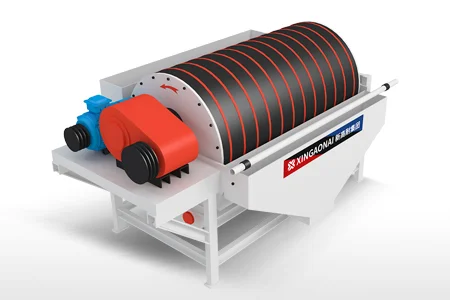
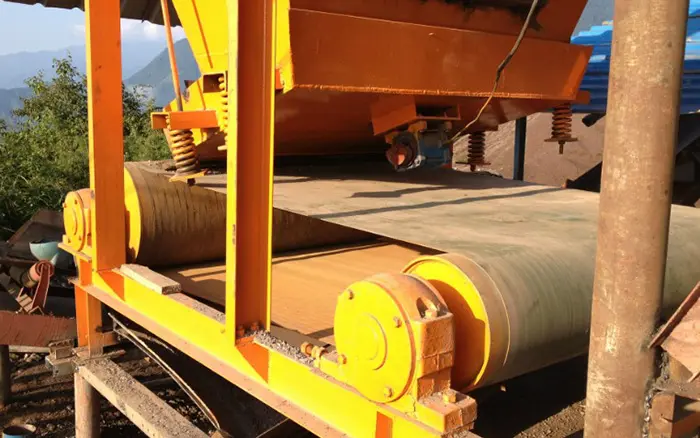
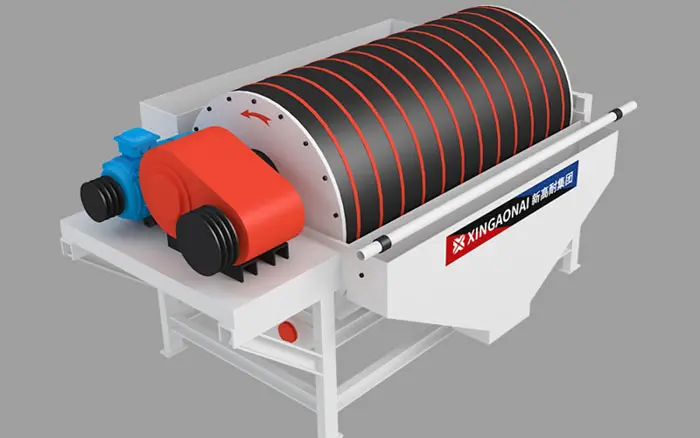
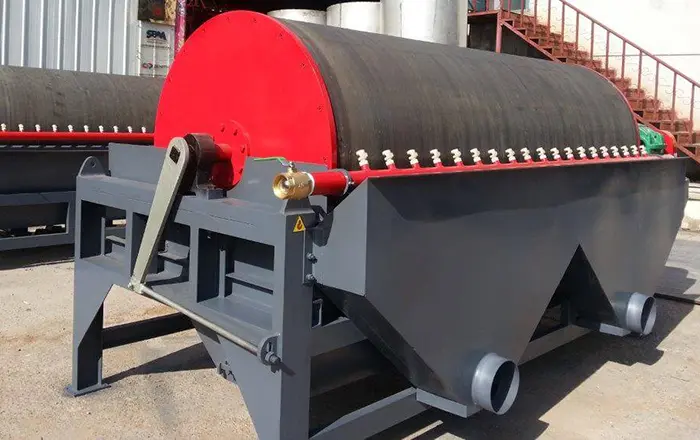
This video demonstrates the recovery of iron concentrate from river sand ore using a dry magnetic separator manufactured by Xingaonai Group. The footage captures the complete separation process in live operation, showing how iron-bearing minerals are selectively extracted from river sand feed material and concentrated into a high-grade ferro concentrate product — all without the use of water, which is the defining operational advantage of dry magnetic separation technology.
River sand iron deposits represent a widely distributed and commercially significant iron ore resource type, particularly in regions where alluvial and fluvial geological processes have concentrated heavy iron-bearing minerals — primarily magnetite and titanomagnetite — through the natural sorting action of water flow over geological time. Processing these deposits efficiently requires separation technology that can handle fine, loose, sandy feed material at high throughput while achieving effective recovery of the magnetic iron fraction. The dry magnetic separator shown in this video is specifically engineered for this application.
What Is Dry Magnetic Separation?
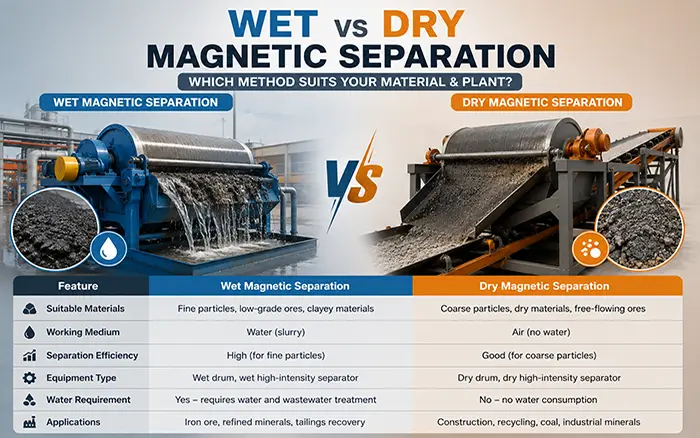
Dry magnetic separation is a mineral processing technique in which magnetic minerals are separated from non-magnetic gangue material using the attractive force of a magnetic field, without the addition of water to the feed material. The process relies on the difference in magnetic susceptibility between the target mineral — in this case, magnetite or other iron oxide minerals with strong magnetic response — and the surrounding non-magnetic sand and silicate gangue.
In the dry magnetic separator shown in this video, the river sand feed material is introduced onto a rotating drum or roller that carries a powerful permanent magnet or electromagnetic system. As the feed material passes through the high-intensity magnetic field zone, iron-bearing particles with sufficient magnetic susceptibility are attracted to the drum surface and carried to the magnetic concentrate discharge point, while non-magnetic particles follow a normal ballistic trajectory and are discharged separately as the non-magnetic tail fraction.
The result is a clean separation between the magnetic ferro concentrate — high in iron content and low in silica and other gangue minerals — and the non-magnetic tailings, which are discharged as sand or returned to the river environment in compliance with applicable environmental regulations.
Key Advantages of Dry Magnetic Separation for River Sand Iron Ore
The dry magnetic separation process demonstrated in this video offers several important operational and economic advantages over wet magnetic separation for river sand iron ore applications.
No Water Requirement: The most significant practical advantage of dry magnetic separation is the elimination of process water from the separation circuit. This is critically important in arid regions or locations with limited water supply, on portable and semi-mobile processing plants where water infrastructure is unavailable, and in operations where the cost and complexity of water management, slurry handling, and tailings dewatering would substantially increase capital and operating expenditure.
Simplified Plant Layout: Dry processing eliminates the need for slurry pumps, pipelines, thickeners, tailings ponds, and filtration equipment that are essential components of any wet magnetic separation circuit. The resulting plant layout is significantly simpler, more compact, and less capital-intensive, making dry magnetic separation particularly well suited to small and medium-scale river sand iron operations and to pilot or trial processing of new deposits.
Direct Dry Product: The ferro concentrate produced by dry magnetic separation is discharged as a dry or low-moisture powder, which can be directly loaded, transported, and fed to downstream smelting or pelletizing processes without the dewatering step that is required to prepare wet magnetic separation concentrate for transport or further processing. This simplification of the product handling chain reduces both capital cost and operating complexity.
High Magnetic Intensity for Fine Particle Recovery: River sand iron ore typically contains iron minerals in a fine particle size range, having been naturally comminuted by fluvial transport processes before deposition. The high-intensity magnetic field generated by the separator shown in this video ensures effective recovery of fine magnetic particles that would be lost in lower-intensity separation systems, maximizing the iron recovery rate from the feed material.
Portability and Flexibility: Dry magnetic separators are inherently more portable than wet separation equipment of comparable capacity, as they do not require associated water handling infrastructure. This makes them well suited to river sand operations where the processing plant may need to be relocated as the deposit is worked out along a river course or where multiple deposit locations are being evaluated simultaneously.