

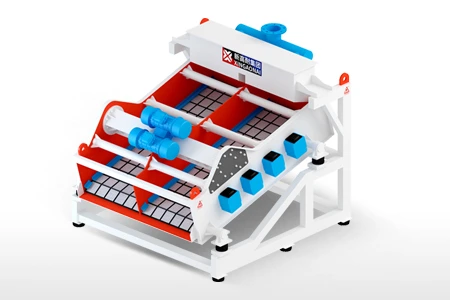
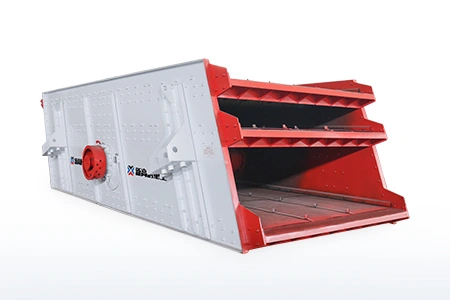
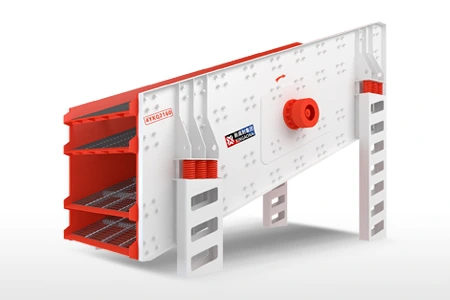
A vibrating screen is a key piece of equipment used in mining, aggregate production, and material processing industries. It is designed to separate materials based on particle size through controlled vibration. Understanding the vibrating screen working principle is essential for improving screening efficiency and selecting the right equipment for your project.
This guide explains how vibrating screens work, their main types, and how they are used in real industrial applications.
What Is a Vibrating Screen?
A vibrating screen is a mechanical screening machine that uses vibration to separate materials into different sizes. It consists of a screen deck, vibration system, motor, and supporting structure.
Materials are fed onto the screen surface, where vibration causes particles to move and stratify. Smaller particles pass through the screen openings, while larger particles remain on top and move toward the discharge end.
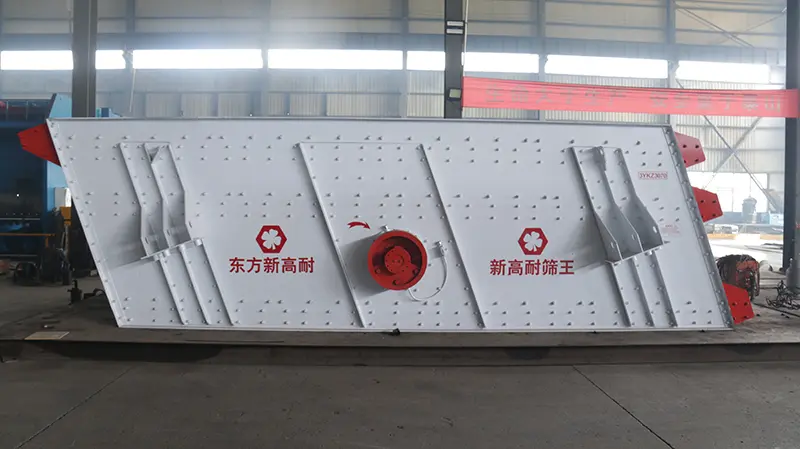
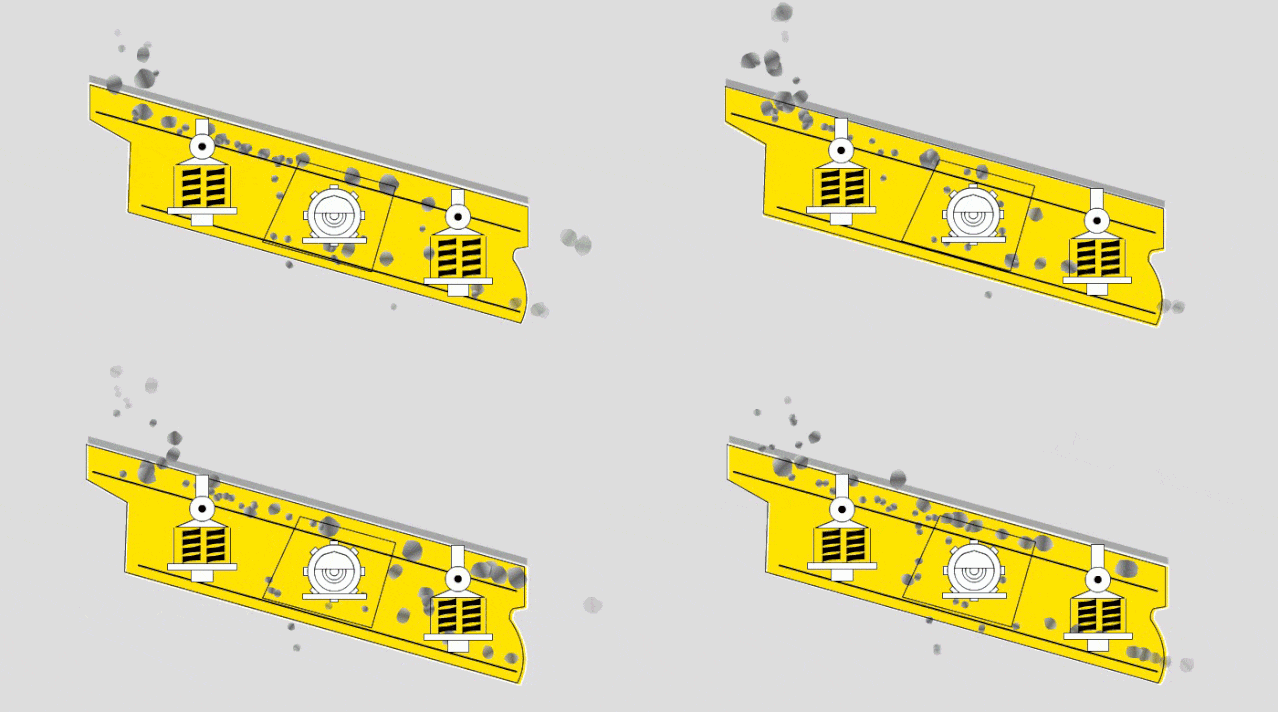
Vibrating Screen Working Principle Explained
The vibrating screen working principle is based on the generation of vibration through a motor or an exciter.
Step-by-Step Process:
Material Feeding
Bulk material is evenly fed onto the screen surface.Vibration Generation
The motor drives the exciter, producing vibration forces that move the screen.Material Movement
The vibration causes particles to jump and move forward.Screening Process
Smaller particles pass through the mesh, while larger ones continue moving.Discharge
Separated materials are discharged from different outlets.
👉 This continuous process ensures efficient classification of materials.
Types of Vibrating Screens
Understanding different types is important when learning the vibrating screen working principle.
Linear Vibrating Screen
Moves in a straight line
Suitable for fine material screening
High precision separation
Circular Vibrating Screen
Moves in a circular motion
Suitable for coarse materials
High processing capacity
👉 Choosing the right type depends on material characteristics and production needs.
Key Factors Affecting Screening Efficiency
Several factors influence the performance of a vibrating screen:
Vibration Frequency and Amplitude
Higher frequency improves fine particle separation, while larger amplitude helps move coarse materials.
Screen Mesh Size
The size of the openings determines the final product size.
Material Properties
Moisture content and particle shape affect screening efficiency.
Feed Rate
Overfeeding reduces efficiency and may cause blockage.
Vibrating Screen vs Trommel Screen
When evaluating screening equipment, many users compare vibrating screens with trommel screens.
| Feature | Vibrating Screen | Trommel Screen |
|---|---|---|
| Motion Type | Vibration | Rotating drum |
| Efficiency | High | Medium |
| Suitable Materials | Wide range | Wet/sticky materials |
| Maintenance | Moderate | Low |
👉 Vibrating screens are generally preferred for higher efficiency and precision.
Applications in Industry
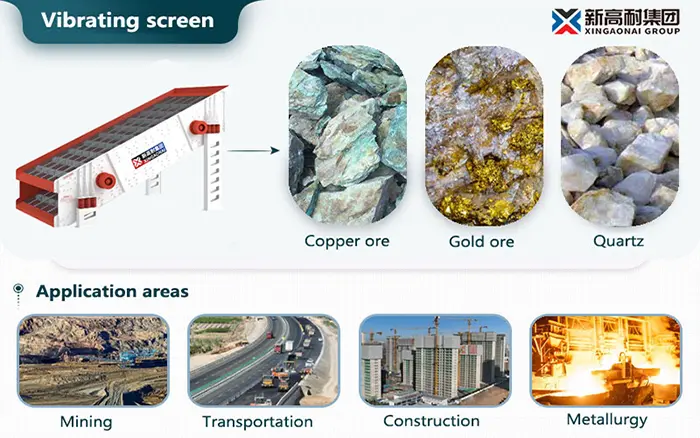
Vibration screens are widely used in:
Mining and mineral processing
Quarrying and aggregates production
Construction waste recycling
Coal and chemical industries
Because of their efficiency, vibrating screens are essential in modern production lines.
How to Choose the Right Vibrating Screen
To select the best equipment:
Consider material size and type
Define required capacity
Choose appropriate screen type
Ensure compatibility with crushers and feeders
Proper selection improves overall system performance.
Final Thoughts on Vibrating Screen Selection
Understanding the vibrating screen working principle helps operators optimize screening efficiency and select the right equipment for their applications. By considering vibration type, material characteristics, and production requirements, you can significantly improve productivity and reduce operating costs.
A well-designed vibrating screen not only enhances material classification but also supports the efficiency of the entire crushing and screening process.