

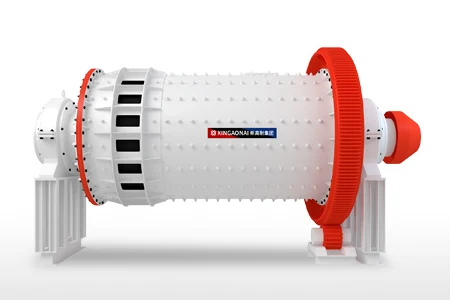
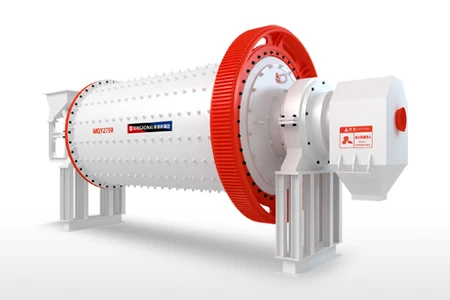
1. Core Working Principle Difference Between Ball Mill and Rod Mill
Ball Mill Working Principle
Rod Mill Working Principle
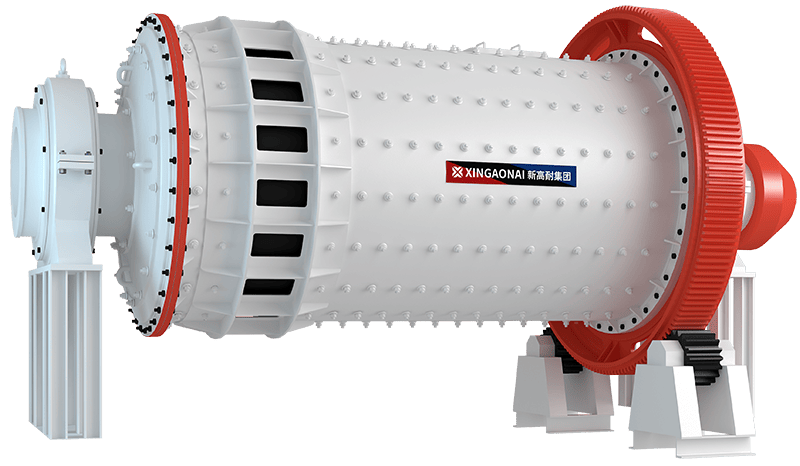
2. Structural Design Differences
Feature | Ball Mill | Rod Mill |
Grinding Medium | Steel/ceramic balls (diameters 20-150mm) | Steel rods (length 2-6m, diameter 50-120mm) |
Cylinder Length-Diameter Ratio | Shorter (L/D = 1-2.5), compact structure | Longer (L/D = 2.5-4), elongated cylinder |
Liner Design | Corrugated or grid liners to enhance ball lifting | Smooth or slightly grooved liners to prevent rod tangling |
Feed/Outlet Structure | Larger feed inlet, suitable for various particle sizes; discharge controlled by grids or diaphragms | Narrower feed inlet (to avoid rod jamming); discharge with sieve plates to retain oversized particles |
Rotation Speed | Higher (45-60 rpm) | Lower (30-45 rpm) |
3. Application Scope Difference Between Ball Mill and Rod Mill
Ball Mill Applications
Material Type: Ideal for hard, brittle, and abrasive materials (e.g., limestone, granite, iron ore, cement clinker) and soft materials (e.g., coal, gypsum).
Particle Size Requirement: Focus on fine grinding (product particle size 0.074-0.4mm) and ultra-fine grinding (even below 0.074mm).
- Industry Scenarios:
Mining: Ore beneficiation (e.g., grinding iron ore for magnetic separation, copper ore for flotation).
Cement: Grinding clinker and gypsum into cement powder.
Chemical: Grinding chemical raw materials (e.g., limestone for calcium carbonate production).
Powder Metallurgy: Ultra-fine grinding of metal powders.
Rod Mill Applications
Material Type: Suitable for brittle, non-abrasive, or sticky materials (e.g., limestone, coal, phosphate rock, clay) and materials requiring minimal over-grinding.
Particle Size Requirement: Primarily for coarse grinding (product particle size 1-3mm) and medium grinding (0.4-1mm), focusing on uniform particle size distribution.
- Industry Scenarios:
Mining: Primary grinding of ores to avoid over-grinding (e.g., gold ore, silver ore) and protect valuable minerals.
Aggregate Production: Grinding limestone or river pebbles into uniform medium-grain aggregates for construction.
Coal Processing: Grinding coal into uniform particles for power plants or coal chemical production.
Ceramic Industry: Grinding ceramic raw materials (e.g., clay, feldspar) with controlled particle size to ensure product quality.
4. Product Quality & Operational Characteristic Differences
Product Quality
Ball Mill: Produces finer particles but with wider particle size distribution, and may generate excessive fines (over-grinding) for some materials. Suitable for scenarios where fine particle size is prioritized.
Rod Mill: Delivers more uniform particle size distribution with minimal over-grinding, as the linear contact of steel rods ensures gentle grinding. Ideal for applications requiring consistent medium-grain products.
Operational Characteristics
Energy Consumption: Ball mills consume more energy per unit output due to higher rotation speed and impact-based grinding; rod mills are more energy-efficient for coarse/medium grinding.
Maintenance: Ball mill liners and steel balls wear faster (especially for abrasive materials), requiring frequent replacement; rod mills have lower wear on rods and liners, reducing maintenance frequency and costs.
Capacity: For the same cylinder volume, ball mills have higher capacity for fine grinding; rod mills have lower capacity but more stable output for coarse grinding.
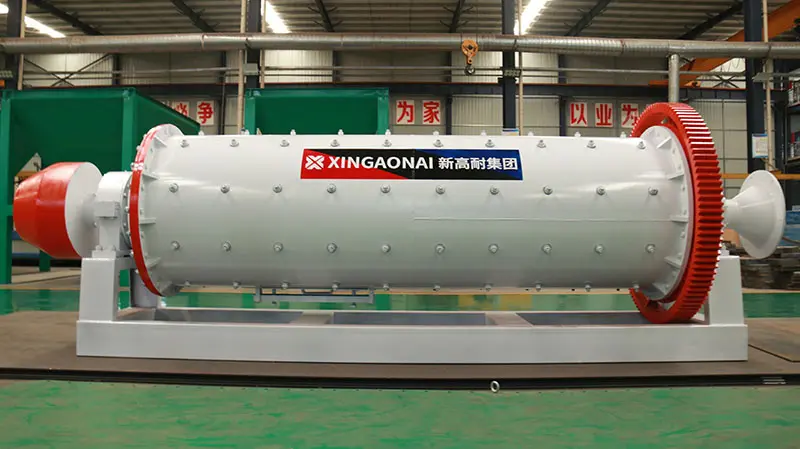
5. Key Selection Guidelines: How to Choose Between Ball Mill and Rod Mill?
Particle Size Requirement: Choose a ball mill for fine/ultra-fine grinding (≤0.4mm); select a rod mill for coarse/medium grinding (≥0.4mm) with uniform particle size.
Material Properties: Use a ball mill for hard, abrasive materials; opt for a rod mill for brittle, non-abrasive, or sticky materials to avoid over-grinding or jamming.
Production Goals: Prioritize a ball mill if high fineness is critical (e.g., cement production); choose a rod mill if minimal over-grinding and uniform particle size are required (e.g., ore beneficiation, aggregate production).
Energy & Maintenance Budget: Rod mills are more cost-effective for long-term operation in coarse grinding scenarios; ball mills are better for applications where fine grinding justifies higher energy and maintenance costs.