Stone Crusher

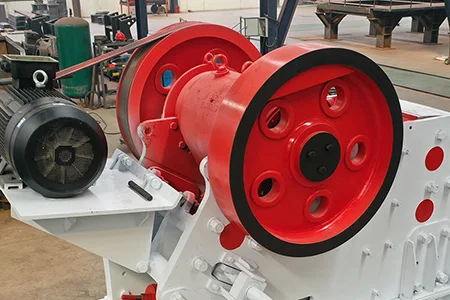
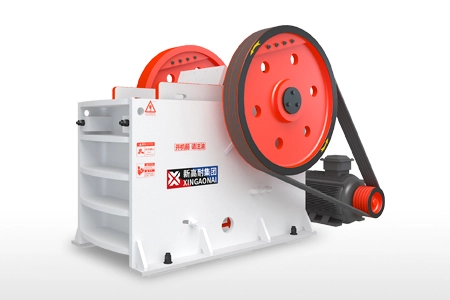
PEV Series Jaw Crusher

CAPACITY

55-1590t/h

FEED SIZE

≤2000mm
Application areas:PEV series jaw crushers are widely used in the primary crushing of materials in mining, quarries, construction, metallurgy and other industries.
Applicable materials:PEV series jaw crusher is suitable for coarse crushing of various hard ores such as granite, river pebbles, basalt, iron ore, etc.

Product Overview

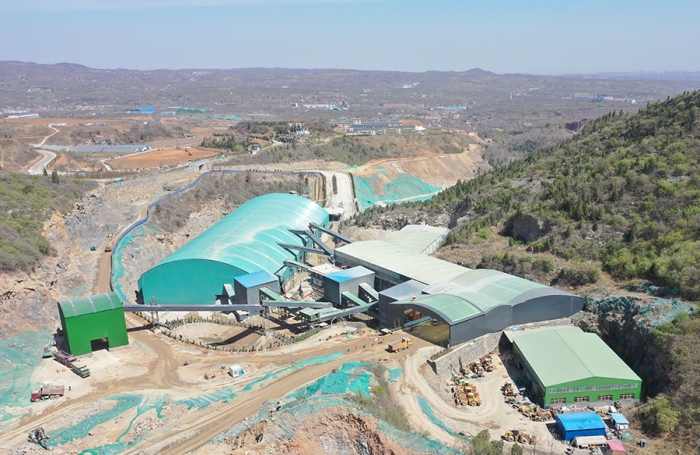
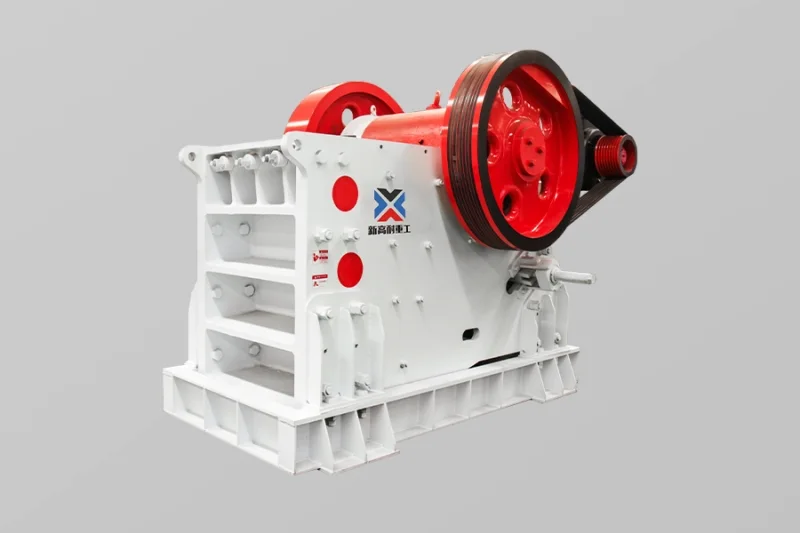
The PEV Series Jaw Crusher is a heavy-duty primary crushing machine designed for mines, quarries, and large aggregate production plants. The series covers nominal capacities from 55 to 1,590 tph and accepts large rock feed, depending on the selected model and operating conditions.

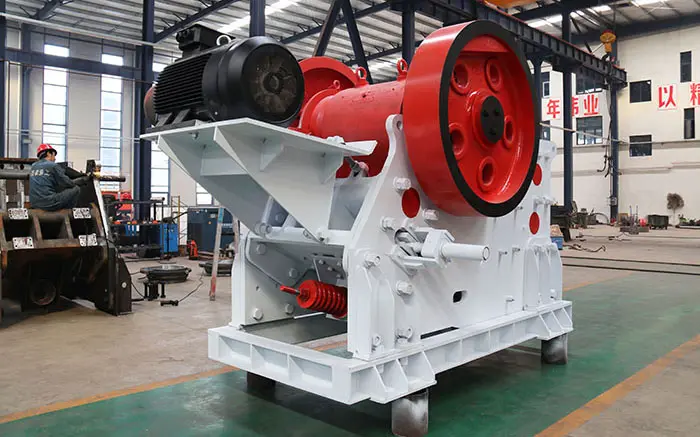
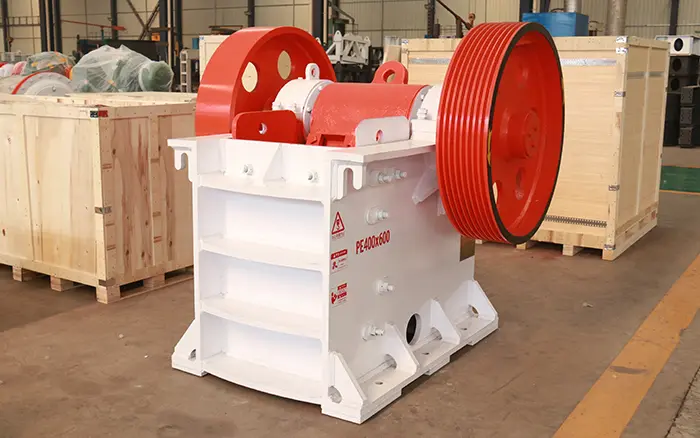
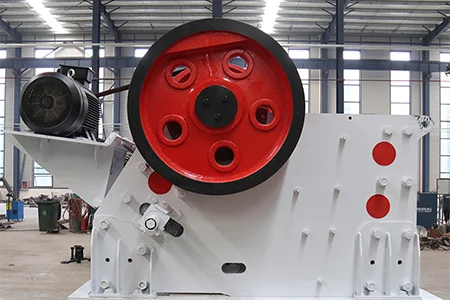
Compared with a conventional PE Series jaw crusher, the PEV Series uses an updated modular frame, optimized crushing chamber, and larger bearing configuration. These features are intended to improve installation flexibility, crushing efficiency, component serviceability, and suitability for high-capacity hard-rock applications.

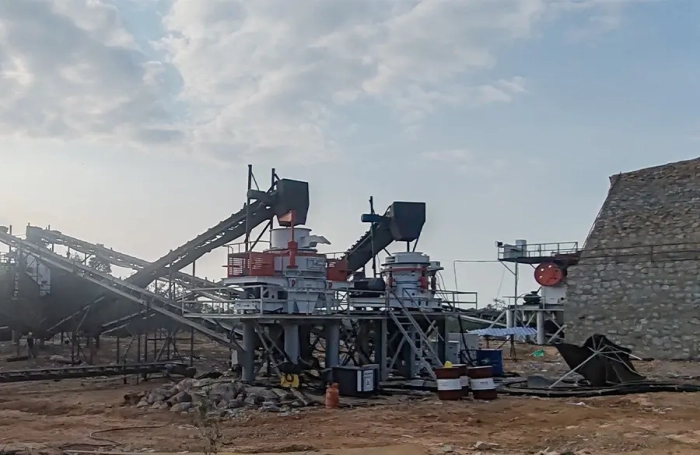
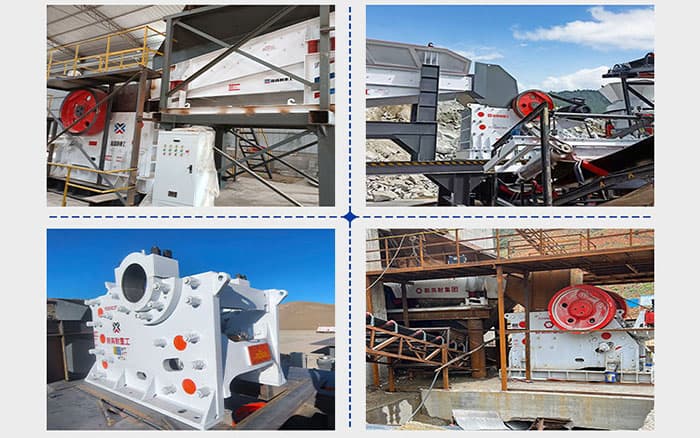
The crusher can process granite, basalt, river pebble, iron ore, copper ore, limestone, quartzite, and other hard or abrasive materials. It is normally installed as the primary crusher before cone crushers, impact crushers, screening equipment, and other downstream processes.

Model selection should be based on the maximum feed size, required throughput, discharge setting, material hardness and abrasiveness, moisture and clay content, installation conditions, and downstream equipment capacity. Published capacities are reference ranges and may vary with feed gradation and operating conditions.
Key Advantages

Modular Non-Welded Frame

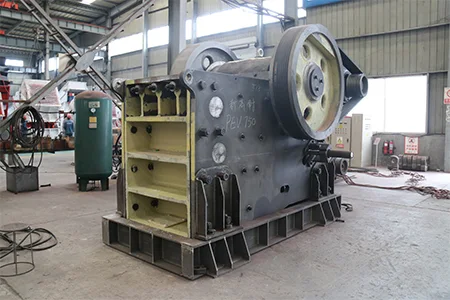
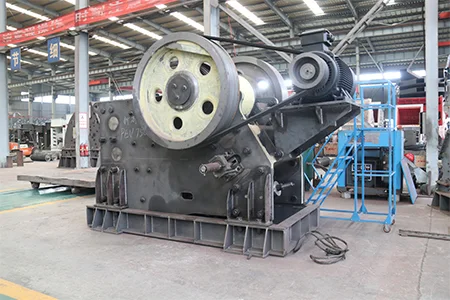
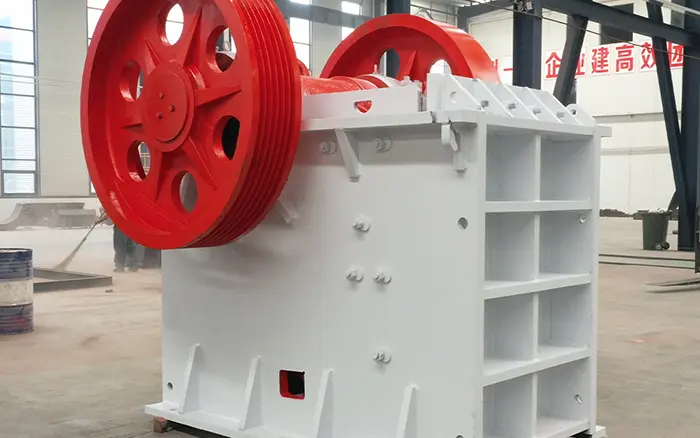
The side, front, and rear frame sections use a detachable bolted structure, helping simplify transportation, installation, inspection, and replacement of major components.

Optimized Crushing Chamber

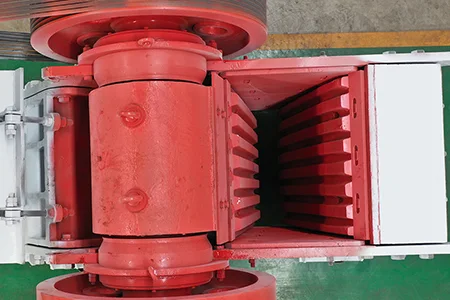
The V-shaped chamber and optimized jaw motion help improve material engagement, reduction performance, and throughput in primary crushing applications.

Designed for Large Hard-Rock Feed

Large feed openings, heavy-duty bearings, and a rigid frame make the crusher suitable for granite, basalt, iron ore, and other hard or abrasive materials.

Easier Maintenance and Component Replacement

Accessible wear parts and the detachable frame design help reduce maintenance difficulty and shorten planned service work.

Working Principle

Working Principle of PEV Series Jaw Crusher
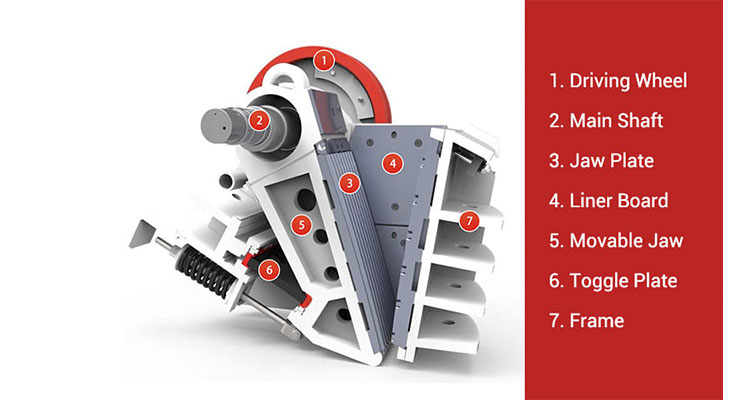
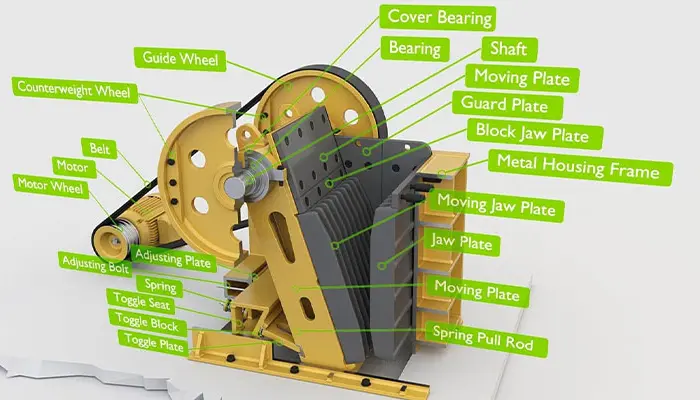
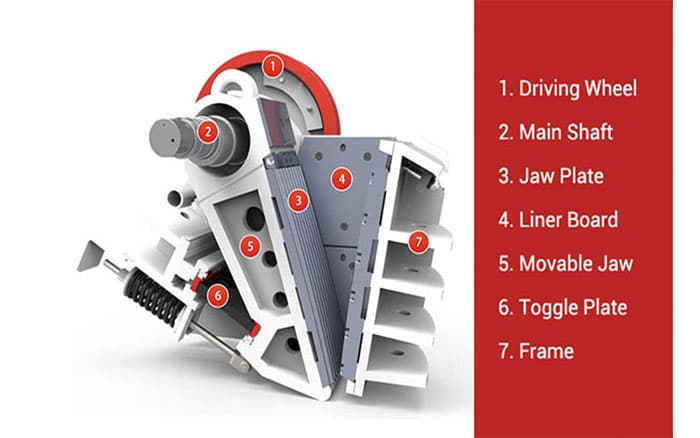
The crushing method of the jaw crusher is a curved extrusion type, and its working principle is to simulate the jaw movement of animals. When working, the motor drives the belt and pulley through the eccentric shaft to move the movable jaw up and down. When the movable jaw rises, the angle between the toggle plate and the movable jaw becomes larger, so that the movable jaw is pushed close to the fixed jaw, and the materials are crushed many times through the extrusion, friction and grinding between the two jaws. When the movable jaw descends, the angle between the toggle plate and the movable jaw becomes smaller, and the movable jaw leaves the fixed jaw under the action of the pull rod and the spring, and the crushed material is discharged freely through the discharge port at the lower part of the jaw cavity under the action of gravity. With the continuous rotation of the motor, the movable jaw periodically crushes and discharges materials to achieve mass production.

Technical Parameters

Model

Feeding inlet size

(mm)

Feed size

(mm)

Outlet size

(mm)

Capacity

(tph)

Motor power

(kw)

Host weight

(t)

PEV500×750500×750≤75050055-340558900
PEV600×900600×900≤900600120-4559012000
PEV750×1060750×1060≤1060750155-58013222600
PEV950×1250950×1250≤1250950290-84516039600
PEV1200×14001200×1400≤14001200405-102520055000
PEV1200×16001200×1600≤15001200520-127525073600
PEV1500×20001500×200020001500760-1590400144600


We are here waiting for you
Our professional team can tailor the solution to suit your needs and answer your questions
Contact Engineer

Frequently Asked Questions

A PEV Series jaw crusher is mainly used for the primary crushing of large rocks and ores. It reduces run-of-mine or quarry material to a size suitable for cone crushers, impact crushers, screens, and other downstream equipment. Typical applications include mining, quarrying, aggregate production, construction materials, and mineral processing.

A PEV jaw crusher can process granite, basalt, river pebble, iron ore, copper ore, limestone, quartzite, and other hard or abrasive materials. Actual capacity and wear-part life depend on the material’s compressive strength, abrasiveness, feed gradation, moisture and clay content, as well as the selected discharge setting.

The PEV Series covers nominal capacities from approximately 55 to 1,590 tph, depending on the selected model. Actual output may vary with the maximum feed size, feed gradation, material properties, moisture content, discharge setting, feeding conditions, and downstream equipment. The final model should therefore be confirmed according to the project’s operating conditions.
Both PE and PEV jaw crushers are designed for primary crushing. The PE Series uses a proven conventional design suitable for a wide range of standard crushing applications. The PEV Series features an updated crushing chamber and a modular, detachable frame designed to simplify transportation, installation, maintenance, and major-component replacement. The best choice depends on the required capacity, feed size, installation conditions, maintenance requirements, and project budget.

To select the correct model, provide the maximum feed size, required hourly capacity, target discharge size, material type, compressive strength, abrasiveness, moisture and clay content, and project location. Installation space, altitude, power supply, feeding equipment, and downstream crusher capacity should also be considered. A model should not be selected from capacity alone because actual output depends on the complete operating conditions.
Under normal operating procedures, a PEV jaw crusher should be started with an empty crushing chamber. Allow the crusher to reach a stable operating speed before starting the feeder. During shutdown, stop feeding first and allow the remaining material to leave the chamber before stopping the crusher. If the chamber is blocked, isolate the power and follow the site’s lockout/tagout and clearing procedures. Always follow the operating manual supplied with the specific model.

Explore Our Projects

Related Blogs

Send message

Please enter your name
Please enter your email
Please enter your message