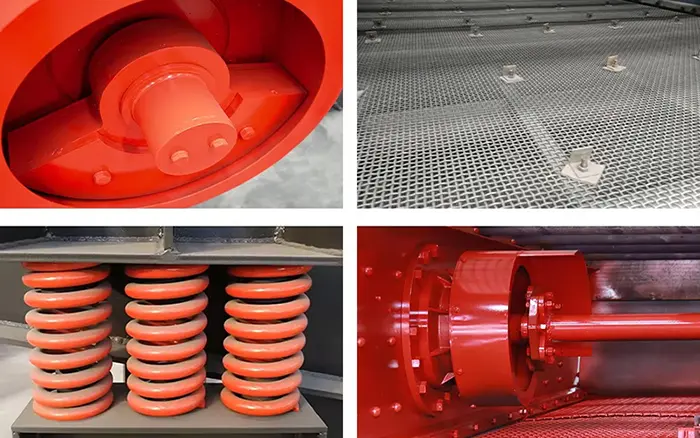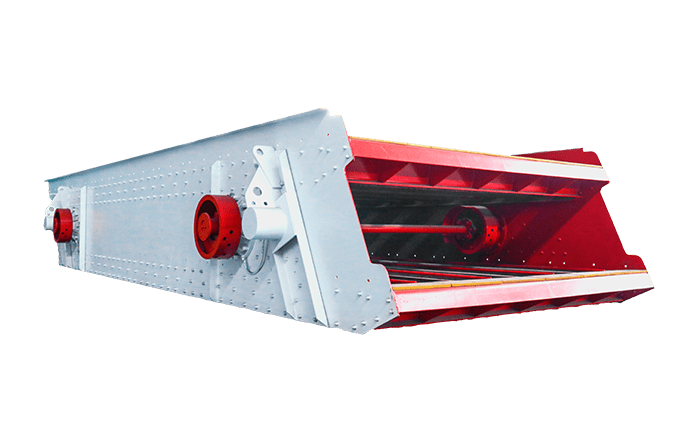
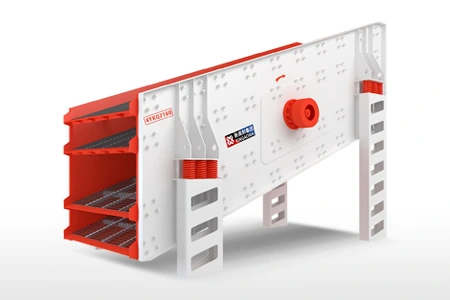
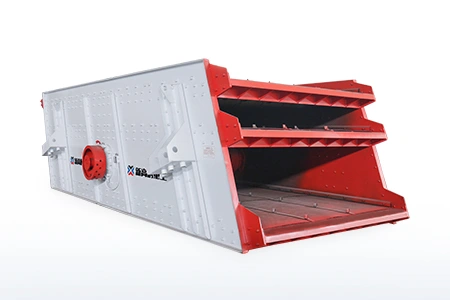
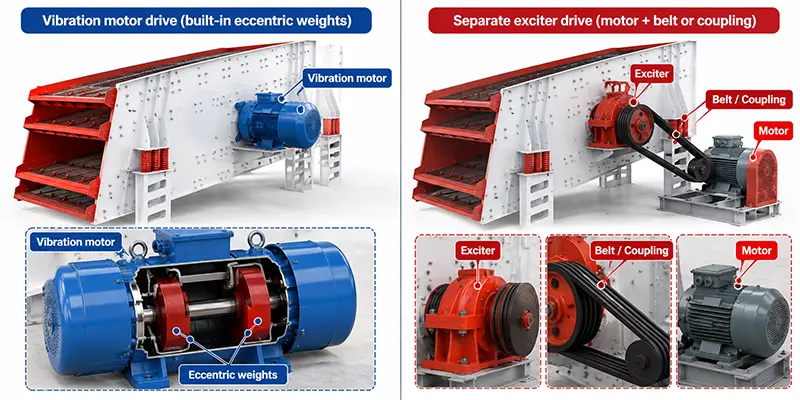
A vibrating screen motor may refer to a purpose-built vibration motor with eccentric weights, or to a separate electric motor that drives a mechanical exciter through belts or a coupling. These arrangements require different replacement checks.
Matching the original motor power is only a starting point. Speed, electrical ratings, mounting dimensions and the existing drive arrangement must also be confirmed. For a vibration motor, the excitation characteristics and installed mass matter as well.
This guide focuses on identifying the correct replacement motor for mining and aggregate screens. It does not replace the engineering calculations required to design a new screen or change its operating characteristics.
1. Identify the Existing Motor Arrangement
Before comparing replacement models, establish what the motor actually does on your screen.
Vibration Motor with Eccentric Weights
A vibration motor combines an electric drive with rotating unbalanced masses. The motor turns the eccentric weights, producing a periodic excitation force that is transmitted to the machine through its mounting.
The replacement specification therefore includes more than electrical power. Relevant characteristics include rated speed, centrifugal force or unbalance data, mounting arrangement and motor mass.
Manufacturer catalogues list different pole counts, voltage configurations and excitation ratings within the same product family. These are separate selection characteristics, not interchangeable descriptions of motor size. OLI electric vibrator specifications
Electric Motor Driving a Separate Exciter
In this arrangement, the motor supplies torque to a separate excitation mechanism through a transmission.
The motor and exciter are different components. Replacement identification must consider the motor shaft, pulley or coupling, operating speed, transmission ratio and starting requirements.
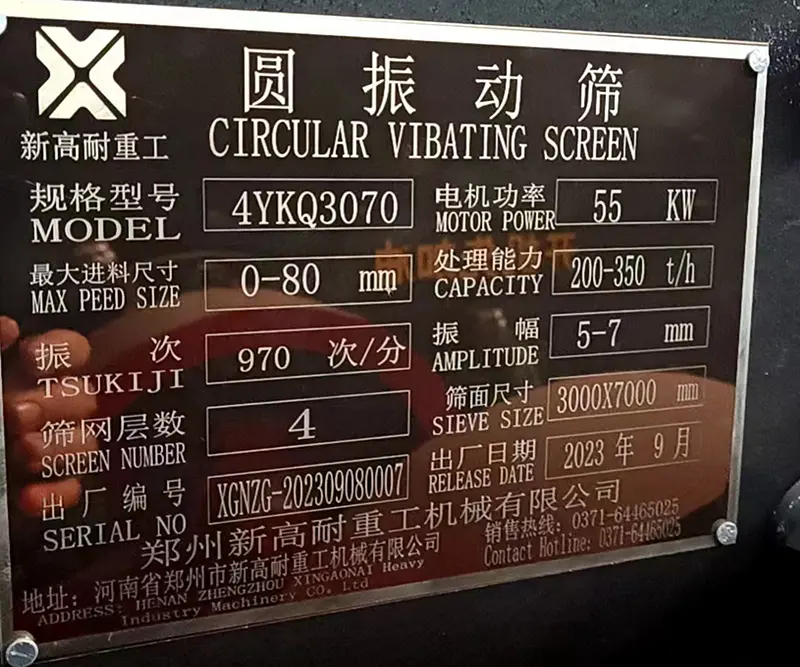
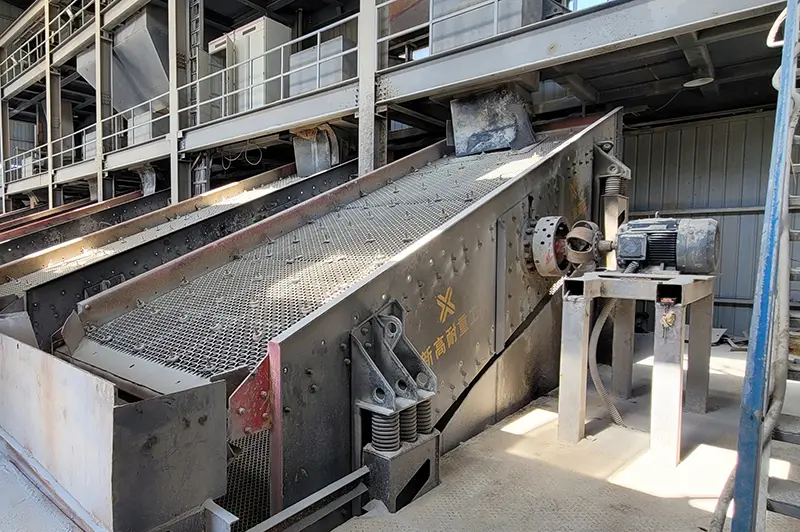
For example, the XINGAONAI circular vibrating screen uses a motor-driven eccentric shaft exciter. A replacement enquiry should identify both the motor and the associated drive arrangement.
Do Not Identify the Arrangement from Screen Motion Alone
“Linear” and “circular” describe the screen’s movement, not a complete motor specification.
A linear vibrating screen may use an engineered system of synchronized exciters. Its name does not establish whether it has directly mounted vibration motors, separate drive motors or a particular number of motors.
Use assembly drawings, nameplates and clear photographs to confirm the actual configuration.
2. Check the Specifications That Must Match
A replacement motor must suit the existing electrical supply, mechanical interfaces and operating duty.
| Specification | What to confirm | Why it matters |
|---|---|---|
| Complete model identification | Manufacturer, model, serial number and relevant suffixes | Similar-looking motors may have different construction or ratings |
| Rated power | Original kW or HP and applicable operating duty | Power alone does not establish compatibility |
| Voltage, frequency and phase | Nameplate ratings, site supply and approved connection | These affect electrical suitability and operating conditions |
| Rated speed and pole count | Nameplate speed at the specified frequency | A different speed can change the drive or excitation conditions |
| Mounting arrangement | Foot or flange mounting, bolt pattern and critical dimensions | The replacement must fit the approved mounting structure |
| Shaft and transmission interface | Shaft diameter, extension, keyway, pulley or coupling | An incompatible connection may prevent correct installation |
| Protection and environment | Enclosure, insulation, ambient conditions and required certification | The motor must suit the installation environment |
| Starting and control | Starter, variable-frequency drive and protective devices | The replacement must work with the approved control arrangement |
| Motor mass | Installed weight, especially on the vibrating assembly | A weight change can affect the machine’s dynamic behaviour |
Do not approve a replacement simply because its power and mounting holes appear to match.
Additional Checks for a Vibration Motor
For a motor with eccentric weights, also confirm:
Rated excitation force at the specified speed.
Unbalance or static-moment information, where provided.
Approved eccentric-weight setting.
Mounting orientation and connection details.
Compatibility with other motors in the same system.
Record the manufacturer’s units exactly. Do not confuse a force value with motor mass or electrical power, and do not transfer a percentage weight setting between different motor designs without confirmation.
Additional Checks for a Separate Drive Motor
For a motor driving an independent exciter, also confirm:
Exciter manufacturer and model.
Required exciter operating speed.
Pulley ratio or coupling arrangement.
Shaft and key dimensions.
Starting and acceleration requirements.
Applicable belt loads or coupling requirements.
The existing transmission is part of the replacement assessment. Reusing a pulley does not automatically establish that it is suitable for the new motor.
3. Why the Same Motor Power Is Not Enough
Two motors with the same kW rating may differ in speed, torque characteristics, shaft dimensions, mounting, environmental protection and operating duty.
For vibration motors, equal power does not guarantee equal excitation force.
For separate drive motors, equal power does not guarantee that the exciter will operate at the correct speed or that the motor can meet the required starting duty.
A replacement should therefore be evaluated as a complete configuration rather than a single power value.
Should You Fit a Larger Motor to Increase Screen Capacity?
Not without an engineering review.
A larger motor does not automatically increase screening capacity. The machine’s mechanical design, excitation system and approved operating conditions remain limiting factors.
Increasing power may leave the original process limitation unchanged. Changing speed or excitation can also increase loads on the screen structure and supports.
Treat a power increase as a proposed equipment modification—not a routine spare-part substitution.
4. Distinguish Motor Speed from Exciter Speed
Three values are often confused:
Electrical supply frequency, expressed in hertz.
Motor shaft speed, expressed in revolutions per minute.
Mechanical excitation frequency, expressed in cycles per second.
They are related, but they are not the same value.
For an induction motor, supply frequency and pole count determine synchronous speed, while the rated shaft speed is normally lower because of slip.
Where a belt transmission is used, the pulley ratio also affects exciter speed. The motor nameplate RPM may therefore differ from the speed of the excitation mechanism.
For a single mechanical excitation cycle per revolution:
Mechanical excitation frequency (Hz) = Exciter speed (rpm) ÷ 60
This relationship should only be used after confirming the excitation mechanism and its actual speed. It does not mean that a motor connected to a 50 Hz supply necessarily produces 50 mechanical vibration cycles per second.
Check What the Equipment Table Is Reporting
A screen specification may list motor power alongside a value described as vibration frequency in r/min.
Before ordering, establish whether that rotational value refers to the motor, eccentric shaft or another excitation component. Do not assume that every speed shown in a screen catalogue is a motor nameplate speed.
If the documentation is unclear, request confirmation from the equipment supplier.
5. Confirm 50 Hz, 60 Hz and Variable-Speed Compatibility
Do not assume that a motor is suitable for a different supply frequency because the voltage appears correct.
Check the approved voltage-frequency combinations, rated speed, output and connection shown on the nameplate or manufacturer’s documentation.
A change in operating speed can affect more than the motor. For a vibration motor, it changes the excitation conditions. For a separate drive, it can change the exciter speed through the existing transmission.
Can a Variable-Frequency Drive Be Used?
Only where the motor, controller and screen system are approved for the intended operating range.
Motor compatibility with a variable-frequency drive does not establish that the screen can operate safely at any frequency. The permitted range must account for the excitation mechanism, cooling, mechanical limits and the machine’s dynamic characteristics.
Do not use an arbitrary frequency change to compensate for an incorrectly selected replacement motor.
Electrical checks and changes must be performed by qualified personnel under the site’s approved procedures.
6. Check Compatibility in Multi-Motor Systems
Where a screen uses multiple motors, the replacement must be assessed as part of that system.
Confirm the relevant requirements for:
Motor type and rated speed.
Electrical ratings.
Excitation characteristics, where applicable.
Eccentric settings.
Mounting position and orientation.
Rotation and synchronization arrangement.
Starting, stopping and protective controls.
Not every multi-motor screen uses the same synchronization method. Follow the equipment documentation rather than applying a general wiring or rotation rule.
Must Both Motors Be Replaced?
Not automatically.
Replacing one motor may be acceptable if the equipment manufacturer confirms compatibility and the remaining motor is suitable for continued service.
However, matching only the kW rating of the failed unit is insufficient. Differences in speed, excitation characteristics or condition may prevent the intended operation.
Record the details and condition of all motors in the relevant drive system before deciding the replacement scope.
7. Confirm That Motor Replacement Addresses the Problem
This guide concerns replacement identification, not a complete fault-diagnosis procedure. Nevertheless, a replacement decision should not ignore the connected equipment.
Before finalizing the order, qualified personnel should establish whether the reported problem also involves:
A seized or damaged exciter.
A defective belt or coupling arrangement.
A loose or damaged motor mounting.
An electrical supply, starter or protection issue.
An unauthorized modification to the drive system.
A new motor can be exposed to the same unresolved condition that affected the previous unit.
Where the cause is uncertain, investigate it before treating motor replacement as the solution. Broader symptoms are covered separately in our vibrating screen troubleshooting guide.
Physical inspection requires the equipment to be isolated and secured under approved site procedures. This article is not an instruction to inspect exposed rotating parts or test live electrical connections.
8. Information to Send Before Ordering a Replacement
A useful enquiry should allow the supplier to identify the screen, motor and mechanical connection without relying on assumptions.
Equipment Identification
Provide:
Screen manufacturer and model.
Serial number or equipment identification.
Photograph of the screen nameplate.
Overall photograph showing the drive arrangement.
Details of previous modifications.
Motor and Exciter Identification
Include:
Clear photographs of the complete motor nameplate.
Existing motor part number.
Number of motors in the system.
Exciter model and nameplate, where applicable.
Existing eccentric-setting records for vibration motors.
Do not send only a photograph of the motor casing. Visually similar units can have different ratings.
Mounting and Transmission Details
Provide available drawings or verified dimensions for:
Mounting feet or flange.
Bolt-hole pattern.
Shaft diameter and extension.
Keyway.
Pulley or coupling.
Relevant clearances and installation envelope.
Photographs are useful, but they do not replace dimensioned drawings where the interface cannot be confirmed visually.
Electrical and Operating Conditions
State:
Site voltage, frequency and phase.
Starting method and control arrangement.
Whether a variable-frequency drive is installed.
Ambient and installation conditions.
Required environmental or hazardous-area certification.
Reported fault and available inspection records.
Project location and planned shutdown date.
If the original documentation is missing, identify the gaps clearly rather than estimating the values.
Replacement Enquiry Checklist
| Information | Available? |
|---|---|
| Screen model and serial number | Yes / No |
| Complete motor nameplate | Yes / No |
| Drive arrangement photograph | Yes / No |
| Exciter identification, if applicable | Yes / No |
| Mounting and shaft dimensions | Yes / No |
| Pulley or coupling details | Yes / No |
| Site electrical supply | Yes / No |
| Starter or VFD information | Yes / No |
| Modification and fault records | Yes / No |
9. Confirm the Replacement Before Installation
Before installation, the responsible team should verify that the supplied unit matches the approved replacement specification.
The review should cover:
Motor identity and documentation.
Electrical ratings and approved connection.
Mounting and transmission interfaces.
Excitation settings, where applicable.
Compatibility with the other drive components.
Required control and protection settings.
Approved installation and commissioning procedures.
Installation, fastening, alignment, electrical connection and commissioning must follow the relevant equipment and motor instructions.
Do not apply a universal bolt torque, eccentric setting or operating speed taken from another screen model.
Match the Drive Arrangement, Not Just the Motor Power
The correct replacement starts with identifying whether the screen uses a vibration motor or a separate motor-driven exciter.
From there, compare the complete electrical and mechanical specification, confirm compatibility with the existing system, and resolve any uncertainty before ordering.
For a replacement-part enquiry, send XINGAONAI your screen model, motor nameplate, exciter details and mounting photographs. We can review the enquiry to confirm the available supply options and the information needed for compatibility assessment.