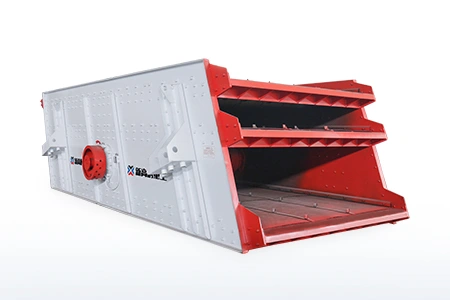
A trommel screen separates material inside a rotating drum, while a vibrating screen moves material across one or more vibrating decks. The choice depends on the screening duty—not simply on whether the feed is wet or dry.
For crushed stone and gravel operations requiring several product sizes, a suitable multi-deck vibrating screen is often worth evaluating first. A trommel deserves consideration where tumbling suits the feed and separation task, including many soil, organic and mixed-material applications.
Neither machine is automatically the better choice for every material. Before comparing models, define the feed condition, required cut sizes, acceptable amounts of misplaced material and production target.
This guide focuses on that initial equipment choice, particularly for aggregate and mineral-processing applications.
Trommel vs Vibrating Screen: Key Differences
| Selection factor | Trommel screen | Vibrating screen |
|---|---|---|
| Main movement | A rotating drum tumbles and moves material | Vibration moves and stratifies material across screen decks |
| Typical applications | Soil, compost, mixed feeds and selected mineral-processing duties | Aggregate grading, scalping and mineral classification |
| Product fractions | Depend on drum sections and the discharge arrangement | Depend on the number of decks and discharge arrangement |
| Damp or sticky feed | Tumbling may help, but adhesion and balling remain possible | Performance depends on the feed, screen media and operating configuration |
| Wet screening | Available in suitable designs and process arrangements | Available in suitable designs with appropriate water handling |
| Capacity comparison | Requires application-specific sizing | Requires application-specific sizing |
| Maintenance focus | Drum media, drive, supports and cleaning equipment | Screen media, exciter, bearings, springs and screen structure |
| Installation | Check the complete drum, conveyor and service layout | Check deck access, support loads, chutes and service space |
These are selection considerations rather than guaranteed performance rankings. A machine intended for rough scalping should not be compared directly with one selected for tight final-product grading.
How the Two Screens Separate Material
Trommel Screens
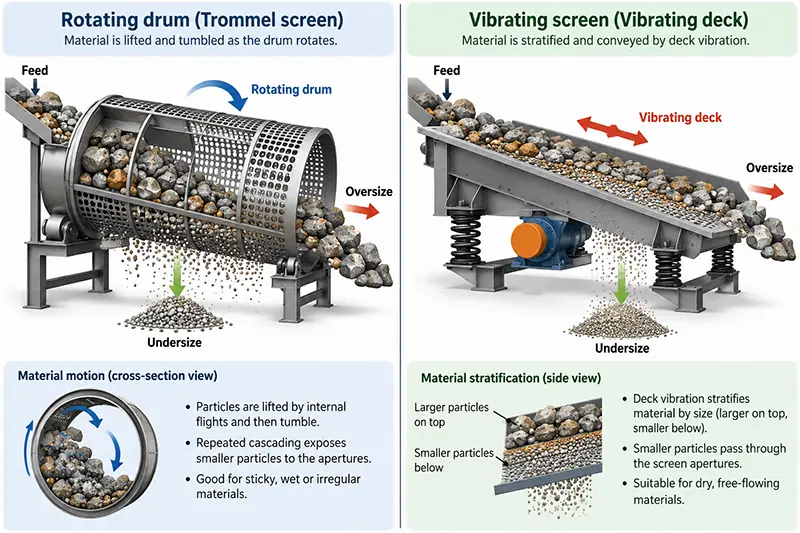
Material enters a cylindrical drum and moves through it as the drum rotates. Undersize passes through the openings, while oversize continues toward its discharge.
Drum inclination, internal features and operating speed influence material movement and residence time. Their arrangement varies by design.
Tumbling can repeatedly expose material to the screening surface, but it does not guarantee that every lump will break apart or every opening will remain clear.
Vibrating Screens
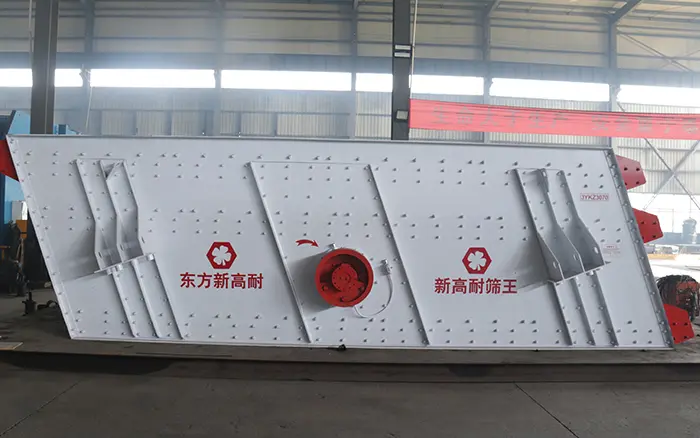
A vibrating screen promotes material movement and stratification across a screening surface. Smaller particles work toward the surface and may pass through the apertures; larger particles remain above it and travel toward discharge.
With multiple decks, material passing an upper deck can be classified again on lower decks.
The vibrating screen working principle explains this process in more detail. For equipment selection, the important point is that vibration, feed distribution and bed depth work together to influence separation.
When to Consider a Trommel Screen
A trommel is worth evaluating when tumbling is useful for the material and the required separation.
Common examples include soil and organic materials, as well as some mixed feeds. There are also mineral-processing trommels, but their duties and configurations can differ substantially from mobile soil-screening machines.
Evaluate a trommel when:
The feed benefits from repeated turning and exposure to the screen.
The required product fractions match the proposed drum arrangement.
The feed size and shape suit the drum entrance and internal clearances.
Cleaning access and drum-media replacement are practical.
Representative material behaves acceptably during testing or a documented application assessment.
Do not assume that all sticky feed will screen successfully in a trommel. Cohesive material can adhere to surfaces, and very wet soil may form balls rather than separate as intended. RUBBLE MASTER discusses this limitation in its trommel comparison.
When to Consider a Vibrating Screen
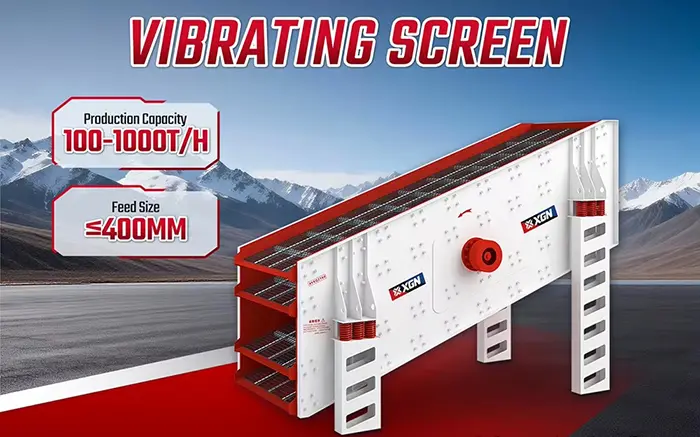
A vibrating screen is worth evaluating when the task involves controlled size classification, particularly where an aggregate plant needs several product streams.
Depending on the selected design, vibrating screens may perform scalping, intermediate classification, final grading or wet screening. These duties require different configurations.
Evaluate a vibrating screen when:
One feed stream must be divided into several specified size fractions.
The screen must integrate with crushers and return conveyors.
Feed distribution and material-bed depth can be controlled.
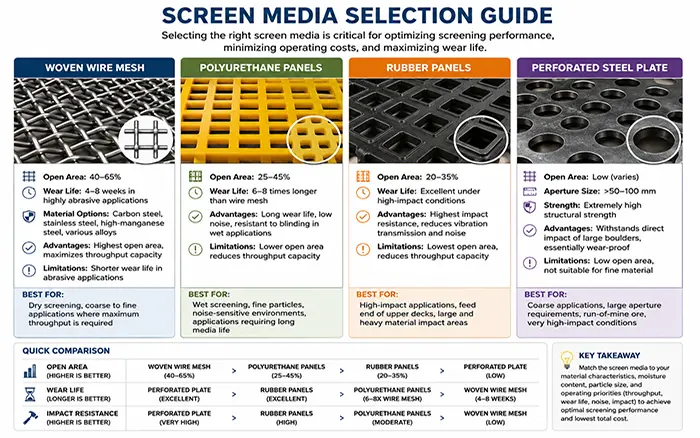
Appropriate screen media are available for the impact, abrasion and moisture conditions.
The structure and access arrangements suit the installation.
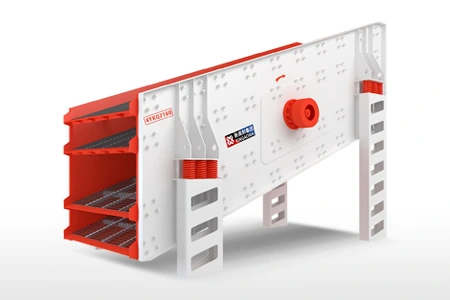
A multi-deck configuration can produce several fractions, but the number of decks alone does not confirm product quality. Apertures, material distribution and discharge arrangements must match the specification.
For the next stage of selection, review the screen deck configuration and media options.
Wet Feed Is Not the Same as Wet Screening
Damp, sticky feed and engineered wet screening are different conditions.
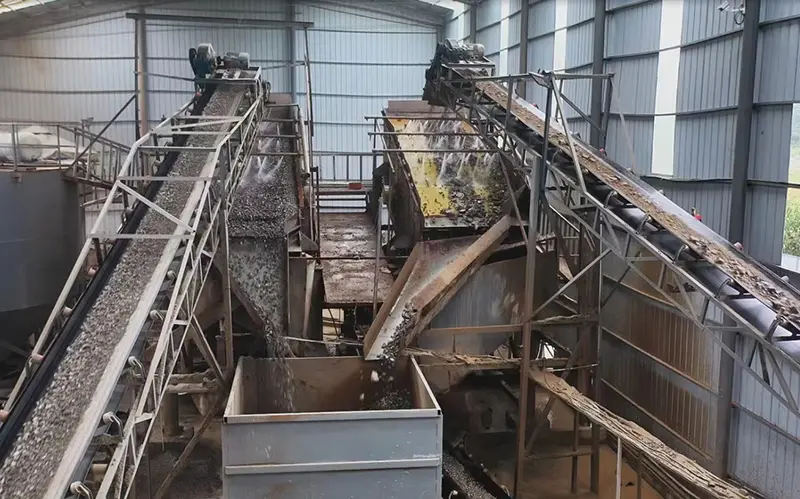
Damp fines may adhere to larger particles, accumulate on surfaces and block openings. A wet-screening process deliberately introduces water to assist material movement, rinsing and separation, with suitable collection and downstream water handling.
Vibrating screens are available for wet-screening duties. For example, Terex’s SI Series documentation identifies both wet and dry applications. Therefore, moisture alone does not justify selecting a trommel.
Conversely, drum rotation does not guarantee that cohesive clay will separate or that screen openings will remain clear.
Describe how the material behaves:
Does it flow freely or smear onto surfaces?
Does it contain loose fines or strong, clay-bound lumps?
Does it form balls when turned?
Do fines release when water is added?
Is water available, and can the resulting slurry be managed?
If the feed contains strongly bound clay, assess whether separate scrubbing or other preparation is necessary. Screening and scrubbing are different duties; neither screen type should be assumed to replace a dedicated treatment stage.
Where behaviour is uncertain, representative testing is more useful than a general claim that one machine handles all wet material.
How to Compare Capacity and Operating Costs
Compare the Same Screening Duty
Two catalogue capacities are not comparable unless their conditions are reasonably aligned.
Ask suppliers to base proposals on the same:
Feed-size distribution and maximum lump size.
Bulk density and moisture condition.
Required cut sizes and product specifications.
Near-size content: particles close to the intended separation size.
Feed rate, including circulating material where applicable.
Dry or wet operating basis.
For wet processes, distinguish dry-solids throughput from total slurry flow. Also distinguish tonnes per hour from cubic metres per hour.
Look Beyond Nominal Screen Area
The total curved surface of a drum and the area of a flat deck do not represent identical working conditions.
Material contact, residence time, bed depth, aperture shape and open area all affect separation. Comparing square metres alone is insufficient.
Ask what proportion of the feed can be processed while meeting the required product specification—not only what maximum tonnage can pass through the machine.
Compare Cost per Acceptable Tonne
Purchase price is only one part of the decision. Include:
Power or fuel consumption.
Screen-media wear and replacement labour.
Cleaning frequency and downtime.
Drive and support-component maintenance.
Water handling where applicable.
Installation, conveyors and supporting structures.
Rehandling or reprocessing of off-specification material.
The relevant result is the cost of producing acceptable material. A machine with a lower purchase price can become expensive if it repeatedly produces material that needs reprocessing.
Avoid declaring either screen type universally cheaper, quieter or easier to maintain without a defined configuration.
A Practical Selection Checklist
Before requesting proposals, prepare the following information.
| Information | Why it matters |
|---|---|
| Material and source | Establishes the application and likely variability |
| Feed grading and maximum lump size | Helps define loading and entry requirements |
| Bulk density | Relates mass throughput to material volume |
| Moisture, clay and organic content | Helps identify adhesion and separation risks |
| Required product sizes | Defines the screening task |
| Product tolerances | Establishes acceptable separation performance |
| Normal and peak feed rates | Helps assess steady and surge conditions |
| Water availability and discharge arrangements | Establishes wet-process feasibility |
| Installation and maintenance space | Checks physical compatibility |
Once the equipment category is established, use these inputs for industrial vibrating screen selection rather than choosing a model from tonnage alone.
Choosing Equipment for an Aggregate Plant
For crushed stone or gravel requiring several product sizes, begin by evaluating a suitable vibrating-screen configuration. For feed where tumbling may be advantageous, include a trommel in the assessment.
The final decision should follow the material and product requirements. It should not follow a simple rule that trommels are for wet material and vibrating screens are for dry material.
XINGAONAI offers circular vibrating screens and linear vibrating screens for aggregate and mineral classification. Provide the feed information, required product sizes and operating conditions so that a suitable configuration can be evaluated.