Choosing a slag crusher starts with identifying the material, the metal present in it and the required product. Equipment suitable for crushing the mineral portion is not automatically suitable for handling large uncrushable metal pieces.
This guide covers cooled, solidified metallurgical slag. It does not describe molten-slag handling, boiler ash-discharge equipment or a complete aluminium salt-slag treatment system.
The practical objective may be aggregate production, preparation for further processing or liberation of metal from a mineral matrix. These duties can require different equipment configurations even when the materials are all described as “slag.”
1. Identify the Slag Before Selecting the Crusher
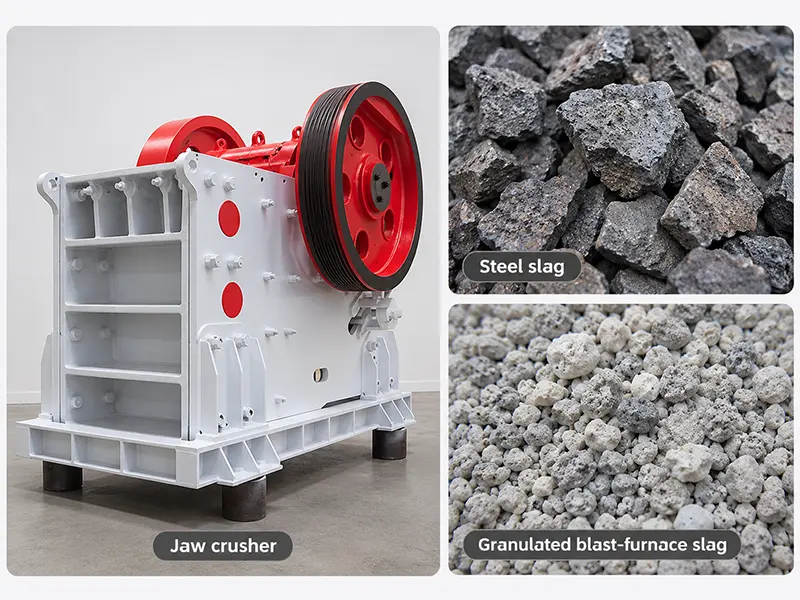
The word “slag” does not define one consistent feed material. Its origin, cooling history and previous processing affect the task.
| Material or condition | What to establish before selection |
|---|---|
| Steelmaking slag | Source, physical condition, metal inclusions, abrasiveness and intended use |
| Air-cooled blast furnace slag | Lump size, structure and aggregate-processing requirements |
| Granulated blast furnace slag | Whether crushing is necessary or drying and grinding are the main duties |
| Non-ferrous metallurgical slag | Mineral composition, residual metals and the proposed recovery route |
| Special materials such as aluminium salt slag | The need for a dedicated treatment assessment |
| Mixed stockpiles | Variability and whether different materials should be processed separately |
Do not select equipment from a material name alone. Representative samples and a description of the feed are more useful than a photograph without information about its origin.
2. What Makes Slag Different from Quarry Rock?
Three conditions deserve particular attention.
Metal inclusions: Some feeds contain free metal pieces or metal locked inside mineral material. An object that cannot be crushed may interrupt operation or damage equipment.
Variable properties: Different batches can vary in hardness, abrasiveness, density and metal content. A setting that works for one batch may not produce the same result with another.
Different processing objectives: Reducing lump size is not the same as selectively breaking a mineral matrix to release metal. Excessive size reduction may create fines without achieving the intended recovery.
Metso’s slag crushing overview similarly identifies variable, abrasive feed and uncrushable material as selection considerations. Its machine-specific protection features should not be assumed to exist on other equipment.
3. Jaw, Cone or Impact Crusher for Slag?
The appropriate crushing method depends on the actual feed and stage duty.
| Equipment direction | Duty to evaluate | Conditions requiring confirmation |
|---|---|---|
| Jaw crusher | Primary size reduction of suitable lump material | Feed size, metal control and the actual protection arrangement |
| Cone crusher | Further reduction of suitably prepared feed | Material suitability, tramp-metal management and product requirements |
| Impact crusher | Size reduction or liberation of suitable material | Abrasion, metal inclusions and rotor configuration |
| Specialized selective-crushing equipment | Particular metal-mineral composite materials | Original equipment capabilities and representative testing |
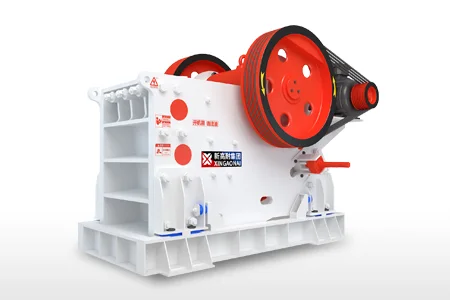
A PEV series jaw crusher is a primary crushing equipment reference. Its published hard-rock duties do not establish approval for an untested, metal-bearing slag feed. Material suitability and the equipment configuration must be confirmed.
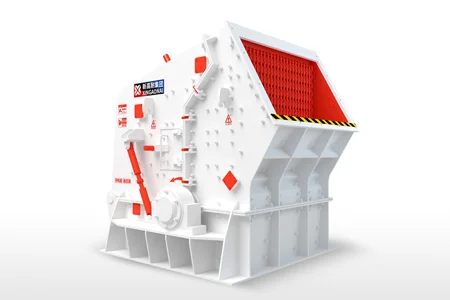
An impact crusher may be evaluated where the material and processing objective suit impact crushing. It should not be selected solely because the slag appears brittle. Abrasive components and uncrushable inclusions remain important.
The general differences are explained in jaw crusher vs impact crusher, but slag selection requires the additional feed assessment described here.
4. How Should Metal Be Managed?
Distinguish between metal already free in the feed and metal that becomes exposed only after breakage.
Pre-sorting and suitable separation can remove some free metal before crushing. Further separation may be needed after a stage that releases embedded metal. The arrangement should follow the material, not a rule that all separation belongs at the end of the line.
An overband magnetic separator can be considered for appropriately magnetic ferrous objects on a conveyor. Its performance depends on installation and feed conditions, and it does not remove every metal type or every embedded piece.
Metal detection, magnetic separation and crusher overload protection perform different functions. None should be described as a universal replacement for the others.
A toggle plate must not be treated as equivalent to a dedicated hydraulic release system. Claims about passing uncrushable objects require confirmation for the exact machine and configuration.
5. What Does a Slag Crushing and Screening Circuit Include?
A conceptual route is:
Feed identification and preparation → controlled feeding → crushing where required → screening → product handling and oversize assessment
Metal inspection and separation may be needed at several points, including before a crusher and after a liberation stage.
Screening separates the output into size fractions. Oversize may return for further crushing, but its metal content should be assessed before recirculation. Repeatedly circulating an uncrushable piece does not solve the problem.
Crusher settings also affect the circuit. The closed side setting is one operating parameter; it does not independently determine the complete product size distribution.
Do not use feed throughput as a substitute for acceptable product output. Report the amount meeting the required grading separately from oversize, recovered metal and rejected material.
6. What Should a Slag Crushing Test Measure?
A useful trial should connect the feed characteristics with the required output:
Representative feed size and material variability.
Free and embedded metal conditions.
Product particle-size distribution.
Acceptable product yield and circulating load.
Metal liberation and separation results.
Wear observations and operating interruptions.
Energy use within a clearly defined measurement boundary.
Record test duration and conditions. A short trial may indicate breakage behaviour, but it cannot establish long-term liner life.
If comparing equipment, use comparable feed and product requirements. One machine should not be judged more productive simply because it produces a coarser or otherwise unacceptable output.
7. Does Crushed Slag Automatically Become a Usable Aggregate?
No. Crushing and screening control size; they do not alone establish suitability for construction use.
Steel slag may require assessment of volume stability and other properties for the intended application. The FHWA steel slag guidance discusses expansion associated with free lime and magnesia. It is an archived technical reference, not a substitute for current project specifications.
Confirm the applicable material requirements, testing methods and acceptance criteria. Do not prescribe one ageing period or declare every crushed slag suitable for road base or concrete.
XINGAONAI can discuss crushing equipment against a defined material description and processing objective. Confirm the slag application, metal-management requirements and supply scope before selecting a model or committing to performance