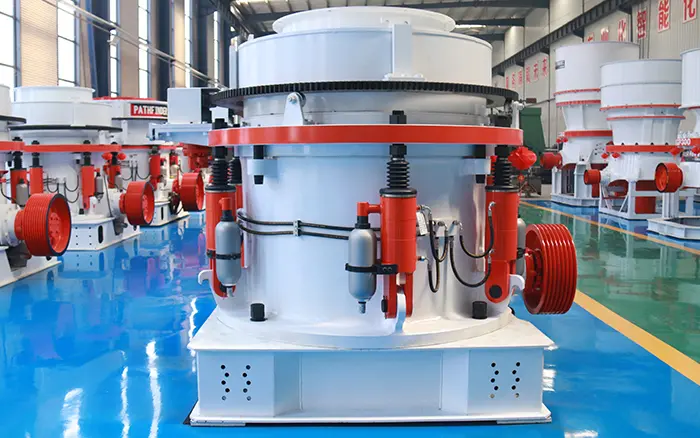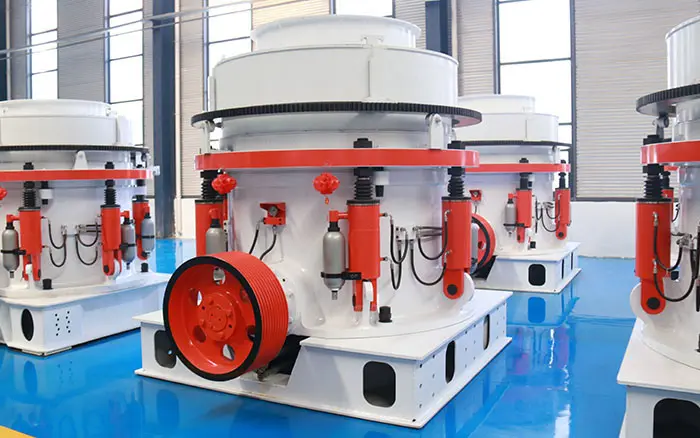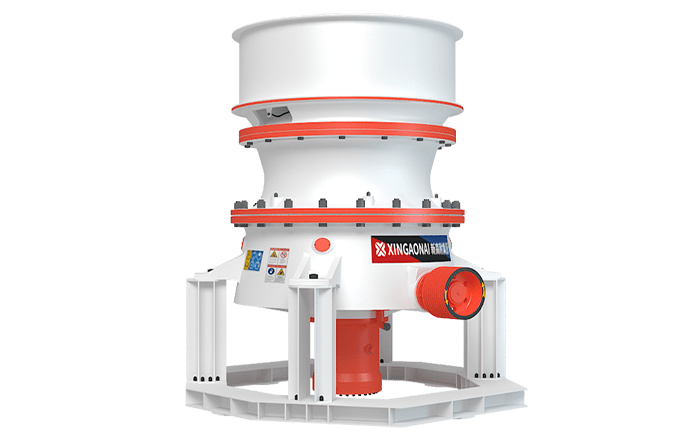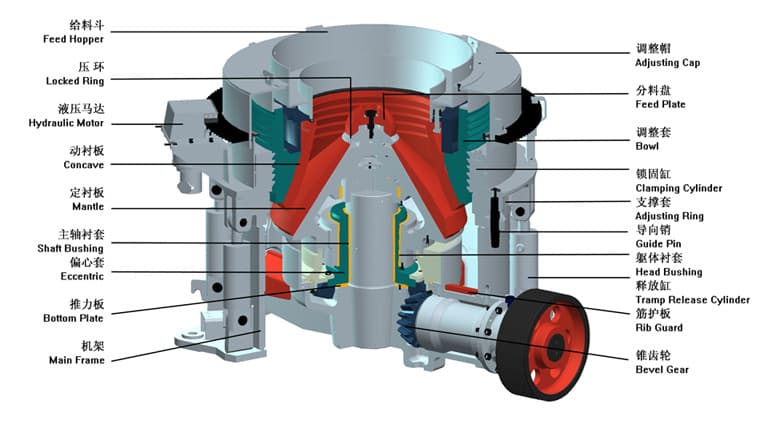
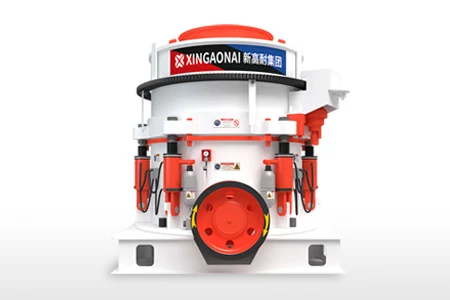
A multi-cylinder hydraulic cone crusher specification sheet should be read as a combination of model, crushing chamber, feed conditions, discharge setting and operating duty. The largest capacity figure alone is not enough to select a machine.
This guide uses the XINGAONAI XHP series as a practical reference. It explains how to compare published parameters, identify missing information and prepare a selection enquiry for secondary or tertiary crushing.
1. XHP Multi-Cylinder Hydraulic Cone Crusher Specifications
The following is a model-level summary of the power values and capacity ranges published on our XHP product page, checked on October 30, 2026.
| Model | Published power (kW) | Published capacity range (t/h) |
|---|---|---|
| XHP200 | 160 | 90–250 |
| XHP300 | 220 | 115–440 |
| XHP400 | 315 | 140–630 |
| XHP500 | 400 | 175–790 |
| XHP800 | 630 | 260–1,200 |
How to use this table: these are published model ranges, not guaranteed output at every setting or for every material. The product page lists a series-level maximum feed size of up to 353 mm; this does not apply to every model or chamber. Confirm the exact feed opening, permitted setting and capacity estimate for the selected configuration before ordering.
Refer to the full XHP technical parameter table for the published chamber entries. The project quotation and approved technical documents should identify the configuration being supplied.
2. What the Main Specifications Mean
| Parameter | What to check | Selection implication |
|---|---|---|
| Feed opening and maximum feed size | Exact model and chamber; actual feed size distribution | Check both the largest feed particles and whether the grading suits the chamber. |
| Chamber or liner profile | Available configuration and intended crushing stage | A chamber selected for a finer product may not accept the same feed as a coarser configuration. |
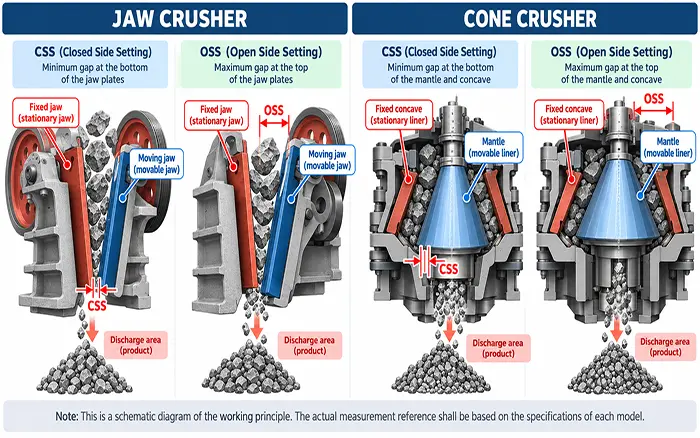
| Closed side setting (CSS) | Permitted operating range and measurement reference | CSS influences grading, capacity and load; it is not a finished-product size guarantee. |
| Capacity | Material, feed grading, CSS and circuit conditions behind the estimate | Compare output under a common set of conditions. |
| Motor power | Specified drive and permitted operating load | Installed kW does not by itself establish output or energy consumption per tonne. |
| Dimensions and weight | Certified installation drawing, shipping weights and lifting information | Allow for maintenance access, foundations and component removal. |
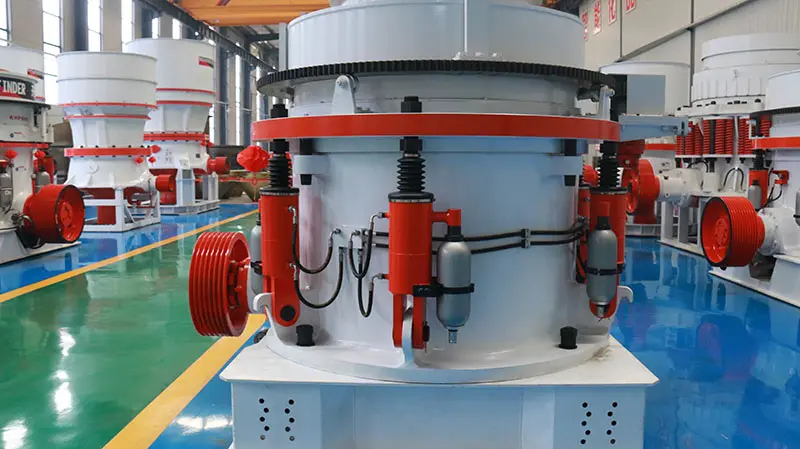
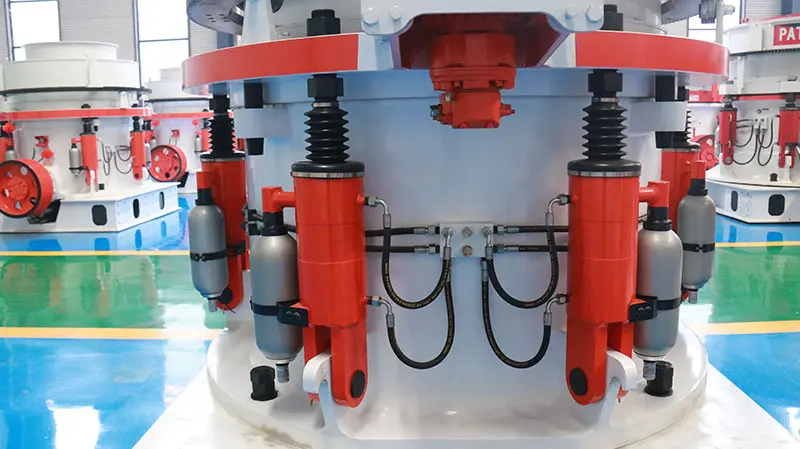
| Hydraulic, lubrication and electrical systems | Supplied equipment, utilities, cooling duty and control interfaces | Confirm the actual package rather than assuming every option is standard. |
3. Match the Chamber and Feed Before Selecting Capacity
A model name is not a complete specification. Check the selected chamber's feed limit and permitted setting together. Chamber labels and available combinations are manufacturer-specific; do not transfer dimensions or settings from another series with a similar model number.
Provide a representative feed size distribution, not only a maximum lump size. Also report bulk density, moisture, clay content, abrasiveness and available strength or crushability test results. These properties affect chamber behaviour and the reliability of a capacity estimate.
Compressive strength measured in MPa is a strength property, not a direct measurement of mineral hardness or abrasiveness. Two rocks with similar compressive strength can produce different wear and crushing results. Likewise, there is no single moisture percentage that defines suitability for every multi-cylinder cone crusher and feed material.
For the wider equipment categories, see our cone crusher types guide. This specification guide focuses on choosing a configuration within the multi-cylinder category.
4. Distinguish the Discharge Setting from Product Grading
CSS describes a minimum opening at the manufacturer's specified reference during the crushing cycle. It does not mean that every particle leaving the crusher is smaller than that value. For example, a 20 mm CSS is not a guarantee of a product entirely below 20 mm.
Specify the required product with a grading envelope or sieve analysis. If the target is a screened 5–20 mm aggregate fraction, assess the screen cuts and oversize return together with the crusher. A tighter setting may increase load or fines and does not automatically improve saleable output.
The CSS and OSS guide explains the setting terminology. Physical measurement and adjustment must follow the manual for the actual machine and installed liners.
5. Size for the Circuit Load, Not Only Fresh Feed
In a closed circuit, the cone crusher can receive both new material and oversize returned from a screen. The crusher, screen, feeder and conveyors must be evaluated as one system.
Illustrative mass-balance example: if a crusher receives 200 t/h of fresh feed plus 60 t/h of screen return, its combined feed is 260 t/h. This arithmetic example is not an XHP performance prediction. Whether a particular configuration can handle that duty requires a capacity assessment at the intended feed grading and setting.
Allowances for feed variation, availability and future expansion should be agreed for the project. Applying the same fixed percentage reserve to every plant can lead to either a bottleneck or an oversized machine.
6. Compare Power, Hydraulics and Installation Requirements
Motor power and operating conditions
Select the drive as part of the manufacturer's approved crusher configuration. Rock strength alone cannot establish a universal minimum motor rating. Confirm the supply voltage and frequency, starting arrangement, permitted load and site conditions. Energy use per tonne must be evaluated against actual throughput and operating power, not the motor nameplate alone.
Hydraulic and lubrication package
Request the approved pressure settings, oil specifications, filtration requirements, cooling duty and monitoring functions for the supplied unit. Higher hydraulic pressure or a larger oil tank is not, by itself, evidence of better performance. Do not change pressure settings to compensate for an unsuitable chamber or overloaded circuit.
For system functions, refer to the cone crusher hydraulic system guide; operating values must come from the relevant machine documentation.
Installation and maintenance access
Request the general arrangement, foundation loads, discharge clearance, lifting requirements and access needed to remove major wear parts. A machine that fits within the available floor area may still lack sufficient service space.
7. Information to Include in a Crusher Selection Enquiry
Material: rock or ore type, representative sample or test data, abrasiveness, moisture and clay content.
Feed: maximum size, size distribution, bulk density and expected variability.
Duty: secondary or tertiary crushing, required fresh-feed rate and operating schedule.
Product: target grading, saleable fractions, fines limits and particle-shape requirements.
Circuit: upstream equipment, screen cuts and capacity, and expected or measured return load.
Site: power supply, ambient conditions, installation constraints and transport access.
Supply scope: motor, hydraulic and lubrication stations, controls, liners, spares and commissioning responsibilities.
Ask for a proposed model and chamber, the intended setting range, the basis of the capacity estimate and the agreed performance verification conditions. A complete proposal should make clear what has been assessed and which assumptions still require confirmation.
8. Choose a Verified Configuration
Use the published XHP model data to shortlist equipment, then confirm the application against the actual feed and circuit. Avoid comparing one supplier's maximum output with another supplier's fine-crushing duty without aligning the conditions.
For model availability and a project-specific selection review, see the XHP multi-cylinder hydraulic cone crusher product page and provide the information above.
Technical reference: Metso's cone crusher chamber selection guidance explains the relationship between chamber choice, feed grading, CSS and operating conditions. Numerical XHP data in this article come from XINGAONAI's linked product page.