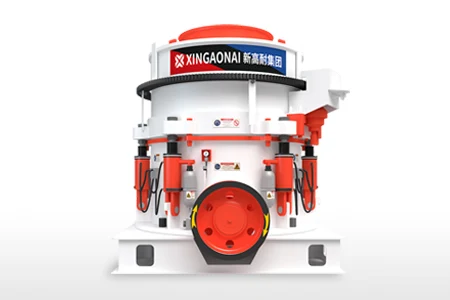
When a major crusher component becomes worn, cracked or dimensionally inaccurate, the decision is not simply whether it can be repaired. Operators must determine whether rebuilding can restore the component to verified dimensions and acceptable reliability—or whether installing a new replacement part presents a lower long-term risk.
A rebuild may be considered when the base material remains structurally sound, damage is localized, original dimensions are available and the completed repair can be properly inspected. Replacement is generally more appropriate when structural integrity cannot be verified, deformation is extensive, failures have occurred repeatedly or the rebuilt component would no longer meet the crusher’s operating requirements.
XINGAONAI does not provide crusher component rebuilding or repair services. This guide is intended to help equipment owners evaluate whether a damaged component should be inspected by a qualified repair provider or replaced with a compatible new part. XINGAONAI supplies replacement crusher parts based on the equipment model, part number, drawings, dimensions and application requirements.
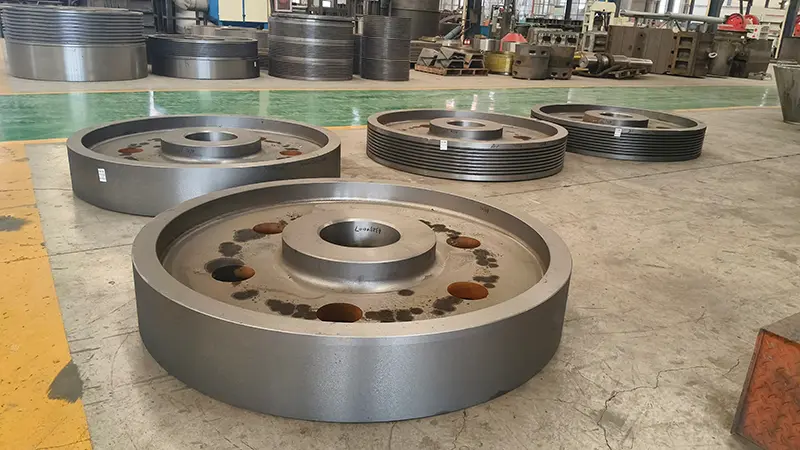
What Is the Difference Between a Wear Part and a Rebuildable Crusher Component?
Before comparing rebuilding and replacement, it is important to distinguish consumable wear parts from major mechanical or structural components.
These two categories have different functions, wear patterns and replacement strategies.
Crusher wear parts
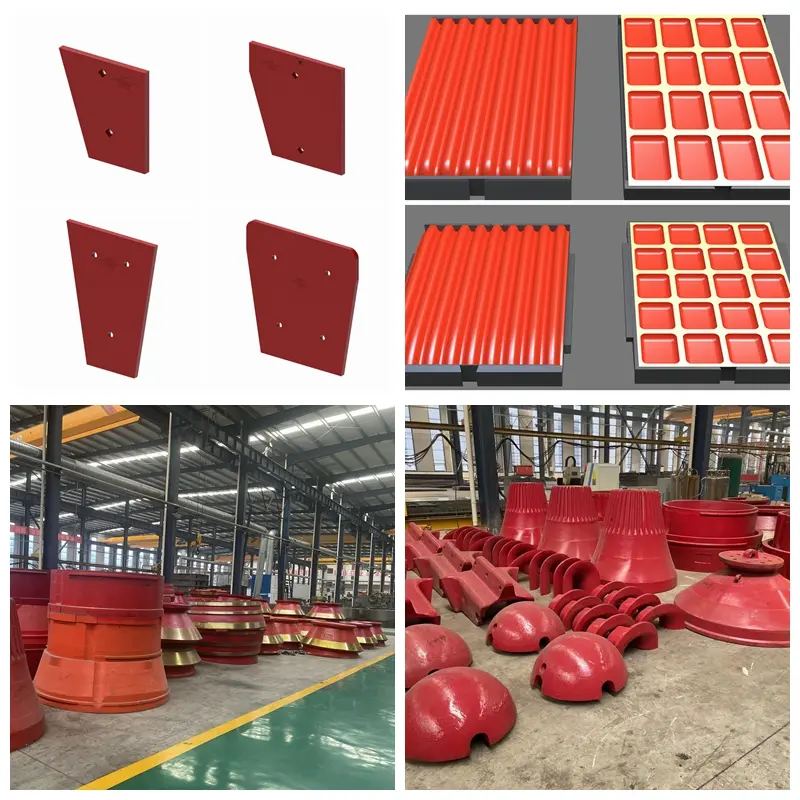
Wear parts are designed to gradually lose material while protecting the crusher or performing the crushing action. They are normally replaced after reaching the manufacturer’s specified wear limit.
Common crusher wear parts include:
Jaw plates
Cheek plates
Mantles
Concaves
Blow bars
Impact plates
Chamber liners
Grate bars
Rotor tips
Protective liner plates
For example, the fixed and movable jaw plates described in this guide to jaw crusher parts are expected to experience progressive abrasion during operation.
Attempting to rebuild a consumable wear part is not automatically economical or technically appropriate. Material compatibility, remaining thickness, balance, attachment method and the manufacturer’s limits must all be considered.
In most applications, wear parts that have reached their specified limit should be replaced rather than repeatedly repaired.
Major mechanical and structural components
Major components are not normally consumed at the same rate as liners and crushing surfaces. However, they may develop localized wear, damaged fits, cracks, corrosion, distortion or dimensional changes after long-term operation.
Examples can include:
Mainframes
Mainshafts
Crusher heads
Eccentrics
Adjustment rings
Bearing housings
Flywheels
Selected pitman components
Selected rotor assemblies
Other machined support structures
Some of these components may be candidates for professional assessment. However, inclusion on this list does not mean that every damaged component can or should be rebuilt.
The decision depends on:
Crusher design
Component material
Damage location
Loading conditions
Previous repairs
Original dimensions and tolerances
Available inspection methods
Ability to verify the finished component
Which Crusher Components May Be Evaluated for Rebuilding?
A component may be sent to a qualified repair provider for further evaluation when several conditions are satisfied.
The base material remains structurally sound
Localized surface wear does not necessarily mean that the complete component has lost its structural integrity.
For example, a worn bearing seat or machined surface may be technically different from a frame with uncontrolled cracking across a highly loaded section. The condition of the underlying material must be established before any repair decision is made.
Visual appearance alone is not enough to confirm structural soundness.
Wear is localized and measurable
Rebuilding may be considered when damage is limited to a defined surface, bore, fit or other measurable area.
The repair provider must be able to determine:
The original dimension
The current dimension
The amount of material lost
The required surface finish
The applicable tolerance
Whether the surrounding material remains suitable for restoration
If no reliable original dimension or acceptance limit is available, it becomes more difficult to demonstrate that the finished component is suitable for service.
Critical dimensions can be restored and verified
A repair is only useful if the component can return to the required dimensional relationship with its connected parts.
Depending on the component, this may involve verifying:
Bore diameter
Shaft diameter
Concentricity
Alignment
Flatness
Runout
Fit with bearings or bushings
Position of mounting surfaces
The required checks vary by crusher model and component. Universal tolerances should not be applied to every machine.
The repair process can be controlled
A qualified provider should have suitable procedures for the component material and damage type.
The work may require engineering review, controlled welding, stress management, precision machining or replacement of non-repairable subcomponents. The specific process should be determined by qualified personnel rather than improvised at the installation site.
The finished repair can be inspected
A repaired component should not be returned to service based only on visual appearance.
The provider should be able to document the completed work and confirm relevant dimensions and inspection results. The required verification depends on the component, repair method and applicable standards.
When Should a Crusher Component Be Replaced?
Replacement is normally the more practical option when rebuilding cannot provide a verifiable level of structural integrity, dimensional accuracy or future reliability.
The part is a consumable wear item
Jaw plates, mantles, concaves, blow bars and many chamber liners are intended to be replaced as they wear.
Operators should follow the model-specific wear limits instead of waiting for complete failure. Excessive wear can change the crushing-chamber geometry, reduce capacity, affect product size and expose the protected structure to damage.
Regular inspections and planned replacement are also covered in XINGAONAI’s aggregate equipment maintenance checklist.
Critical dimensions cannot be recovered
Replacement should be considered when:
Too much material has been lost.
The component cannot be machined back to the required geometry.
Mating parts would no longer fit correctly.
Alignment cannot be restored.
Original dimensions cannot be established.
The finished component cannot be measured or verified.
A component that looks repaired but does not maintain the required fits can cause vibration, abnormal loading, lubrication problems and secondary damage.
Structural damage cannot be reliably evaluated
The presence of a crack does not automatically mean that a component must be discarded. It also does not mean that welding is automatically acceptable.
The decision depends on:
Crack location
Crack direction and extent
Component material
Loading conditions
Previous repairs
Heat-affected areas
Manufacturer requirements
Applicable repair procedures
If the damage affects a critical load-bearing area and no reliable repair and verification procedure is available, replacement is the safer decision.
The component has failed repeatedly
Repeated failure in the same area may indicate a problem beyond the component itself.
Possible causes include:
Incorrect alignment
Unstable feeding
Excessive vibration
Lubrication failure
Loose mounting
Improper fit
Excessive load
Uncrushable material entering the chamber
Incorrect replacement-part specifications
An unresolved design or installation problem
Repairing the same area again without identifying the root cause may only delay another failure.
Material condition is unknown
A previous repair may have changed the material locally through welding, heating, machining or stress concentration.
Replacement may be preferable when:
The material grade cannot be identified.
Previous welding procedures are unknown.
Several undocumented repairs are present.
Heat damage is suspected.
The material condition cannot be properly evaluated.
Traceability is required but unavailable.
The equipment no longer meets production requirements
Rebuilding restores an existing component; it does not automatically increase the crusher’s feed opening, capacity or reduction capability.
If the crusher has become a permanent production bottleneck, rebuilding the original component may return the machine to its previous condition without solving the current process requirement.
In this situation, replacing or upgrading the complete crusher may be more practical than continuing to repair individual components.
What Should Be Inspected Before Making the Decision?
The crusher should be stopped, isolated and made safe according to the site’s lockout/tagout procedure and the equipment manual before internal inspection or component removal.
A condition assessment should then consider the following information.
1. Equipment identification
Record:
Crusher manufacturer
Crusher model
Serial number
Component name
Original part number
Drawing or assembly number
Crusher components are not interchangeable simply because they have a similar appearance.
2. Operating history
Review:
Total operating hours
Material being processed
Feed-size changes
Crusher settings
Lubrication records
Vibration and temperature trends
Previous component failures
Previous repairs
Recent capacity or product changes
Maintenance records can help distinguish progressive wear from sudden damage.
3. Visual inspection
Inspect for:
Surface wear
Cracks
Deformation
Corrosion
Loose fits
Damaged threads
Fretting
Abnormal contact patterns
Previous welds
Heat discoloration
Lubricant leakage or contamination
Visible damage should be documented with both overall and close-up photographs.
4. Dimensional inspection
Measurements should be compared with a verified drawing, manufacturer specification or reliable reference component.
Depending on the part, the inspection may cover:
Bore dimensions
Shaft dimensions
Mounting faces
Bolt-hole locations
Bearing fits
Bushing fits
Alignment
Concentricity
Flatness
Runout
5. Appropriate material or non-destructive testing
A qualified repair provider may recommend suitable testing based on the material and suspected damage.
The selected method and acceptance criteria should be appropriate for the component. One inspection method should not be treated as universally suitable for every casting, forging, weld or machined surface.
What Does a Qualified Component Rebuild Involve?
XINGAONAI does not perform component rebuilding. If an owner chooses to investigate a rebuild, the damaged part should be assessed by a suitably qualified repair provider.
A controlled rebuild process may include:
Component identification and document review
Cleaning and disassembly
Visual and dimensional inspection
Appropriate material and non-destructive testing
Engineering assessment
Written repair scope
Controlled repair execution
Machining of approved surfaces
Replacement of non-repairable subcomponents
Dimensional verification
Assembly and alignment checks
Final inspection and documentation
The actual scope depends on the crusher, component and damage.
A rebuild should not be described as restoring a component to “like-new” or “better-than-new” condition unless the repair provider can support that statement with defined specifications, inspections and acceptance records.
How to Compare Rebuild and Replacement Costs
The lowest initial quotation is not necessarily the option with the lowest total cost.
Total rebuild cost
A realistic rebuild estimate may include:
Initial inspection
Disassembly
Cleaning
Material testing
Repair work
Machining
New bushings, bearings or other subcomponents
Assembly
Final inspection
Transport
Installation
Planned downtime
Contingency for hidden damage
Additional damage is sometimes found only after the component has been cleaned and disassembled. The initial quotation should therefore state what is included and how additional work will be approved.
Total replacement cost
A replacement estimate may include:
New component price
Freight
Import duties or local taxes
Packaging
Installation
Required mating parts
Commissioning
Planned downtime
Disposal or storage of the old component
Compare expected cost per operating hour
Where reliable service-life estimates are available, the options can be compared using:
Expected life-cycle cost per operating hour = Total expected cost ÷ Expected operating hours
This calculation should also consider the financial consequences of another unplanned shutdown.
A cheaper rebuild may become the more expensive option if it has:
A high risk of repeat failure
A short expected service life
Limited documentation
No clear acceptance criteria
A longer or uncertain repair schedule
A new replacement part may have a higher purchase price but offer more predictable installation, documentation and future planning.
Compare downtime and delivery time
Lead time can significantly affect the decision.
Operators should compare:
Time required to remove and inspect the old component
Transport time to and from the repair provider
Time required for repair and machining
Availability of repair materials
Lead time for a new replacement component
Installation and alignment time
Availability of a spare crusher or component
Production loss during the shutdown
A rebuild is not automatically faster. A replacement is also not automatically faster. Both schedules should be confirmed before committing to either option.
Crusher Component Rebuild vs Replacement Decision Table
| Component condition | Default direction | Main reason |
|---|---|---|
| Consumable wear part has reached its specified limit | Replace | Wear parts are normally managed as replaceable items |
| Localized, measurable wear with sound surrounding material | Evaluate rebuilding | The damaged area may be recoverable |
| Worn bore or shaft surface with verified original dimensions | Evaluate rebuilding | Restoration may be possible if final dimensions can be verified |
| Crack found in a load-bearing area | Stop and obtain qualified assessment | Repair suitability depends on material, location and loading |
| Severe distortion or uncontrolled deformation | Replace | Geometry and load distribution may not be reliably restored |
| Material grade or previous repair history is unknown | Prefer replacement | Repair and inspection criteria may be uncertain |
| Repeated failure in the same location | Investigate root cause and consider replacement | Another repair may not correct the underlying problem |
| Replacement lead time is long but repair scope is verifiable | Compare both options | Downtime may change the economic decision |
| Repair cost and downtime approach the total replacement cost | Prefer replacement | A new component may provide more predictable value |
| Existing crusher no longer meets capacity requirements | Consider equipment upgrade | Rebuilding only restores the original capability |
This table is a preliminary screening tool. It does not replace a model-specific engineering assessment.
Why Repeated Repairs Require Root-Cause Analysis
A component can be repaired correctly and still fail again if the operating problem remains unresolved.
For example:
A repaired bearing housing may wear again if alignment remains incorrect.
A shaft can experience repeated damage if the bearing fit or lubrication condition is wrong.
A frame repair may crack again if foundation movement or loose mounting continues.
A replacement liner may wear unevenly if feed distribution remains one-sided.
Cone-crusher components can experience secondary damage when bearing condition is not monitored.
For more component-specific information, see XINGAONAI’s guide to cone crusher bearings.
Before rebuilding or replacing a failed component, investigate:
What failed?
Where did the failure begin?
Was the damage progressive or sudden?
Were operating conditions within the equipment limits?
Did another component cause the damage?
Have similar failures occurred before?
Will replacing the part remove the cause or only the symptom?
Root-cause information can also help a parts supplier identify whether a material, profile or configuration change should be evaluated.
How to Identify the Correct Replacement Crusher Part
Ordering a crusher component using only its name or photograph creates a significant mismatch risk.
Terms such as “mainshaft,” “eccentric,” “bearing housing” or “jaw plate” may refer to many different dimensions and configurations.
To identify the correct part, provide:
Equipment manufacturer
Exact crusher model
Serial number
Component name
Original part number
Assembly drawing
Component drawing
Critical dimensions
Material requirement
Required quantity
Clear photographs
Country of installation
Required delivery date
If the original part number is unavailable, additional measurements and drawings may be required.
For wear parts, also provide:
Processed material
Material hardness and abrasiveness, if known
Maximum feed size
Crusher setting
Current wear pattern
Target product size
Operating hours achieved by the previous part
Information on specific gyratory components can be found in the gyratory crusher wear parts guide.
Information to Provide When Requesting a Replacement Part
The following checklist can be copied into a replacement-parts inquiry.
| Required information | Customer details |
|---|---|
| Crusher manufacturer | |
| Crusher model | |
| Serial number | |
| Part name | |
| Original part number | |
| Drawing number | |
| Required quantity | |
| Main dimensions | |
| Material specification | |
| Processed material | |
| Feed size | |
| Crusher setting | |
| Current damage or wear | |
| Previous replacement history | |
| Delivery country | |
| Required delivery date |
Attach clear photographs of:
The complete component
Identification plates
Part numbers
Damaged or worn areas
Mounting faces
Mating components
Existing drawings
Measured dimensions
More complete information reduces the risk of supplying an incompatible component.
Replacement Parts for XINGAONAI Crushers
XINGAONAI supplies crushers and replacement parts for mining, quarrying and aggregate applications.
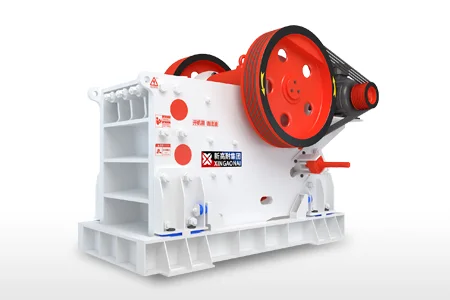
The PEV Series Jaw Crusher is used for primary crushing of granite, basalt, iron ore, river pebble and other hard materials. Replacement-part requirements vary by model, serial number and component configuration.
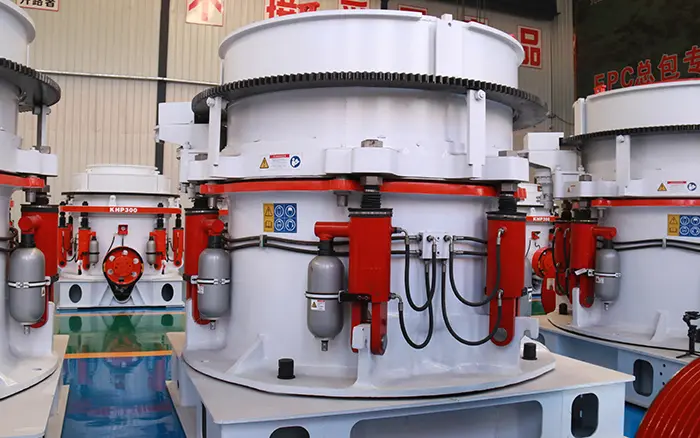
The XHP Series Multi-Cylinder Hydraulic Cone Crusher is used for secondary and tertiary crushing. Its parts must be matched to the specific model, crushing chamber and equipment configuration.
XINGAONAI does not provide crusher component rebuilding or repair services. If a damaged component cannot be reliably rebuilt by a qualified repair provider, send us the crusher model, part number, drawings, dimensions, photographs and application details so that we can review the replacement-part requirements.
Conclusion
The crusher component rebuild vs replacement decision should be based on evidence rather than the visible appearance of the damaged part or the lowest initial quotation.
A rebuild may be considered when:
The base material remains suitable.
Damage is localized and measurable.
Original dimensions and tolerances are available.
The repair process can be controlled.
Final dimensions and structural condition can be verified.
Expected cost, downtime and remaining service life justify the work.
Replacement is generally the more practical choice when:
A consumable wear part has reached its limit.
Structural integrity cannot be confirmed.
Critical dimensions cannot be restored.
Material or previous repair history is unknown.
The component has failed repeatedly.
The repair cannot be properly inspected.
The existing equipment no longer meets production requirements.
The total repair cost and risk approach the value of a new part.
XINGAONAI does not provide rebuilding services. We supply replacement crusher parts and can review part identification and supply requirements using the equipment model, part number, drawings, dimensions, photographs and operating information.
Need a replacement crusher component?
Send XINGAONAI the crusher model, serial number, part number, drawings, dimensions and damage photographs. Our team will check the part information and replacement requirements before preparing a quotation.