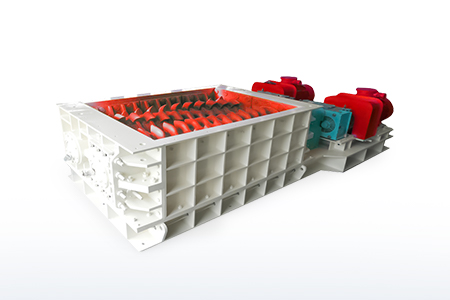
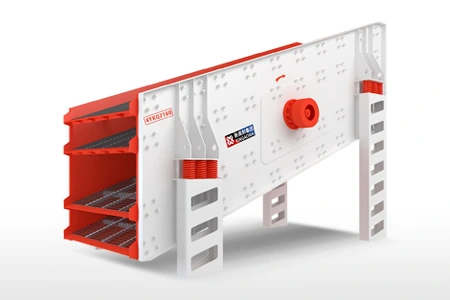
Start with the required product sizes when planning a coal crushing plant. If some of the raw coal already meets the relevant specification, a screen ahead of the crusher can divert that material around the crushing stage. The crusher can then be sized for the stream it actually receives, including any oversize returned from the product screen.
A coal crushing and screening plant reduces the size of raw coal and separates it into the fractions needed for shipment or downstream processing. If the project also requires ash reduction or removal of mineral impurities, assess the appropriate separation or washing stages as part of the wider coal preparation circuit. Example of a coal preparation flowsheet
1. What Should a Coal Crushing Plant Deliver?
Define the product before selecting the crusher. A plant preparing coal for a downstream process may only need to control the top size. A plant producing several saleable fractions must also control the yield and size distribution of each fraction.
| Design input | What to establish |
|---|---|
| Raw coal | Maximum lump size, full feed size distribution, moisture variation and the amount and hardness of associated rock |
| Product | Required size fractions, permitted oversize and maximum fines content where specified |
| Throughput | Fresh feed rate and required output for each saleable or downstream product stream |
| Delivery conditions | Whether throughput is measured on an as-received or dry basis, and what the next process can accept |
Ask for a representative feed sieve analysis. Two feeds with the same maximum lump size can place very different loads on the crusher if one already contains a large proportion of correctly sized coal.
2. When Should Coal Bypass the Crusher?
A prescreen separates part of the feed before crushing. Its undersize can bypass the crusher if it meets the requirements of a product stream or can feed the next process directly. If it contains too many fines for that destination, evaluate it as a separate stream before blending.
A typical arrangement is:
Raw coal → controlled feeding → prescreening
Suitable undersize → bypass to the appropriate product stream or downstream process.
Prescreen oversize → crusher → product screen.
Product screen oversize → return to the crusher if a closed circuit is justified, or route to a separate destination.
A bypass can reduce unnecessary crushing and may help limit additional fines. Check the bypass stream by sampling. Screen openings, feed distribution and material condition all influence what actually passes through. A circular vibrating screen is one option for product sizing where its screen media and operating conditions suit the coal. McLanahan on screening and sizing
3. How Do You Select a Coal Crusher?
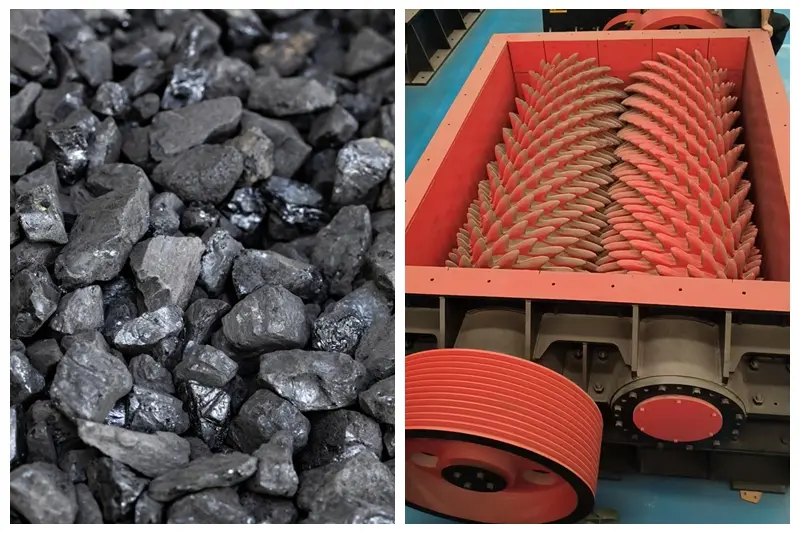
A double toothed roll crusher can be evaluated for primary or secondary sizing of suitable coal. The teeth grip and break the feed as the rolls turn in opposite directions. Check the actual lump sizes and associated rock before choosing the model, and verify the product size distribution by screening a representative crushed sample.
| Equipment | Where to evaluate it | What to verify |
|---|---|---|
| Double toothed roll crusher | Primary or secondary coal sizing within the model’s feed limits | Lump size, rock content, product size distribution and response to wet feed |
| Mineral sizer | Coal sizing duties where the tooth arrangement, drive configuration or installation height matters | Feed and product sizes, allowable inclusions and the model’s protection features |
| Rotary breaker | Duties where coal breaks more readily than certain larger, harder pieces of rock | Coal and rock breakage behaviour, reject composition and coal remaining in the reject |
A roll setting is a machine setting. Confirm the final product against the specified sieve limits, including permitted oversize and fines. Compare double roll crusher specifications alongside test results for the intended feed. McLanahan on primary coal crusher selection
4. How Does Wet Coal Affect Screening and Handling?
Wet fines and clay can adhere to screen media or build up in a hopper or transfer chute. When screen openings blind, some particles that would normally pass through can report to the oversize stream. Ahead of the crusher, that can increase the crushing load. At the product screen, it can increase recirculation or change the yield of the required fractions.
Assess the circuit using feed that represents both normal and wetter operating conditions. During a trial, observe where buildup begins and compare the resulting size distributions. Evaluate the screen deck and screen media together with feed distribution and transfer conditions.
Account for dust at crushing, screening and transfer points. If water is used for dust suppression, include its effect on screening and material handling in the assessment. Coal dust controls should be selected for the site and duty. NIOSH, Best Practices for Dust Control in Coal Mining
5. How Do You Size the Plant for Finished Product Output?
Keep three rates separate: fresh feed to the plant, total feed to the crusher and finished product that meets specification.
| Stream | Illustrative rate |
|---|---|
| Fresh raw coal feed | 300 t/h |
| Prescreen undersize suitable for bypass | 100 t/h |
| Fresh feed entering the crusher | 200 t/h |
| Product screen oversize returned to the same crusher | 40 t/h |
| Total feed to the crusher | 240 t/h |
In this example, the crusher receives 200 + 40 = 240 t/h. The 40 t/h is an internal stream and should be counted in the crusher duty. Calculate finished output separately by measuring each acceptable product stream, including any bypass material that qualifies as a final product. The table uses hypothetical rates on a consistent mass basis and does not establish the final saleable yield.
Use the same sampling period and mass basis when reconciling the flows. Specify whether the crusher, screen and conveyors must sustain these rates continuously or handle them as short peaks.
6. What Should a Trial Run Measure?
Sample the fresh feed, bypass, crusher discharge and each final product stream. Record operating conditions alongside the results so that measurements from different runs can be compared.
Feed conditions: size distribution, moisture, visible rock and feed rate.
Product quality: yield by size fraction, oversize and fines content.
Internal load: bypass and recirculating flow rates, where applicable.
Operating behaviour: buildup, screen blinding, interruptions and the conditions under which they occurred.
Finished output: tonnes per hour of each fraction that meets the agreed specification.
For an initial equipment assessment, share the feed sieve analysis, wet-feed conditions, target fractions and required finished output with XINGAONAI. These inputs help define the duties of the crusher and screens before a model is selected.