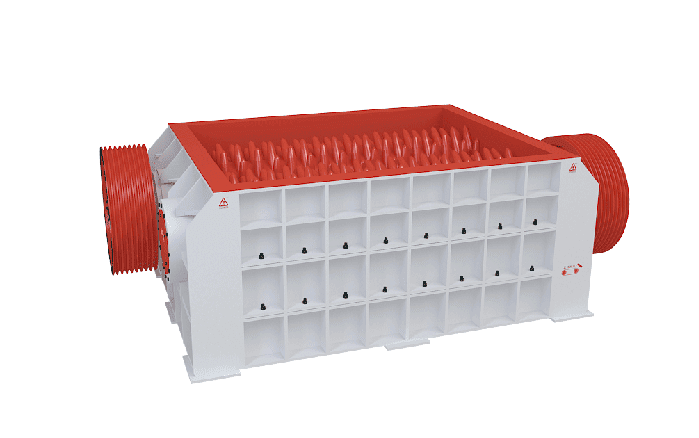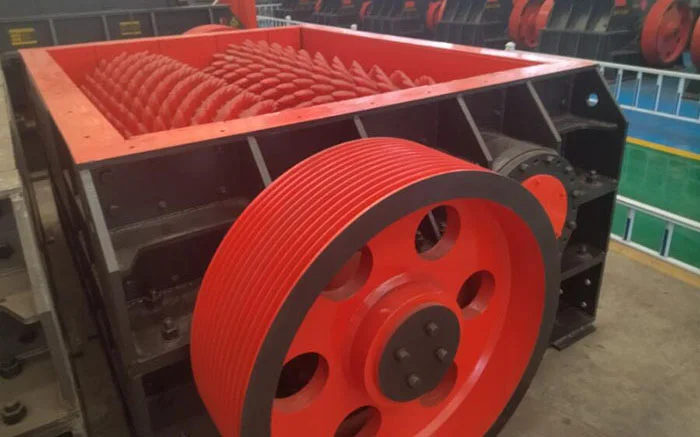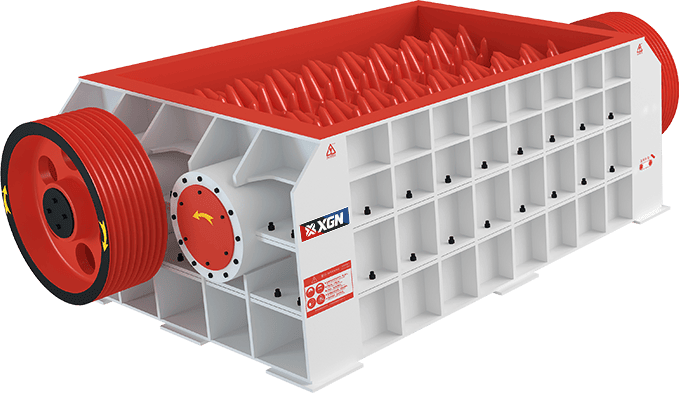
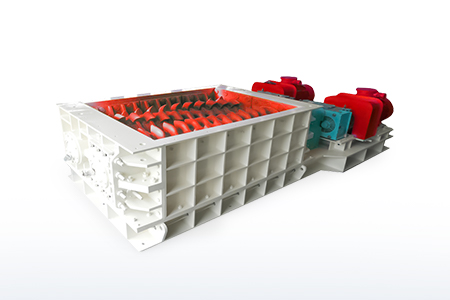
Double roll crusher specifications define the feed size, output range, processing capacity and operating conditions a machine can handle. Important specifications include roll diameter, roll width, roll-surface profile, maximum feed size, product size, motor power, operating speed and overload-protection method.
Selecting a model only by tons per hour can result in poor feed gripping, excessive wear, blockages or inconsistent product size. The crusher must also match the material’s hardness, abrasiveness, moisture content and bulk density.
Quick answer: Compare double roll crushers by maximum feed size, required output, material properties, roll dimensions, surface type, installed power and actual capacity under defined feed conditions. Capacity alone is not enough for model selection.
For current equipment configurations, visit the XINGAONAI double roll crusher product page.
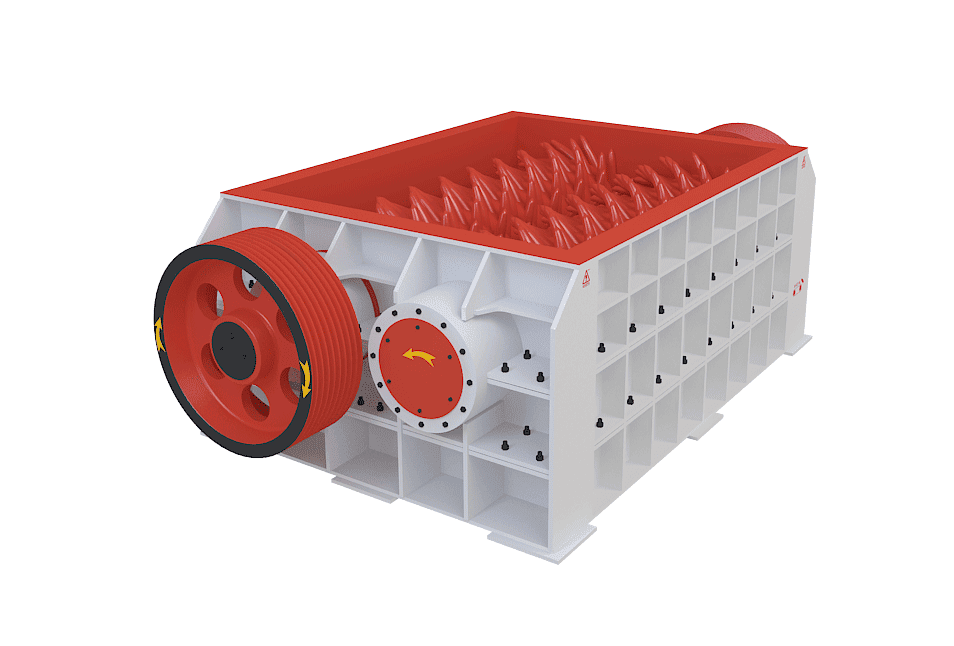
Main Double Roll Crusher Specifications
A complete technical datasheet should include the following parameters.
| Specification | What it describes | Why it matters |
|---|---|---|
| Roll diameter | Diameter of each crushing roll | Affects feed gripping and maximum practical feed size |
| Roll width | Effective crushing width | Influences potential capacity |
| Maximum feed size | Largest allowable feed lump | Prevents overloading and poor nip conditions |
| Output size | Expected product-size range | Determines whether the crusher meets process requirements |
| Roll gap | Minimum distance between roll surfaces | Influences product size |
| Capacity | Expected throughput under stated conditions | Must match plant demand |
| Roll speed | Rotational speed of the rolls | Affects gripping, capacity, fines and wear |
| Motor power | Installed drive power | Must provide sufficient operating torque |
| Roll surface | Smooth, corrugated or toothed | Determines gripping and crushing action |
| Adjustment system | Mechanical, spring or hydraulic | Controls roll gap and wear compensation |
| Overload protection | Method for passing uncrushable material | Protects rolls, shafts and bearings |
| Machine weight | Total equipment weight | Required for foundation and lifting design |
| Overall dimensions | Length, width and height | Required for installation planning |
A quotation that lists only capacity and motor power does not provide enough information for technical comparison.
XINGAONAI Double Roll Crusher Model Table
The following table reflects the large-capacity models currently displayed on the XINGAONAI product page.
| Model | Roll diameter | Roll width | Maximum feed size | Output size | Motor power | Capacity |
|---|---|---|---|---|---|---|
| 2PGC90200 | 900 mm | 2,000 mm | ≤300 mm | ≤90 mm | 2 × 90 kW | 300 tph |
| 2PGC100250 | 1,000 mm | 2,500 mm | ≤350 mm | ≤90 mm | 2 × 160 kW | 600 tph |
| 2PGC120300 | 1,200 mm | 3,000 mm | ≤400 mm | ≤90 mm | 2 × 220 kW | 1,000 tph |
Technical note: These figures should be verified before publication. The capacity must be tied to a defined material, feed-size distribution, moisture content, bulk density and discharge setting. The current table appears to describe large heavy-duty toothed roll crushers rather than small fine-crushing smooth-roll machines.
Do not combine small smooth-roll crusher specifications with these large 2PGC models unless they are clearly separated into different product series.
How to Read Double Roll Crusher Specifications
1. Roll Diameter
Roll diameter affects how easily material is gripped and pulled into the crushing zone.
A larger roll diameter can generally:
Accept larger feed
Improve the nip condition
Provide greater tooth-mounting area
Reduce the risk of feed slipping
Increase equipment weight and torque requirements
A large roll is not automatically better. It also requires a heavier shaft, bearings, frame and drive system.
The required diameter depends on:
Maximum feed size
Feed shape
Tooth height
Roll-surface friction
Material compressive strength
Required reduction ratio
2. Roll Width
Roll width is the effective length of the crushing zone.
A wider roll can increase potential throughput, provided that:
Material is distributed across the full roll width.
The feeder supplies a stable flow.
Motor and shaft torque are adequate.
The discharge conveyor handles peak capacity.
Material does not accumulate at one end.
If feed is concentrated in the center, increasing roll width will not provide the expected capacity and may cause uneven roll wear.
3. Maximum Feed Size
Maximum feed size is not determined by the opening above the rolls alone.
It is affected by:
Roll diameter
Tooth profile
Tooth height
Nip angle
Surface friction
Feed shape
Material hardness
Roll speed
The largest feed lump should not be used as the only design input. The manufacturer also needs the complete feed-size distribution.
A crusher receiving mostly fine material with occasional oversize lumps operates differently from one continuously receiving feed near its maximum size.
4. Output Size and Roll Gap
For smooth rolls, product size is closely related to the physical roll gap. For toothed rolls, output is also influenced by:
Tooth spacing
Tooth height
Intermeshing depth
Material fracture characteristics
Roll speed
Feed-size distribution
Roll wear
Therefore, a listed output value such as “≤90 mm” should be accompanied by:
Applicable material
Maximum feed size
Roll configuration
Percentage passing the stated size
Test or calculation basis
A maximum product size is not the same as a complete product gradation.
5. Processing Capacity
Capacity is normally expressed in tons per hour, but it is not a fixed value independent of operating conditions.
Actual capacity depends on:
Roll diameter
Roll width
Roll speed
Roll gap
Tooth configuration
Bulk density
Feed-size distribution
Moisture and clay content
Feed uniformity
Material crushability
Operating availability
When comparing suppliers, ask for the conditions used to calculate the stated capacity.
For example, a model rated at 300 tph for dry coal may not achieve the same capacity with wet clay-rich material at the same feed size.
6. Motor Power
Installed motor power indicates the available drive capacity, but does not prove the crusher’s throughput.
The motor and drive must provide enough torque for:
Normal crushing load
Short-term feed surges
Startup conditions
Variations in material hardness
Changes in moisture
Temporary overload
Check whether the specification refers to:
One motor or two motors
Installed power or normal operating power
Fixed-speed or variable-speed operation
Direct, belt or gear transmission
Motor efficiency and protection class
For models shown as 2 × 90 kW, the crusher uses two motors, each rated at 90 kW.
7. Roll Speed
Roll speed affects feed gripping, capacity, product size, fines generation and wear.
Higher speed may increase nominal throughput, but it can also cause:
Material slippage
More fine particles
Higher tooth wear
Greater dynamic loading
Increased vibration
Lower speed can improve controlled crushing for some materials but may reduce capacity.
A datasheet should provide actual operating speed or roll peripheral speed where it is relevant to performance comparison.
8. Roll-Surface Type
Smooth Rolls
Smooth rolls mainly use compression and are generally suitable for:
Smaller feed
Brittle materials
Controlled fine crushing
Applications requiring limited fines
Corrugated Rolls
Corrugated surfaces improve friction and gripping while retaining a relatively controlled crushing action.
Toothed Rolls
Toothed rolls grip larger or moderately sticky material and use compression, splitting and shearing.
Typical applications include:
Coal
Coke
Lignite
Clay
Shale
Gypsum
Fertilizer raw materials
Toothed rolls do not automatically make the crusher suitable for granite, quartzite or other highly abrasive hard rock.
See the custom double toothed roller crusher guide for tooth-profile and configuration options.
9. Gap Adjustment System
Available adjustment systems may include:
Mechanical screw adjustment
Shim adjustment
Spring-loaded adjustment
Hydraulic adjustment
Automated hydraulic positioning
The technical specification should state:
Minimum and maximum adjustment
Adjustment method
Whether adjustment requires shutdown
How actual gap is measured
How roll wear is compensated
Whether the system also provides overload release
10. Overload Protection
One roll may be mounted on a movable bearing frame supported by springs or hydraulic pressure.
When uncrushable material enters the crusher, the movable roll retracts temporarily to allow the obstruction to pass. It should then return to the operating position.
Ask the supplier to specify:
Maximum release movement
Spring or hydraulic setting
Reset method
Monitoring or alarm system
Whether roll collision is mechanically prevented
Recommended upstream metal-removal equipment
11. Roll and Tooth Materials
Specifications should identify the roll shell or tooth-segment material.
Possible configurations include:
Alloy steel
High-manganese steel
High-chromium wear material
Hardfaced steel
Replaceable tooth segments
Application-specific wear coatings
Do not select roll material based only on feed hardness. Abrasiveness, impact load, moisture and tramp-metal risk also affect wear.
Request:
Material grade
Heat-treatment condition
Surface hardness where relevant
Expected repair method
Replaceable-part drawing
Recommended spare inventory
12. Shaft and Bearing Specifications
Heavy-duty crushers require shafts and bearings capable of supporting:
Roll weight
Crushing force
Drive torque
Temporary overload
Misalignment risk
Continuous operation
The manufacturer should provide or confirm:
Shaft material
Bearing model
Bearing manufacturer
Lubrication method
Seal arrangement
Inspection interval
Replacement procedure
Bearing size alone is not enough; correct alignment, housing rigidity and dust protection are also important.
13. Machine Dimensions and Weight
Overall dimensions and weight affect:
Foundation design
Floor loading
Building headroom
Crane selection
Transport method
Maintenance access
Feed-chute design
Discharge-conveyor position
Request both the overall arrangement drawing and the maintenance-clearance drawing. A crusher may fit into the installation space while still lacking enough room to remove a roll or motor.
Specifications for Different Applications
| Application | Important specifications |
|---|---|
| Coal sizing | Tooth profile, fines generation, moisture handling and capacity |
| Coke crushing | Roll material, controlled product size and dust sealing |
| Limestone | Abrasiveness, roll wear material and feed-size distribution |
| Clay and shale | Anti-clogging teeth, moisture content and feeder selection |
| Gypsum | Controlled crushing and limited over-crushing |
| Fertilizer | Product uniformity, corrosion conditions and contamination requirements |
| Salt or potash | Corrosion resistance and product-size control |
| Refractory raw material | Abrasiveness, roll material and acceptable wear |
Each material should have its own performance basis. Do not assume that one capacity rating applies to every application.
How to Select the Correct Model
Step 1: Confirm Material Suitability
Determine:
Compressive strength
Abrasiveness
Moisture
Clay content
Bulk density
Feed shape
If the material is very hard and abrasive, compare a jaw or cone crusher before selecting a roll crusher.
Step 2: Define Maximum and Normal Feed Size
Provide both the largest lump and the feed-size distribution.
Step 3: Define the Required Product
Specify:
Maximum product size
Target product range
Allowable oversize
Allowable fines
Whether screening follows the crusher
Step 4: Confirm Required Capacity
Provide normal and peak capacity. Avoid selecting a model that operates continuously at its theoretical maximum.
Step 5: Select the Roll Surface
Choose smooth, corrugated or toothed rolls according to feed gripping, moisture and product requirements.
Step 6: Review Motor and Protection System
Check motor power, startup method, overload release and upstream metal removal.
Step 7: Verify Plant Integration
Confirm:
Feeder capacity
Feed-chute width
Discharge-conveyor capacity
Installation dimensions
Foundation load
Electrical supply
Maintenance access
Design Parameters That Affect Specifications
After merging the useful content from the former design page, the following design factors should be considered part of specification review.
Feed Distribution
The feeder should spread material across the roll width. Uneven feeding reduces usable capacity and creates localized wear.
Nip and Gripping
Roll diameter, tooth geometry and surface friction must allow the crusher to capture the intended feed.
Frame Rigidity
The frame should maintain roll alignment under load. Excessive deformation changes the effective gap and product size.
Shaft and Bearing Load
Shafts and bearings must handle crushing force, roll weight, torque and temporary overload.
Maintenance Access
Roll shells, tooth segments, bearings, motors and hydraulic components should be accessible for inspection and replacement.
Dust and Safety Enclosure
Guards and enclosures should limit access to rotating parts while allowing practical maintenance. Dust-control connections may be required for enclosed installations.
Common Specification Mistakes
Comparing Capacity Without Material Conditions
Two manufacturers may quote different capacities because they use different feed material, density, moisture and output settings.
Treating Maximum Feed Size as Normal Feed Size
Continuous feeding at the stated maximum may reduce capacity and increase mechanical load.
Assuming the Roll Gap Equals Final Product Size
This assumption is especially unreliable for toothed rolls.
Selecting a Crusher Only by Motor Power
Larger motors cannot correct poor feed gripping, an unsuitable tooth profile or insufficient roll width.
Ignoring Moisture and Clay
Wet, sticky material may reduce capacity and block the roll surface even if hardness is low.
Mixing Different Crusher Series in One Table
Small smooth-roll crushers and large toothed sizing crushers should have separate model tables and clear application descriptions.
Accepting Unsupported Wear-Life Claims
Wear life depends on actual tonnage, abrasiveness, contaminants and operating conditions.
Information to Request From the Manufacturer
Before purchase, request:
Technical datasheet
Model and configuration
General arrangement drawing
Foundation drawing
Roll-surface drawing
Motor and drive information
Bearing information
Lubrication requirements
Wear-part list
Recommended spare-parts list
Inspection procedure
Test-run record
Operation manual
Warranty scope
For supplier evaluation, read How to Choose Double Roll Crusher Manufacturers.
RFQ Checklist
Provide:
Material name
Material photos
Maximum feed size
Feed-size distribution
Required product size
Required capacity
Compressive strength
Abrasiveness
Moisture and clay content
Bulk density
Operating hours per day
Tramp-metal risk
Upstream feeder
Downstream screen or conveyor
Electrical supply
Installation dimensions
Project location
Conclusion
Double roll crusher specifications must be evaluated as a complete system. Roll diameter, width, speed, surface profile, gap, motor power and overload protection must match the material and required product.
Do not compare models using nominal capacity alone. Require each supplier to state the material and operating conditions behind its performance figures.
To understand how feed moves through the crushing zone, read the double roll crusher working principle. For current equipment details, visit the Double Roll Crusher product page.