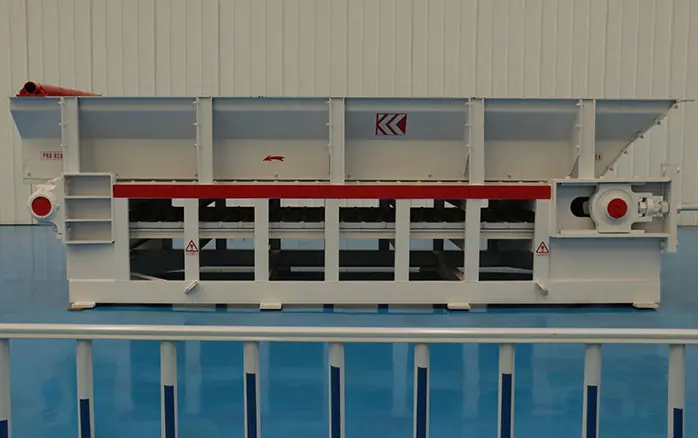
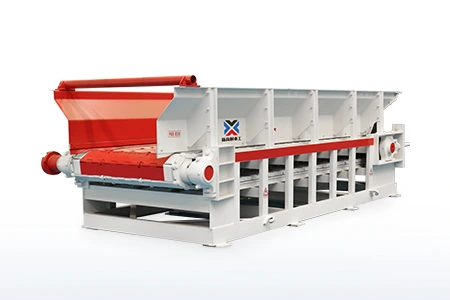
Choosing an apron feeder manufacturer involves more than comparing capacity, motor power and purchase price. An apron feeder operates under high material loads, impact and abrasive conditions, often directly below a hopper or storage bin. Its performance depends on correct sizing, structural design, component quality and compatibility with the upstream and downstream equipment.
A reliable manufacturer should understand the complete feeding application before recommending a machine. Material characteristics, hopper geometry, maximum lump size, required capacity, impact loading and operating environment must all be considered.
This guide explains how to evaluate an apron feeder manufacturer, what technical information to request and how to compare suppliers on engineering quality rather than price alone.
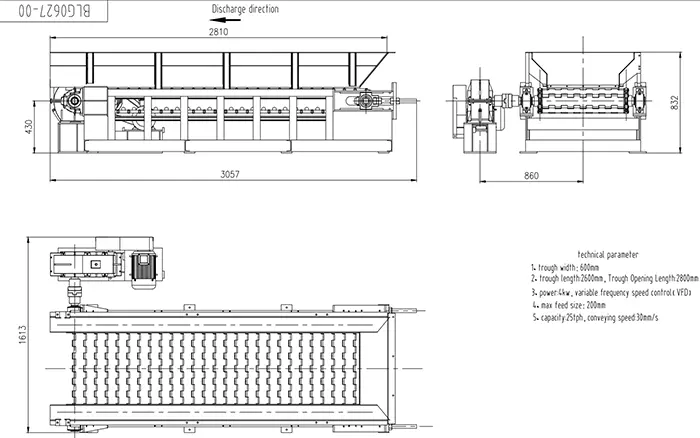
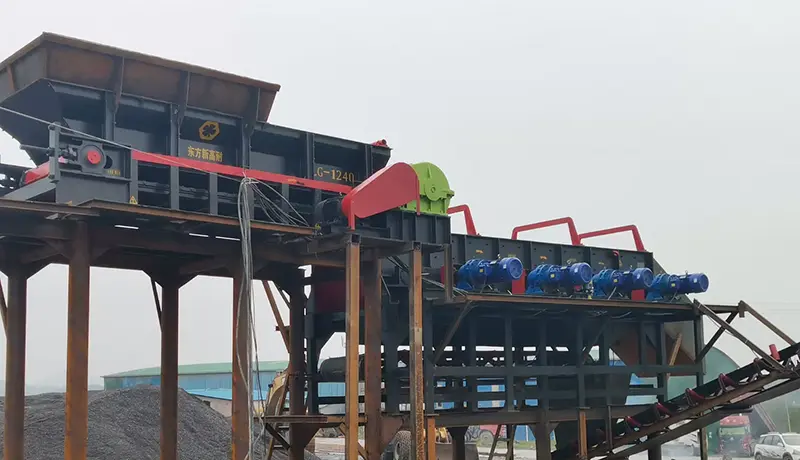
XINGAONAI currently offers the BLG Series apron feeder for controlled feeding and short-distance conveying in mining, aggregate, building-material and mineral-processing applications.
Apron Feeder Manufacturer Evaluation Checklist
Use the following checklist during the initial supplier review.
| Evaluation area | What the manufacturer should provide |
|---|---|
| Application review | Assessment of material, capacity, feed size, moisture and abrasiveness |
| Feeder sizing | Recommended pan width, length, speed, material depth and motor power |
| Hopper interface | Loading conditions, opening dimensions and skirt-board arrangement |
| Structural design | Frame, pan, chain, shaft and support-roller specifications |
| Drive selection | Motor, reducer, coupling, VFD and overload considerations |
| Component quality | Material specifications and manufacturing tolerances |
| Technical drawings | General arrangement, foundation and interface drawings |
| Quality inspection | Dimensional checks, welding inspection and shop testing |
| Spare parts | Parts list, drawing numbers and recommended inventory |
| Installation support | Foundation, alignment, commissioning and operator guidance |
| Documentation | Manuals, drawings, certificates and inspection records |
| Lifecycle cost | Energy, wear, maintenance and replacement-part availability |
A supplier that provides only a price and model number has not collected enough information to confirm whether the feeder is suitable.
What Does an Apron Feeder Manufacturer Need to Know?
Before selecting a model, the manufacturer should request detailed application data.
Material Information
Provide:
Material name
Bulk density
Maximum lump size
Typical feed-size distribution
Moisture content
Clay or sticky material content
Material temperature
Abrasiveness
Angle of repose
Presence of metal or uncrushable objects
Two materials with the same bulk density may create very different operating conditions. Large angular rocks generate substantial impact, while wet clay may adhere to the pans and skirt boards.
Capacity Requirements
Specify:
Normal operating capacity
Maximum design capacity
Expected surge capacity
Operating hours per day
Continuous or intermittent operation
Required turndown ratio
Downstream equipment capacity
The feeder should not be selected only for the average production rate. It must also control short-term surges without overloading the drive or downstream crusher.
Hopper and Loading Conditions
The manufacturer should understand:
Hopper opening length and width
Material depth above the feeder
Maximum material storage load
Whether trucks or loaders dump directly into the hopper
Drop height onto the feeder
Impact distribution
Existing structural constraints
Required feeder inclination
The hopper-feeder interface affects starting torque, material pressure, required pan strength and drive power.
Installation Conditions
Provide information about:
Available installation length
Horizontal or inclined arrangement
Indoor or outdoor installation
Ambient temperature
Dust, rain and corrosion exposure
Foundation or steel-support structure
Maintenance access
Available electrical supply
Upstream and downstream equipment
For more detailed selection factors, refer to the apron feeder design and sizing guide.
Engineering Capabilities to Look For
1. Application-Based Sizing
A manufacturer should select the feeder according to the actual duty rather than using capacity alone.
Important sizing variables include:
Pan width
Effective loading width
Feeder length
Material bed depth
Chain speed
Bulk density
Hopper opening
Inclination
Required capacity
Starting load
Drive efficiency
The selected speed and material depth should provide the required flow without causing excessive material spillage, impact or component wear.
2. Hopper Load Evaluation
An apron feeder installed under a bin must start while supporting the material above it. The load is influenced by hopper geometry, material properties and the size of the outlet.
The manufacturer should evaluate the extraction load instead of calculating motor power from throughput alone.
The design should also consider:
Initial breakaway torque
Material compaction
Uneven loading
Starting under a full hopper
Temporary blockages
Shock loading
3. Drive-System Selection
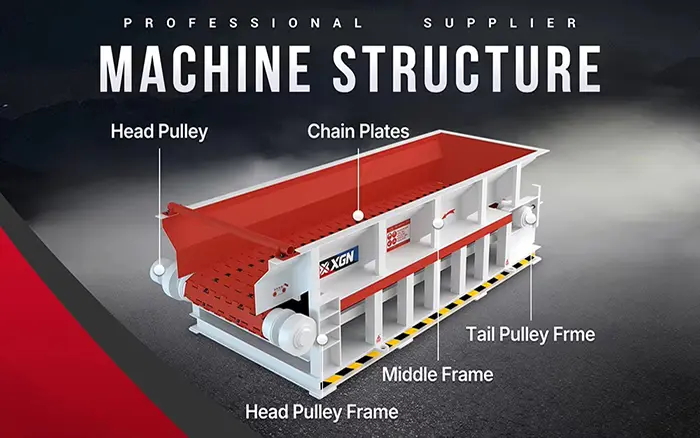
The drive normally includes a motor, reducer, coupling, drive shaft and sprockets. A variable-frequency drive can regulate the chain speed and help match the feeder output to downstream demand.
The manufacturer should explain:
Selected motor power
Reducer ratio
Output torque
Service factor
Starting method
Speed-adjustment range
Overload protection
Brake or backstop requirements, where applicable
To understand how the drive transfers power to the pans, see the apron feeder working principle.
4. Structural and Fatigue Design
The frame must support the feeder, material bed and impact load without unacceptable deformation.
The design review should cover:
Main frame sections
Cross-member spacing
Welded connections
Drive and tail shaft supports
Roller support positions
Hopper connection points
Foundation loads
Dynamic loading
Access for component replacement
For demanding applications, ask which design standard, calculation method or engineering assumptions were used.
Published XINGAONAI BLG Series Range
The current XINGAONAI BLG Series covers the following published standard configurations:
| Model | Pan width | Pan length | Maximum feed size | Motor power | Capacity |
|---|---|---|---|---|---|
| BLG-0840 | 800 mm | 4,000 mm | ≤500 mm | 7.5 kW | 200–250 t/h |
| BLG-1040 | 1,000 mm | 4,000 mm | ≤500 mm | 11 kW | 250–350 t/h |
| BLG-1240 | 1,200 mm | 4,000 mm | ≤500 mm | 15 kW | 400–500 t/h |
| BLG-1540 | 1,500 mm | 4,000 mm | ≤500 mm | 18.5 kW | 600–800 t/h |
These values describe the published standard range. Actual capacity depends on bulk density, material depth, chain speed, hopper arrangement, moisture and operating conditions.
A manufacturer should confirm the final model after reviewing the complete application data. The largest published model should not automatically be selected simply because it has the highest nominal capacity.
Components an Apron Feeder Manufacturer Must Control
The performance of an apron feeder depends on the compatibility of its components. Buying individual parts from different sources without verifying dimensions and load ratings can create alignment and reliability problems.
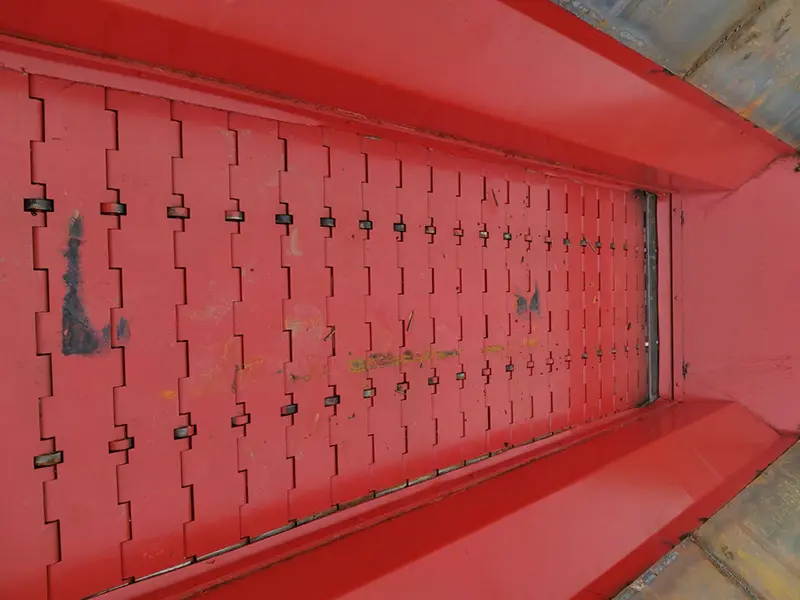
Apron Pans
The pans form the carrying surface and receive material impact. Evaluate:
Pan material
Plate thickness
Cross-sectional profile
Reinforcement structure
Overlap between adjacent pans
Bolt-hole position
Dimensional consistency
Resistance to deformation
Replaceability
Pan design should minimize leakage while allowing the assembly to move smoothly around the head and tail sections.
Chains, Pins and Bushings
The chain transmits the pulling force and supports the pan assembly. The manufacturer should confirm:
Chain type
Pitch
Link dimensions
Pin and bushing materials
Heat-treatment requirements
Allowable working load
Connection to the pans
Compatibility with the sprocket profile
Lubrication or sealed-chain requirements
Different chain designs have different maintenance requirements. Do not apply one universal lubrication schedule to every apron feeder chain.
For chain-specific inspection and replacement information, see the apron feeder chain guide.
Drive and Tail Sprockets
Sprocket tooth geometry must match the selected chain. Poor engagement can produce impact, chain jumping, accelerated wear and uneven movement.
Check:
Tooth profile
Material grade
Hardness or surface treatment
Shaft connection
Alignment tolerance
Replaceable segments, if applicable
Shafts and Bearings
The drive and tail shafts must withstand torque, chain pull and bending loads.
The manufacturer should define:
Shaft material
Machining tolerances
Bearing type
Bearing housing arrangement
Sealing method
Lubrication points
Alignment procedure
Support and Return Rollers
Rollers support the loaded and returning pan-chain assembly. Incorrect roller spacing can increase pan deflection and chain loading.
Ask about:
Roller diameter
Shaft and bearing arrangement
Seal design
Roller spacing
Replacement access
Suitability for dust and moisture
Frame and Skirt Boards
The frame maintains alignment, while skirt boards help contain material along the loading zone.
Evaluate:
Frame rigidity
Weld quality
Surface preparation
Replaceable wear liners
Skirt-board adjustment
Dust-control interfaces
Maintenance access
Guarding around moving parts
The apron feeder parts guide explains the functions and inspection points of the principal components.
How to Verify Manufacturing Quality
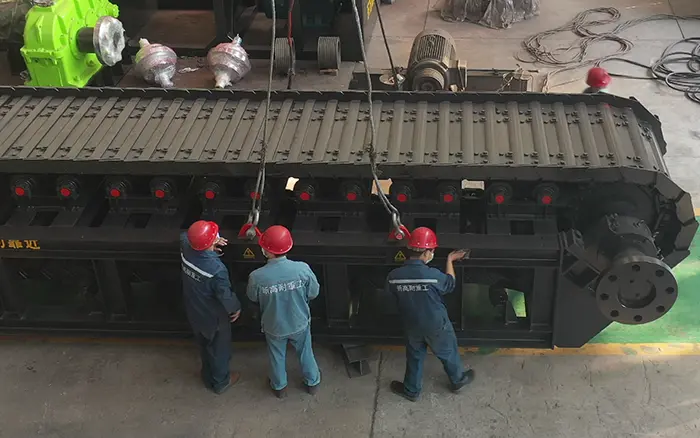
A professional apron feeder factory should be able to explain how critical dimensions and components are inspected.
Material Documentation
Depending on the project, request:
Material grade information
Supplier certificates
Heat-treatment records
Hardness results
Welding consumable records
Coating specifications
The required documentation should be agreed upon before production begins.
Dimensional Inspection
Inspection points may include:
Overall frame dimensions
Shaft center distances
Pan width and pitch
Chain alignment
Sprocket position
Roller position
Mounting-hole locations
Interface dimensions
Foundation and anchor-bolt positions
Dimensional errors can create chain misalignment, uneven loading and installation delays.
Welding Inspection
The inspection level should match the structural importance of the joint and project requirements.
The manufacturer should provide:
Approved welding procedures where required
Visual weld inspection
Correction of unacceptable defects
Nondestructive testing when specified
Records for critical structural joints
Do not assume every weld requires the same inspection method. Define the project standard before ordering.
Assembly Inspection
Before testing, verify:
Pans are installed in the correct sequence
Chain tension is even
Sprockets align with the chains
Shafts rotate freely
Bearings and seals are installed correctly
Guards fit properly
Fasteners are tightened and secured
Lubrication points are accessible
No components interfere during movement
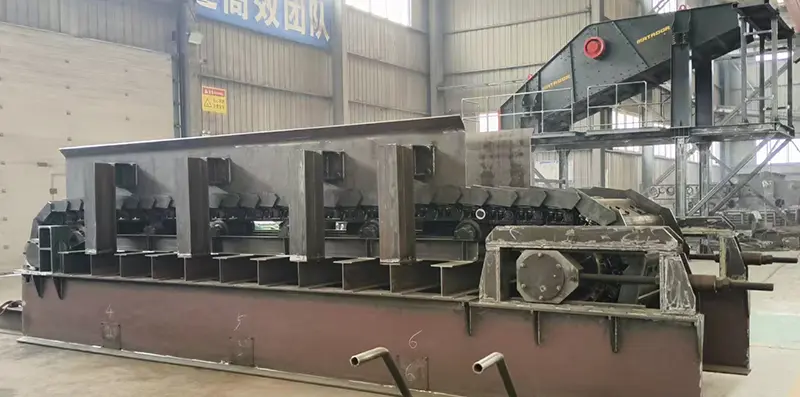
What Should Be Included in Factory Testing?
The scope of the factory acceptance test should be written into the purchase specification.
A typical no-load inspection may check:
Rotation direction
Smooth startup
Chain tracking
Pan movement
Abnormal noise
Excessive vibration
Bearing condition
Reducer operation
VFD speed adjustment
Emergency-stop function
Guard installation
Sensor and switch operation
Oil or grease leakage
A no-load factory test cannot reproduce every loaded operating condition. Final performance must also be checked during installation and commissioning with the actual material.
Ask the manufacturer to provide a test record showing the inspected items, test conditions, results and responsible personnel.
Drawings and Documents to Request
A complete apron feeder supply should include the drawings and documentation required for installation, operation and future maintenance.
Request the applicable documents from the following list:
General arrangement drawing
Overall dimensions
Equipment weight
Center-of-gravity information
Foundation-load data
Anchor-bolt layout
Hopper and discharge interface dimensions
Drive arrangement
Electrical requirements
Motor and reducer data
Lubrication instructions
Installation manual
Operation manual
Maintenance schedule
Spare-parts list
Wear-part drawings
Recommended commissioning procedure
Inspection and test records
Documents should use the same model, revision and configuration as the supplied machine.
Apron Feeder Manufacturer vs. Apron Pan Manufacturer
An apron pan feeder manufacturer supplies a complete operating machine, while an apron pan supplier may manufacture only the steel pans or related replacement components.
A complete feeder manufacturer should be responsible for compatibility between:
Pans
Chains
Sprockets
Shafts
Rollers
Frame
Drive unit
Hopper interface
Control system
A replacement-pan supplier may be appropriate when the existing feeder is already correctly designed and accurate drawings or samples are available.
When ordering replacement pans, provide:
Feeder manufacturer and model
Original drawing number
Pan width
Pan pitch
Overall dimensions
Hole positions
Material grade
Existing wear pattern
Required quantity
Photographs of the original component
Do not select replacement pans based only on width. Small dimensional differences can affect chain alignment and the overlap between adjacent pans.
How to Compare Apron Feeder Quotations
Two quotations may describe machines with the same nominal capacity but include very different equipment and services.
Compare:
Technical Scope
Model and duty classification
Pan width and feeder length
Maximum feed size
Design capacity
Material bulk density
Feeder speed
Motor and reducer
Chain specification
Pan material
Frame construction
Hopper and skirt-board scope
Electrical and Control Scope
Motor
VFD
Local control panel
Sensors
Pull-cord or emergency-stop system
Speed monitoring
Interlocks
Cables and junction boxes
Commercial Scope
Packing
Freight
Installation supervision
Commissioning
Training
Spare parts
Warranty
Documentation
Delivery time
Lifecycle Cost
The lowest initial price may not provide the lowest cost per processed tonne. Consider:
Energy consumption
Pan and chain wear
Lubrication requirements
Inspection time
Replacement-part availability
Planned downtime
Unplanned downtime
Freight cost for spare parts
Ask every supplier to quote against the same technical specification. Otherwise, the prices may not represent equivalent machines.
Warning Signs When Selecting a Manufacturer
Be cautious if a supplier:
Recommends a model without requesting material data
Guarantees capacity without defining bulk density
Uses one feeder configuration for every application
Cannot provide drawings before production
Does not explain chain and sprocket compatibility
Cannot identify the material grade of critical components
Refuses to define the inspection scope
Provides no spare-parts list
Uses unsupported service-life guarantees
Quotes unusually high feed size or capacity without calculations
Cannot explain installation and commissioning responsibilities
Provides performance percentages without test conditions
Claims such as fixed component life, guaranteed energy savings or universal wear reductions should be supported by clearly defined operating conditions.
When Should You Choose an Apron Feeder?
An apron feeder is generally considered when the application involves:
Heavy bulk material
Large or angular lumps
Abrasive feed
High hopper loads
Impact from material loading
Controlled extraction from a bin
Short-distance feeding
Harsh mining or aggregate environments
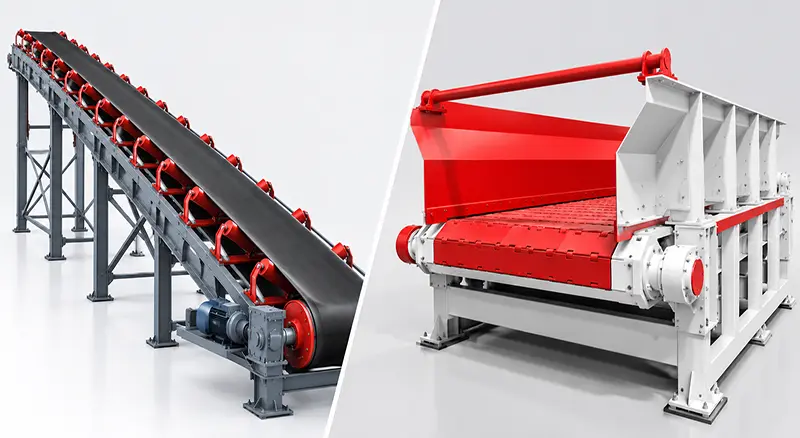
A belt feeder may be more suitable for lighter, smaller or less abrasive materials when gentle handling, higher speed or lower initial cost is important.
See the belt feeder vs apron feeder comparison before choosing between the two systems.
Information to Include in an RFQ
Send the same information to each apron feeder manufacturer so the quotations can be compared fairly.
Material Data
Material name
Bulk density
Maximum feed size
Moisture
Abrasiveness
Material temperature
Typical feed-size distribution
Production Data
Normal capacity
Maximum capacity
Operating hours
Required speed range
Downstream equipment
Installation Data
Hopper dimensions
Outlet size
Drop height
Feeder inclination
Available installation length
Foundation details
Power supply
Environmental conditions
Supply Requirements
Mechanical scope
Electrical scope
Control system
Spare parts
Installation supervision
Commissioning
Training
Documentation language
Inspection requirements
Required delivery date
Conclusion
Choosing the right apron feeder manufacturer requires a review of engineering capability, component compatibility, manufacturing quality and long-term support.
A qualified supplier should collect complete material and installation data before selecting a model. The supplier should also explain how the pan width, chain speed, hopper loading, drive torque and structural design relate to the required capacity.
Buyers should request drawings, component specifications, inspection records, a spare-parts list and a clearly defined factory test. Unsupported claims about component life, energy savings or maximum capacity should not replace application-specific engineering.
By comparing manufacturers against one common technical specification, project owners can select an apron feeder that provides stable feeding, manageable maintenance and a lower lifecycle cost.