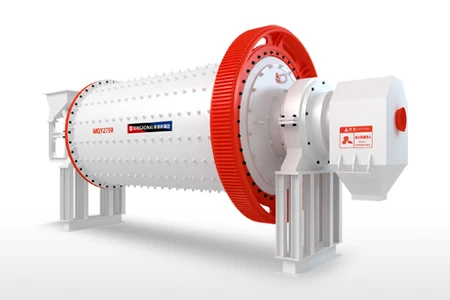
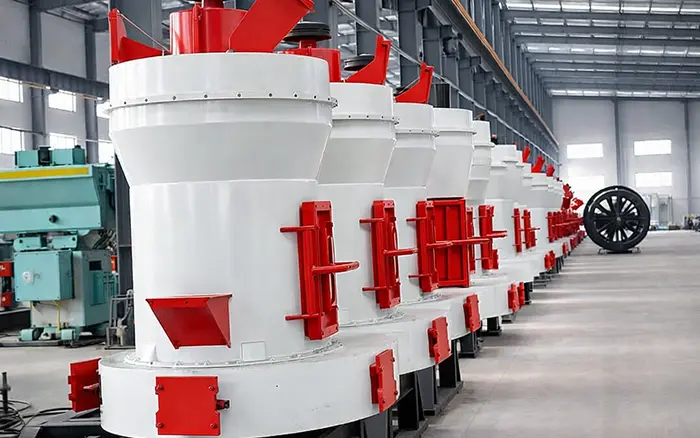
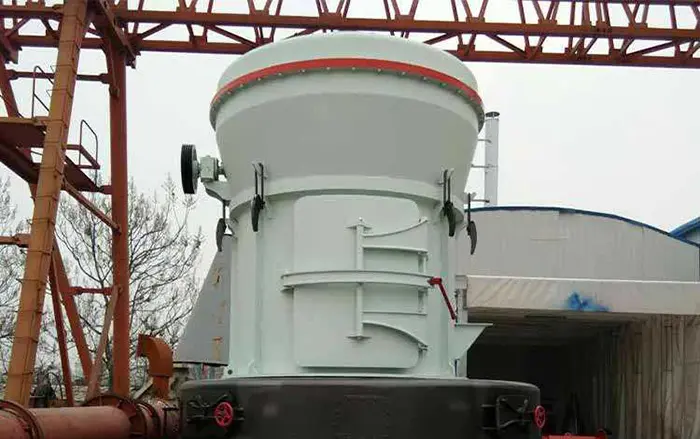
Grinding Mill

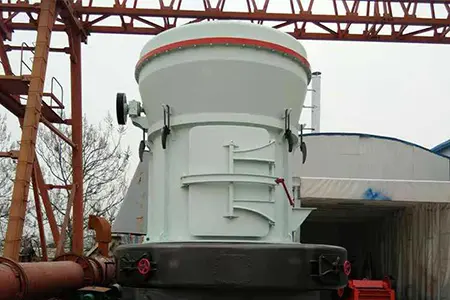
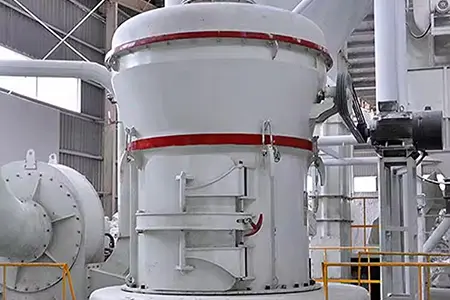
Raymond Mill

CAPACITY

3-45t/h

FEED SIZE

30-50mm
Application areas:Raymond Mill is widely used in mining, metallurgy, construction, chemical, and non-metallic mineral processing industries.
Applicable materials:such as gypsum, talc, calcite, limestone, marble, potash feldspar, barite, dolomite, granite, kaolin, bentonite, medical stone, iron ore, etc.
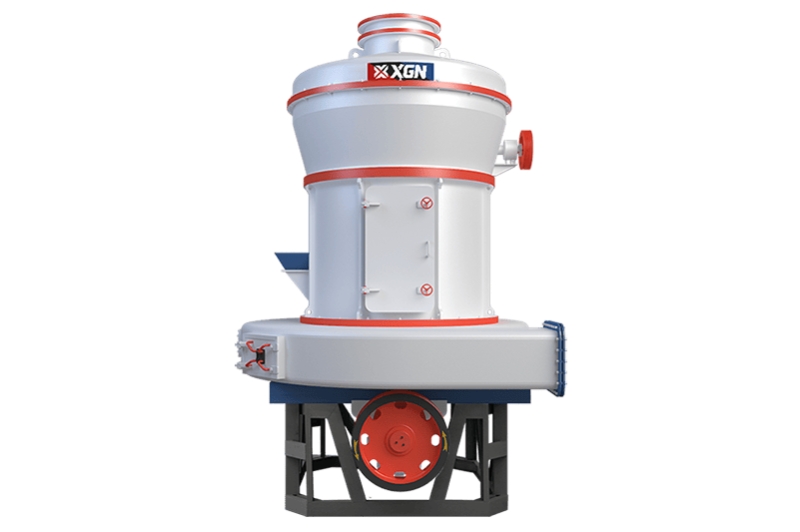
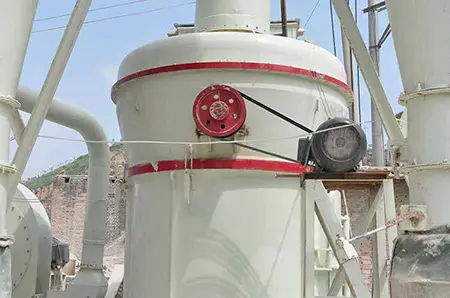
Product Overview

Raymond mill is widely used in the grinding of mineral products in the fields of metallurgy, building materials, chemical industry, mining, etc. It is suitable for processing various non-flammable and explosive materials with Mohs hardness below 7 and humidity below 6%. The fineness of the finished product is between 613μm and 44μm. Through the combined effect of the analyzer and the fan, it can meet the requirements of different users.

Key Advantages

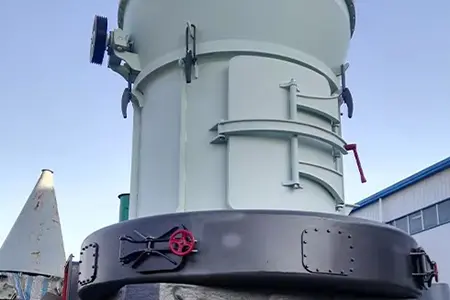
Raymond mill host machine

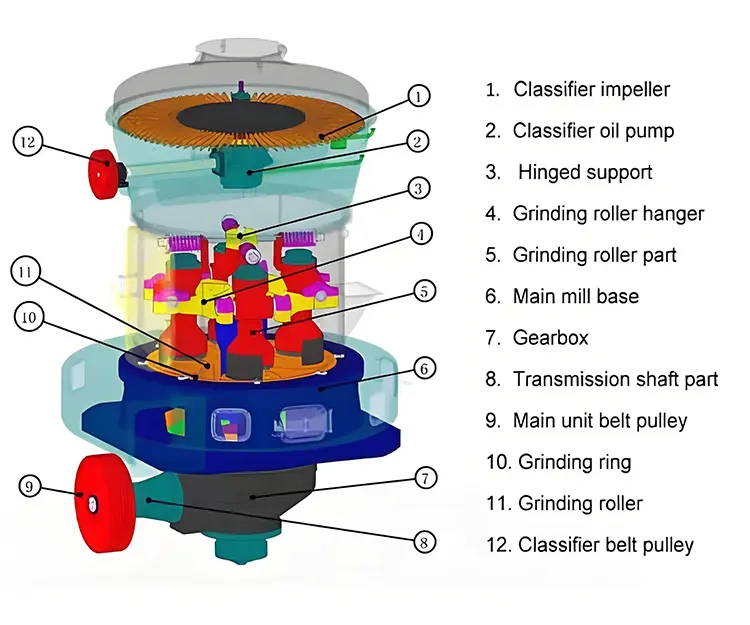
It adopts advanced European technology and is specially designed for grinding non-metallic minerals with Mohs hardness ≤7. It is highly efficient and energy-saving, with a 20% increase in output and an adjustable fineness of 80-600 mesh. It is equipped with a high-precision grading system, and the powder is uniform and fine. The key components are made of special wear-resistant alloys, which are durable and have low maintenance costs. It is widely used in the efficient grinding of limestone, barite and other materials, and is an ideal choice for modern industrial production.

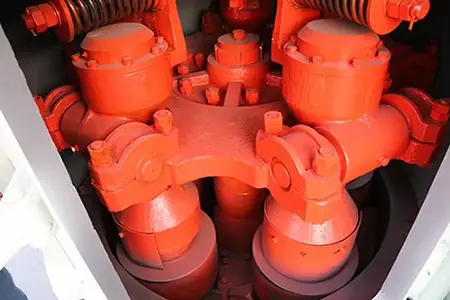
Grinding roller assembly

Made of high-strength alloy steel and subjected to special heat treatment, the wear resistance is increased by 50% and the service life is more than 8,000 hours. The optimized curved surface design has a larger grinding contact surface and a 20% increase in grinding efficiency. Equipped with an automatic lubrication system, it is easy to maintain and more stable in operation. It is suitable for processing high-hardness materials and is the core component to ensure the efficient operation of the Raymond mill.

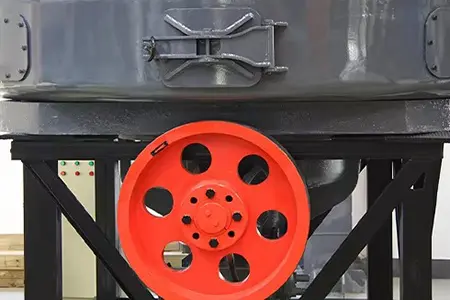
Drive pulley

Adopts high-precision dynamic balancing technology, with low vibration during operation and a transmission efficiency of 98%. High-quality cast iron material with anti-skid groove design ensures stable power transmission without slipping. After hardening treatment, it has strong wear resistance and a service life extended by 40%. Modular structure design, convenient maintenance and replacement, effectively ensuring the continuous and efficient operation of the equipment.

Analyzer

Adopts high-precision turbine classification technology, the speed is steplessly adjustable, and the finished product fineness is precisely controlled at 80-600 mesh. The blade structure is optimized, the classification efficiency is increased by 30%, and the energy consumption is reduced by 15%. Made of wear-resistant alloy material, it has strong stability and easy maintenance, ensuring that the uniformity of powder and production efficiency are improved simultaneously.

Working Principle

Working Principle of Raymond Mill
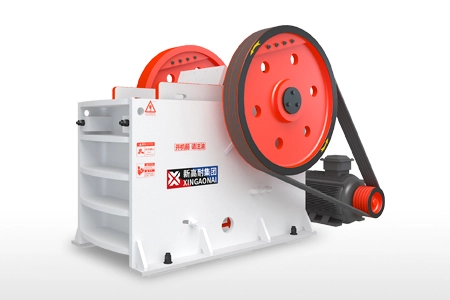
The Raymond Mill operates using centrifugal force and a closed-circuit system. The process involves four stages: Crushing & Feeding: Raw material is first crushed and then elevated to a storage hopper. A vibrating feeder ensures uniform feeding into the grinding chamber. Grinding: Material enters the grinding chamber, where the grinding roller swings outward due to centrifugal force, tightly pressing against the grinding ring. The rotating shovel scoops the material and throws it into the gap between the roller and ring, creating a crushing and grinding effect. This is the core mechanism of the Raymond mill. The material is ground under the pressure of the roller. Classification: The ground powder is blown by a fan's airflow into the analyzer. Here, coarse particles are rejected and fall back for regrinding, ensuring the fineness of the final product. Collection: Qualified fine powder is separated in a cyclone collector and discharged as the finished product. The system is sealed and circulates under positive and negative pressure, minimizing dust pollution.

Technical Parameters

Model

MTW110

MTW138

MTW175

MTW215

Ring Roller Number(pcs)

4

4

5

5

Major diameter of roller(mm)

360×190

460×240

520×280

640x 320

Inner diameter of roller (mm)

1100×190

1380×240

1750×280

2150x 320

rotary speed of main frame(r/min)

120

96

75

65

Max.Feed Size(mm)

<30

<35

<40

<50


Final size(mm)

1.6-0.045,

fineness can reach to 0.038

1.6-0.045,

fineness can reach to 0.038

1.6-0.045,

fineness can reach to 0.038

1.6-0.075,

fineness can reach to 0.038

Capacity(th)

3.5-10

6.5-15

13-35

30-45

Overall dimension(mm)

8910×6950×9010

10920×9470×10227

12275×9555×9916

14730x 10860x 10341

Main unit motor

Y280M-6

Y315M-6

Y335M2-8

Y355M2-8

Power(kw)

55

90

160

280

Rotate Speed(r/min)

980

990

990

740

Classifier speed regulating motor

(variable frequency motor)

Y132M-4

Y180M-4

Y225S-4

Y250M-4

Power(kw)

7.5

18.5

37

55

Rotate Speed(r/min)

125~1250

1470

1470

1470

Centrifugal induced draft fan motor

Y250M-4

Y315M-4

Y315L2-4

Y355L-4

Power(kw)

55

110

200

315

Rotate Speed(r/min)

1480

1480

1480

1480

Elevator

TH200

TH250

TH315

TH400

Motor Model

Y100L2-4

Y112M-4

Y112M-4

Y160M-4

Motor Power(kw)

3

4

4

11

Rotate Speed(r/min)

1420

1430

1440

1440

Jaw Crusher

PE250×400

PE250×400

PE250×750

PE350×750

Motor Model

Y180L-6

Y180L-6

Y200L2-6

Y250M-6

Power(kw)

15

15

22

37

Rotate Speed(r/min)

970

970

970

970

Magnetic Vibrating Feeder

GZ2F

GZ3F

GZ4F

GZ5F

We are here waiting for you
Our professional team can tailor the solution to suit your needs and answer your questions
Contact Engineer

Frequently Asked Questions

A Raymond Mill is used for grinding non-metallic minerals into fine powder. It is widely applied in mining, building materials, chemical, and metallurgy industries.

The fineness is controlled by the classifier speed and airflow system. Unqualified coarse powder is returned for further grinding automatically.

The finished powder fineness is typically adjustable between 80 mesh and 400 mesh, depending on the classifier settings and customer requirements.

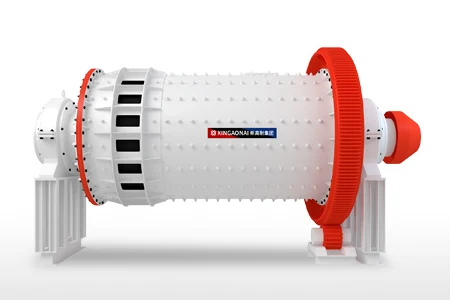
Raymond Mill is suitable for fine powder grinding with lower energy consumption and smaller footprint, while Ball Mill is commonly used for coarse grinding and large-scale mineral processing.

Yes. Raymond Mill is one of the most commonly used grinding machines for limestone powder production in mining and building material industries.

Explore Our Projects

Send message

Please enter your name
Please enter your email
Please enter your message