Mobile Crusher

Hard Rock Mobile Crushing Plant

CAPACITY

70-380 t/h

FEED SIZE

≤630 mm
Application areas:Mobile hard rock crushing plants are used in quarries, mines, aggregate production, road construction and infrastructure projects that require periodic equipment relocation.
Applicable materials:Suitable for granite, basalt, river pebble, iron ore and other hard or abrasive materials. The final equipment configuration should be selected according to material hardness, abrasiveness, maximum feed size, required capacity and final product specificat
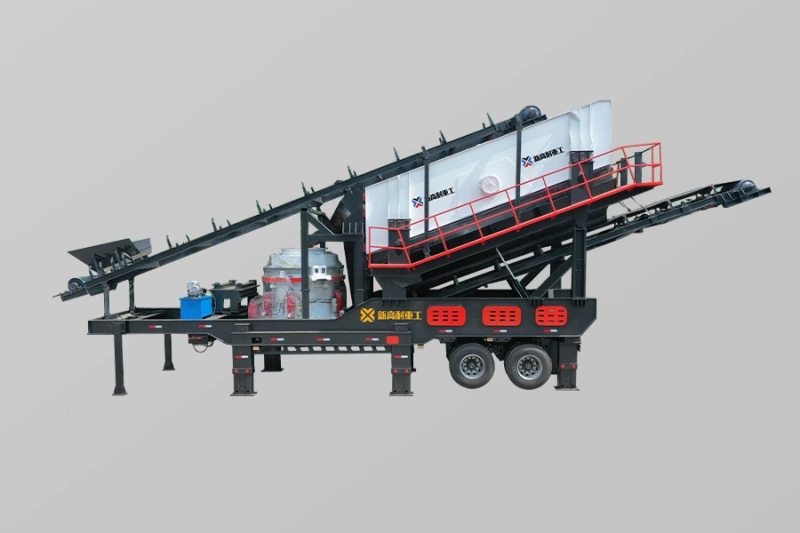
Product Overview

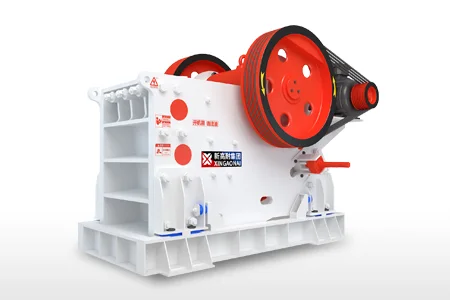
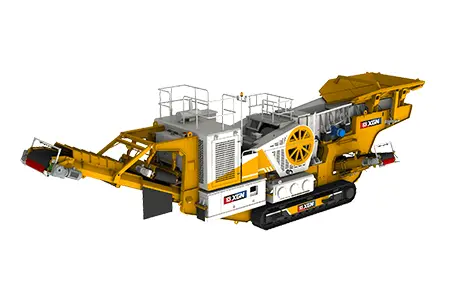
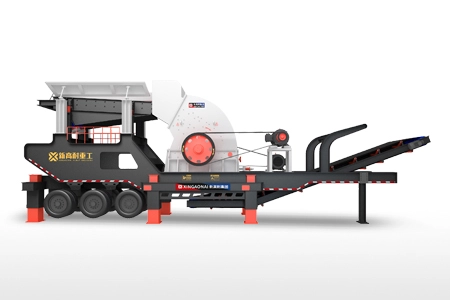
The Hard Rock Mobile Crushing Plant is a modular, tire-mounted system designed for processing granite, basalt, river pebble, iron ore and other hard or abrasive materials. A typical production line combines a mobile jaw crushing unit for primary crushing, a mobile cone crushing and screening unit for secondary crushing, and an optional mobile VSI crushing and screening unit for aggregate shaping or manufactured sand production.

Each mobile unit integrates the relevant crusher, feeder or vibrating screen, conveyors and a wheeled chassis. The units can operate independently or be combined into a multi-stage crushing and screening circuit. The primary jaw crushing unit accepts feed sizes up to 630 mm, while the available configurations provide complete-unit capacities ranging from 70 to 380 t/h.

The final configuration is determined by the feed material, particle-size distribution, required capacity, target product sizes and site conditions.

Key Advantages

Modular Plant Configuration

The production line can combine mobile jaw crushing, cone crushing, screening and VSI shaping units according to the required process. Individual modules can operate separately or as part of a complete crushing circuit.

Designed for Hard Rock

The jaw-and-cone crushing combination is suitable for granite, basalt, river pebble, iron ore and other hard or abrasive materials that require multi-stage size reduction.

Flexible Site Relocation

Each unit is mounted on a wheeled chassis, allowing the plant to be relocated between working areas without rebuilding a complete fixed production line.

Closed-Circuit Crushing and Screening

When configured with return conveyors, oversized material from the vibrating screen can be returned to the cone crusher or VSI unit for further processing, helping maintain consistent final product sizes.

Multiple Final Products

Different screen-deck and crusher configurations can be selected to produce multiple aggregate sizes or manufactured sand according to project requirements.

Project-Specific Configuration

Crusher models, screens, feeders and conveyors are selected according to the feed material, maximum lump size, target capacity and required final products.

Working Principle

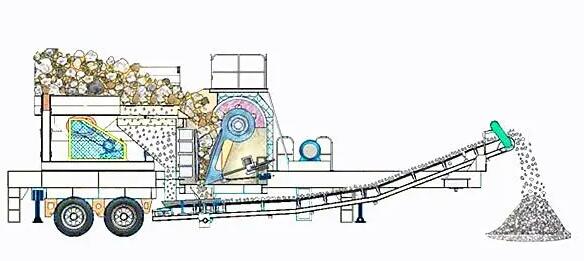
Working Principle of Hard Rock Mobile Crushing Plant
Raw material is first loaded into the hopper of the mobile jaw crushing unit. The vibrating feeder delivers the material evenly to the jaw crusher, where large pieces of hard rock are reduced to a size suitable for secondary crushing. The primary-crushed material is then conveyed to the mobile cone crushing and screening unit. The cone crusher performs secondary crushing, after which the vibrating screen separates the material into the required product sizes. When a closed-circuit configuration is used, oversized material is returned to the cone crusher for further crushing. If improved aggregate shape or manufactured sand is required, the screened material can be sent to an optional mobile VSI crushing and screening unit. The VSI crusher performs fine crushing and shaping, while the vibrating screen classifies the finished material. Each unit is mounted on an independent wheeled chassis. The modules can be relocated separately and combined according to the required production process and site layout.

Technical Parameters

ModelAncillary equipmentHost equipment

Feed size

(mm)

Capacity

(tph)

Overall ability

(tph)

Dimensions

(mm)

XPEV69-1ZGC1038PEV600*900≤500100-180≤100-22013560x2890x4930
XPEV75-1ZGC1238PEV750*1060≤630100-300≤120-33015340x2920x5370


ModelAncillary equipmentHost equipment

Feed size

(mm)

Capacity

(tph)

Overall ability

(tph)

Dimensions

(mm)

XHP2003YK2160XHP20070-190-≤70-22014640x2920x6470
XHP3003YK2470XHP30080-200-≤120-38014790x3050x6660


ModelAncillary equipmentHost equipment

Feed size

(mm)

Capacity

(tph)

Overall ability

(tph)

Dimensions

(mm)

VSI-95322YK2470VSI9532≤40150-220≤180-25014970x2920x7595
VSI-85222YK2160VSI8522≤40100-120≤100-15014500x2800x7200


Need Help Choosing the Right Equipment?
Tell us your material type, maximum feed size, required capacity and final product specifications. Our engineers will recommend the right equipment model and process solution for your project.
Talk to an Engineer

Frequently Asked Questions

A typical plant includes a mobile jaw crushing unit for primary crushing, a mobile cone crushing and screening unit for secondary crushing, and an optional mobile VSI unit for shaping or manufactured sand production. The final configuration depends on the required products and site conditions.

The plant is designed for granite, basalt, river pebble, iron ore and other hard or abrasive materials. Material hardness, abrasiveness and moisture content should be evaluated before selecting the crusher configuration.

The mobile jaw crushing unit can accept primary feed sizes of up to 630 mm, depending on the selected model. Cone crusher and VSI feed-size limits are smaller and must be matched to the output of the preceding crushing stage.

Available mobile-unit configurations provide capacities from approximately 70 to 380 t/h. Actual plant output depends on the selected modules, feed gradation, material properties, screen settings and final product requirements.

The jaw crusher reduces large raw material during primary crushing, while the cone crusher performs secondary crushing of hard and abrasive material. This combination is commonly used where multiple crushing stages are required.

Please provide the material type, maximum feed size, feed gradation, required capacity, final product sizes, moisture content, operating hours and site conditions. This information is required to design an appropriate mobile crushing process.

Send message

Please enter your name
Please enter your email
Please enter your message