NEWS
NEWS
HOME > NEWS > Industrial news > Details

CONTACT

Industrial news

What Is a Flotation Machine? Mineral Processing Guide

Release time:2025-12-26 Views:0
When exploring mineral processing technologies, a common question arises: What is a flotation machine? Simply put, a flotation machine (also called a flotation cell) is a critical industrial device used to separate valuable minerals from ore. It leverages the differences in surface properties of minerals—some repel water (hydrophobic), while others attract it (hydrophilic)—to isolate target minerals like gold, copper, lead, and zinc. This technology is the backbone of mining operations worldwide, enabling the extraction of high-purity minerals from low-grade ore. This guide comprehensively answers “What is a flotation machine” by breaking down its working principle, core components, types, applications, and key advantages.

What Is a Flotation Machine: Core Definition & Purpose

At its essence, a flotation machine is a vessel designed to create a froth layer that selectively carries valuable minerals to the surface for collection. Its primary purpose is to separate and concentrate valuable minerals from gangue (worthless rock) in ore, making it economically viable to refine metals. Unlike other separation methods, the flotation machine works even with fine-grained ore (down to 20μm), which is why it’s indispensable in modern mining. Whether processing gold ore, copper sulfides, or phosphate rock, the flotation machine turns low-grade raw material into high-value concentrates.

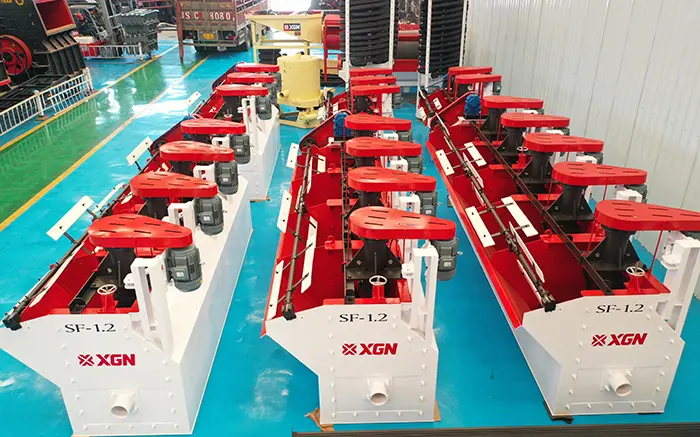
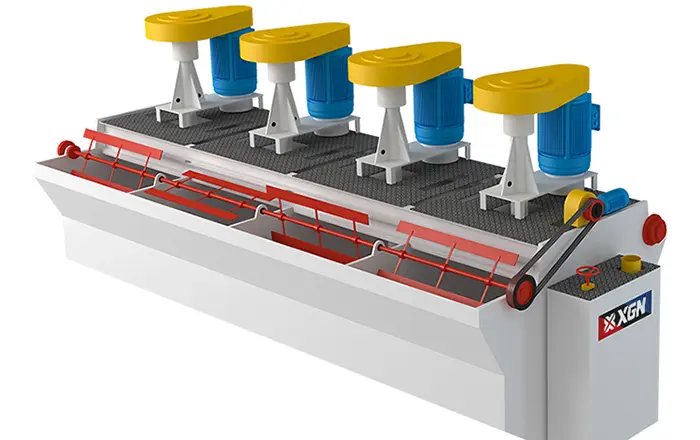
what is a flotation machine 02

How Does a Flotation Machine Work?

To fully understand “What is a flotation machine,” its working principle—known as froth flotation—is key. The process follows four core steps, all coordinated within the flotation machine:
  1. Ore Preparation: Crushed and ground ore is mixed with water to form a slurry, which is fed into the flotation machine.

  2. Reagent Addition: Chemical reagents (collectors, frothers, modifiers) are added to the slurry. Collectors coat valuable minerals to make their surfaces hydrophobic; frothers create stable bubbles; modifiers adjust the slurry’s pH to enhance separation.

  3. Aeration & Agitation: The flotation machine injects air into the slurry, creating tiny bubbles. Simultaneously, an agitator keeps the slurry mixed, ensuring minerals come into contact with bubbles.

  4. Froth Separation: Hydrophobic valuable minerals attach to the bubbles and rise to form a froth layer on the surface. The froth (rich in target minerals) is scraped off by mechanical paddles, while hydrophilic gangue remains in the slurry and is discharged as tailings.

This selective separation process is what makes the flotation machine so effective—even for complex ore with multiple minerals.

Core Components of a Flotation Machine

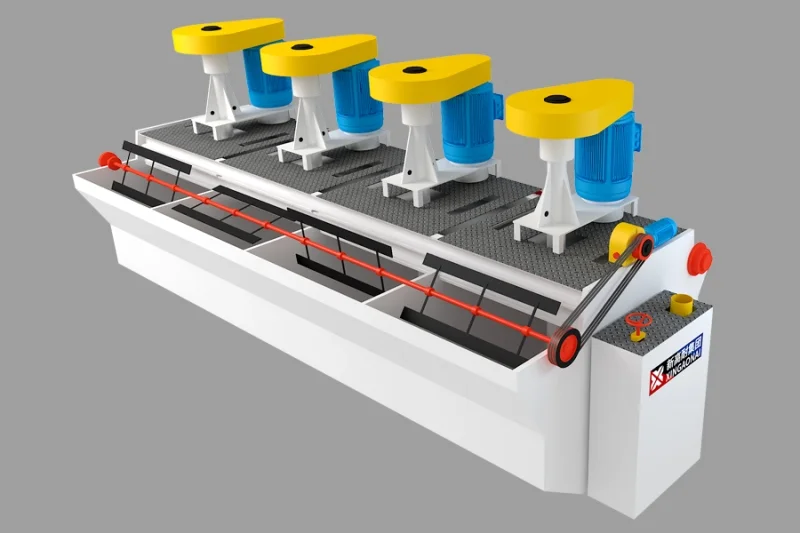
A standard flotation machine comprises several key components that work together to enable efficient separation:
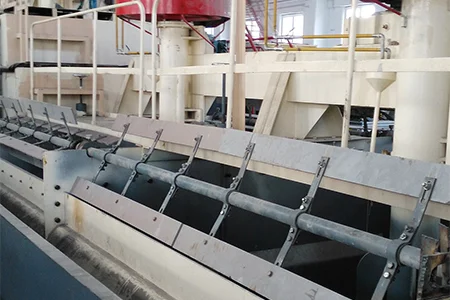
  • Flotation Cell (Vessel): The main tank where slurry, reagents, and air interact. It’s typically made of stainless steel or rubber-lined steel to resist corrosion.

  • Agitator: A rotating device that mixes the slurry, prevents mineral settling, and disperses air bubbles evenly.

  • Aeration System: Pipes or diffusers that inject air into the slurry, generating the bubbles needed for mineral attachment.

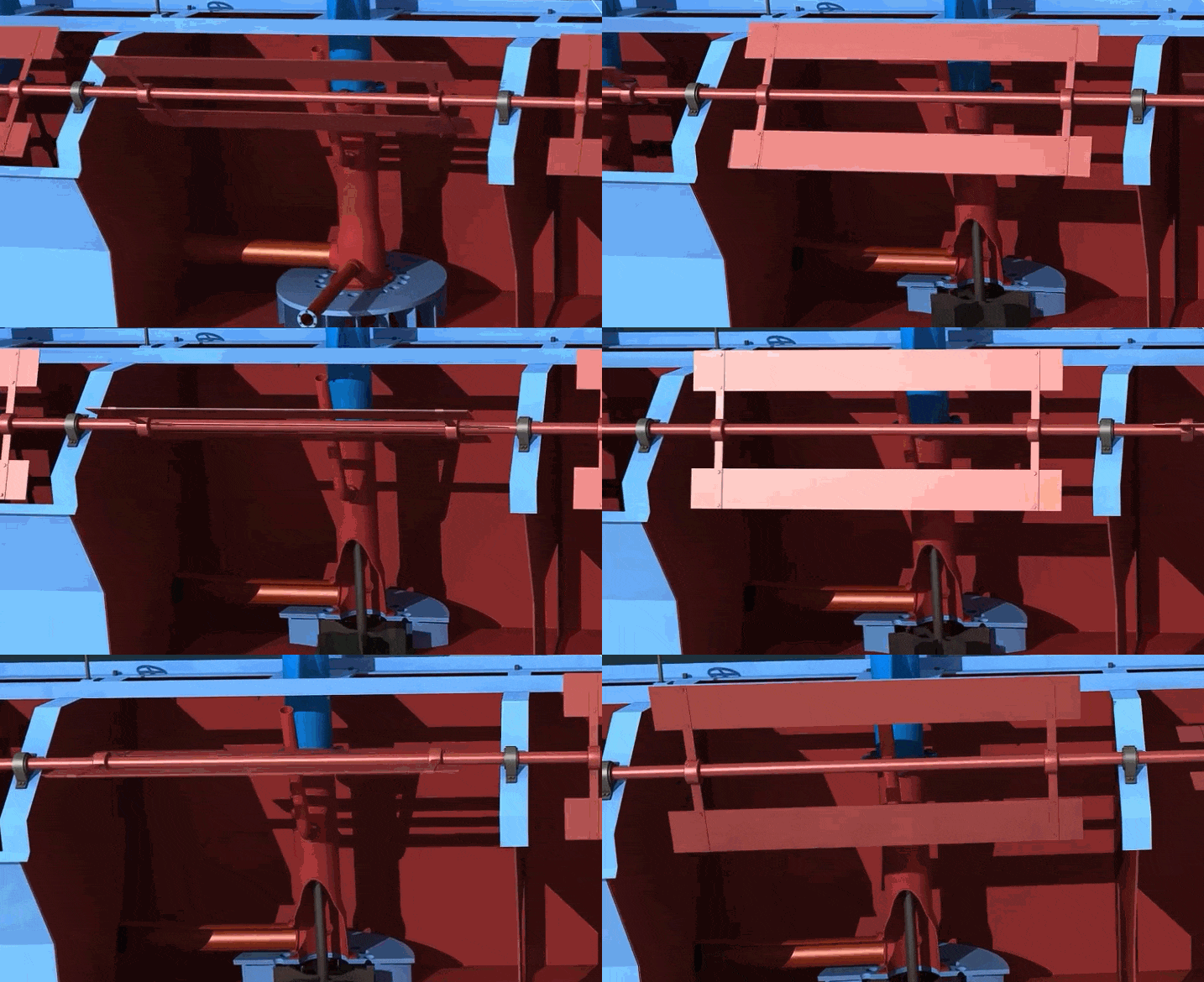
  • Froth Scrapers: Mechanical paddles that skim the mineral-rich froth from the surface and direct it to a collection trough.

  • Reagent Dosing System: Pumps and nozzles that precisely deliver collectors, frothers, and modifiers into the flotation cell.

  • Control Panel: Modern flotation machines feature PLC controls to adjust slurry level, air flow, and reagent dosage in real time.

Common Types of Flotation Machines

When answering “What is a flotation machine,” it’s important to note the different types tailored to specific ore and production needs:

1. Mechanical Flotation Machine

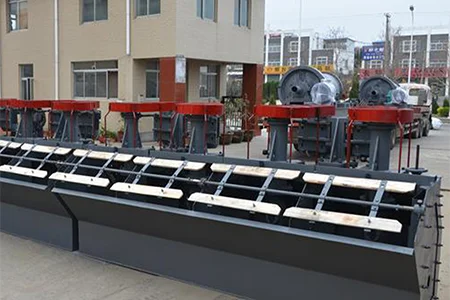
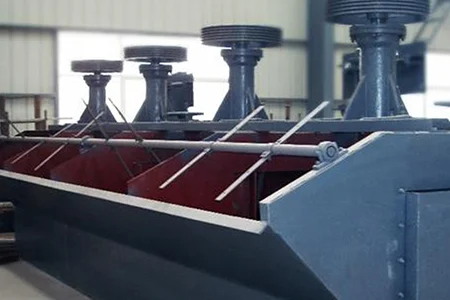
The most widely used type, featuring an impeller (agitator) and stator. It generates bubbles via shear force from the rotating impeller. Ideal for medium-to-fine ore and high-capacity operations (50-500 m³/h), it’s commonly used in copper and gold mines.

2. Pneumatic Flotation Machine

Relies on compressed air to generate bubbles, with no mechanical agitator. It’s energy-efficient and gentle on fragile minerals, making it suitable for fine-grained ore and mineral processing where particle integrity matters.

3. Pneumomechanical Flotation Machine

Combines mechanical agitation and pneumatic aeration for enhanced bubble-mineral contact. It offers high separation efficiency and is used for complex ore with multiple valuable minerals.

4. Column Flotation Machine

A tall, vertical cell that uses countercurrent flow of slurry and air. It delivers high-purity concentrates and is often used for final upgrading of minerals like gold and platinum.

Industrial Applications of Flotation Machines

A key part of answering “What is a flotation machine” is highlighting its real-world uses. Its versatility makes it indispensable across mining and related sectors:
  • Metal Mining: Separates gold, copper, lead, zinc, nickel, and platinum-group metals from ore. For example, copper sulfide ore is processed in flotation machines to produce copper concentrate (25-30% copper content) for smelting.

  • Non-Metallic Mineral Processing: Concentrates phosphate, fluorite, barite, and kaolin for use in fertilizers, ceramics, and construction materials.

  • Coal Preparation: Removes sulfur and ash from coal to meet environmental standards and improve combustion efficiency.

  • Wastewater Treatment: Separates oil, solids, and contaminants from industrial wastewater, supporting environmental compliance.

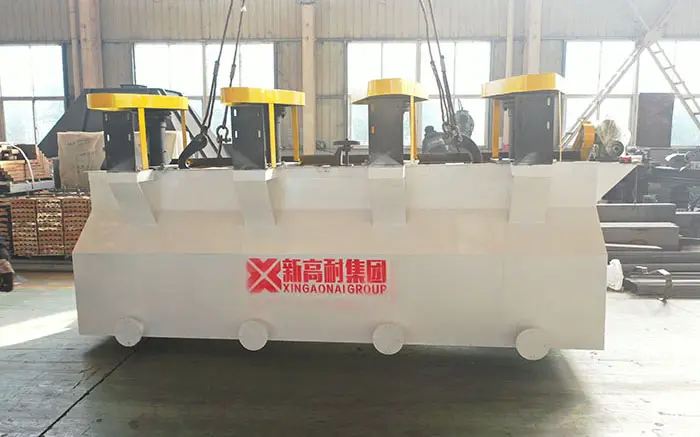
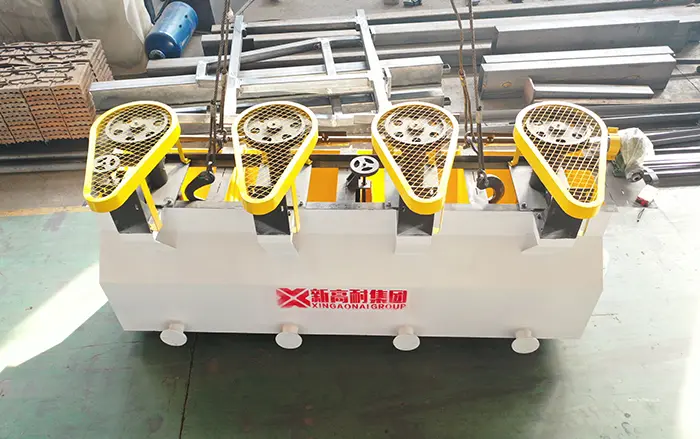
what is a flotation machine 03

Key Advantages of a High-Quality Flotation Machine

The flotation machine’s widespread adoption stems from its unique benefits for mining operations:
  1. High Separation Efficiency: Selectively concentrates valuable minerals, even from low-grade ore (as low as 0.5% copper or 1g/t gold).

  2. Versatility: Handles diverse ore types (sulfides, oxides, carbonates) and particle sizes (20μm-2mm).

  3. Scalability: Available in small lab-scale models (1-5 L) and large industrial units (500+ m³/h), adapting to production needs.

  4. Precision Control: Modern models with automated systems allow precise adjustment of process parameters, ensuring consistent concentrate quality.

  5. Cost-Effectiveness: Turns low-value ore into profitable concentrates, maximizing the economic value of mining projects.

How to Choose the Right Flotation Machine?

When selecting a flotation machine, consider these factors to align with your operation:
  • Ore Properties: Choose the type (mechanical, pneumatic) based on mineral surface properties, particle size, and ore hardness.

  • Production Capacity: Match the flotation machine’s volume to your daily throughput requirements.

  • Concentrate Quality Goals: Opt for column flotation machines if high-purity concentrates are needed.

  • Energy Efficiency: Prioritize models with low power consumption, especially for large-scale operations.

  • Maintenance Needs: Select machines with durable components and easy access for cleaning and part replacement.

Conclusion

To wrap up “What is a flotation machine,” it is a specialized mineral separation device that uses froth flotation to isolate valuable minerals from ore. Its efficient, versatile, and scalable design makes it the cornerstone of mining operations worldwide—enabling the extraction of critical metals and minerals that power industries. Whether you’re processing gold ore, copper sulfides, or coal, understanding the flotation machine’s working principle and applications helps you make informed decisions for your mineral processing line.
As mining evolves toward sustainability and efficiency, flotation machines continue to innovate—integrating AI for real-time optimization, energy-saving designs, and eco-friendly reagents. For anyone asking “What is a flotation machine,” the answer is clear: it’s a strategic investment that turns low-grade ore into high-value products, driving profitability in the global mining industry.