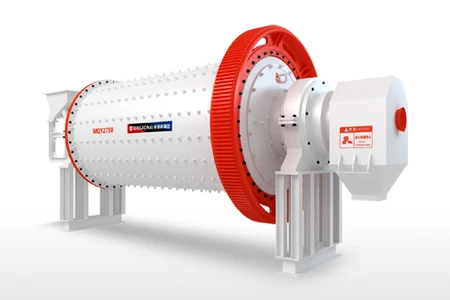
A SAG mill uses both the ore itself and an added steel-ball charge to reduce particle size. A ball mill relies mainly on grinding balls. In many mineral-processing plants, they perform different duties: the SAG mill handles an earlier grinding stage, while the ball mill reduces the material further toward the required final product.
The practical question is therefore more than which mill is better. It is which grinding arrangement suits the ore, throughput and downstream process.
This guide explains the main differences, how the mills work together, and what should be evaluated when comparing a SAG–ball circuit with a crushing–ball mill circuit.
SAG Mill vs Ball Mill: Quick Comparison
| Comparison factor | SAG mill | Ball mill |
|---|---|---|
| Name | Semi-autogenous grinding mill | Ball mill |
| Principal grinding media | Ore particles together with an added steel-ball charge | Grinding balls |
| Common circuit role | Primary or intermediate grinding | Subsequent grinding, or grinding after suitable crushing |
| Feed characteristics | Commonly receives relatively coarse crushed ore | Normally receives finer crusher product or material from an earlier grinding stage |
| Main selection concern | Response of the ore to breakage, feed distribution and circuit duty | Grindability, feed size, final product requirement and classification |
| Relationship to the other mill | May prepare feed for a ball mill | May complete grinding after a SAG stage |
| Universal replacement? | No | No |
These are common arrangements rather than fixed rules. Single-stage SAG circuits and different ball-milling configurations also exist. The complete flowsheet must be assessed for the particular ore.Stantec Hard Rock Miner’s Handbook
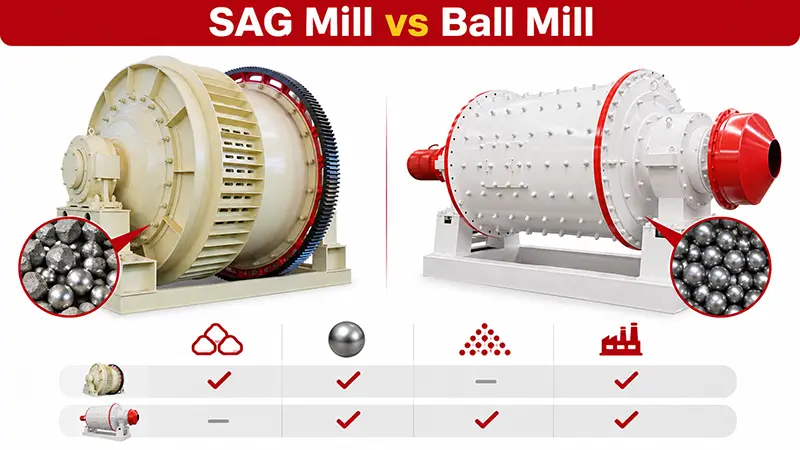
How Their Grinding Mechanisms Differ
SAG Mill
“Semi-autogenous” means that the ore contributes to the grinding action, assisted by added grinding balls.
As the mill rotates, the charge is lifted and redistributed. Impact and abrasion reduce particle size through interactions involving ore, balls and liners.
Because the ore participates in the grinding process, its breakage characteristics and size distribution are particularly important. A change in the proportion of coarse, competent particles can affect operation even when the ore name remains unchanged.
Ball Mill
A ball mill uses grinding balls as its principal media. Rotation lifts and moves the charge, allowing impact and abrasion to reduce the material between the balls and other surfaces.
Its performance also depends on the ore. Feed size, grindability, ball size, liner condition and classification all influence the result.
The distinction is the contribution of ore as grinding media—not the absence of ore-to-ore contact inside a ball mill. FLS identifies ore plus grinding balls as the defining combination in SAG milling.FLS AG and SAG mills
Where Each Mill Fits in a Grinding Circuit
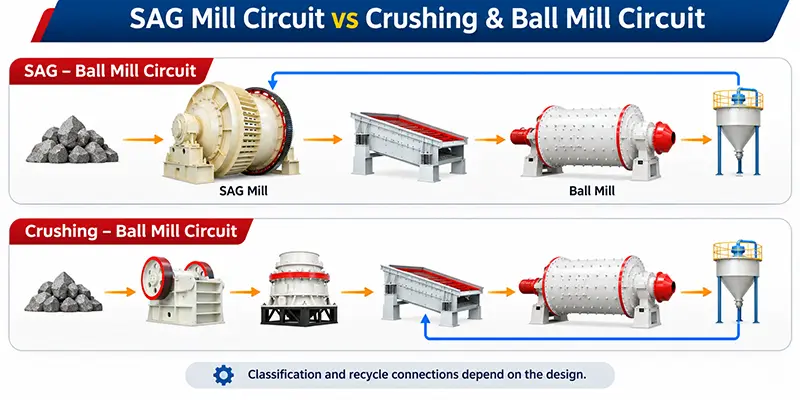
A SAG mill commonly treats relatively coarse material after primary crushing. A ball mill often works farther downstream, where additional size reduction is required.
A simplified two-stage arrangement is:
Primary crushing → SAG grinding → ball milling and classification → downstream processing
An alternative arrangement is:
Crushing and screening → ball milling and classification → downstream processing
Neither line is a complete engineering flowsheet. Screens, pumps, classifiers and return streams must be arranged according to the selected process.
Why SAG Mills and Ball Mills Often Work Together
The two stages can divide the size-reduction duty.
The SAG stage handles the earlier grinding task. The ball-milling stage then provides further grinding, usually working with a classification circuit to control the product sent downstream.
This division requires a suitable balance. If the SAG stage supplies a coarser product than expected, the ball-milling circuit may face more work. If classification returns excessive material, internal loads can rise without an equivalent increase in finished output.
The size transferred between stages is therefore important. T80 describes the particle size below which 80% of the defined transfer stream passes. Its sampling location and measurement basis must be identified.
Research on SAG–ball circuits highlights transfer size as an important link between design, throughput and operating performance.Keys to Best Practice Comminution
SAG–Ball Circuit or Crushing–Ball Mill Circuit?
A meaningful comparison uses the same ore, required throughput and final product specification.
SAG–Ball Circuit
This arrangement may be considered where testwork supports processing coarse feed through a SAG stage before further ball milling.
Evaluation should include ore variability, feed-size distribution, grinding power, material discharge and the balance between stages. If pebble crushing is included, its effect must also be considered.
Crushing–Ball Mill Circuit
This route prepares suitable ball-mill feed through crushing and screening.
Its assessment should include crusher and screen performance, feed consistency, grinding energy, wear and the effect of changes in ore properties.
The comparison must cover the whole route. Lower mill power does not automatically mean lower total energy if upstream crushing demand increases. Likewise, fewer process stages do not automatically mean lower project cost.
What Determines Circuit Selection?
| Design factor | What needs evaluation |
|---|---|
| Ore characteristics | Breakage behavior, grindability, abrasiveness and variability |
| Feed distribution | Representative size distribution, not maximum size alone |
| Required throughput | Average and design production requirements |
| Final product | Required P80 and any additional distribution limits |
| Mineral liberation | Size reduction needed for downstream recovery |
| Classification | Separation performance and return loads |
| Operating costs | Energy, media, liners, maintenance and availability |
| Site conditions | Power, space, water, access and practical maintenance arrangements |
Representative testwork is essential when a project moves beyond an initial concept. A Bond Ball Mill Work Index helps assess a ball-milling duty, but it does not alone establish the suitability or required size of a SAG mill.
Detailed diameter and power calculations belong in a separate sizing exercise. For that step, see ball mill sizing.
For an operating closed circuit, also distinguish fresh feed from material returning internally. The circulating load guide explains that distinction.
Common Comparison Mistakes
Selecting by ore name alone. Two deposits of the same mineral can have different grinding responses.
Assuming hard ore always requires SAG milling. Circuit selection needs suitable testwork and comparison.
Comparing feed rate with finished-product output. Internal circulation must be accounted for.
Treating P80 as maximum particle size. P80 describes an 80% passing size.
Using one universal ball charge or feed-size limit. These depend on the equipment and duty.
Claiming one route always saves energy. Compare equivalent product requirements and the complete circuit.
Selecting a Ball Mill for Its Actual Duty
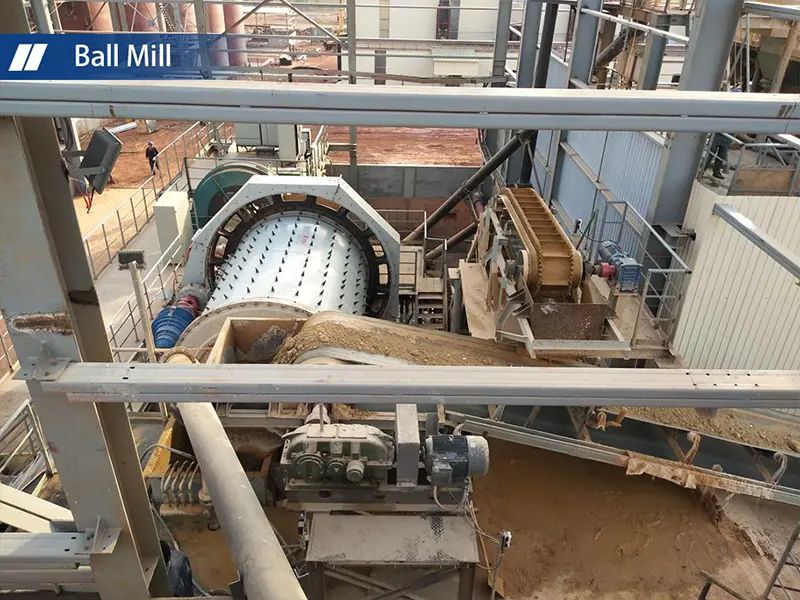
Define the ore characteristics, incoming size distribution, final product and throughput before selecting a mill. Assess the ball mill together with its upstream equipment and classification circuit.
Explore the XINGAONAI Ball Mill for equipment details and configurations for suitable grinding duties.