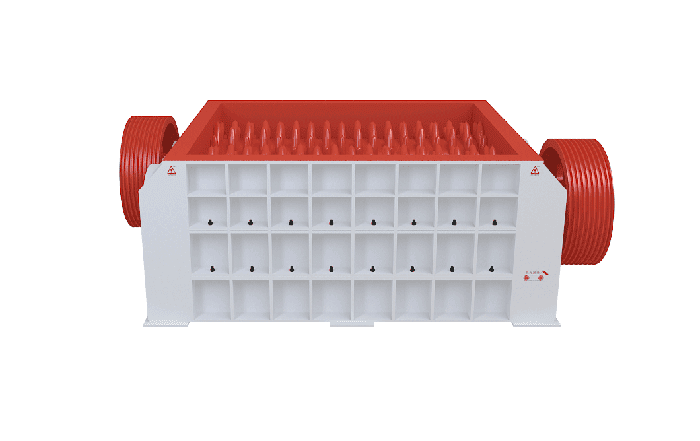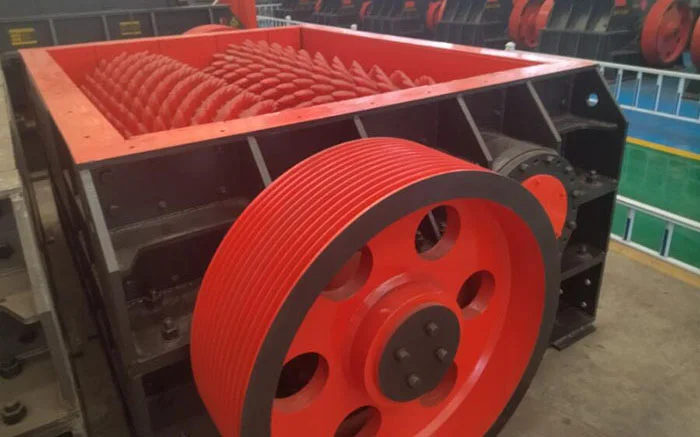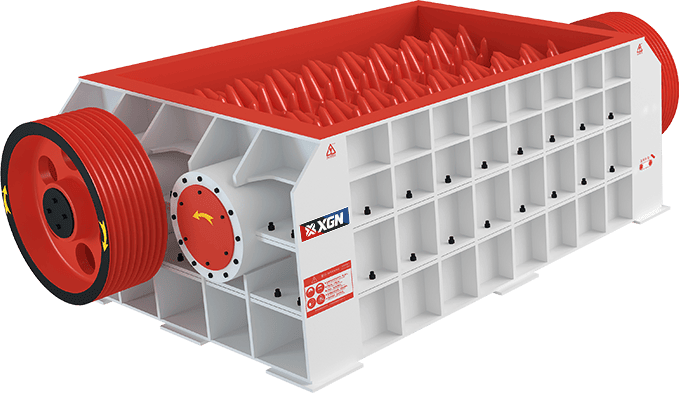
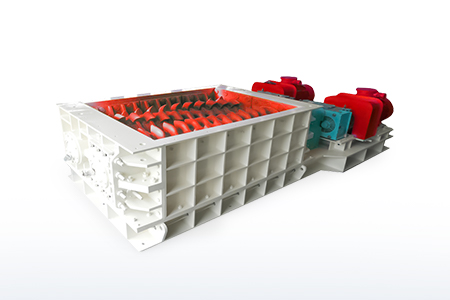
A custom double toothed roller crusher is designed around the actual feed material, maximum lump size, required capacity and target product size. Instead of using a fixed roll and tooth configuration for every application, the manufacturer adjusts the tooth profile, roll diameter, roll width, roll gap, operating speed, wear materials and overload-protection system.
This type of crusher is commonly used for coal, coke, lignite, clay, shale, gypsum, limestone, fertilizer raw materials and other soft-to-medium-hard materials that benefit from combined gripping, compression and shearing.
Quick answer: Customize a double toothed roller crusher when a standard model cannot reliably grip the feed, achieve the required capacity, control the product size or handle moisture and clay. The design should be based on representative material data—not only the required tons per hour.
XINGAONAI provides configurable double roll crusher equipment with different roll-surface and operating options for industrial crushing applications.
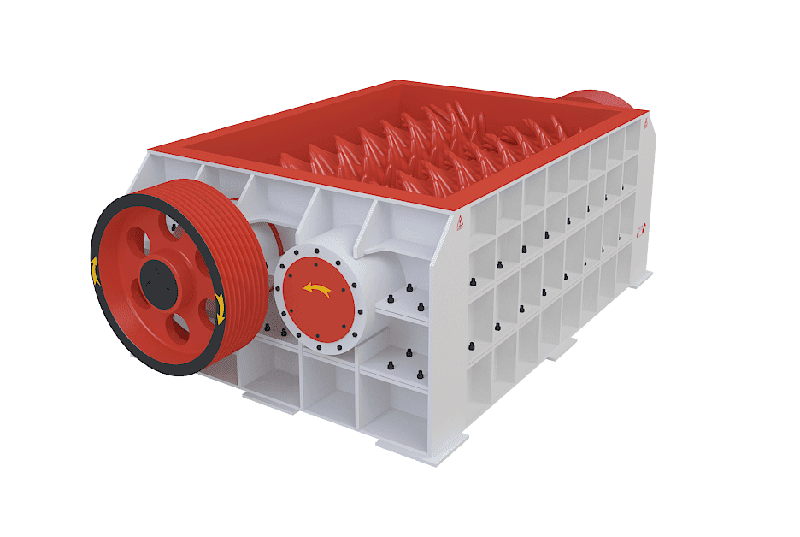
What Is a Double Toothed Roller Crusher?
A double toothed roller crusher uses two parallel rolls fitted with teeth or replaceable tooth segments. The rolls rotate toward each other and pull material into the crushing zone.
As the material passes between the rolls, it is reduced through a combination of:
Gripping
Compression
Shearing
Splitting
Bending
The teeth improve the crusher’s ability to capture larger, irregular or moderately sticky feed that might slip on smooth rolls.
However, toothed rolls do not automatically make the crusher suitable for very hard, abrasive rock. Granite, quartzite and similarly abrasive materials may cause rapid tooth and roll wear unless the entire machine is specifically engineered and tested for that application.
For a detailed explanation of material feeding, crushing and discharge, see the double roll crusher working principle.
When Is Customization Necessary?
A standard double toothed roll crusher may be insufficient when:
Feed lumps are larger than the standard opening.
Required capacity exceeds a standard model.
Material contains moisture or clay.
Feed shape is irregular or slab-like.
A narrow output range is required.
Standard teeth cannot grip the material.
Excessive fines must be avoided.
Wear conditions require different tooth materials.
Installation height or floor space is limited.
Existing conveyors dictate a specific inlet or outlet arrangement.
The plant requires automatic gap control.
Tramp metal is likely to enter the crusher.
Local voltage or motor standards differ.
The machine must integrate with an automated production line.
Customization should solve a defined operating problem. Adding unnecessary options increases cost and complexity without guaranteeing better crushing performance.
Information Required Before Customization
The manufacturer needs representative operating data before designing the crusher.
| Required information | Why it matters |
|---|---|
| Material name | Provides an initial application reference |
| Maximum feed size | Affects roll diameter and tooth height |
| Feed-size distribution | Helps evaluate capacity and gripping |
| Required product size | Influences tooth spacing and roll gap |
| Required capacity | Affects roll width, speed and drive power |
| Compressive strength | Helps assess whether roll crushing is suitable |
| Abrasiveness | Determines tooth and roll material |
| Moisture content | Indicates sticking and blockage risk |
| Clay content | Influences tooth shape and cleaning design |
| Bulk density | Required for realistic capacity estimation |
| Operating hours | Affects bearing, drive and wear-part duty |
| Tramp-metal risk | Determines overload-protection requirements |
| Site dimensions | Affects frame, feed and discharge layout |
| Power supply | Required for motors and control system |
Where material behavior is uncertain, crushing tests should be considered before the final equipment configuration is confirmed.
Customizable Parts of a Double Toothed Roller Crusher
1. Tooth Profile
Tooth profile affects gripping, penetration, crushing action and product shape.
Possible configurations include:
Pointed Teeth
Pointed teeth can penetrate and grip relatively brittle feed. They may be useful where larger lumps must be captured and broken by splitting and compression.
Very thin or sharp teeth may wear rapidly in abrasive material.
Blunt or Heavy-Duty Teeth
A wider, more robust tooth provides greater mechanical strength and may be more suitable for high-load operation.
It usually produces a stronger compression and splitting action rather than fine cutting.
Hooked or Curved Teeth
A hooked profile can improve the ability to pull slab-shaped or moderately sticky material into the crushing zone.
The design must prevent material from packing between adjacent teeth.
Intermeshing Teeth
The teeth on the two rolls pass between each other to provide more positive sizing and shearing.
Adequate clearance must be maintained to prevent tooth collision when the rolls move under overload.
Replaceable Tooth Segments
Segmented tooth plates allow worn sections to be replaced without replacing the complete roll assembly.
The segment mounting system should provide:
Secure fastening
Accurate positioning
Easy maintenance access
Protection against loosening
Sufficient support under crushing load
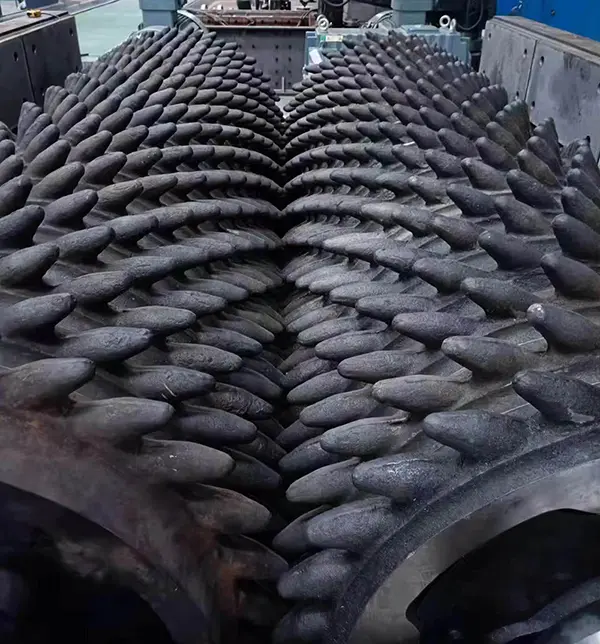
2. Tooth Spacing and Arrangement
Tooth spacing influences the largest material that can enter the crusher and the shape of the discharged product.
Closer spacing may provide more sizing points but can increase:
Fine-particle generation
Packing risk
Wear surface
Cleaning requirements
Wider spacing may accept larger feed but may allow more oversize material to pass.
The tooth arrangement should be designed around the complete feed-size distribution, not only the largest lump.
3. Roll Diameter
Roll diameter affects:
Feed gripping
Nip conditions
Tooth mounting area
Available crushing force
Machine dimensions
Shaft torque
Maximum practical feed size
A larger roll can improve the ability to accept larger feed, but it also increases machine weight, torque requirements and manufacturing cost.
The roll diameter should be selected together with the tooth height and arrangement.
4. Roll Width
Roll width is one of the factors that determines potential throughput. A wider crushing zone can process more material when feed is distributed evenly across the full roll face.
Increasing width alone will not guarantee higher capacity if:
The feeder supplies material unevenly.
The inlet is too narrow.
The rolls cannot grip the material.
The drive system is undersized.
Wet material blocks part of the roll width.
The discharge conveyor is too small.
The feed chute should distribute material across the usable width rather than concentrating it in the center.
5. Roll Gap and Product Size
The roll gap influences the discharged particle size, but toothed rolls do not always produce a product identical to the physical clearance between the rolls.
Final product size also depends on:
Tooth height
Tooth spacing
Intermeshing depth
Material fracture behavior
Feed-size distribution
Roll wear
Operating load
The supplier should define how the proposed discharge size was estimated and under which material conditions it applies.
6. Roll Speed
Roll speed influences capacity, gripping, fines generation and wear.
An excessively high speed may cause:
Material slippage
Increased fines
Greater wear
Higher impact loading
More vibration
An excessively low speed may reduce capacity and allow material to accumulate above the rolls.
Final speed should be selected from material-test data, reference applications or verified manufacturer calculations.
7. Equal-Speed or Differential-Speed Operation
Some toothed roll crushers use rolls operating at similar peripheral speeds. Other applications may use a controlled speed difference to increase shearing action.
Differential speed can be useful for certain soft, fibrous or sticky materials, but it may also increase:
Tooth wear
Product fines
Drive complexity
Power demand
It should only be specified when the material and product requirements justify it.
8. Roll and Tooth Materials
The roll surface must resist the actual combination of crushing load, abrasion, impact and corrosion.
Possible configurations include:
Alloy-steel tooth segments
High-manganese components
High-chromium wear parts
Hardfaced steel
Replaceable wear-resistant plates
Application-specific coatings
The correct material cannot be selected from hardness alone. Moisture, particle abrasiveness, tramp metal and desired maintenance intervals must also be considered.
Ask the manufacturer for:
Material grade
Heat-treatment condition
Hardness range where relevant
Replaceable-part structure
Repair method
Recommended spare-part quantity
9. Drive System
A custom crusher may use:
Single- or twin-motor drive
V-belt transmission
Gear transmission
Flexible coupling
Fixed-speed motor
Variable-frequency drive
Application-specific hydraulic drive
The drive must provide sufficient torque for normal crushing and temporary load increases.
A variable-frequency drive may help during commissioning or changing operating conditions, but it cannot compensate for an incorrectly sized roll or motor.
10. Gap Adjustment
Available options may include:
Mechanical screw adjustment
Shim adjustment
Spring-loaded adjustment
Hydraulic adjustment
Automated position control
Hydraulic systems can simplify adjustment and overload release, but they add hydraulic components and maintenance requirements.
The quotation should state:
Adjustment range
Adjustment accuracy
Whether adjustment is possible during operation
How wear compensation is performed
How the actual gap is measured
11. Overload Protection
Uncrushable material can damage teeth, shafts, bearings and drive components.
Possible protection measures include:
Spring release
Hydraulic relief
Torque monitoring
Motor-current protection
Shear pins or safety couplings
Upstream magnetic separation
Emergency stop and reverse control
The movable roll should be able to release the obstruction and return to its operating position without allowing the rolls or teeth to collide.
12. Feeding System
A double toothed roller crusher requires controlled and evenly distributed feeding.
The feeding system may include:
Vibrating feeder
Belt feeder
Chain or apron feeder
Feed chute
Flow-control gate
Metal detector
Magnetic separator
The feeder should cover the usable roll width and prevent sudden surges that overload one section of the crusher.
13. Discharge and Transfer System
The discharge opening and conveyor must handle the peak crushed-material flow without causing material to accumulate beneath the rolls.
Check:
Discharge-chute angle
Conveyor capacity
Available headroom
Dust sealing
Access for clearing blockages
Protection against material rebound
Downstream screening requirements
14. Frame and Installation Layout
The frame may be modified to suit:
Existing building dimensions
Limited installation height
Underground operation
Mobile or skid-mounted systems
Existing foundation locations
Maintenance access
Motor position
Feed and discharge direction
Customization should preserve adequate access for roll, bearing and drive maintenance.
15. Electrical and Automation Options
Depending on the plant, controls may include:
Local control panel
Remote start and stop
Motor-current monitoring
Bearing-temperature monitoring
Vibration monitoring
Hydraulic-pressure monitoring
Roll-speed monitoring
Blockage alarm
Emergency stop
Interlocking with feeder and conveyor
PLC or plant-control integration
Monitoring points should reflect actual equipment risks rather than being added only as marketing features.
Smooth Rolls vs Toothed Rolls
| Factor | Smooth double roll crusher | Double toothed roller crusher |
|---|---|---|
| Crushing action | Mainly compression | Compression, splitting and shearing |
| Feed gripping | Lower | Stronger |
| Typical feed | Smaller, brittle material | Larger or moderately sticky material |
| Product control | Closely related to roll gap | Also influenced by tooth arrangement |
| Fines generation | Often lower | Depends on tooth profile and speed |
| Blockage resistance | Lower for sticky feed | Can be better with suitable teeth |
| Wear parts | Smooth shell or surface | Teeth or tooth segments |
| Typical use | Fine or controlled crushing | Coal sizing and larger-feed reduction |
Neither design is universally better. The correct choice depends on feed behavior and product requirements.
Customization Process
A practical customization process should include the following stages.
1. Application Review
The manufacturer reviews the material, feed size, capacity, output and operating conditions.
2. Material Testing
Testing may be required when crushability, moisture behavior or wear risk is uncertain.
3. Preliminary Configuration
The supplier proposes:
Roll dimensions
Tooth profile
Roll gap
Drive system
Wear materials
Protection system
Estimated capacity
4. Technical Confirmation
The buyer reviews the datasheet, drawings, motor requirements, installation dimensions and supply scope.
5. Manufacturing and Inspection
Rolls, shafts, frame and drive components are manufactured and assembled. Agreed inspection items should be recorded.
6. Factory Test
The equipment undergoes dimensional checks, rotation checks and no-load testing before shipment. Load testing should be defined separately if required.
7. Installation and Commissioning
Alignment, rotation direction, lubrication, gap setting, protection devices and feeder interlocks are checked before production.
8. Performance Verification
Performance should be evaluated using the agreed feed conditions:
Material
Maximum feed size
Moisture
Capacity
Target output
Test duration
Sampling method
Performance Guarantee Conditions
Capacity or product-size guarantees should define the operating basis.
A performance agreement may include:
Material name and source
Feed-size distribution
Maximum feed size
Moisture content
Bulk density
Required capacity
Product-size requirement
Allowable fines or oversize
Test duration
Sampling and measurement procedure
Without these conditions, a capacity figure cannot be evaluated fairly.
Common Customization Mistakes
Choosing Toothed Rolls Only for Harder Material
Toothed rolls improve gripping and shearing, but do not automatically make the crusher suitable for hard, abrasive rock.
Designing Around Maximum Capacity Alone
The machine must also satisfy feed-size, product-size, wear and maintenance requirements.
Ignoring Moisture and Clay
Wet material can pack between teeth or adhere to the roll surface. Moisture should be tested where blockage is a concern.
Using Unsupported Performance Claims
Energy savings, wear life and capacity should be tied to defined operating conditions and evidence.
Ignoring Feed Distribution
An oversized crusher cannot achieve stable capacity if material is concentrated on only part of the roll width.
Overcomplicating Automation
Install sensors and controls that address real operating risks. More instrumentation does not automatically produce more reliable operation.
Information to Send With an RFQ
Provide:
Material name and photographs
Maximum and average feed size
Feed-size distribution
Compressive strength, if available
Abrasiveness
Moisture and clay content
Bulk density
Required product size
Required capacity
Operating hours per day
Tramp-metal risk
Installation dimensions
Upstream feeder
Downstream conveyor or screen
Electrical supply
Project location
Required control level
For guidance on evaluating suppliers, see How to Choose Double Roll Crusher Manufacturers.
Conclusion
A custom double toothed roller crusher should be designed around the actual material and process requirements. Effective customization involves more than changing tooth shape: roll dimensions, speed, gap, wear materials, drive torque, overload protection and plant integration must be evaluated together.
Avoid accepting unqualified capacity, energy-saving or wear-life promises. Require the supplier to state the feed conditions and design basis behind every performance figure.
For standard equipment details, visit the XINGAONAI double roll crusher. For model and parameter comparison, read the double roll crusher specification guide.