XINGAONAI Group · Video Library
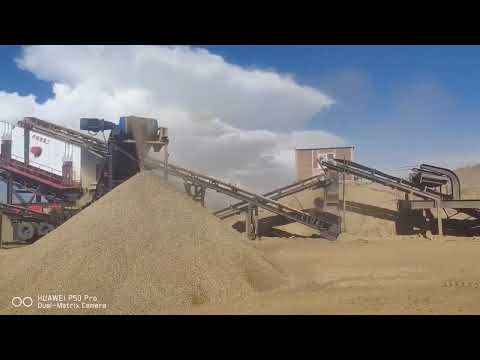
100 TPH Jaw and Cone Crushing Plant: PEV600×900 + HP200
Watch a nominal 100 TPH jaw-and-cone crushing plant with PEV600×900 and HP200 equipment. Review equipment roles, catalogue data and plant selection factors.
About This Video
This video presents a jaw-and-cone crushing arrangement identified as a nominal 100 TPH plant, combining a PEV600×900 jaw crusher for primary crushing with an HP200 cone crusher for secondary crushing. It provides a visual reference for discussing a similar equipment configuration.
The 100 TPH figure is the plant designation used for this video. It should not be read as a measured production result or as the individual capacity rating of either crusher. Actual throughput and finished-product output depend on the material, feed conditions, crusher settings and the complete plant configuration.
Equipment Roles in the Crushing Arrangement
Primary jaw crushing: The PEV600×900 reduces incoming rock before the secondary stage. Feed preparation and the permitted maximum particle size must match the selected machine.
Secondary cone crushing: The HP200 provides further size reduction after the jaw crusher. Confirm its exact model version, crushing chamber, feed limits, discharge setting and motor specification in the project equipment schedule.
Screening and material handling: For a similar plant, define the screens, conveyors, product stockpiles and any oversize return circuit around the required finished-product sizes.
PEV600×900 Catalogue Reference
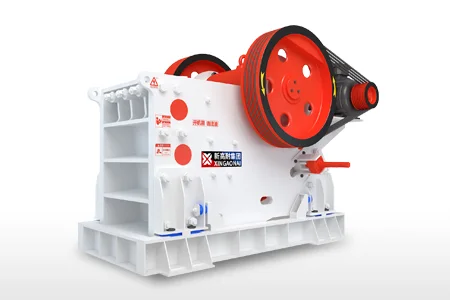
The current PEV Series product table lists the following reference specifications for PEV600×900:
| Specification | Catalogue reference |
|---|---|
| Feed opening dimensions | 600×900 mm |
| Feed opening width / depth | 900 mm / 600 mm |
| Motor power | 90 kW |
| Reference capacity range | 120–455 t/h |
Source: PEV Series product PDF. These are catalogue values for the model, not a verified record of the installed motor, operating rate or finished-product yield in this footage. Confirm the supplied configuration and performance conditions for the actual project.
The 600×900 mm opening describes inlet geometry. It is not the maximum allowable feed particle size, and it does not specify the discharge setting. Both limits require model-specific confirmation.
Why Plant Capacity Differs from a Crusher Catalogue Range
A complete plant is selected around its design duty. A primary crusher may operate below its catalogue capacity range when the feed rate is controlled or when downstream crushing, screening and product requirements determine the plant output. Catalogue ranges and a nominal plant designation therefore describe different things and should not be compared as guaranteed operating results.
To assess a nominal 100 TPH installation, consider feed-size distribution, rock strength and abrasiveness, moisture and clay content, required product sizes, crusher settings, screen loading and any circulating material. Wear-part consumption, energy use and product shape need project-specific assessment rather than a general promise of low wear or uniform output.
Planning a Similar Jaw-and-Cone Plant
Send the material type, maximum feed size and size distribution, required hourly throughput, target product fractions, project location and available power supply. State whether the capacity target refers to incoming feed or saleable finished products, and include available material test results.
Use this video as a configuration reference. Ask our team to assess the suitable equipment, process layout and agreed scope for your operating conditions. Discuss your crushing plant requirements.


Related Resources
Explore Equipment & Further Information
Related Equipment
Related Articles & Updates
How Granite Compressive Strength Determines Your Crusher Choice: Jaw, Cone or Impact?
Granite compressive strength ranges from 100–310 MPa. Learn which crusher type — jaw, cone or impact — handles hard granite best, and how to...
Read MoreHow to Adjust Jaw Crusher Gap: Step-by-Step Guide
How to adjust jaw crusher gap: Safe step-by-step guide for optimal particle size & crushing efficiency in mining/quarries.
Read MoreWhat Is a Jaw Crusher?
What Is a Jaw Crusher? A primary crushing machine for hard materials in mining/quarries, using compression crushing for large rock reduction...
Read MoreYour Application
Discuss Your Equipment Requirements
Include this video as a reference and tell us what you need to process and produce.
Send Your Requirements- Material and maximum feed size
- Required capacity and finished-product sizes
- Project location and current stage
Discuss What You Have Seen
Discuss Your Equipment or Plant Requirements
Tell us your material, feed conditions, required capacity, product specifications and project location. Include this video title or link if it helps explain your requirements.
Send message
Fields marked * are required. Country and phone are optional.