

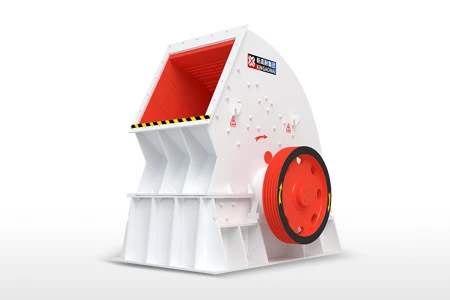
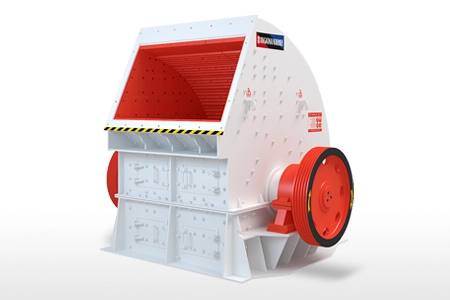
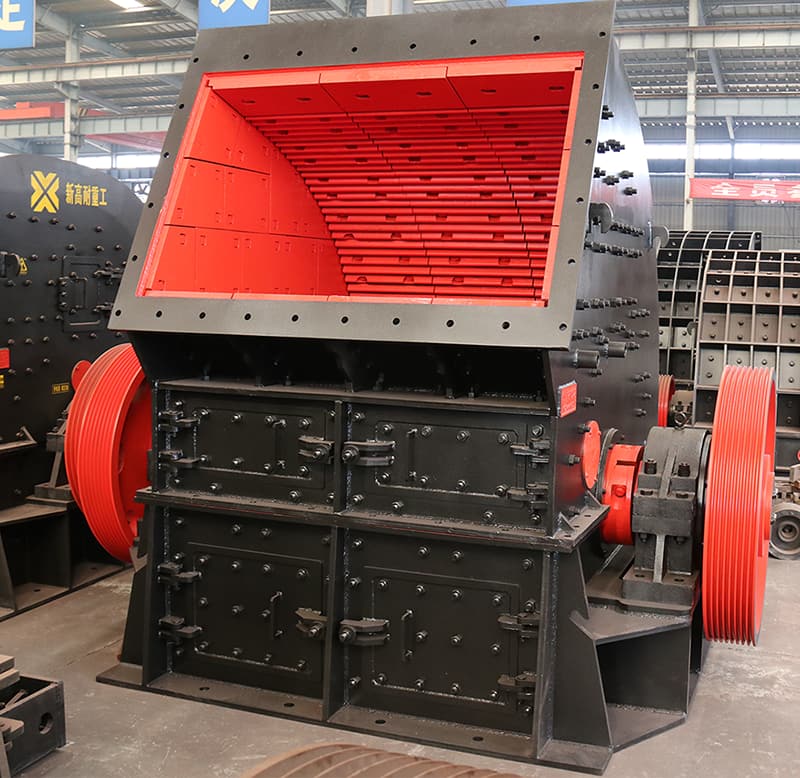
What Is a Hammer Crusher: Core Definition
Core Working Principle of a Hammer Crusher
Primary Impact Crushing: Raw materials are fed into the crushing chamber and hit directly by the high-speed rotating hammers. The instant impact force shatters large material blocks into smaller pieces, achieving the first stage of crushing.
Secondary Collision Crushing: The crushed material fragments are thrown to the wear-resistant liners of the crushing chamber under centrifugal force, and rebound after collision. During the rebound process, they collide with other rotating hammers or uncrushed materials, realizing secondary crushing and refining the particle size.
Screening & Discharge: The repeatedly crushed materials move to the grate bar area at the bottom of the crushing chamber. Particles that meet the required size pass through the grate bar gap and are discharged from the machine; oversized particles are retained in the chamber and continue to be crushed by the hammers until they meet the discharge standard.
Key Structural Components of a Hammer Crusher
Rotor Assembly: The power core of the hammer crusher, including rotor shaft, disk plates, hammer pins and crushing hammers. It is made of high-strength alloy steel to withstand high-speed rotation and huge impact force, ensuring stable operation.
Crushing Hammers: The direct crushing component, usually made of high-manganese steel or alloy composite materials with excellent wear and impact resistance. Hammers are flexibly mounted on the rotor and can be rotated or replaced to extend service life.
Crushing Chamber: The enclosed space for material crushing, composed of side liners, front liners and grate bars. The inner wall is equipped with wear-resistant liners to prevent chamber damage from material impact and realize secondary collision crushing.
Grate Bars (Screen Bars): Installed at the bottom of the crushing chamber, it is the key component to control the discharge particle size. The gap between grate bars can be adjusted according to production requirements, and the wear-resistant steel material ensures long-term use without deformation.
Frame & Base: The heavy-duty welded steel structure that bears the entire weight of the crusher and the impact force during crushing. It has high rigidity and stability, effectively absorbing vibration and reducing noise during equipment operation.
Drive System: Consists of motor, V-belts, pulleys and couplings, which provides power for the high-speed rotation of the rotor. The V-belt drive design has the advantages of shock absorption and overload protection, preventing damage to key components.
Feed Hopper & Chute: Guides raw materials to enter the crushing chamber evenly, avoiding uneven loading and rotor imbalance. The inner wall is equipped with wear-resistant liners to resist abrasion from hard and angular materials.
Key Features & Advantages of a Hammer Crusher
High Crushing Ratio: It can crush large material blocks into fine particles in a single pass, with a crushing ratio of 10:1 to 40:1, which is much higher than jaw crushers and cone crushers, reducing the need for secondary crushing equipment.
Simple Structure & Easy Operation: The equipment has few components, a compact structure, and a simple operation process. It can be operated with basic training, and the daily operation and adjustment are convenient and fast.
High Production Efficiency: The high-speed rotating hammers realize continuous and rapid crushing of materials, with large processing capacity and high production efficiency, suitable for large-scale industrial continuous production.
Adjustable Discharge Particle Size: The discharge particle size can be flexibly adjusted by changing the gap of the grate bars or replacing different types of hammers, meeting the different particle size requirements of various industrial applications.
Wide Material Adaptability: It is suitable for crushing various brittle materials with compressive strength ≤200MPa, including limestone, coal, gypsum, clay, shale, and various construction waste, with strong adaptability.
Low Investment & Operation Cost: The equipment has a simple manufacturing process, low initial investment, and few wearing parts. The maintenance and replacement cost is low, and the overall operation cost is far lower than other crushing equipment.
Industrial Applications of a Hammer Crusher
Mining Industry: Used for primary and secondary crushing of low-hardness ores such as limestone, gypsum, and coal ore, providing qualified ore particles for subsequent beneficiation, grinding and other processes.
Building Materials Industry: Crushes limestone, clay, shale and other raw materials into fine powder for cement, brick, tile and other building materials production, which is the core equipment of building materials production lines.
Construction & Demolition Industry: Processes construction waste such as concrete blocks, brick fragments, and stone residue into recycled aggregates, realizing resource reuse and environmental protection, and is suitable for on-site crushing of construction waste.
Coal Industry: Specialized in coal crushing, crushing raw coal into uniform particle sizes for coal combustion, coking and coal chemical processing, improving coal utilization efficiency.
Chemical Industry: Crushes brittle chemical raw materials such as gypsum, salt, and potassium sulfate, meeting the particle size requirements of chemical production and processing.
Quarrying Industry: Crushes small and medium-sized stone blocks into aggregate of different specifications for road construction, building foundation and concrete mixing, with high production efficiency and good particle shape.
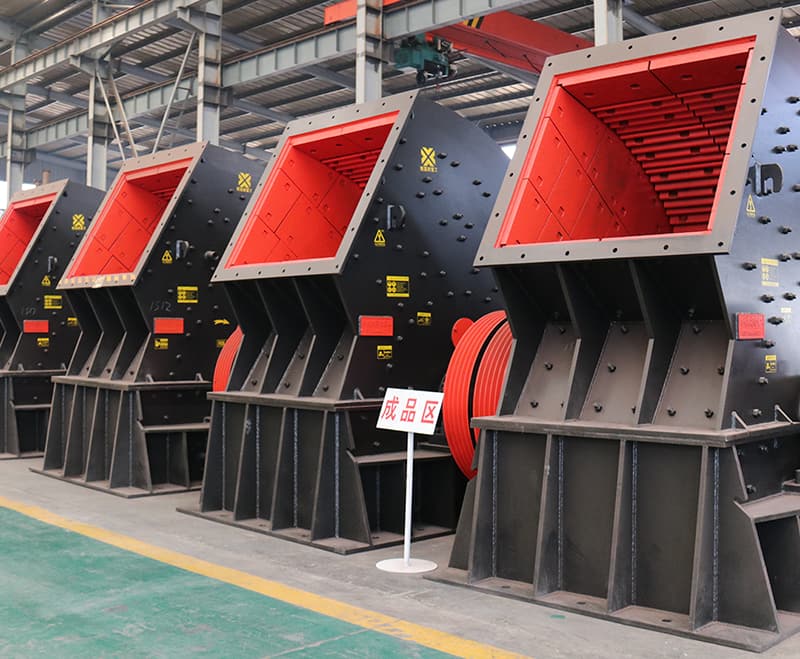
Suitable Materials for a Hammer Crusher
Compressive strength ≤200MPa
Moisture content ≤15%
No high-viscosity or ductile components