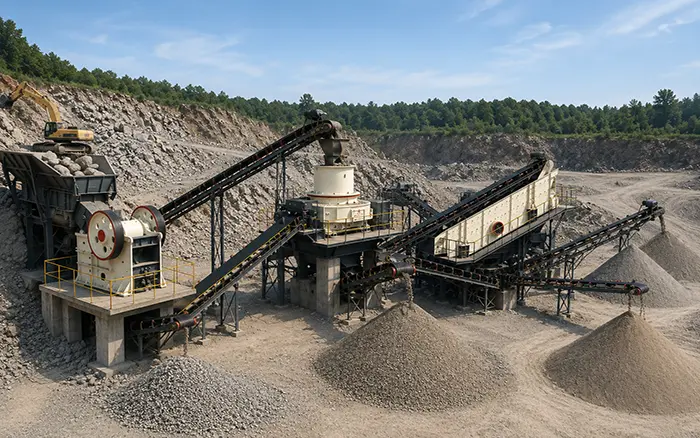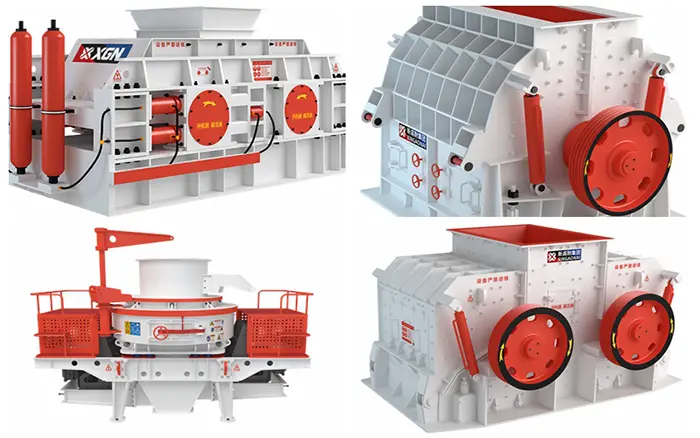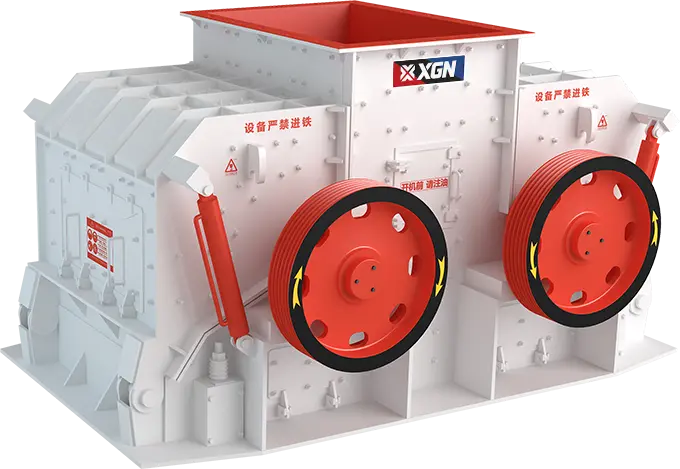
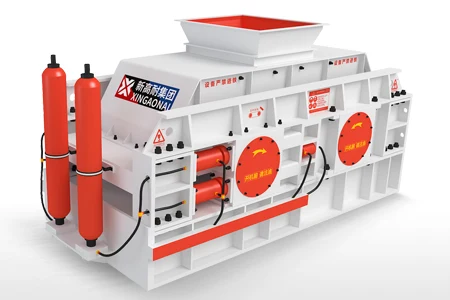
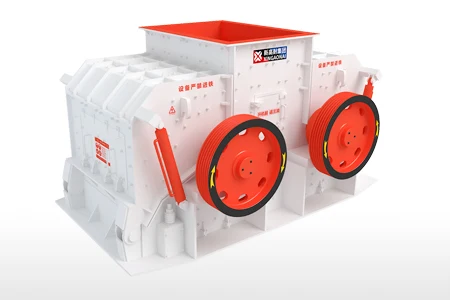
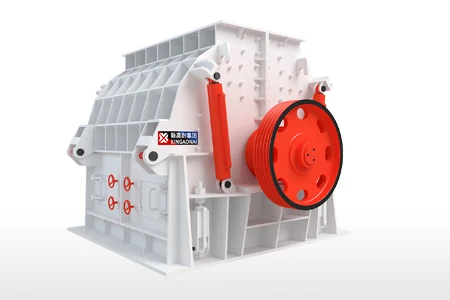
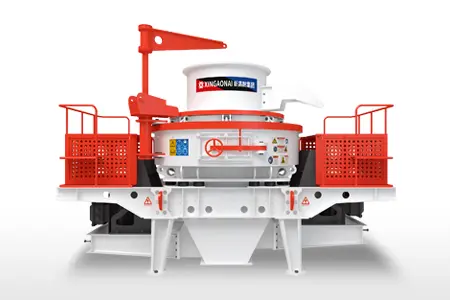
A sand making machine reduces prepared rock or aggregate into manufactured sand and fine aggregate. Depending on the machine type, it may use high-speed impact, repeated hammer impact or compression between rotating rollers.
The term “sand making machine” does not describe one universal working principle.
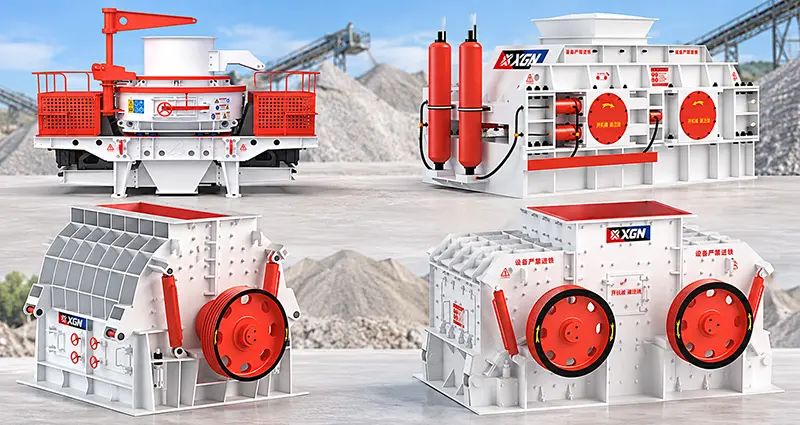
The four principal designs are:
VSI vertical shaft impact crusher
Single-rotor sand making machine
Double-rotor sand making machine
Roller sand making machine
A VSI accelerates material through a high-speed rotor. Single- and double-rotor machines use hammers and repeated impact, while a roller machine uses compression between rotating rolls.
These machines may perform similar production duties, but their internal structures, allowable feed sizes, suitable materials and finished products are different.
The General Sand-Making Process
Although the internal crushing mechanism varies, most manufactured-sand circuits follow a similar external process:
Prepared Feed → Controlled Feeding → Fine Crushing or Shaping → Discharge → Screening → Finished Sand
Oversized particles separated by the screen may return to the crusher, creating a closed circuit.
1. Feed preparation
Large raw stone is normally reduced by a jaw crusher, cone crusher or impact crusher before it enters the sand making stage.
The required preparation depends on the selected machine. A VSI generally requires much smaller feed than a single-rotor or double-rotor machine.
2. Controlled feeding
A feeder or conveyor delivers material at a stable rate.
Uneven or excessive feeding can cause:
Unstable motor load
Reduced crushing efficiency
Poor product consistency
Blockages
Accelerated wear
Excessive recirculating load
3. Crushing or shaping
Inside the machine, the material is reduced by impact or compression. Some machines mainly perform fine crushing, while others can also improve particle shape.
4. Discharge
The processed material leaves the machine and moves to a vibrating screen.
A crusher does not normally separate all finished products internally. Screening is a separate process stage.
5. Screening and recirculation
The screen separates qualified manufactured sand from coarse particles.
Oversized material may return to the sand making machine, while material meeting the required specification moves to storage, washing or further classification.
How Does a VSI Sand Making Machine Work?
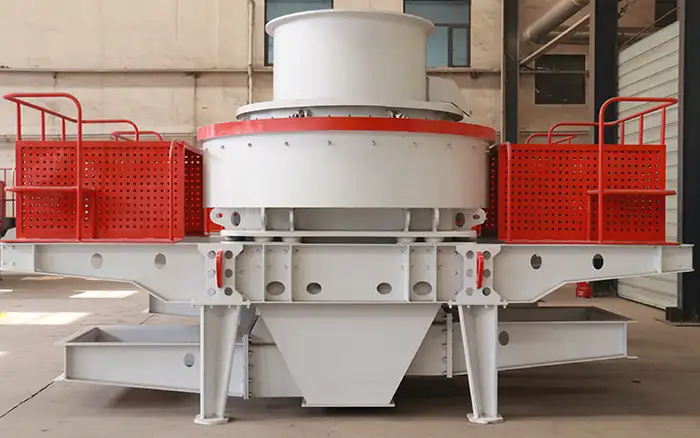
A VSI vertical shaft impact crusher uses a high-speed vertical rotor to accelerate the feed material.
The operating sequence can be summarized as:
Feed → Rotor Acceleration → High-Speed Impact → Crushing and Shaping → Discharge
Material feeding
Prepared material enters through the upper feed opening. The allowable feed size depends on the machine model, material hardness and feeding arrangement.
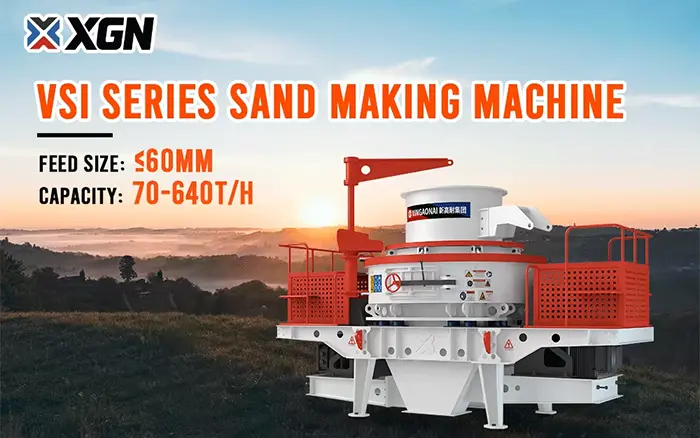
The current XINGAONAI VSI range lists feed sizes up to 60 mm and capacities from 70 to 640 t/h, depending on the model and feed method.
Rotor acceleration
Material entering the rotor is accelerated and discharged through the rotor ports.
The rotor converts mechanical energy from the motor into particle velocity.
Impact crushing
After leaving the rotor, the material undergoes high-speed impact.
Depending on the crushing-chamber configuration, the principal modes include:
Rock-on-rock
Rock-on-metal
In rock-on-rock operation, accelerated particles collide with a retained bed of material. In rock-on-metal operation, they strike metal components or anvils.
Rock-on-metal can provide more aggressive size reduction but may also increase wear on metal components.
Particle shaping
Repeated particle collisions can break weak edges and help improve particle shape. The actual result depends on:
Feed characteristics
Rotor speed
Feed grading
Crushing-chamber configuration
Recirculating load
Condition of wear parts
A VSI does not guarantee the same particle shape for every material.
Discharge
Processed material falls from the crushing chamber and moves to the downstream screen.
For a more detailed explanation of the rotor, feed modes and crushing chamber, read the vertical shaft impact crusher working principle.
How Does a Single-Rotor Sand Making Machine Work?
A single-rotor sand making machine uses a rotating rotor equipped with hammers.
Its working process is different from that of a VSI.
1. Material enters the crushing chamber
The machine can accept larger feed than a typical VSI, depending on the model and material.
The current XINGAONAI range lists capacities of 20–150 t/h and feed sizes up to 700 mm. These are model-range values rather than guaranteed output for every material.
2. Rotor and hammer impact
The rotor drives the hammers at operating speed. Incoming material is struck and broken by the hammers.
The particles may then collide with:
Internal liners
Impact surfaces
Other particles
Grate or discharge-control components
3. Repeated crushing
Material that is still too large remains in the crushing chamber and receives additional impact.
This process continues until the particles can pass through the controlled discharge area.
4. Product discharge
The discharge opening or grate arrangement helps control the upper particle size.
The final product should still be screened because the crusher alone cannot provide perfectly controlled grading.
Suitable operating direction
A single-rotor machine may be considered for compatible materials such as:
Limestone
Bluestone
Dolomite
Suitable construction waste
Other brittle materials confirmed by testing
It should not automatically be recommended for highly abrasive granite, basalt or river pebbles without evaluating hammer and liner wear.
How Does a Double-Rotor Sand Making Machine Work?
A double-rotor sand making machine uses two rotors to create consecutive crushing stages within one machine.
Its general operating sequence is:
Feed → First Rotor Impact → Second Rotor Impact → Further Particle Collision → Controlled Discharge
First crushing stage
Material entering the crushing chamber is struck by the first rotor.
This initial impact reduces the feed and transfers the particles toward the next crushing zone.
Second crushing stage
The second rotor applies further impact to the partially reduced material.
The consecutive impact stages allow the machine to achieve greater reduction than a comparable single-impact stage under compatible conditions.
Particle-to-particle collision
The rotor action also causes particles to collide with other particles and internal wear surfaces.
The actual crushing result depends on:
Rotor configuration
Hammer condition
Feed size
Material brittleness
Feed rate
Discharge setting
Discharge control
The final particle size can be influenced by the gap between the hammers and grate components, where applicable.
XINGAONAI currently lists double-rotor capacities of 150–300 t/h and maximum feed sizes up to 280 mm, depending on the model.
The machine is primarily considered for compatible materials such as limestone, bluestone, gangue and shale. Highly abrasive rock requires a wear-cost assessment before selection.
How Does a Roller Sand Making Machine Work?
A roller sand making machine uses compression rather than high-speed impact as its main crushing mechanism.
Its operating sequence is:
Feed → Material Drawn Between Rollers → Compression Crushing → Discharge
Material feeding
Material enters above the rotating rollers.
The feed must remain within the allowable size because oversized or uncrushable material can create excessive load.
Roller compression
The rollers rotate toward the crushing zone and draw the material into the gap.
As the gap narrows, compressive force breaks the particles.
Discharge-size control
The gap between the rollers influences the discharge size.
A narrower gap generally produces finer material but can reduce capacity and increase operating load. The appropriate setting depends on the feed and required product.
Product discharge
Crushed material falls below the rollers and moves to screening or collection.
The current XINGAONAI roller range lists feed sizes up to 40 mm and capacities from 50 to 300 t/h.
Roller equipment may be considered for compatible soft or medium-hard materials requiring controlled fine crushing. Final selection should account for moisture, abrasiveness and the required fines content.
Comparison of Four Sand Making Machine Working Principles
| Machine | Main crushing force | Feed direction | Main operating role | Important limitation |
|---|---|---|---|---|
| VSI | High-speed impact | Prepared, relatively small feed | Fine crushing and particle shaping | Requires controlled feed size |
| Single rotor | Hammer impact | Can accept larger feed | Crushing and sand production for compatible materials | Wear increases with abrasive material |
| Double rotor | Consecutive hammer impact | Medium to larger prepared feed | Multi-stage crushing inside one machine | Material compatibility is important |
| Roller machine | Compression | Relatively small controlled feed | Controlled fine crushing | Not suitable for every hard or sticky material |
The table provides a general comparison. A model should not be selected from the crushing principle alone.
What Happens After the Sand Making Machine?
The discharge normally contains particles of different sizes.
Downstream equipment may include:
Vibrating screen
Separates finished sand, aggregate and oversized particles.
Return conveyor
Returns oversized material to the sand making machine.
Sand washer
Removes clay, silt or unwanted surface contaminants when wet processing is required.
Hydrocyclone
Classifies fine particles and may help recover usable sand from wash water.
Dewatering screen
Reduces surface water from washed sand.
Air classifier
Controls fine powder in a dry-process system.
The complete process depends on raw material and product requirements. The detailed production-line sequence is explained in the stone-to-sand process.
The vibrating screen, return conveyor and washer are part of the production circuit, not internal components of every sand making machine.
What Factors Affect How a Sand Making Machine Works?
Raw-material properties
Hardness, abrasiveness, brittleness, moisture and clay content influence the crushing response.
A machine suitable for limestone may not be economical for basalt.
Maximum feed size
Oversized feed can increase impact loading, block the crushing chamber and damage internal components.
The feed should remain within the limit specified for the material and model.
Feed-size distribution
A stable and properly graded feed usually produces more consistent operation than a feed containing unpredictable large particles or excessive fines.
Feed rate
Overfeeding can cause overload and blockage. Severe underfeeding can reduce production and may alter the way particles interact inside an impact crusher.
Machine settings
Depending on the design, important settings may include:
Rotor speed
Roller gap
Hammer-to-grate gap
Crushing-chamber configuration
Feed mode
Return-load control
Wear-part condition
Worn rotor tips, hammers, liners, anvils, grate bars or roller surfaces can change capacity and product size.
Screening efficiency
A blocked or damaged screen sends incorrectly sized particles through the circuit and increases unnecessary recirculation.
Moisture and clay
Wet or sticky material can adhere to feeding, screening and crushing components. The acceptable level depends on the machine and process design.
How to Select the Right Working Principle
Hard and abrasive rock
For granite, basalt, diabase and river pebbles, a VSI is commonly considered after jaw and cone crushing.
Wear parts and feed preparation must still be evaluated.
Limestone and other brittle materials
VSI, single-rotor, double-rotor or roller equipment may be considered, depending on:
Feed size
Capacity
Required finished product
Abrasiveness
Desired plant layout
Larger feed entering the sand-making stage
A single-rotor or double-rotor machine may accept larger feed than a VSI. However, feed acceptance alone should not determine the selection.
Particle-shaping requirement
A VSI may be considered when improving aggregate shape is a major objective.
Controlled compression crushing
A roller machine may be considered when a controlled discharge and compression-based mechanism match the material.
Common Misunderstandings
All sand making machines use an impeller
Incorrect. A VSI uses a high-speed rotor, rotor-and-hammer machines use hammers, and roller machines use compression.
All sand making machines perform particle shaping
Incorrect. Shaping ability varies significantly by crushing mechanism and operating conditions.
The vibrating screen is part of the crusher
Normally, the screen is separate downstream equipment in the production circuit.
Higher speed always produces better sand
Higher speed may increase impact energy, but it can also increase fines, power consumption and wear. The correct setting depends on the product requirement.
A machine’s rated capacity equals finished-sand output
Incorrect. Rated throughput may refer to total feed or total discharge. Finished-sand output depends on feed grading, screen products and return load.
One sand making machine is suitable for every material
Incorrect. Machine selection must account for hardness, abrasiveness, moisture, feed size and product specification.
Conclusion
A sand making machine works by reducing prepared material through impact or compression, but the exact mechanism depends on the machine type.
A VSI accelerates particles through a high-speed rotor.
A single-rotor machine uses hammer impact.
A double-rotor machine applies consecutive impact stages.
A roller machine crushes material through compression.
The machine is only one part of the production circuit. Stable feeding, correct feed size, effective screening and controlled recirculation all influence the final sand quality.
The appropriate working principle should be selected according to material properties, feed size, required capacity, finished-product specification and expected wear cost.