

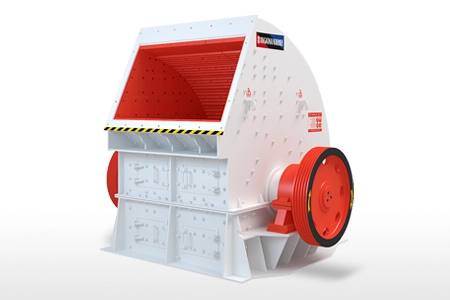
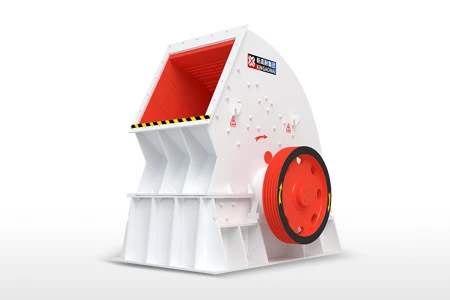
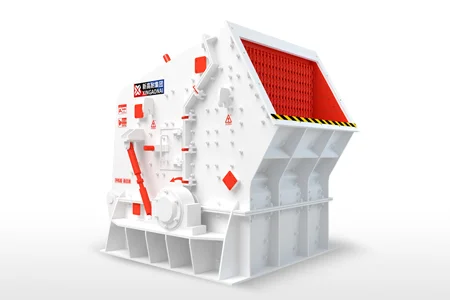
1. Primary Application Scope of Heavy Hammer Crushers
Unlike traditional crushers that are limited to specific material hardness, heavy hammer crushers leverage the impact force of high-speed rotating hammers to crush materials. They excel at processing materials with medium to low hardness (generally below 300 MPa on the Brinell hardness scale) and good brittleness. This adaptability allows them to serve multiple industries, from mining and construction to cement production and chemical engineering.
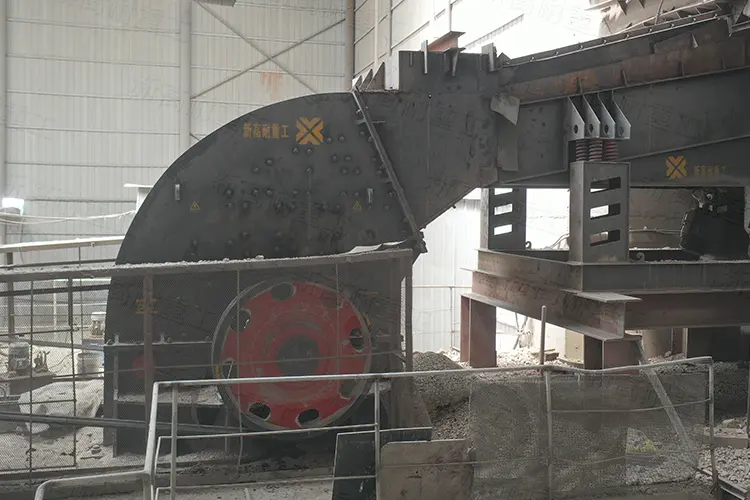
2. Key Materials Crushable by Heavy Hammer Crushers
2.1 Natural Rock and Stone Materials
Limestone: One of the most frequently crushed materials. Limestone has a hardness of 3-5 MPa and is easy to break. Crushed limestone is used in cement manufacturing, building decoration, and agricultural soil improvement.
Dolomite: Similar to limestone in hardness, dolomite is often used as a flux in steelmaking and as an aggregate in road construction after crushing.
Shale: A soft sedimentary rock that crushes easily. Crushed shale is used in brick-making, ceramic raw materials, and as a lightweight aggregate in concrete.
Sandstone: With a hardness of 15-30 MPa, sandstone is crushed into various particle sizes for use in concrete, asphalt mixtures, and water conservancy projects.
2.2 Mineral Ores (Medium-Low Hardness)
Iron Ore (Siderite, Limonite): Siderite and limonite have a hardness of 2-4 MPa, which is ideal for heavy hammer crushers. Crushed iron ore is sent to the beneficiation process to extract iron concentrate.
Copper Ore (Oxidized Copper Ore): Oxidized copper ore is relatively soft, and heavy hammer crushers can efficiently break it into particles of uniform size, facilitating the leaching of copper elements.
Lead-Zinc Ore: Low-grade lead-zinc ore with high brittleness can be crushed by heavy hammer crushers to improve the recovery rate in the subsequent beneficiation process.
2.3 Industrial Waste and By-Products
Blast Furnace Slag: A by-product of steelmaking, blast furnace slag has a hardness of 20-30 MPa. Crushed slag is used to produce slag cement, concrete admixtures, and road materials.
Steel Slag: Another steelmaking by-product, steel slag can be crushed into aggregates for road base and concrete after stabilization treatment, realizing resource recycling.
Cement Clinker: In cement plants, heavy hammer crushers crush cement clinker (hardness 25-40 MPa) into fine powder, which is then ground into cement.
2.4 Construction and Demolition Waste
Concrete Debris: Crushed concrete can be recycled into recycled aggregate, used to make recycled concrete, mortar, and road base materials, reducing the need for natural sand and stone.
Brick and Tile Waste: Waste red bricks and tiles are soft and brittle, and after crushing, they can be used as lightweight aggregate or in the production of autoclaved aerated concrete blocks.
Reinforced Concrete (with Pre-Treatment): After removing steel bars through magnetic separation, the remaining concrete can be efficiently crushed by heavy hammer crushers.
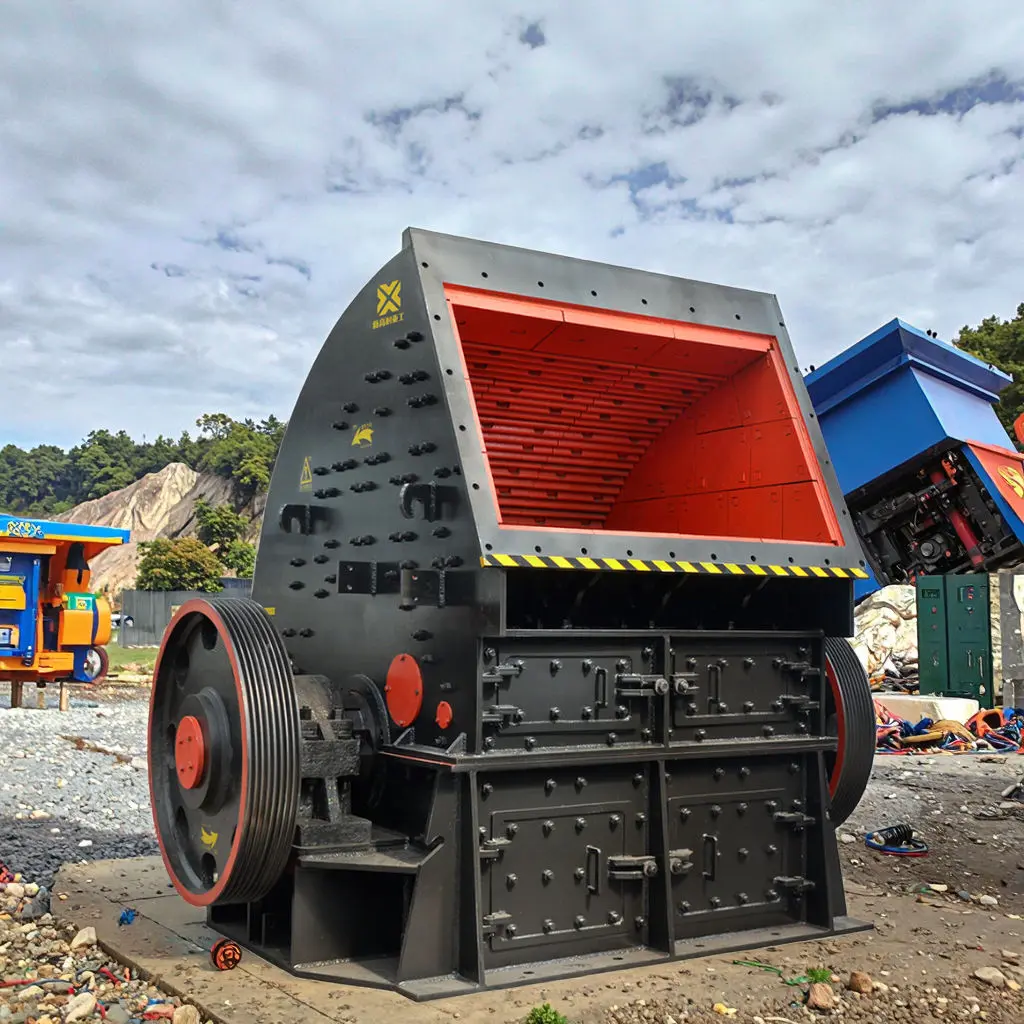
3. Materials to Avoid Crushing with Heavy Hammer Crushers
High-Hardness Materials: Such as granite, basalt (hardness above 300 MPa), and corundum. These materials will severely wear the hammer head and liner, reducing equipment life.
Viscoelastic Materials: Such as asphalt, rubber, and plastic. These materials are easy to adhere to the inner wall of the crusher, causing blockage and affecting production efficiency.
Materials with Metal Impurities: Such as steel bars, bolts, and scrap iron mixed in raw materials. These impurities can collide with the hammer head, leading to equipment failure.
4. Why Choose a Heavy Hammer Crusher for These Materials?
High Crushing Ratio: It can complete coarse crushing and fine crushing in one pass, reducing the number of equipment configurations and saving investment costs.
Uniform Product Particle Size: The impact crushing method ensures that the crushed materials have a regular shape and uniform particle size, meeting the requirements of various application scenarios.
Simple Structure and Easy Maintenance: Compared with complex crushers such as cone crushers, heavy hammer crushers have fewer wearing parts and lower maintenance difficulty.
Energy-Saving and High Efficiency: The high-speed rotating hammer head generates strong impact force, which has high crushing efficiency and low energy consumption per unit of product.