

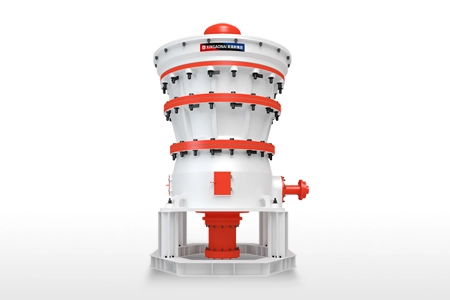
In the world of mining, quarrying, and aggregate processing, crushing equipment plays a pivotal role in reducing large raw materials into manageable sizes. Among the various types of crushers available, the gyratory crusher stands out as a workhorse for primary crushing applications—especially when dealing with massive, hard rocks and ores. If you’re asking, “What is a gyratory crusher?” you’ve come to the right place. This article breaks down its definition, working principle, key components, advantages, and common uses to help you understand why it’s a staple in heavy-duty industrial operations.
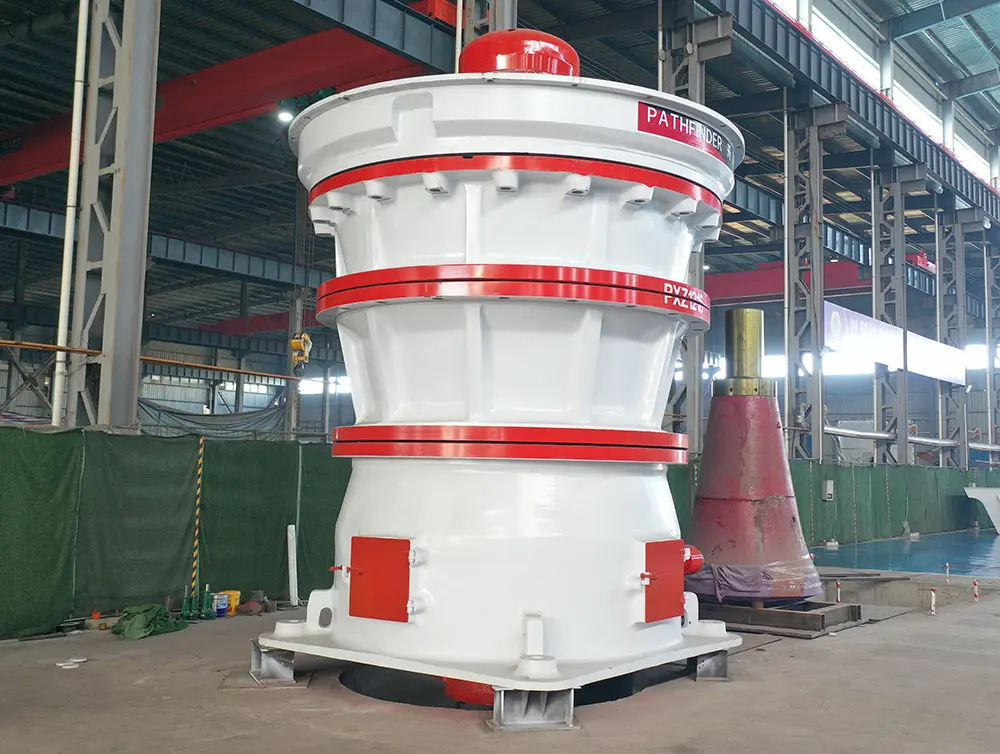
What Is a Gyratory Crusher, Exactly?
How Does a Gyratory Crusher Work? The Core Mechanism
Feed Inlet: Large rocks or ores are fed into the top of the crusher through a hopper. The feed size is determined by the diameter of the crusher’s opening, which varies by model.
Gyratory Motion: A vertical drive shaft powers the conical mantle, causing it to both rotate (spin) and gyrate (swing in a circular motion). This gyration is what gives the crusher its name and creates the crushing action.
Crushing Chamber: As the mantle gyrates, the space between the mantle and the stationary concave fluctuates. When the mantle swings toward the concave, the gap narrows, compressing and breaking the material inside. When it swings away, the gap widens, allowing the crushed material to move downward.
Particle Sizing: The crushed material continues to move through the tapered crushing chamber, undergoing repeated compression until it reaches the desired size. The final particle size is controlled by adjusting the gap at the bottom of the chamber (known as the discharge setting).
Discharge: Once the material is small enough, it exits the crusher through the discharge opening and is transported to the next stage of processing (e.g., secondary crushing, screening, or stockpiling).
Key Components of a Gyratory Crusher
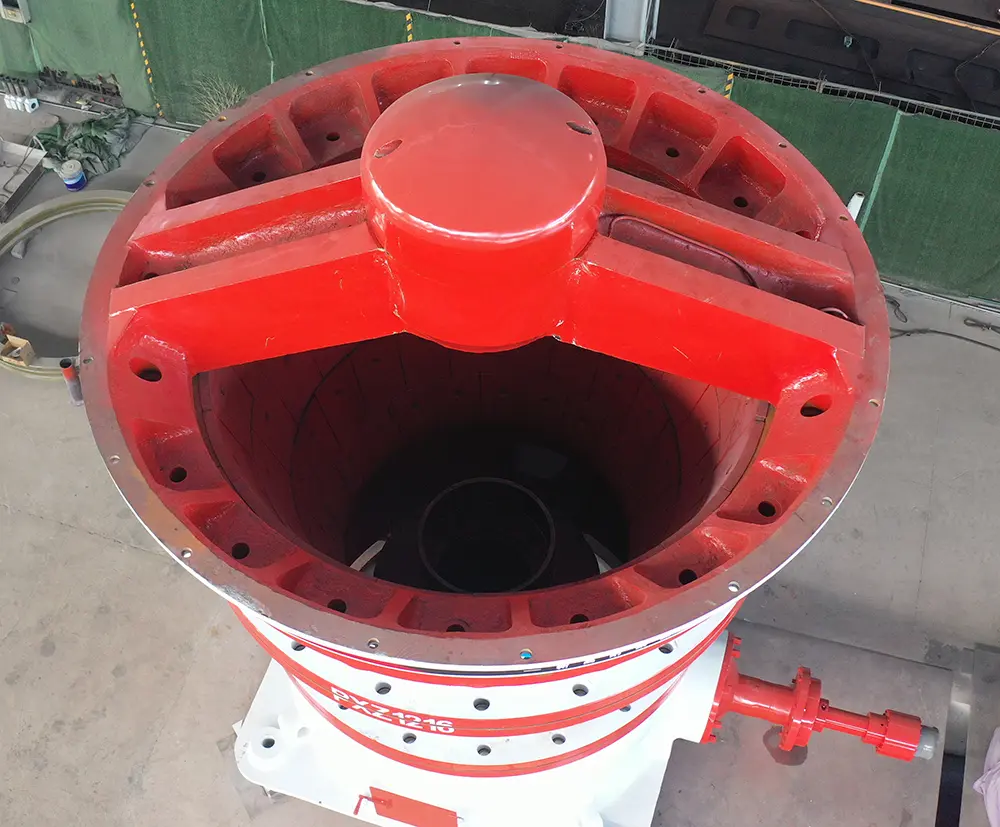
Mantle: The rotating, conical crushing head that delivers the compressive force. It’s typically made of high-wear-resistant steel to withstand constant contact with hard materials.
Concave: The stationary, conical shell that forms the outer wall of the crushing chamber. Like the mantle, it’s designed for durability and is often replaceable when worn.
Drive Shaft: The vertical shaft that transmits power from the motor to the mantle, enabling rotation and gyration.
Crankshaft & Eccentric Sleeve: These components convert the motor’s rotational power into the mantle’s gyratory motion. The eccentric sleeve creates the swinging action that adjusts the crushing gap.
Hopper: The large, funnel-shaped component that guides raw materials into the crushing chamber evenly, preventing jams.
Discharge Adjustment Mechanism: A system (often hydraulic or mechanical) that allows operators to adjust the discharge gap, controlling the final particle size of the crushed material.
What Are the Advantages of a Gyratory Crusher?
High Capacity: Gyratory crushers process more material per hour than many other primary crushers (e.g., jaw crushers), making them ideal for large-scale operations like mines and quarries.
Large Feed Size: They can handle extremely large rocks—some models accept feed sizes up to 6 feet (1.8 meters) in diameter—eliminating the need for pre-crushing.
Continuous Operation: Unlike jaw crushers, which have a reciprocating motion that pauses between crushing cycles, gyratory crushers operate continuously, increasing efficiency.
Uniform Product Size: The tapered crushing chamber and consistent gyratory motion produce evenly sized particles, reducing the need for reprocessing.
Durability: Built with heavy-duty steel components, gyratory crushers withstand the abrasion and impact of hard materials like granite, basalt, and copper ore.
Common Uses of Gyratory Crushers
Mining: Primary crushing of iron ore, copper ore, gold ore, and other minerals in underground and open-pit mines.
Quarrying: Processing limestone, granite, marble, and other aggregates for construction materials (e.g., concrete, asphalt).
Construction Demolition: Crushing large concrete debris and demolition waste into reusable aggregates.
Industrial Minerals: Processing materials like bauxite (for aluminum), limestone (for cement), and coal (for power generation).
Gyratory Crusher vs. Other Crushers: Key Differences
Gyratory vs. Jaw Crusher: Jaw crushers use a fixed plate and a moving plate (jaw) that reciprocates to crush material. They are smaller and more affordable but have lower capacity and smaller feed size limits than gyratory crushers. Jaw crushers are better for small-scale operations, while gyratory crushers suit large mines.
Gyratory vs. Cone Crusher: Cone crushers are similar in design to gyratory crushers but are smaller and used for secondary or tertiary crushing. They handle smaller feed sizes and produce finer particles, while gyratory crushers focus on primary crushing of large materials.