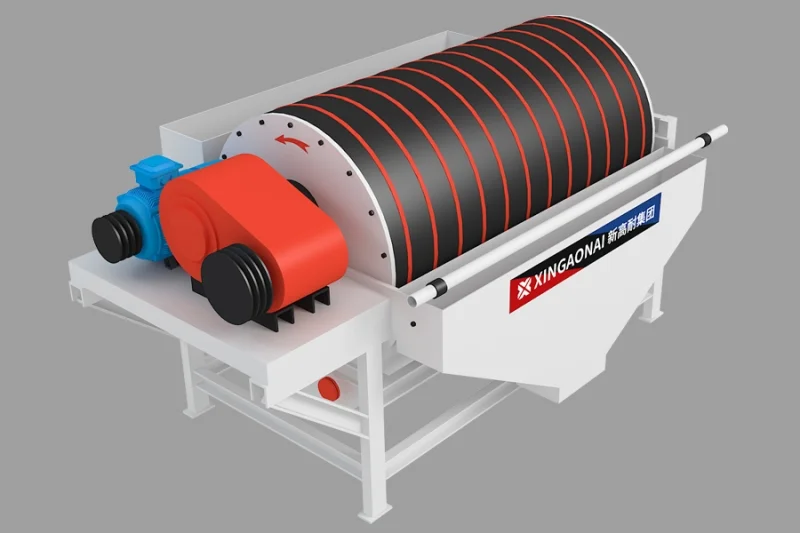
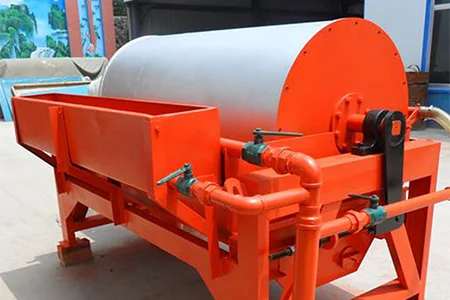
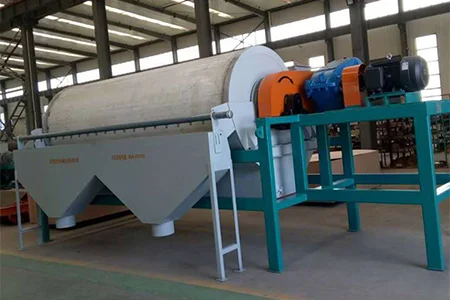
A Permanent Magnetic Drum Separator is a widely used magnetic separation equipment designed to separate magnetic materials from non-magnetic ones in industrial workflows. It leverages high-strength permanent magnets to generate a stable magnetic field, making it ideal for continuous, low-energy separation in mining, recycling, and building materials industries.
Unlike electromagnetic separators that rely on electricity, this device operates without external power supply for magnetic field generation. Its simple structure, stable performance, and low maintenance needs make it a cost-effective solution for bulk material processing.

What Is a Permanent Magnetic Drum Separator: Core Definition
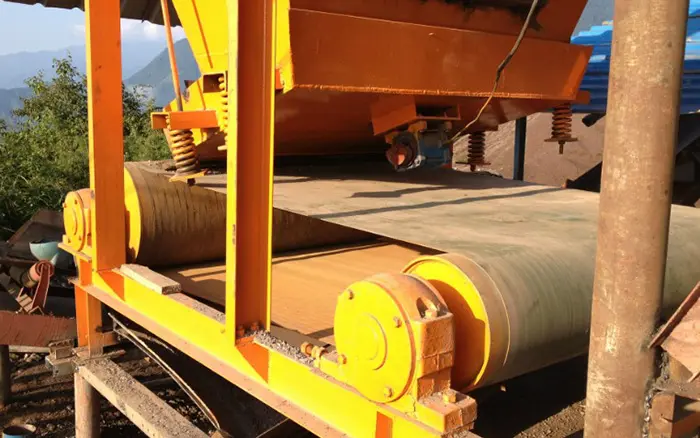
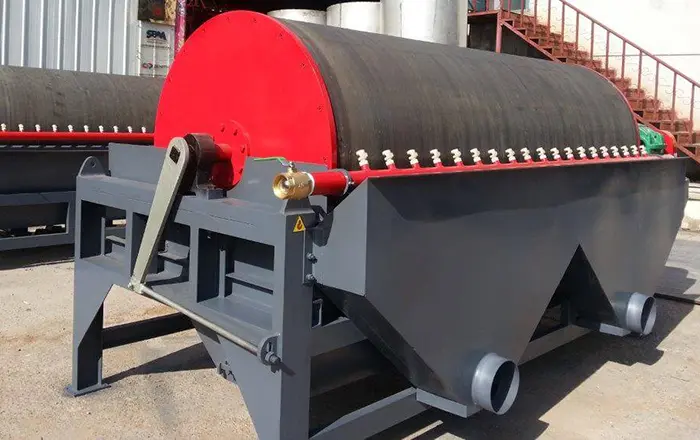
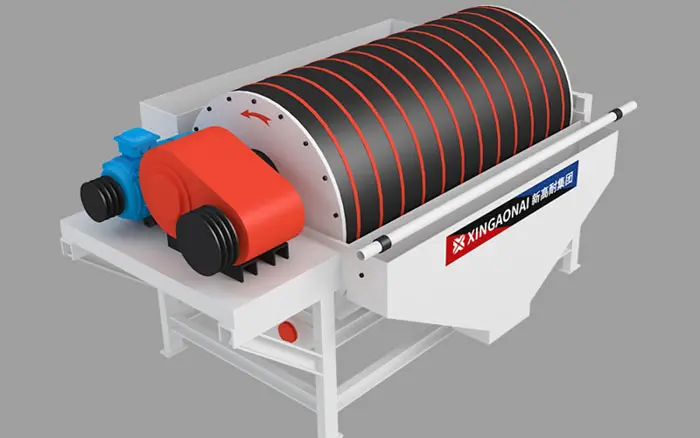
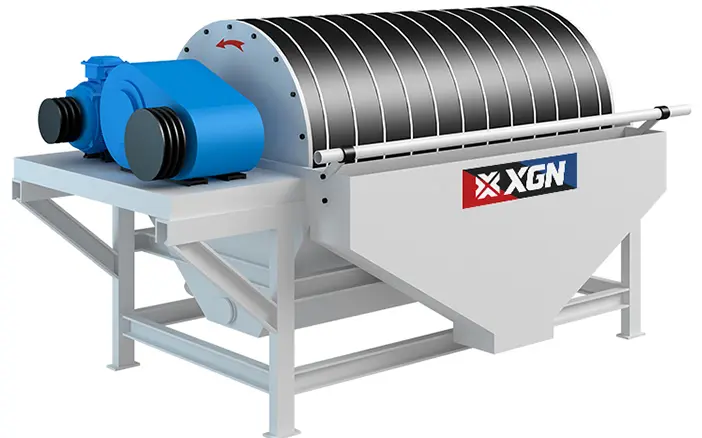
A Permanent Magnetic Drum Separator (also called a permanent magnetic roller separator) is a mechanical device consisting of a rotating drum and an internal fixed permanent magnet system. The drum is usually made of non-magnetic materials (e.g., stainless steel), while the internal magnets are arranged to form a strong, uniform magnetic field across the drum surface.
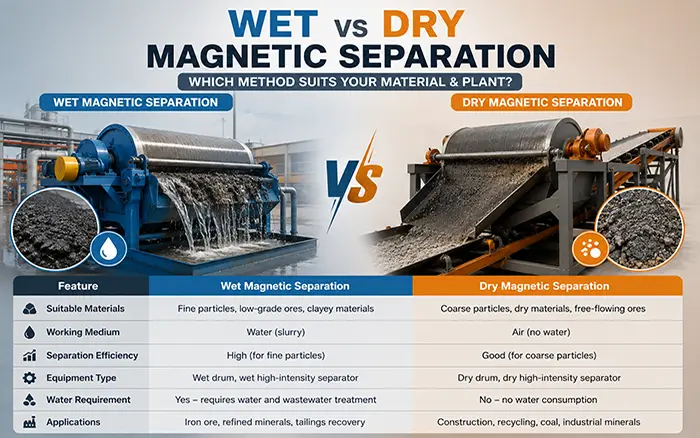
It works by conveying materials through the rotating drum—magnetic particles are adsorbed to the drum surface, while non-magnetic particles fall freely. This separation process is continuous, efficient, and suitable for both dry and wet material processing.
Working Principle of a Permanent Magnetic Drum Separator
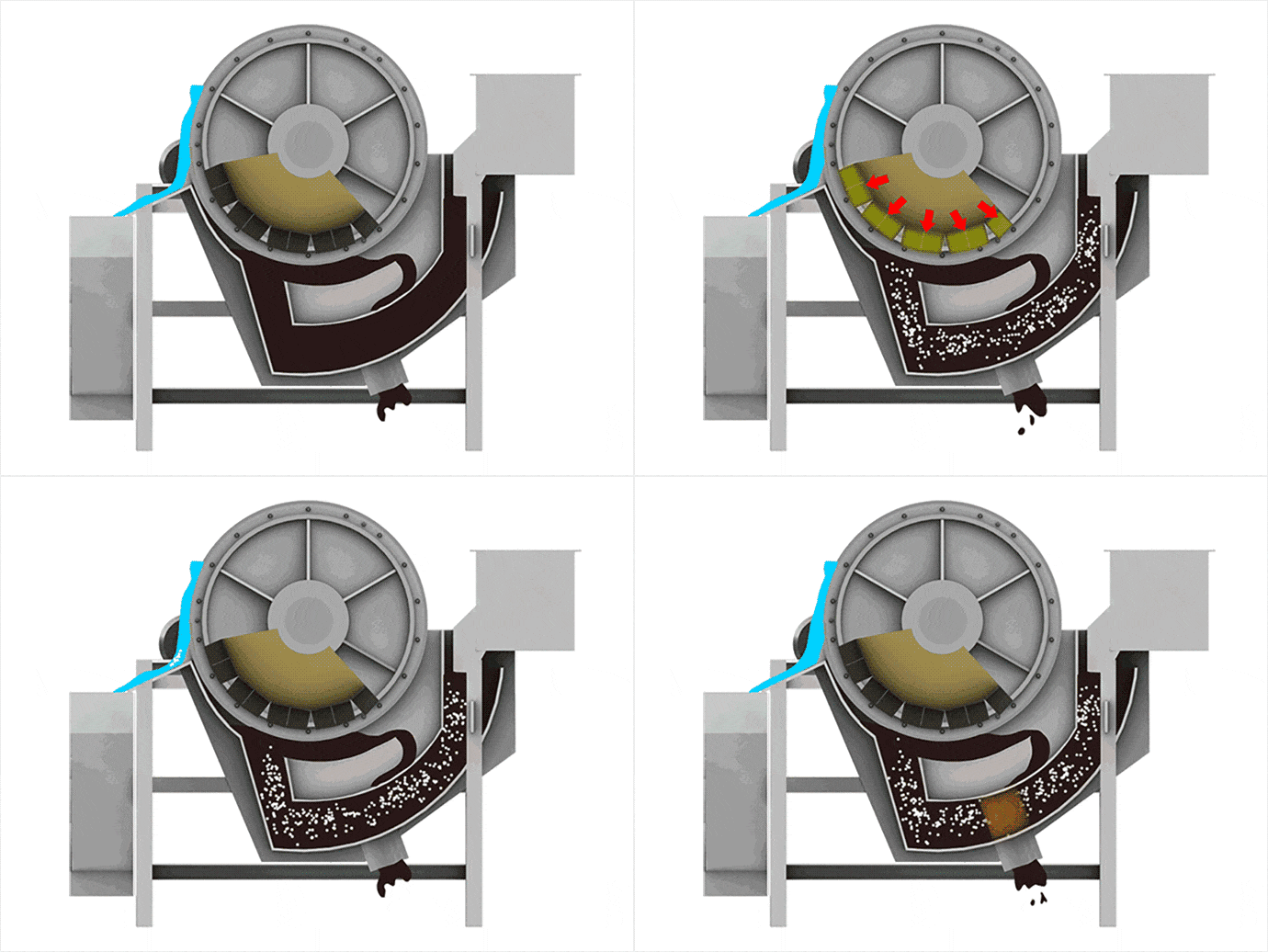
The working principle of a Permanent Magnetic Drum Separator is straightforward, relying on the interaction between magnetic materials and the fixed internal magnetic system. The process unfolds in four key stages:
1. Material Feeding
Bulk materials (e.g., ore, recycled scrap, aggregates) are fed onto the rotating drum via a hopper or conveyor belt. The feed rate is controlled to ensure each particle has sufficient contact with the drum surface, optimizing separation efficiency.
2. Magnetic Adsorption
As materials pass over the drum, the internal permanent magnets generate a strong magnetic field (usually 1000-6000 Gauss, adjustable by magnet type). Magnetic particles (e.g., iron filings, magnetic minerals) are instantly adsorbed to the drum surface, while non-magnetic particles (e.g., stone, plastic, gangue) are not affected.
3. Material Conveyance & Separation
The drum rotates continuously, carrying the adsorbed magnetic particles away from the feeding area. Non-magnetic particles, lacking magnetic attraction, fall into a dedicated collection hopper under gravity.
4. Magnetic Particle Discharge
When the magnetic particles rotate to the area without magnetic field (the "dead zone" of the internal magnet system), they lose adsorption force and fall into a separate collection hopper. This completes the separation cycle, enabling 24/7 continuous operation.
Key Components of a Permanent Magnetic Drum Separator
The reliable performance of a Permanent Magnetic Drum Separator depends on well-matched core components, each playing a critical role in separation:
1. Rotating Drum
The outer drum is made of non-magnetic stainless steel or carbon steel with a wear-resistant liner. Its smooth surface ensures minimal material adhesion and long service life, even when processing abrasive materials.
2. Internal Permanent Magnet System
The core component, usually made of high-performance rare-earth magnets (neodymium iron boron) or ferrite magnets. Magnets are arranged in a specific pattern to generate a uniform magnetic field, with field strength tailored to material properties.
3. Feeding Device
Includes a hopper and adjustable baffle to control feed rate and material distribution. Uniform feeding is essential to avoid overloading and ensure consistent separation results.
4. Drive System
Consists of a motor, reducer, and chain/belt drive. It controls the drum rotation speed (adjustable from 10-30 RPM), which directly impacts separation efficiency and material handling capacity.
5. Collection Hoppers
Two separate hoppers for magnetic and non-magnetic materials, preventing cross-contamination. The hoppers are designed with inclined bottoms for easy material discharge and transportation.

Key Features of a Permanent Magnetic Drum Separator
A high-quality Permanent Magnetic Drum Separator offers distinct advantages that make it suitable for diverse industrial applications:
1. Energy Efficiency
No external power supply is needed for magnetic field generation, reducing energy consumption by 30-50% compared to electromagnetic separators. It only requires power for drum rotation, lowering operational costs.
2. Stable Performance
Permanent magnets maintain a stable magnetic field for 8-10 years (no demagnetization under normal use), ensuring consistent separation results. The sealed structure prevents dust and moisture from damaging internal components.
3. Easy Operation & Maintenance
Simple structure with few moving parts. Daily maintenance only involves cleaning the drum surface and lubricating the drive system, minimizing downtime and repair costs.
4. Wide Adaptability
Suitable for dry and wet material processing, as well as various particle sizes (0.1-50mm). It can handle magnetic minerals, iron impurities, and recycled materials, adapting to different industry needs.
5. Adjustable Magnetic Strength
By selecting different magnet materials (neodymium vs. ferrite) or adjusting magnet arrangement, magnetic field strength can be customized to separate weak magnetic or strong magnetic materials.
Industrial Applications of Permanent Magnetic Drum Separators
Thanks to its reliable performance and versatility, a Permanent Magnetic Drum Separator is widely used in multiple industries:
1. Mining Industry
Separating magnetic minerals (e.g., magnetite, hematite, manganese ore) from non-magnetic gangue. It is a key equipment in mineral beneficiation lines, improving ore grade and resource utilization.
2. Recycling Industry
Recovering iron and steel particles from solid waste (e.g., construction waste, plastic scrap, electronic waste). It helps improve recycling efficiency and reduce environmental pollution.
3. Building Materials Industry
Removing iron impurities from aggregates, cement, and ceramic raw materials. This prevents damage to downstream equipment (crushers, grinders) and ensures product quality.
4. Metallurgy Industry
Purifying metal powders and separating magnetic alloys from non-magnetic materials. It is used in steelmaking, aluminum processing, and rare earth extraction processes.
5. Food & Pharmaceutical Industry
Removing iron contaminants from food raw materials (e.g., grains, flour) and pharmaceutical powders. It complies with food safety and GMP standards, ensuring product purity.
How to Choose a Permanent Magnetic Drum Separator
Selecting the right model depends on specific processing needs and material properties:
Material Properties: Choose magnetic strength based on material magnetic susceptibility (weak vs. strong magnetic) and particle size.
Processing Capacity: Match the drum diameter and length to the required throughput (10-500 t/h).
Working Environment: For wet materials, select a waterproof model; for abrasive materials, choose a wear-resistant drum liner.
Magnet Type: Neodymium magnets for high field strength (ideal for weak magnetic materials); ferrite magnets for cost-sensitive, strong magnetic material separation.
Conclusion
A Permanent Magnetic Drum Separator is a reliable, efficient magnetic separation device that plays a crucial role in industrial material processing. Its energy-saving design, stable performance, and wide adaptability make it indispensable in mining, recycling, and building materials industries.
By understanding its working principle, components, and applications, businesses can select the right Permanent Magnetic Drum Separator to optimize separation efficiency, reduce costs, and improve product quality. As industrial technology advances, it continues to evolve with higher magnetic strength and better wear resistance, delivering greater value to industrial production.