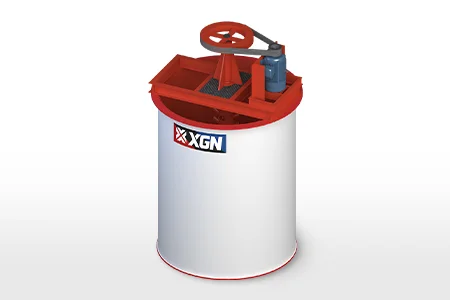
Tank agitators are essential equipment in industrial processes that require uniform mixing, blending, dispersion, or suspension of liquids, solids, or gases. From chemical reactors and pharmaceutical tanks to food processing vessels and wastewater treatment tanks, the performance of a
tank agitator directly impacts product quality, process efficiency, and operational costs.
Tank agitator design is a critical engineering process that involves balancing multiple factors to ensure the agitator meets the specific needs of the application. A well-designed tank agitator delivers consistent mixing results, minimizes energy consumption, and extends equipment service life. This guide explores the core principles, key design factors, and best practices of tank agitator design for industrial applications.
Core Principles of Tank Agitator Design
The primary goal of tank agitator design is to create controlled fluid motion within the tank to achieve the desired mixing outcome. This is based on three fundamental principles that guide every aspect of the design process:
1. Fluid Dynamics
Tank agitator design relies on understanding fluid dynamics—how liquids and gases move within the tank when acted upon by the agitator. The design must generate sufficient flow velocity to ensure all regions of the tank are reached, avoiding dead zones where materials remain unmixed.
Key fluid dynamic considerations include flow pattern (axial, radial, or tangential), turbulence, and shear rate. These factors determine how effectively materials are mixed, dispersed, or suspended.
2. Power Requirement
The power needed to drive the agitator depends on the tank size, fluid properties (viscosity, density), impeller type, and desired mixing intensity. Tank agitator design must calculate the optimal power input to avoid overconsumption of energy while ensuring effective mixing.
Underpowered agitators fail to achieve uniform mixing, while overpowered units waste energy and may cause unnecessary shear or turbulence that damages sensitive materials.
3. Scalability
Tank agitator design must be scalable, meaning the design principles used for small laboratory tanks can be applied to large industrial vessels. This ensures consistency in mixing performance across different tank sizes, which is critical for scaling up production processes.
Key Factors in Tank Agitator Design
Several critical factors influence tank agitator design, and each must be carefully considered to ensure the agitator performs optimally for the specific application. These factors work together to determine the overall design and performance of the system.
1. Tank Geometry
Tank geometry is a foundational factor in tank agitator design, as it directly impacts fluid flow and mixing efficiency. Key considerations include tank shape (cylindrical, rectangular, or conical), tank diameter (D), liquid height (H), and the position of the agitator within the tank.
Cylindrical tanks are the most common choice for industrial applications, as they promote uniform fluid flow and minimize dead zones. The ratio of liquid height to tank diameter (H/D) typically ranges from 0.8 to 1.5, depending on the mixing requirements.
2. Impeller Design
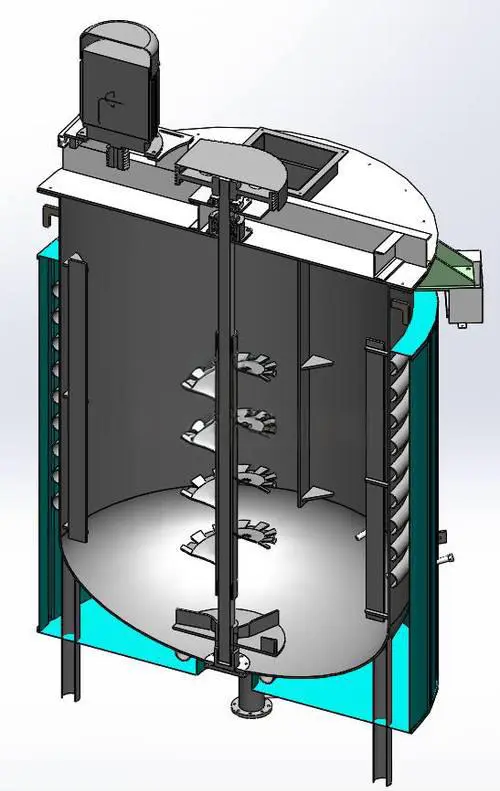
The impeller is the core component of a
tank agitator, responsible for generating fluid motion. Tank agitator design must select the right impeller type, size, and configuration based on the application and fluid properties.
Common impeller types include:
Axial-flow impellers (e.g., propellers): Ideal for low-viscosity fluids, generating axial flow to mix materials vertically.
Radial-flow impellers (e.g., turbines): Suitable for medium to high-viscosity fluids, creating radial flow to disperse materials evenly.
Anchor or paddle impellers: Designed for high-viscosity fluids or pastes, ensuring mixing along the tank walls to avoid dead zones.
Impeller size (typically expressed as a ratio of impeller diameter to tank diameter, D/T) and the number of blades also play a key role in mixing efficiency.
3. Fluid Properties
The properties of the fluid being mixed are critical to tank agitator design. Key properties include viscosity (thickness of the fluid), density, surface tension, and whether the fluid contains solids or gases.
High-viscosity fluids require more powerful agitators with larger impellers or specialized designs (e.g., anchor impellers), while low-viscosity fluids can use smaller, more efficient impellers. Fluids with suspended solids may require higher shear rates to prevent settling.
4. Agitator Speed
Agitator speed (rotations per minute, RPM) directly affects mixing intensity, flow rate, and shear rate. Tank agitator design must determine the optimal speed to achieve the desired mixing outcome without damaging materials or wasting energy.
Higher speeds generate more turbulence and shear, which is ideal for dispersion or emulsification, while lower speeds are better for gentle mixing of sensitive materials (e.g., pharmaceuticals or food products).
5. Material Selection
Tank agitator design must consider the material of construction to ensure compatibility with the fluid being mixed and the operating environment. Common materials include stainless steel (for corrosive or food-grade applications), carbon steel (for general industrial use), and specialized alloys (for high-temperature or high-pressure environments).
The impeller and shaft materials must also be resistant to wear, corrosion, and fatigue to ensure long service life.
6. Baffles and Tank Internals
Baffles are vertical plates installed inside the tank to prevent swirling and promote turbulence. Tank agitator design often includes baffles to improve mixing efficiency by breaking up the circular flow pattern created by the impeller.
Other tank internals, such as heating or cooling coils, can also influence agitator design, as they may disrupt fluid flow and require adjustments to impeller position or size.
Tank Agitator Design for Different Industrial Applications
Tank agitator design varies based on the specific industry and application, as different processes require different mixing outcomes. Below are examples of tailored designs for common industries:
1. Chemical Industry
In the chemical industry, tank agitator design focuses on handling corrosive fluids, high viscosities, and reactions that require precise temperature and mixing control. Turbine or radial-flow impellers are commonly used, with materials such as stainless steel or Hastelloy to resist corrosion.
2. Pharmaceutical Industry
Pharmaceutical applications require gentle, sterile mixing to avoid damaging active ingredients. Tank agitator design often uses axial-flow impellers at lower speeds, with smooth surfaces and easy-to-clean components to meet hygiene standards.
3. Food and Beverage Industry
Food and beverage tank agitator design prioritizes hygiene, gentle mixing, and uniform dispersion. Propeller or paddle impellers are used, with materials that meet food-grade standards (e.g., 316 stainless steel) and easy disassembly for cleaning.
4. Wastewater Treatment
Wastewater treatment requires mixing to suspend solids, disperse chemicals, and promote biological reactions. Tank agitator design uses large, low-speed impellers (e.g., anchor or paddle) to handle high-solids content and prevent settling.
Common Mistakes in Tank Agitator Design
Poor tank agitator design can lead to inefficient mixing, high energy consumption, and equipment failure. Below are common mistakes to avoid:
Ignoring fluid viscosity: Using the wrong impeller type for high or low viscosity fluids leads to poor mixing.
Incorrect impeller size or position: An impeller that is too small or poorly positioned creates dead zones and uneven mixing.
Underestimating power requirements: Underpowered agitators fail to achieve the desired mixing intensity, while overpowered units waste energy.
Neglecting tank geometry: Poor tank shape or H/D ratio leads to inefficient fluid flow and dead zones.
Inadequate material selection: Using materials incompatible with the fluid leads to corrosion, wear, and equipment failure.
Best Practices for Tank Agitator Design
To ensure optimal performance and efficiency, follow these best practices for tank agitator design:
1. Define Clear Mixing Objectives
Start by defining the desired mixing outcome (e.g., blending, dispersion, suspension) and performance criteria (e.g., mixing time, uniformity, shear rate). This guides all design decisions.
2. Conduct Fluid Property Analysis
Test and analyze the fluid’s viscosity, density, and other properties to select the right impeller type, speed, and power requirements.
3. Optimize Tank Geometry
Use a cylindrical tank with an appropriate H/D ratio and install baffles to promote uniform flow and minimize dead zones.
4. Select the Right Impeller
Choose an impeller type that matches the fluid properties and mixing objectives. Consider impeller size, blade count, and material to ensure durability and efficiency.
5. Calculate Power Requirements Accurately
Use established formulas or software to calculate the required power input, ensuring the agitator is neither underpowered nor overpowered.
6. Test and Validate the Design
Conduct small-scale tests or use computational fluid dynamics (CFD) simulations to validate the design before scaling up to industrial-sized tanks.
Conclusion
Tank agitator design is a complex engineering process that requires careful consideration of fluid dynamics, tank geometry, impeller design, fluid properties, and application-specific requirements. A well-designed tank agitator delivers consistent mixing results, minimizes energy consumption, and extends equipment service life.
By understanding the core principles, key design factors, and best practices outlined in this guide, engineers and industry professionals can design tank agitators that meet the unique needs of their applications. Whether for chemical, pharmaceutical, food, or wastewater treatment industries, proper tank agitator design is essential for efficient, reliable, and cost-effective industrial mixing.