

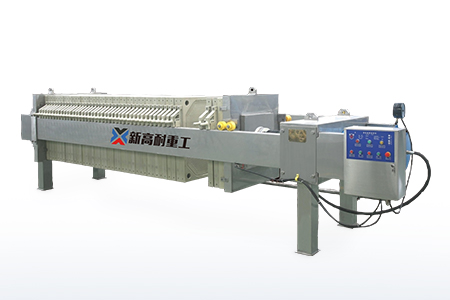
Key Principles for Plate and Frame Filter Press Troubleshooting
Safety First: Always shut down the equipment, cut off the power supply, and relieve system pressure before conducting any troubleshooting. Wear appropriate personal protective equipment (PPE) such as gloves, goggles, and protective clothing.
Systematic Inspection: Start with visual inspection (e.g., checking for leaks, damaged plates, or loose connections) before moving to mechanical or hydraulic system checks. Document the symptoms in detail to narrow down possible causes.
Refer to Manuals: Consult the manufacturer’s operation and maintenance manual for specific parameters, component specifications, and recommended troubleshooting procedures.
Preventive Maintenance Priority: Many issues can be avoided with regular preventive maintenance. Integrate troubleshooting findings into your maintenance schedule to prevent recurring problems.
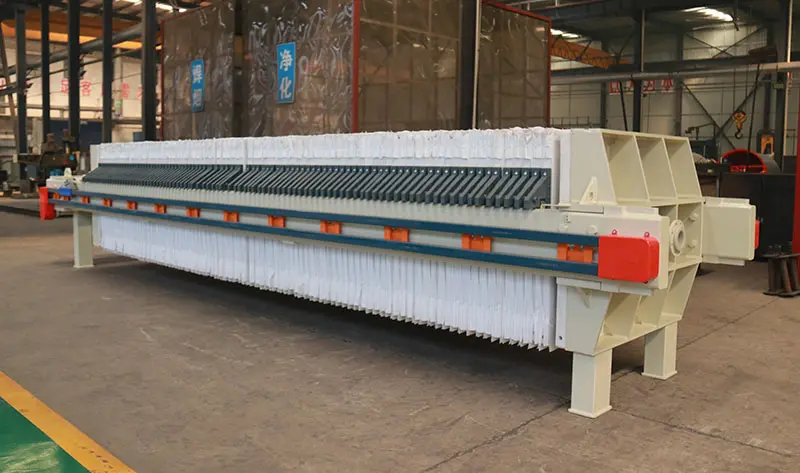
Common Plate and Frame Filter Press Issues: Troubleshooting Guide
Issue 1: Filtrate Leakage (Between Plates or From Seals)
Damaged or worn filter cloths (e.g., tears, holes, or improper installation).
Deformed or damaged filter plates (caused by overpressure, impact, or long-term wear).
Dirt or debris stuck on the sealing surfaces of plates, preventing proper sealing.
Insufficient clamping pressure (hydraulic system failure or pressure setting too low).
Aging or damaged rubber seals (loss of elasticity due to long-term use or high temperature).
Inspect filter cloths for damage; replace any torn or worn cloths and ensure proper installation (flat, no wrinkles, and correctly aligned).
Check filter plates for deformation or cracks; replace damaged plates and adjust the clamping pressure to the manufacturer’s recommended range.
Clean the sealing surfaces of plates thoroughly to remove dirt, debris, or cake residues.
Examine the hydraulic system for leaks or pressure loss; repair hydraulic components (e.g., pumps, valves, hoses) and adjust the pressure to ensure sufficient clamping force.
Replace aging or damaged rubber seals with compatible, high-quality seals.
Issue 2: Slow Filtration Speed
Clogged filter cloths (caused by fine particles or viscous materials blocking the pores).
Incorrect filter cloth selection (mesh size too small for the material or incompatible with the filtrate).
Low feed pressure (insufficient pressure to push the filtrate through the filter cloth).
High viscosity of the filtrate (due to low temperature or high solid content).
Blocked feed pipeline or valve (restricting the flow of slurry into the filter press).
Clean or replace clogged filter cloths; use a backwashing system (if available) to remove residues from the cloth pores.
Select filter cloths with appropriate mesh size and material (e.g., polyester for acidic filtrates, polypropylene for alkaline environments).
Check the feed pump and pressure gauge; repair or replace the pump if it fails to maintain the required pressure.
Adjust the filtrate temperature (heat viscous materials if necessary) or dilute the slurry to reduce solid content and viscosity.
Inspect and clean the feed pipeline, valves, and filters to remove blockages.
Issue 3: Uneven Clamping Pressure
Malfunctioning hydraulic system (e.g., faulty pressure relief valve, uneven oil distribution).
Worn or damaged guide rails (causing uneven movement of the pressing plate).
Misaligned filter plates (due to improper installation or plate deformation).
Uneven wear of the pressing plate or thrust plate.
Inspect the hydraulic system: check for oil leaks, clean or replace the pressure relief valve, and ensure uniform oil supply to both sides of the pressing plate.
Lubricate or replace worn guide rails to ensure smooth, even movement of the pressing plate.
Realign filter plates and replace any deformed plates to ensure proper contact between plates.
Check the pressing plate and thrust plate for uneven wear; repair or replace them if necessary.
Issue 4: Difficult Cake Discharge
Filter cake is too dry or hard (due to excessive filtration time or high pressure).
Incorrect filter cloth selection (incompatible material leading to cake adhesion).
Insufficient cake washing (residues causing adhesion between cake and cloth).
Damaged or worn discharge mechanism (e.g., hydraulic cylinder failure for automatic cake discharge).
Adjust the filtration parameters: reduce filtration time or pressure to prevent over-drying of the cake; increase the amount of flocculant (if applicable) to improve cake looseness.
Replace the filter cloth with a material that has good cake release performance (e.g., membrane filter cloths for sticky materials).
Optimize the cake washing process: increase washing water flow or extend washing time to remove residues.
Inspect and repair the discharge mechanism: check hydraulic cylinders, valves, and linkages for faults; replace worn components.
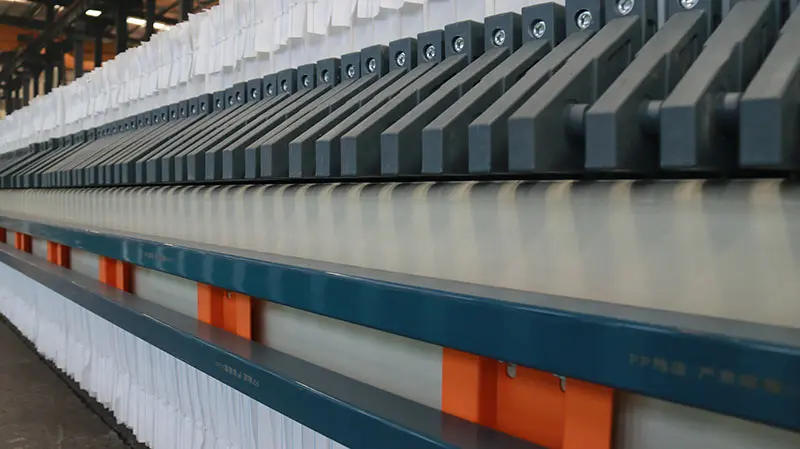
Issue 5: Filter Plate Damage (Cracks or Deformation)
Excessive clamping pressure (exceeding the plate’s maximum bearing capacity).
Impact or collision during plate installation or cake discharge.
Corrosion of plates (due to acidic or alkaline filtrates and improper material selection).
Long-term fatigue wear (extended use beyond the plate’s service life).
Immediately replace cracked or severely deformed filter plates; use plates that meet the manufacturer’s specifications (material and pressure rating).
Adjust the clamping pressure to the recommended range; install a pressure relief valve to prevent overpressure.
Train operators to handle plates carefully during installation and discharge to avoid impact or collision.
Select filter plates made of corrosion-resistant materials (e.g., PP for chemicals, stainless steel for high-temperature applications) based on the filtrate properties.
Issue 6: Hydraulic System Failure
Low hydraulic oil level or contaminated oil (blocking valves or damaging pumps).
Oil leaks in hoses, fittings, or cylinders (causing pressure loss).
Faulty hydraulic pump (failing to generate sufficient pressure).
Clogged or damaged valves (restricting oil flow).
Air in the hydraulic system (causing unstable pressure).
Check the hydraulic oil level and quality; add oil if necessary and replace contaminated oil with the recommended type.
Inspect hoses, fittings, and cylinders for leaks; replace damaged components and tighten loose fittings.
Test the hydraulic pump; repair or replace it if it fails to maintain pressure.
Clean or replace clogged valves; ensure smooth oil flow.
Bleed air from the hydraulic system according to the manufacturer’s procedure to stabilize pressure.
Preventive Maintenance to Reduce Plate and Frame Filter Press Issues
Daily Inspection: Check for leaks, abnormal noises, and filter cloth condition; record operating parameters (pressure, flow, temperature).
Regular Cleaning: Clean filter plates, cloths, and pipelines to remove residues and prevent clogging.
Lubrication: Lubricate guide rails, hydraulic components, and moving parts regularly with appropriate lubricants.
Filter Cloth Maintenance: Rotate or replace filter cloths periodically; clean cloths after use to extend their service life.
Hydraulic System Care: Regularly check oil level and quality; replace oil and filters according to the manufacturer’s schedule.
Operator Training: Ensure operators are properly trained in correct operation, plate handling, and basic troubleshooting.