

Core Working Principles: Impact Crusher vs Hammer Crusher
How Does an Impact Crusher Work?
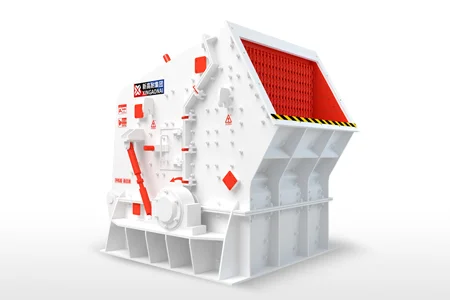
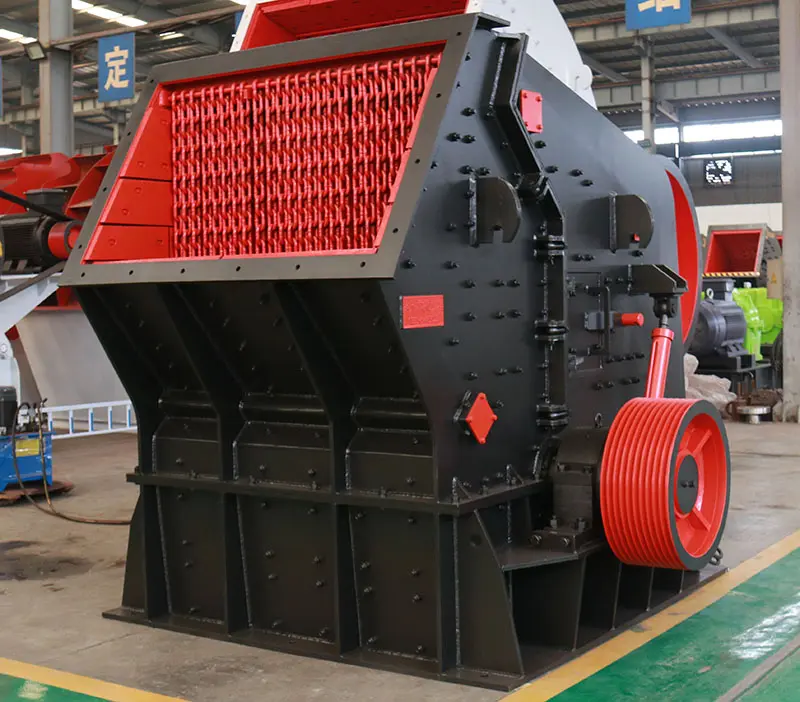
An impact crusher uses the principle of impact crushing. When materials enter the crushing cavity, they are first struck by high-speed rotating impact hammers. The struck materials are then thrown onto the impact plate at the front of the cavity for secondary crushing. After rebounding from the impact plate, the materials collide with other incoming materials (a process known as "stone-on-stone" crushing) before being discharged through the discharge port. Some advanced impact crushers are equipped with adjustable impact plates, allowing operators to control the discharge particle size by modifying the gap between the impact hammer and the impact plate.
How Does a Hammer Crusher Work?
Structural Differences: Impact Crusher vs Hammer Crusher
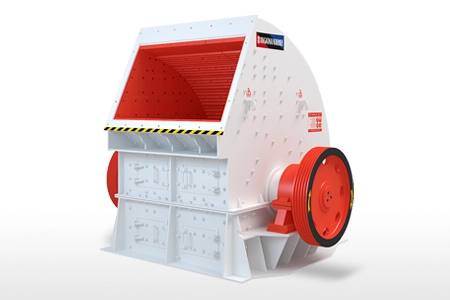
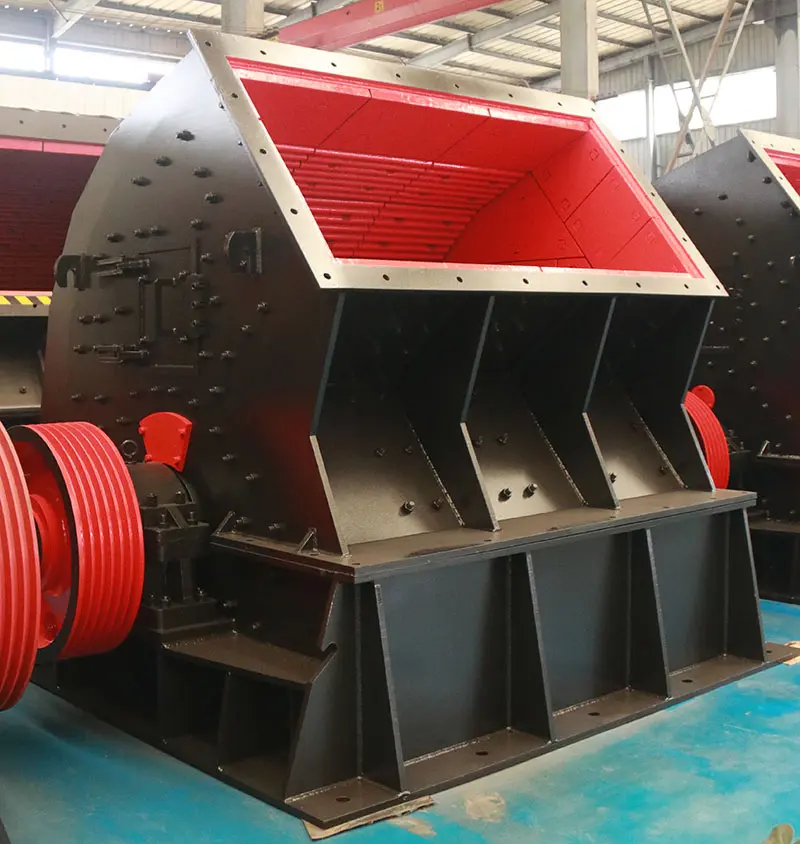
Crushing Chamber & Plates: Impact crushers have a relatively large, open crushing cavity with one or more impact plates (fixed or adjustable). Hammer crushers have a more enclosed cavity lined with wear-resistant lining plates, and a sieve plate at the bottom to control discharge particle size.
Hammer/Impact Element Design: Impact crushers are equipped with impact hammers that are usually rigidly connected to the rotor. Hammer crushers use flexible or rigid hammerheads; high-quality models like China hammer crusher from Xingaonai adopt high-chromium alloy hammerheads for enhanced wear resistance.
Rotor Speed: Impact crushers typically have a higher rotor speed (1000-1800 rpm) to generate strong impact force. Hammer crushers operate at a relatively lower speed (800-1500 rpm), focusing on combining impact and shear force.
Performance Advantages: Impact Crusher vs Hammer Crusher
Advantages of Impact Crusher
Excellent Particle Shape: The "stone-on-stone" crushing process produces cubical-shaped finished products with low needle-like and flaky content, which is ideal for high-quality aggregate production (e.g., concrete aggregates for high-speed railways).
High Crushing Efficiency for Medium-Hard Materials: It performs well in crushing medium-hard materials (compressive strength ≤ 350Mpa) such as granite, basalt and diabase, with high crushing ratio and stable production capacity.
Easy Maintenance: The impact plates and impact hammers are easy to replace, and the adjustable gap design allows for convenient adjustment of discharge particle size without stopping the machine.
Advantages of Hammer Crusher
High Efficiency for Brittle Materials: It is highly efficient in crushing brittle materials (compressive strength ≤ 150Mpa) such as limestone, coal, shale and coal gangue. China hammer crusher from Xingaonai can achieve one-stage crushing, replacing traditional multi-stage processes and improving production efficiency.
Low Investment & Operation Costs: The simple structure reduces equipment investment. The high-wear-resistance hammerheads (e.g., high-chromium alloy) and simplified process lower maintenance and energy costs, making it a cost-effective option for small and medium-sized enterprises.
Large Feed Size & High Capacity: Hammer crushers can handle materials with large feed sizes (up to 1200mm for large models), and the processing capacity can reach 50-6000 T/h, meeting large-scale production needs.
Application Scenarios: Impact Crusher vs Hammer Crusher
Typical Applications of Impact Crusher
High-quality aggregate production (concrete, asphalt aggregates for highways, bridges and tunnels).
Crushing of medium-hard to hard rocks (granite, basalt, diabase) in mining and quarrying industries.
Secondary or tertiary crushing in multi-stage crushing production lines.
Typical Applications of Hammer Crusher
Crushing of brittle materials (limestone, coal, shale, coal gangue) in cement plants, power plants and coal mines.
One-stage crushing production lines for sand and gravel aggregates (suitable for areas rich in limestone resources).
Construction waste recycling (crushing waste concrete, bricks and other materials into reusable aggregates).
Small and medium-sized mining and construction projects with limited investment and demand for cost-effective solutions.
Cost Comparison: Impact Crusher vs Hammer Crusher
Initial Investment: Impact crushers have a higher initial investment due to their more complex structure and advanced technology. Hammer crushers, especially China hammer crusher from Xingaonai, have lower initial investment with simple structure and mature technology.
Operation & Maintenance Costs: Impact crushers have higher maintenance costs due to the frequent replacement of impact plates and hammers (especially when crushing hard materials). Hammer crushers have lower maintenance costs, and the high-wear-resistance components reduce the frequency of part replacement. Energy costs of hammer crushers are also lower for brittle material crushing.
How to Choose Between Impact Crusher and Hammer Crusher?
Material Hardness: Choose impact crusher for medium-hard to hard materials (granite, basalt); choose hammer crusher for brittle, soft materials (limestone, coal).
Product Quality Requirement: If you need high-quality cubical aggregates, impact crusher is the better choice; if particle shape is not a key requirement, hammer crusher is sufficient.
Production Process: For one-stage crushing of large feed sizes, hammer crusher (e.g., China hammer crusher from Xingaonai) is more suitable; for multi-stage crushing to improve product quality, impact crusher is ideal for secondary/tertiary crushing.
Investment Budget: Choose hammer crusher if you have a limited budget and need cost-effective operation; choose impact crusher if you can afford higher initial investment for better product quality and long-term benefits.