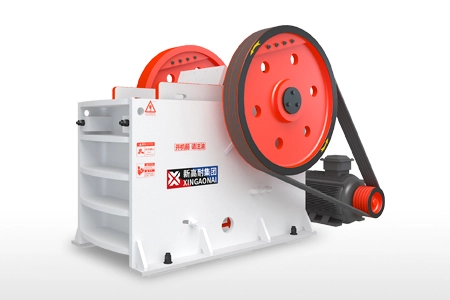
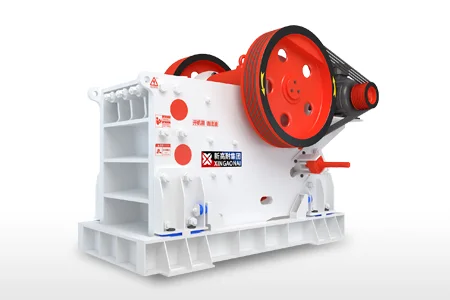
Jaw crushers are the backbone of primary crushing in mining, quarrying, construction, and recycling industries. As the first stage of material processing, their performance directly dictates the efficiency of the entire production line. Among all performance indicators, the capacity of a
jaw crusher is the most critical—it determines how much material the machine can process per hour, directly impacting production schedules, operational costs, and overall profitability.
Understanding the capacity of a jaw crusher, the factors that influence it, and how to calculate and optimize it is essential for plant managers, engineers, and procurement professionals. This comprehensive guide breaks down everything you need to know about jaw crusher capacity, helping you select the right equipment, maximize output, and maintain consistent performance.
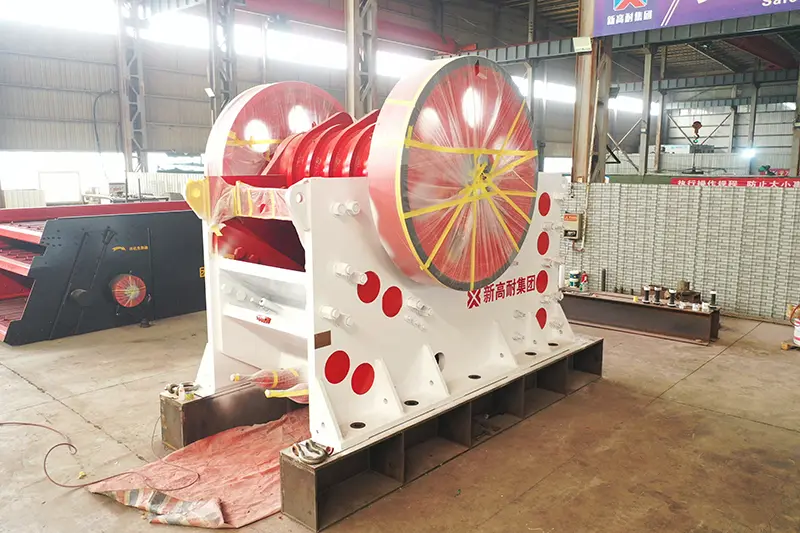
What Is the Capacity of a Jaw Crusher?
The capacity of a jaw crusher refers to the volume or weight of material that the machine can process within a specific time frame, typically measured in tons per hour (t/h) or cubic meters per hour (m³/h). It is a quantitative measure of the crusher’s productivity and is influenced by both design and operational factors.
There are two key types of jaw crusher capacity to understand:
Theoretical Capacity: This is the maximum output the crusher can achieve under ideal conditions—uniform feeding of properly sized material, optimal operating parameters, and no downtime. It is calculated based on the crusher’s design specifications, such as jaw width, stroke, and speed.
Actual Capacity: This is the real-world output achieved in on-site operations. It is almost always lower than the theoretical capacity, as it accounts for variables like material properties, feeding inconsistencies, maintenance breaks, and equipment wear.
A reliable jaw crusher will maintain a stable actual capacity close to its theoretical value, ensuring consistent production and avoiding bottlenecks in the crushing line.
Key Factors Influencing the Capacity of a Jaw Crusher
The capacity of a jaw crusher is not a fixed value—it varies based on several interrelated factors. Understanding these factors allows you to adjust operations, select the right equipment, and troubleshoot low-output issues.
1. Feed Size and Material Properties
The size and characteristics of the raw material are among the most impactful factors. Raw materials that are too large (exceeding the crusher’s maximum feed size) will cause jams, slow down feeding, and reduce capacity. Similarly, overly hard or abrasive materials increase crushing resistance, requiring more energy and slowing down the crushing cycle.
Moisture content also plays a role: high moisture (above 10-15%) can cause material to clump and stick to the crushing chamber, leading to blockages and reduced throughput. Dry, free-flowing materials, on the other hand, ensure smooth feeding and consistent capacity.
2. Discharge Opening Size (Closed Side Setting, CSS)
The discharge opening—commonly referred to as the closed side setting (CSS)—is the distance between the fixed jaw and the moving jaw when the latter is in its closed position. It directly controls the size of the final product and has a inverse relationship with capacity: a smaller CSS reduces capacity (as material takes longer to crush and exit), while a larger CSS increases capacity (as material passes through more quickly).
Operators must balance capacity with the required final product size—adjusting the CSS to meet both production goals and quality standards.
3. Swing Speed of the Moving Jaw
The swing speed (rotational speed of the eccentric shaft) determines how often the moving jaw compresses and releases material. An optimal speed ensures that material is crushed efficiently and discharged promptly.
If the speed is too low, the crushing cycle is too slow, and material accumulates in the chamber, reducing capacity. If the speed is too high, material cannot exit the chamber fast enough, leading to jams and a drop in output. Most jaw crushers operate at speeds between 200 and 400 RPM, depending on their size and design.
4. Stroke of the Moving Jaw
The stroke is the distance the moving jaw travels during each cycle. A larger stroke increases the depth of crushing, allowing the crusher to process more material per cycle and improving capacity. However, the stroke must be matched to the crusher’s size and the material’s hardness—too large a stroke can cause excessive wear or damage to the jaw plates.
5. Crusher Model and Structural Design
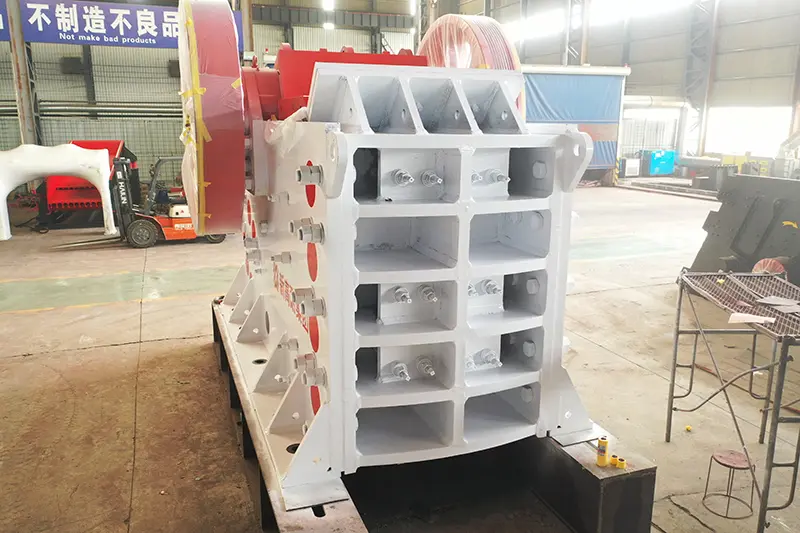
The design and size of the
jaw crusher directly impact its maximum capacity. Large-scale jaw crushers (with wider jaw plates and larger chambers) are designed for high-capacity applications, while small to medium-sized models are suited for lower-output operations.
Other design features, such as the angle of the jaw plates, the shape of the crushing chamber, and the drive system, also influence capacity. Modern jaw crushers with optimized chamber designs (e.g., deep, curved chambers) reduce material clogging and improve throughput.
6. Feeding Uniformity
Uniform, continuous feeding is critical for maintaining stable capacity. Uneven feeding—either too much (overloading) or too little (underfeeding)—disrupts the crushing cycle. Overloading causes jams and machine vibration, while underfeeding wastes the crusher’s capacity and reduces overall efficiency.
Using a vibrating feeder to deliver material evenly to the jaw crusher ensures consistent throughput and maximizes capacity.
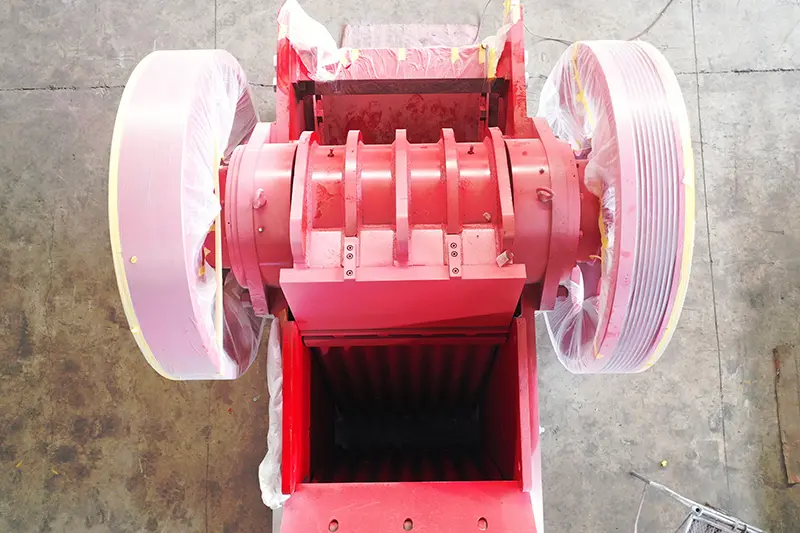
How to Calculate the Capacity of a Jaw Crusher
While jaw crusher manufacturers provide theoretical capacity data in their specifications, you can estimate the actual capacity using practical engineering formulas. The most common method considers the key design and operational parameters:
Basic Capacity Formula (t/h) = Jaw Width (m) × Discharge Opening (m) × Swing Speed (RPM) × Material Density (t/m³) × Efficiency Factor
Key notes about the formula:
Jaw Width: The width of the jaw plates (in meters), which determines how much material can be fed into the chamber at once.
Discharge Opening: The CSS (in meters), adjusted based on the desired product size.
Swing Speed: The rotational speed of the eccentric shaft (in RPM).
Material Density: The density of the raw material (typically 1.6-2.8 t/m³ for most aggregates and ores).
Efficiency Factor: A correction factor (0.6-0.8 for most applications) that accounts for real-world conditions (e.g., material moisture, wear, feeding inconsistencies).
For example, a jaw crusher with a 1.2m jaw width, 0.05m CSS, 300 RPM swing speed, processing material with a density of 2.0 t/m³, and an efficiency factor of 0.7 would have an estimated capacity of ~25.2 t/h.
How to Optimize the Capacity of a Jaw Crusher
Maximizing the capacity of a jaw crusher requires a combination of proper equipment selection, regular maintenance, and optimized operations. Below are practical tips to improve output:
1. Ensure Uniform Feeding
Use a vibrating feeder to deliver material evenly to the jaw crusher. Avoid overloading the chamber, and ensure the feeder matches the crusher’s capacity to prevent bottlenecks.
2. Maintain Optimal CSS
Adjust the discharge opening based on your production goals. If capacity is a priority (and product size allows), increase the CSS. If product quality is critical, balance CSS with output.
3. Control Material Properties
Pre-screen raw materials to remove oversized particles and reduce moisture content (if necessary). This prevents jams and ensures smooth crushing.
4. Regularly Maintain and Replace Wear Parts
Worn jaw plates, toggle plates, and bearings reduce crushing efficiency and capacity. Inspect wear parts regularly and replace them promptly to maintain optimal performance.
5. Optimize Swing Speed
Adjust the swing speed to match the material type and desired output. Consult the manufacturer’s guidelines to find the optimal speed for your application.
6. Keep the Crushing Chamber Clean
Regularly clear any material buildup or blockages in the chamber. Clogged chambers reduce throughput and can cause premature wear.
Capacity of Jaw Crusher for Different Applications
Jaw crusher capacity varies by application, depending on the material type, desired product size, and production scale. Below are common capacity ranges for different scenarios:
Small-Scale Quarrying/Construction: 5-50 t/h (small jaw crushers, ideal for local projects).
Medium-Scale Mining/Aggregate Production: 50-200 t/h (mid-sized crushers, suitable for regional operations).
Large-Scale Mining: 200-1000+ t/h (heavy-duty jaw crushers, designed for high-volume, continuous production).
Conclusion
The capacity of a jaw crusher is a critical indicator of its performance, directly influencing the efficiency and profitability of crushing operations. By understanding the factors that affect capacity—such as feed size, CSS, swing speed, and material properties—you can select the right equipment, optimize operations, and maximize output.
Calculating capacity using practical formulas helps in planning production schedules, while regular maintenance and operational adjustments ensure stable, consistent performance. Whether you’re in mining, quarrying, or construction, a clear understanding of jaw crusher capacity is essential for building an efficient, reliable crushing line.
By following the best practices outlined in this guide, you can ensure your jaw crusher operates at its full capacity, minimizing downtime, reducing costs, and achieving your production goals.