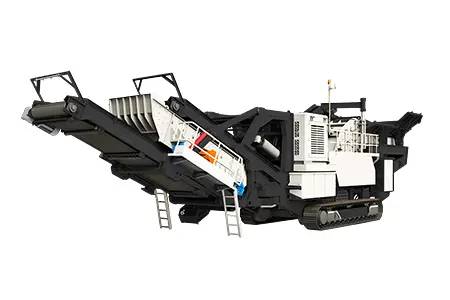
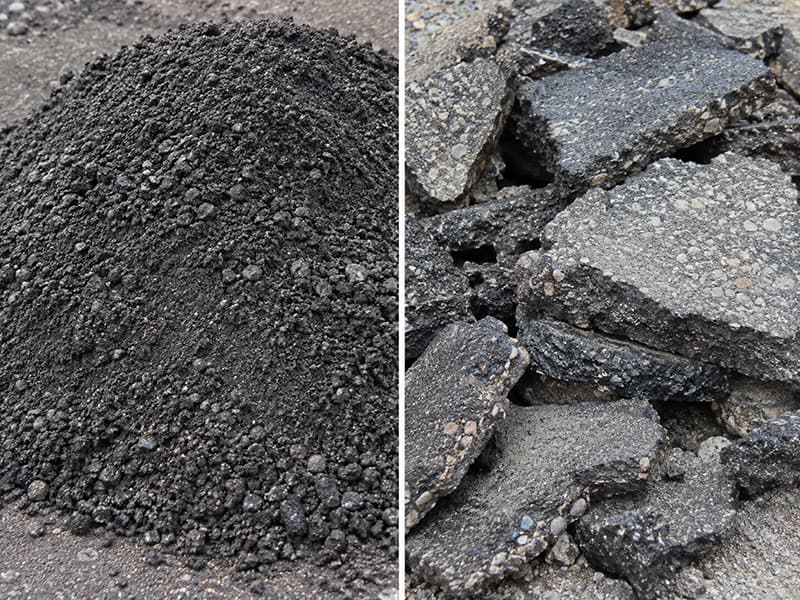
An asphalt crusher reduces oversized pieces of reclaimed asphalt pavement (RAP) so they can be screened and reused. Whether you need one depends on what arrives at the site. Loose asphalt millings may already be close to the required gradation and only need screening. Millings that have clumped together may need to be broken apart. Large pieces of pavement removed during demolition typically need crushing before final screening.
Start by comparing the incoming material with the required product gradation. The aim is to produce a consistent RAP feed for its intended use while limiting unnecessary crushing and the extra fines it can generate.
When Does RAP Need an Asphalt Crusher?
Asphalt millings come from removing pavement with a milling machine. Removed pavement can also arrive as slabs or irregular chunks. Even two loads from the same road project can need different treatment if one is loose and the other has compacted or formed clumps during stockpiling.
| Incoming RAP | First step to evaluate | What to check |
|---|---|---|
| Loose millings | Screen and separate the usable fraction | How much of the material already meets the target gradation? |
| Millings with soft or breakable clumps | Break up the clumps and rescreen | Do the clumps separate into usable particles, or does significant oversize remain? |
| Large pavement chunks or slabs | Crush, then screen | Can the feed opening accept the largest pieces? How much oversize remains after a pass? |
| Mixed millings and pavement chunks | Prescreen and send the oversize stream to the crusher | Can the screen remove enough usable material to reduce the crusher load? |
For contractors who process pavement chunks at multiple jobsites, a tracked mobile impact crusher is one option to evaluate. Check the feed opening against the largest pavement pieces, and review the crusher and screen together against the required output. If the feed is mostly loose millings, a screen or a clump breaker may do more of the work than the crusher.
How to Set Up a RAP Crushing and Screening Circuit
A practical starting point for mixed RAP is to screen the feed first and route material that needs size reduction to the crusher. The exact circuit depends on how much of the feed meets the product specification and how much oversize remains after crushing.
Prescreen the feed. Separate the material already within the required size range. Use representative samples to check whether the screened fraction meets the actual gradation specification.
Process the oversize. Break up agglomerated millings or crush larger pavement chunks, depending on what is retained on the screen.
Rescreen the processed material. Route any remaining oversize back to the crusher if a closed circuit is appropriate. Account for this return load when sizing the crusher, screen, and conveyors.
Stockpile the finished fractions. Keep coarse and fine RAP separate when the downstream mix design calls for separate fractions. Record the material source and processing date where traceability is required.
A single screening pass may be sufficient for a consistent milling feed. A stockpile with large slabs and feed from several sources can require additional crushing or fractionation. FHWA’s RAP guidance covers how feed origin, crushing, screening, and stockpile management affect the consistency of processed RAP. FHWA guidance on RAP processing and stockpiling
Mobile or Stationary Asphalt Crusher?
A mobile asphalt crusher is worth evaluating when the processing location changes frequently or when the contractor wants to work close to where the pavement is removed. Check the operating footprint, the space required for separate stockpiles, and whether the screen can handle the oversize returned to the crusher. The ability to move the crusher only solves one part of the site layout.
A stationary RAP circuit is worth evaluating when several projects deliver material to the same yard or asphalt plant. A fixed layout can provide dedicated routes for prescreened material, crusher feed, and finished fractions. It can also make it easier to keep materials from different sources separate where that matters for the mix design.
| Project condition | Configuration to evaluate |
|---|---|
| Pavement removal at several jobsites | Mobile crusher and screen sized for the material handled at each site |
| Regular deliveries to one asphalt plant or recycling yard | Stationary receiving, screening, and crushing circuit |
| Mostly loose millings with occasional clumps | Screening first, with clump breaking as needed |
| Large and irregular pavement pieces | Crusher feed opening and feed arrangement sized for the largest representative pieces |

How to Control Fines and Check RAP Gradation
A tighter crusher setting can reduce oversize, but it may also increase the amount of fine material. Start by screening out the fraction that already meets the target. Then compare representative samples of the incoming RAP, the screened bypass, and the finished product. Sampling the streams separately helps you see whether extra fines are coming from the crusher or were already present in the feed.
Keep these checks in mind:
Define the target from the end use. RAP going into a new asphalt mixture and RAP intended for a road base can have different acceptance requirements. For asphalt mixtures, confirm with the mix designer whether the reported gradation refers to processed RAP particles or the aggregate recovered after binder removal.
Check feed under normal operating conditions. Damp or sticky material can build up on the screen and reduce the effective open area. Inspect how the screen handles representative material, including batches that are more difficult to process.
Track the amount of oversize returning to the crusher. If the return load rises while fresh feed stays steady, check the screen and feed distribution as well as the crusher setting. A screen with blocked openings can send usable material back to the crusher.
Sample when the feed source changes. A new milling job or demolition load can change the grading, clump size, or amount of foreign material in the stockpile.
If your site also processes concrete demolition material, assess it as a separate feed stream. Steel, brick, and other contaminants can change how you prepare and screen the feed. Vibrating screen selection for recycled concrete aggregate
What Information Is Needed to Specify an Asphalt Crusher?
Before requesting a quote, put together a brief description of the material and the finished RAP you need. Photos and a representative sieve analysis make it easier to tell whether the main job is screening, clump breaking, or crushing.
| Information to provide | Why it matters |
|---|---|
| Material source and photos | Distinguishes loose millings, stockpile clumps, and removed pavement |
| Maximum feed size and incoming gradation | Helps assess feed opening requirements and the potential for prescreening |
| Required fresh-feed throughput | Provides the starting point for sizing the circuit before accounting for recirculation |
| Target gradation and finished fractions | Determines what the screen must separate and where oversize should go |
| Moisture, stickiness, and foreign material | Helps identify handling, screening, and feed preparation needs |
| Downstream use and site layout | Clarifies product requirements, stockpile space, and whether the equipment needs to move |
For a XINGAONAI equipment review, share the largest representative feed pieces, the required fresh-feed rate, and the target RAP gradation. If you already have a screen, include its deck configuration and opening sizes so the proposed crusher can be evaluated as part of the existing circuit.